


Ghost of Yōtei is every bit the spectacle players should expect from the team behind Ghost of Tsushima. While the fundamental core remains familiar, Sucker Punch shows an even deeper understanding of vibrant, engaging worlds and Japanese culture.
At what point do we wish to abandon reality and blissfully exist inside a game’s world?
No matter how fantastical or violent or absurd or realistic or impractical, a rich world teeming with personality so frequently provides more than just meager escapism. And while becoming lost in a game and submerged in its fiction is intoxicating–especially when the outside world is particularly virulent–we wouldn’t cling to these virtual confines if their existence didn’t speak to us in some way.
Think about your favorite games. Is it more than just the mechanics? What about the characters that line those virtual streets or set up camp far off in the distance waiting to provide you with a quest? Do you stare in awe at a deep space vessel haunted by aliens or lurk with terror at a dilapidated metropolis in the post apocalypse?
Linear games so frequently have the benefit of controlled direction. The player will shoot or jump their way through levels and chapters, often happening upon a grandiose setpiece bursting with action or a moment of narrative pathos leaving them breathless.
Open-world games hinge upon the size and scope of their map. Players are meant to have an unbridled sense of freedom to take on nearly any task in any order they wish, seeking out new skills and stories while the main quest always lingers in the mind.
By definition, open-world games should have irresistibly habitable worlds, the kind players never want to leave and spend dozens of hours in. Maybe at times they get a little repetitive. Maybe at times the player isn’t witness to incredible moments of directed action. But if that world ultimately fails to entrance the player, it hinders the overall product.
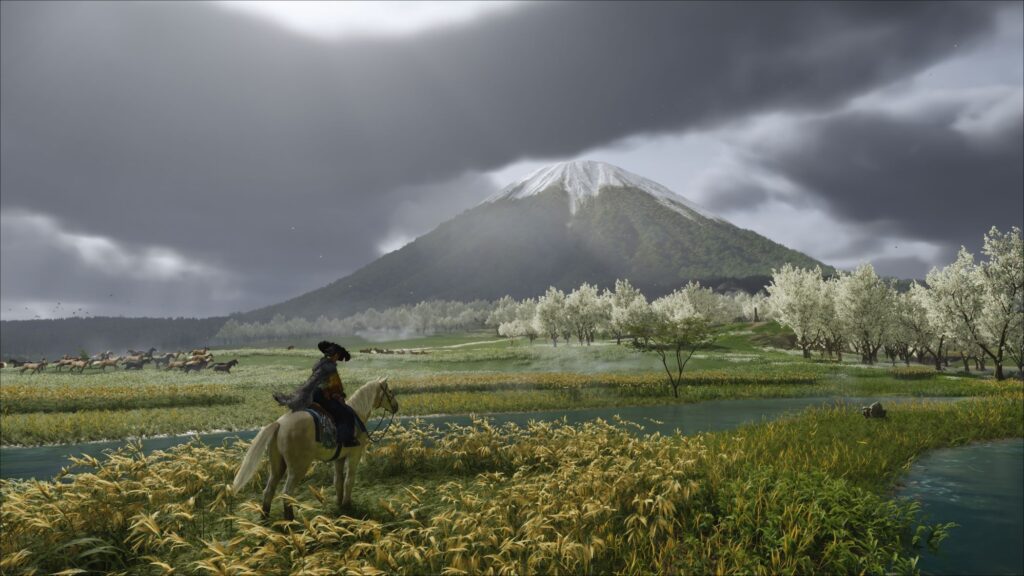
When Ghost of Tsushima released in July of 2020, it arrived a month after The Last of Us Part II. Naughty Dog’s game was a brutal triumph of unparalleled linear storytelling, taking us back to the world of Joel and Ellie for another harrowing ride. While its vision of America was bleak, one can’t argue the grimy splendor and uncompromising vision.
By comparison, Ghost of Tsushima‘s vision of Japan was similarly bathed in blood and natural beauty. While The Last of Us‘ world saw nature clawing back its hold on the land, Tsushima was relatively unspoiled by man’s dominance. While significantly less grim, Ghost of Tsushima was gripped with violence, taking on the chaotic Mongol invasion of the 13th century. Jin Sakai’s steel carved a path as both shinobi and samurai and the game was unafraid with its visceral combat.
Yet in spite of all that spilled crimson, Ghost of Tsushima had an unforgettable, breathtaking open world.
In the last decade, Sony Interactive Entertainment has worked to dominate the space of high-production, top quality games, creating tangible, fruitful worlds packed with both story and gameplay meant to captivate players. The Horizon series has felt like a kind of mass appeal flagship franchise, offering a sprawling world with things to do. God of War is narratively impactful, mechanically brilliant, and features a renewed legacy character in a distinct Norse setting. Even Astro Bot, with all its reverence for the PlayStation brand, made a cohesively cute world with addictive charm and expert platforming.
Ghost of Tsushima‘s approach to open-world gameplay felt different. Sucker Punch Productions had seemed to take their lessons from the Infamous series and built a living map that players could freely roam. Certainly it was possible to bounce from quest market to point of interest. But Sucker Punch designed Ghost of Tsushima to not be a game of constantly toggling the map button to find the next thing to do. The wind acted as a literal compass and animals and plumes of smoke would guide players towards curiosities.
It felt… cinematic.
And that has so often been the sore thumb of these dense, unscripted worlds. The best, most awe-inspiring moments are often tied to a main story mission that features enough guardrails to not break the free-form structure. The natural world of Tsushima was brimming with color and detail, housing combat and quests in a package that felt singularly unique. For players that wanted more Breath of the Wild and less “Ubisoft” from PlayStation, Ghost of Tsushima was the solution.
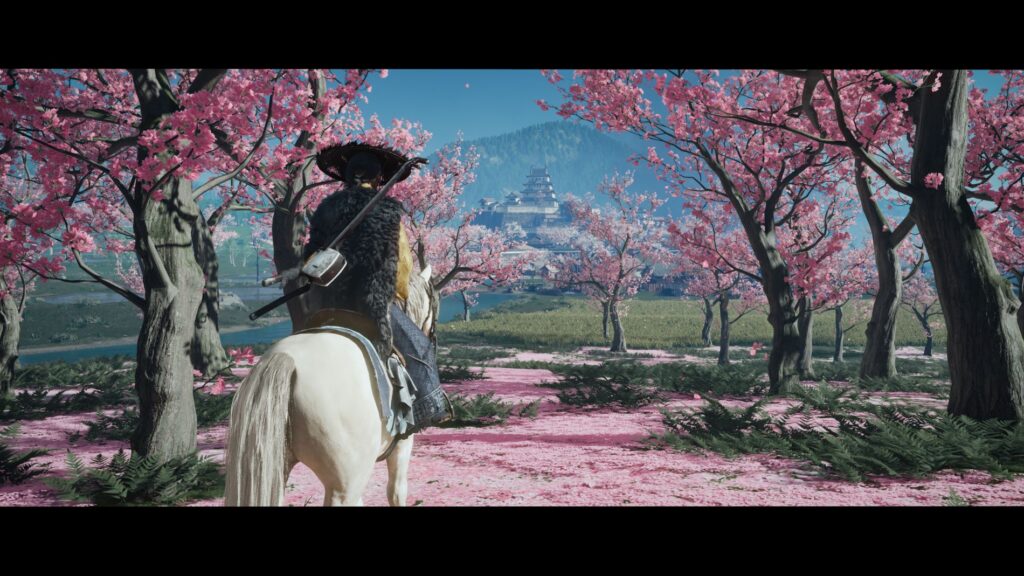
In the 75 hours it took me to do every piece of content in Ghost of Yōtei, I was never listless, never once wanted to leave its uncompromising vision of 17th century Japan.
Many would argue that while the vision of Horizon: Forbidden West was vast, its massive scale could cause the game to feel bloated. Ghost of Yōtei takes precedence from Marvel’s Spider-Man 2, a sequel that sought not to not only be bigger but justifiably better.
Insomniac’s second Spidey attempt did feature New York City’s other boroughs but also made the setting more dense, adding more flavor to the structure it established with the first game. Merely introducing a bigger city with Miles Morales, new villains, and more of the same types of activities would have been fun but unexciting.
For all of Ghost of Tsushima‘s incredible qualities, I will admit to growing a bit weary of using a grapple hook to climb yet another cliff to grab a charm or a cosmetic at a shrine. Or chasing a fox for a few seconds to a tucked-away stop behind some rocks. And Ghost of Yōtei certainly has those boxes of things to check, tasks that will handsomely reward the player a cosmetic sword hilt or a charm they may never equip.
But Sucker Punch asked themselves the question, “How do we do these things but better?”
This first palpable sense of improvement came the initial time I set out to do one of Ghost of Yōtei‘s dedicated shrines. Shoved to the edge of the map, this shrine led me on a minutes-long journey jumping, climbing, and swinging over precarious cliffs, seemingly stretching past what I thought would be the playable space. The second hot spring I visited to increase my maximum health had a note, urging me to pray facing Mount Yōtei. I did just that and a little noise played and red leaves swirled around Atsu, my fierce protagonist who merely wanted to ease her weary body. While she soaked up the water, a red fox visited… just because.
Most of Ghost of Yōtei‘s hot springs feature small extra tasks that offer no real benefit. Completing them merely triggers a whimsical moment that’s likely to issue a grin from the player’s mouth.
Maybe the player has to duel an NPC who is already using the bamboo strike, or pay them for a turn. Maybe they need to remove a bunch of metal swords that are triggering lightning to interrupt the side activity. None of these things are particularly profound in the grand scheme of open-world activities. Yet they add a minor twist to make the player feel more involved with the action on screen.
Ghost of Yōtei works to wring out every bit of guilty pleasure from its activities, taking the familiar and making them fresh. And because the game resonates with so many recognizable elements from the first game, fans should instantly be able to see not only the strength of Ghost of Tsushima but how Ghost of Yōtei dazzles in new ways.
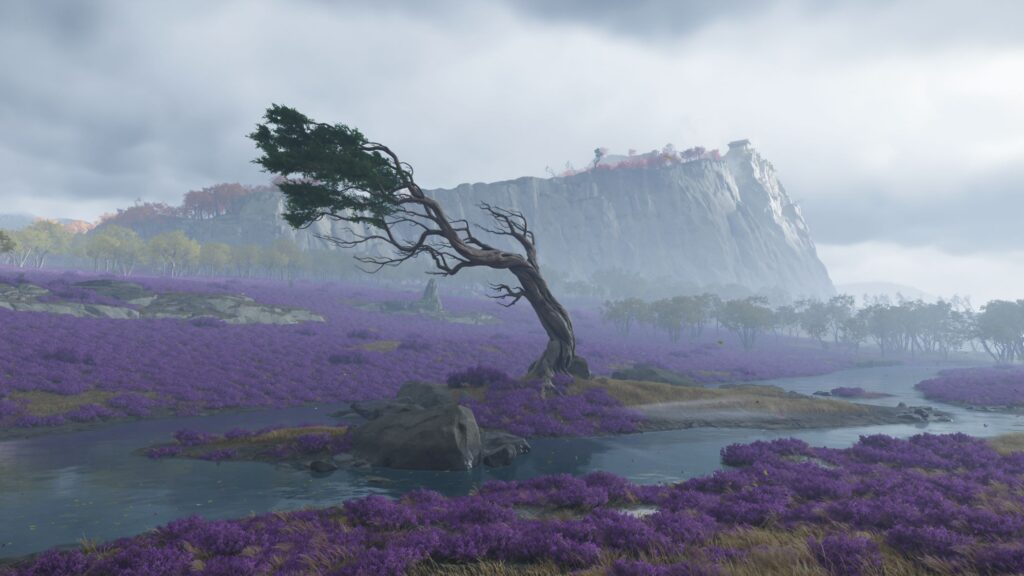
Absolutely no words, however, can do justice to describe the majesty that is Ghost of Yōtei‘s vision of Ezo–which is modern day Hokkaido, Japan.
Ezo is dense, sprawling with activities that are packed close together. Even when the player gets on horseback and gallops across an open field with nothing nearby, there is an unbridled feeling of freedom and spectacle. Ghost of Yōtei doesn’t need to place something in front of the player every few seconds for it to feel exciting. The meager act of existing in this world is reward enough.
Minutes into the game, Atsu rushes towards the looming presence of Mount Yōtei, white flowers stitched amongst the green grass, music swelling, the camera panning. It’s a visually arresting moment in a game flooded with visually arresting moments.
Sucker Punch is so confident in the player eagerly lapping up Ezo that for the game’s initial map, chunks of it are relatively vacant of actual tasks, quests, and points of interest.
The art and environment team working on Ghost of Yōtei must be experts in color theory as the world constantly shifts on the palette it emphasizes. Fields of purple flowers smoothly blend into the crisp blue waters of rivers. The snowy region players later visit is flecked with pink cherry blossoms and red saplings. A sea of golden ginkgo leaves masks a deadly enemy fortress.
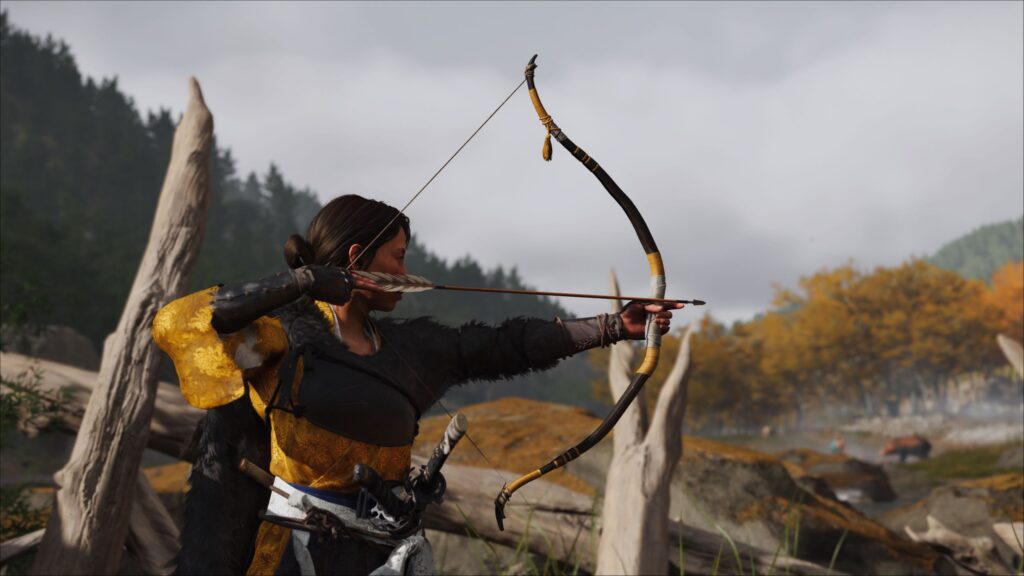
Bluntly, Ghost of Yōtei is one of the best looking games in the medium. As a technical powerhouse, there are certainly better, perhaps even on the PlayStation 5. But no amount of crystal-clear polygons can match the visual language present here. Even in the most candlelit darkness and bloodstained tufts of snow, Ghost of Yōtei begs you to stare in awe.
This is one of the most legible worlds that’s been crafted. And while cliffside handholds might be distinctly carved out to aid the player’s eye, only rarely will it take more than a few moments to recognize the path forward or where something of importance lies. And that is one of the strengths that carries over from Ghost of Tsushima.
Should the player wish, they could actively work to avoid looking at the world map and instead opt to read the cues Sucker Punch incorporated. Atsu comes equipped with a spyglass and it can be used to identify and mark important locations and activities on the map but they will still need to be traveled to. But nearly everything in Ghost of Yōtei has its own visual element to make it identifiable from a distance.
Hot springs and fox dens are usually located by trees with red leaves. Wolf dens are small rock outcroppings with a gnarled tree on them. Enemy encampments and quest-giving NPCs are usually found under plumes of smoke and fire. Sucker Punch wants the player to avoid that natural instinct of completing an objective, opening the map to identify the next closest thing, and making a beeline there. They want us to swing the camera around and look for these identifiers ourselves and head to them. And it absolutely works.
Also returning from Ghost of Tsushima is the guiding wind and the golden bird. With a swipe up on the touchpad, a strong breeze will blow in the direction of the next step in a quest or where the player has marked something on the map. Because there is no mini-map or compass in the game, the guiding wind is meant to guide the player in the right direction, to pay attention to the gusts of wind and where the leaves and branches reach to. Should the player not have anything marked or be near an activity, a golden bird will flutter around Atsu, darting ahead with the intention that following its path will lead to something new.
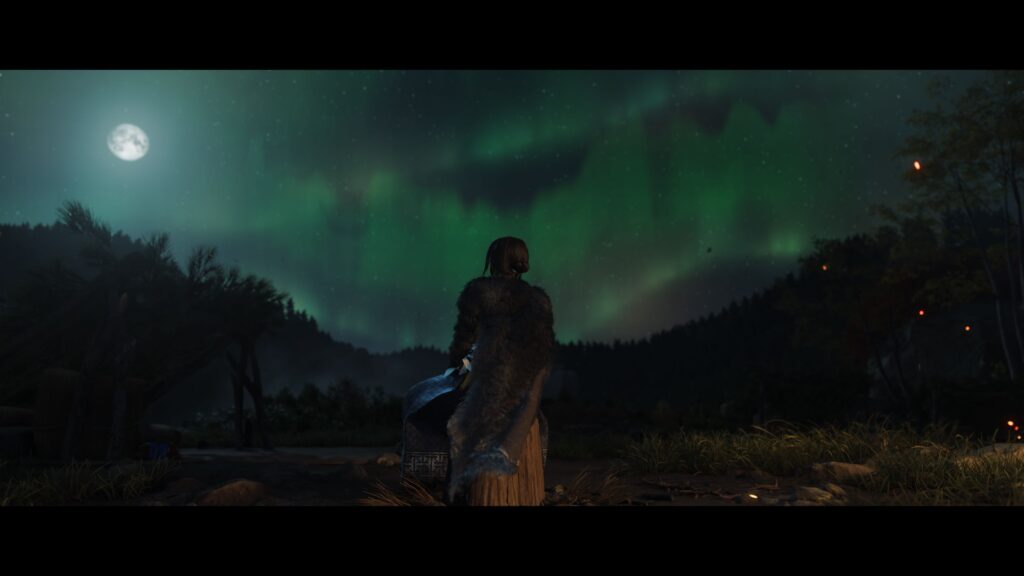
It’s these tricks that immerse the player in the world of Ghost of Yōtei and its natural splendor. Clever decisions like boosting the speed of the horse’s gallop when moving along trails of white flowers invite the player to spend time in the game, not in a menu, not constantly relying on fast travel.
Enhancing the stylized naturalism of Ghost of Yōtei is the game’s dark horse: the camera. It took me a couple hours of playing before I started to unpack the significance the camera work, framing, and cinematography plays in bringing the world to life and making Ghost of Yōtei a more cinematic experience, like the Japanese films Sucker Punch is obviously inspired by.
When Atsu climbed atop her horse and began to gallop towards whatever destination I was aiming her towards, I noticed the the camera began to pan out further away from her. The speed it did so was relatively subtle, waiting until she had gained momentum before fully becoming fixed. In combat, especially duels, the camera closes in on the action, making the player the third participant in the intense clash between Atsu and whatever foe she is taking on. Whether up close or from a distance, the camera is an intimate partner in Ghost of Yōtei, always present and working to provide the player with the most optimized angle.
But Sucker Punch also frequently takes control of the camera and Atsu’s movement to grant additional immersion to the player. I think of the Wolf Hunts where Atsu teams up with her wolf companion to take down bandits who are caging and killing the wolves of Ezo. The activity starts with Atsu automatically climbing her horse and racing behind the wolf as he catches the scent of the bandits. Miraculously, the camera does not need to be adjusted during this chase as it locks in the direction of the wolf. The player merely needs to push forward on the control stick to follow, behind mindful of jumping over fallen trees and avoiding potential traps.
Linear games often have scenes and levels framed in specific ways, especially during pivotal points of action. As an open-world game, Sucker Punch has less liberty to control where the player is going and how they manipulate the camera. But somehow, they managed to create essential pathing that allows them to toy with the camera as players move around the world. Additionally, there’s a confidence in the direction to the point where the player almost doesn’t think about having to adjust the camera during navigation and combat. It’s an impressive feat that will hopefully get its deserved accolades in the years to come.
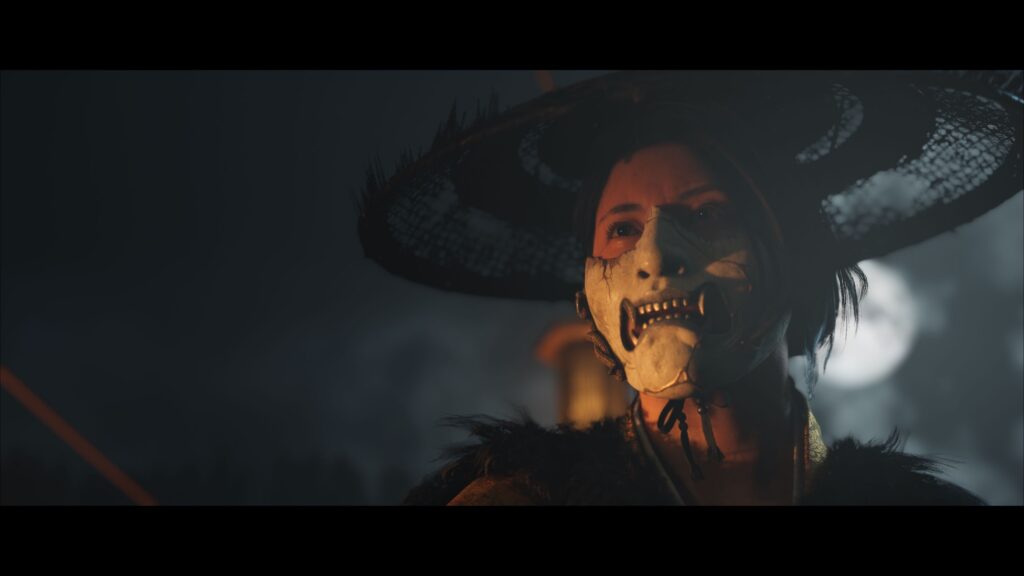
While Ghost of Yōtei shares DNA with numerous elements of Ghost of Tsushima, it is merely a spiritual successor rather than a direct sequel. This is designed to be a standalone title, enjoyable without having ever experienced Jin Sakai’s memorable journey.
Where Ghost of Tsushima focused on Jin’s struggle with being beholden to the samurai’s code of honor in the face of the Mongol forces, Ghost of Yōtei is concerned with Atsu’s quest for vengeance at any cost.
I appreciated the way Sucker Punch wrote Ghost of Tsushima as not only a commentary on an outmoded, stringent way of seeing the world but on the weight of expectations, both to home and family. Ghost of Yōtei has echoes of that struggle as Atsu must come to terms with the bloody cost her path will leave in its wake.
The events of Ghost of Yōtei kick off as Atsu’s family is massacred by Lord Saitō and his band known as the Yōtei Six. Pinned to the burning ginkgo tree at her family’s homestead and left to die, Atsu returns to Ezo after 16 years to kill Saitō and the other five members. In the years since the murder of her mother, father, and brother, Atsu has become a mercenary of sorts, hardened by the numerous battles that helped hone her skill and fill her purse.
Quickly into the narrative, Atsu is regarded as the onryō, a vengeful ghost of Japanese folklore that is freeing Ezo from the clutches of the Yōtei Six. Unlike Jin, Atsu has no samurai code to abide by. Her internal conflict is mired by the pain of losing everything she ever loved, having resigned her life to killing her targets and then ending her own.
In a similar vein to The Last of Us Part II, Sucker Punch works to address the weighty cost of revenge and how it can not only eat away at the soul but harm others in its wake. While Atsu’s tale does not reach the profound depths as Naughty Dog, Ghost of Yōtei isn’t really the game for that.
Clearly pulling numerous threads from Japanese film and culture, Ghost of Yōtei follows many hallmarks. Betrayal, forgiveness, wizened mastered, and towns under siege are the bread and butter of this genre.
When the player opts to pursue the “Golden Path”, they are treated to an incredible host of tailored missions designed to expand on the game’s mechanics, the understanding of its characters, and the appreciation for the world. Atsu will meet a growing cast of allies meant to provide her with aid and emotional support in her journey.
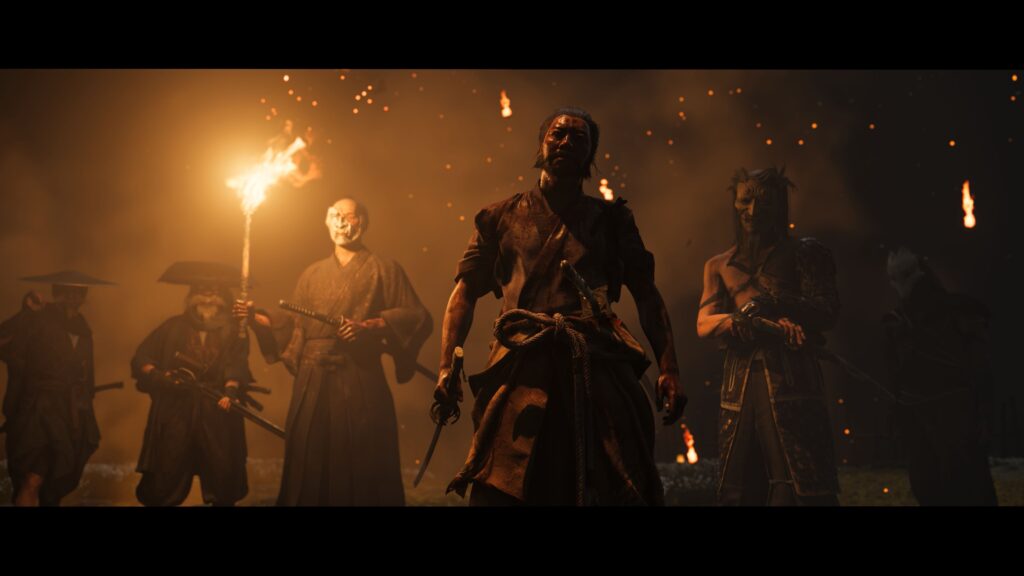
But if I’m being honest, I think the primary quest to kill the Yōtei Six–while an important foundation to the game–often doesn’t feel like it takes precedence, at least for me.
Because Sucker Punch designed Ghost of Yōtei to be a sprawling, open-ended adventure, the player is not required to pursue any singular thread at any specific time. In fact, that nagging complaint some may have about “end of the world but I’m going to do a bunch side content syndrome” doesn’t really apply here. Even the quests that feel “superfluous” have strands linking them to the terror Lord Saitō is inflicting on the people of Ezo.
For context, I think I was about at the 30-hour mark when I finally defeated my second member of the Yōtei Six. Ghost of Yōtei puts no pressure on the player to accomplish any one goal. Things to do and reasons to explore are peppered throughout the world, ripe for the taking. But outside of the main narrative, none of the content actually feels required.
Yet I still felt compelled to do every single task in the game because I was having an astoundingly good time with everything I experienced. But it was also fascinating to watch the way the world reacted to Atsu’s actions and progression.
For example, take the three optional weapons that players can earn over the game: the ōdachi, yari, and kusarigama. While I cannot confirm this, my assumption is that players could avoid acquiring these weapons and mainline killing the Yōtei Six. But acquiring each of these weapons leads to extensive, multi-quest storylines about the masters that teach you these weapons. Not only do they lead to mechanical and cosmetic rewards, they explore the history of Ezo and peel back Japanese culture. Enemies and NPCs may comment on something Atsu had previously done or remark at a specific tool she uses, just to add that bit of flavor.
A corner of the map is dedicated to acquiring one piece of armor, replete with its own history and storyline. Doing this mission takes players through a bizarre ghost story, working to twist the formula of Ghost of Yōtei and what’s been experienced thus far. New tools are rewarded with narrative purpose. And even short, five-minute missions seem to have their basis in a story or way of life that was likely typical to 17th century Japan.
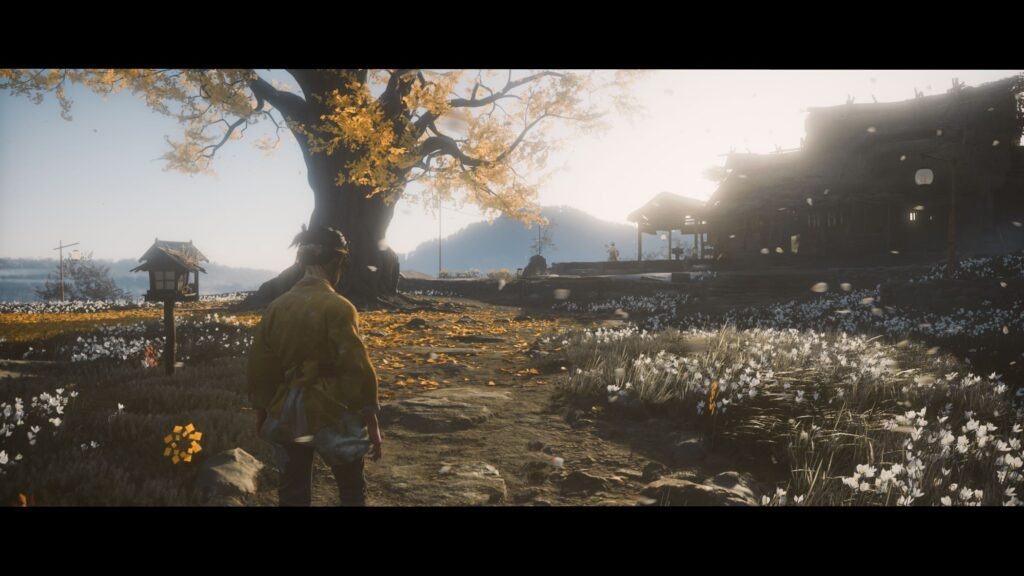
It’s in these stories that I found myself continuously latching on to Ghost of Yōtei‘s writing and narrative. It may seem counterintuitive to not require anything. But offering tantalizing morsels to reward player curiosity makes you naturally want to explore, to hunt down clues. Players can go around collecting bounties, seeking out spots on the map where targets are rumored to be. Some are humorous, a few are strange, many lead to intense fights or new discoveries on the map. Progression is natural because the world and the story are always leading players to yet another thing to do, another way to expand their toolset and knowledge of the world.
If I had to guess, about 20 to 25 hours of my time with Ghost of Yōtei was spent with the Golden Path quests, which take players across Ezo’s five unique regions. A few aspects of it felt under-baked, absolutely. Early on, the game shows that players can instantly travel back to Atsu’s childhood in certain instances. While this is yet another clever way of showing off Ghost of Yōtei‘s seamless and virtually nonexistent loading times, it’s only used a handful of times over the course of the game.
But I have to stand by the undeniable allure of the world and its multiple side stories that such a massive portion of my playtime was dedicated to not only doing everything, but getting lost in the “extraneous” content.
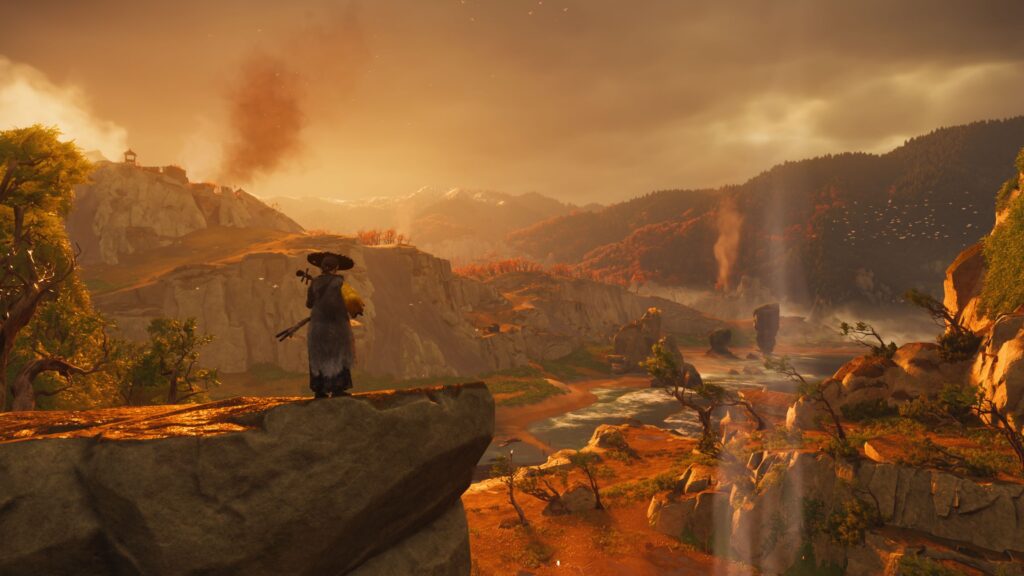
My love for Ghost of Yōtei continues with its phenomenal score and sense of style. At numerous times in the game, a musical interlude will play, tugging at the heartstrings and framing a key point in the story. But whether during a cutscene, a fight, or simple exploration Toma Otowa’s score enriches the cultural immersion while taking obvious influence from samurai cinema and spaghetti Westerns. For my playthrough, I opted for Japanese voice acting and was captivated by all performances and the incredible lip syncing the character models did. I played a few opening hours of the game with English audio (and would flip to it a few times during my main playthrough) and loved Erika Ishii’s work as Atsu. And yes, I’ll totally switch over when I come back to the game again.
While I touched on the mechanics of the open world and many of the activities players can do, it should come as little surprise that Ghost of Tsushima‘s fundamentals also carry over to combat.
For context, I played Ghost of Yōtei on Hard and truly felt that extreme difficult across my time in the game. Atsu’s path of vengeance is every bit as relentless as Jin’s was against the Mongols.
Rather than dealing with shifting katana stances, Atsu uses five primary weapons, all meant to be better suited against specific enemy combatants. Players start with a single katana and the story quickly leads them to acquiring dual katanas. But combat fundamentals in Ghost of Yōtei rely on light attacks, heavy attacks, focus attacks, blocking, parrying, and dodging.
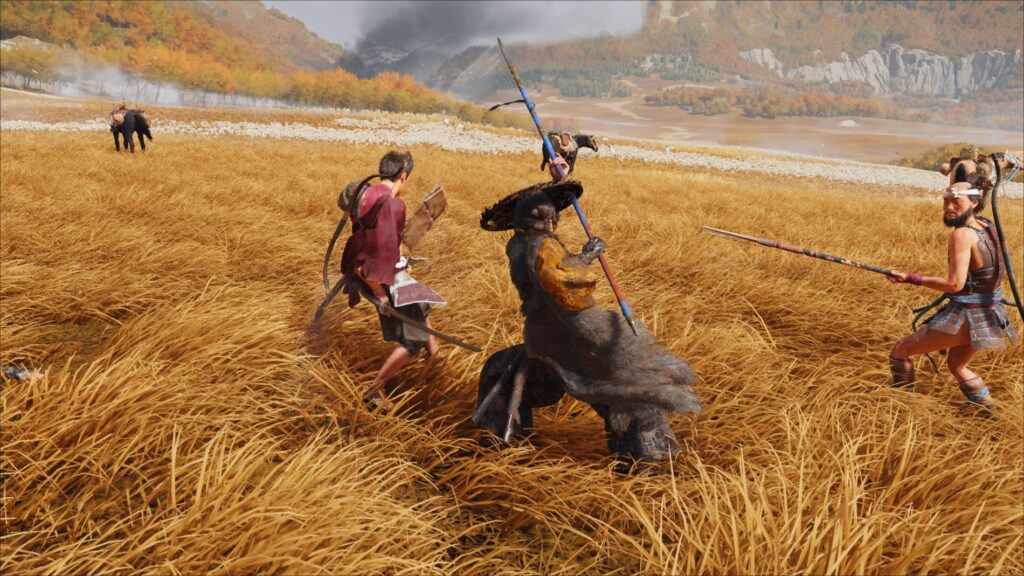
Light attacks are fast and deal less damage. Heavy attacks work to deal more damage but also chip away at an enemy’s stagger bar. Once an enemy is staggered, they are briefly stunned, opening them up for attacks. Enemies can attack Atsu with simple attacks that can be blocked by holding L1. Attacks with a blue glint must be timed with block, parrying them. Red glint attacks can’t be blocked or parried and must be dodged. Parrying a blue glint attack right before it hits, triggers a perfect parry, briefly slowing time and allowing follow-up attacks. Dodging a blue or red glint attack at the last second enables a perfect dodge, granting a brief window of slowed time as well. New are yellow glint attacks, which signifies an attack that will cause Atsu’s weapon to fly out of her hands. Players must counter this with a heavy attack to disarm the attacking enemy.
In Ghost of Yōtei, enemies carry spears, sickles, katanas, guns, bows and arrows, and a few other weapons. While combat situations can be hectic, juggling weapons to best stagger enemies is key. Katanas should be met with katanas, dual katanas easily stagger spear users, the kurisagama decimates enemy shields, and the ōdachi is perfect for brutes.
The system is not complex and if it were, it would make combat too busy and unwieldy. Over the course of the game, thrown objects are introduced to add new tools to take on bigger groups, escape hairy situations, or merely dispel annoying grunts you don’t want to deal with.
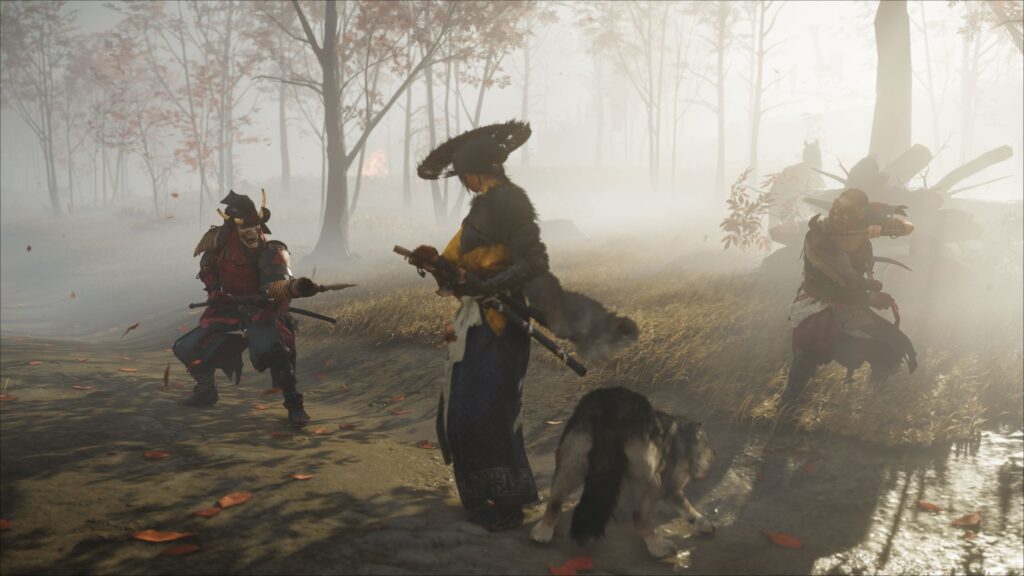
Stealth in Ghost of Yōtei is dependent upon how clever and sneaky the player is. But I must admit, the game allows for multiple builds based on what armor and charms are equipped. A favorite of mine was a bow build that allowed me to target up to three enemies with the heavy bow. I could then use the light bow to freely target the nearest enemy and time my shots to do extra damage. A stealth build I had allowed me to use the kurisagama to assassinate from a distance, while adding kunai assassinations.
Using materials and money found throughout the game players will upgrade the capabilities of all armor, weapons, and items. Some charms can be upgraded by completing certain actions and other skills will add new abilities for Atsu and her weaponry. Instead of leveling up, players earn skills by praying at shrines found throughout the world, thereby encouraging exploration to increase Atsu’s power.
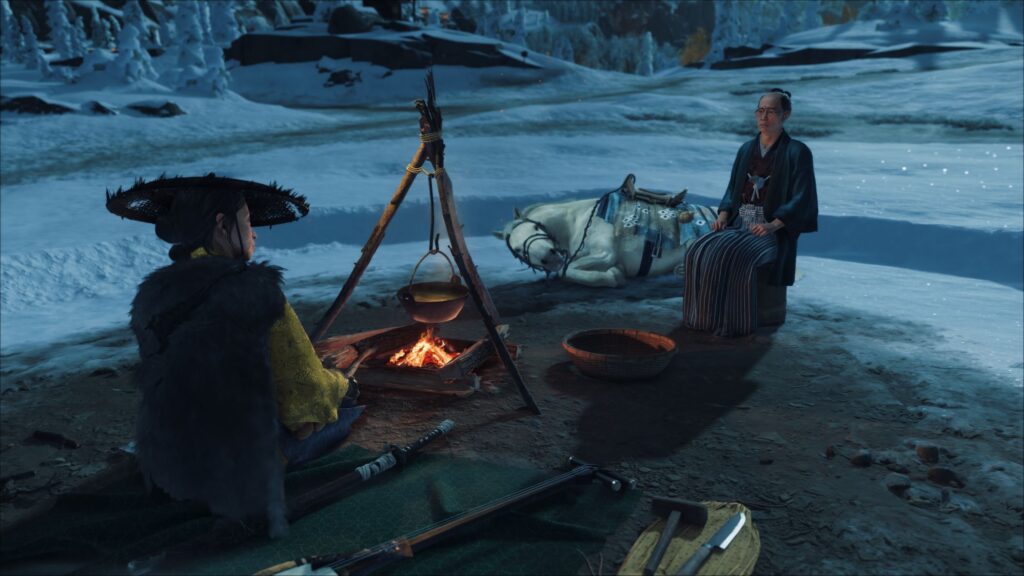
By the time I ended up in the game’s final region, I felt excessively powerful. I was stringing together combos, blocking attacks, throwing weapons that I had disarmed from enemies, calling upon my wolf companion to help me in standoffs. Ghost of Yōtei provides that incredibly satisfying rush, coupled with the knowledge that you have scoured Ezo for all its secrets.
By the end of my time, only one challenged remained in the game: the hardest one-on-one duel at the end of a string of multiple duels across the region. While I attempted it about 50 times, I couldn’t fell this master. But it proves that the sadists at Sucker Punch have made memorable boss fights with some of the most elaborate attack patterns and complex animations I can think of. Not to mention that many of these fights are general spectacles of their own right, taking place is breathtaking scenery, such as atop Mount Yōtei.
it is important to note that playing pre-release, Ghost of Yōtei had been patched a couple times but had not received a Day One patch that comes out with the launch of the game. For a game of its scope, Ghost of Yōtei only had a few bugs, many of which never broke the game or caused it to crash. A few times after death, enemies’ voices would become squeaky for a few seconds and there were a few audio glitches that caused sounds to be muffled. Once, Atsu spun around rapidly in circles and often subtitles would take too long to appear. A particularly annoying bug caused one instance of a mini-game in which players flick coins against another on a table to not render the coins–but I still managed to beat it! Additionally, the hardest two difficulties will have balance patches, meaning that my potential playthrough could either be easier or harder, based on what’s adjusted. I will say that some of those perfect parry windows felt excruciatingly tight, even with the help of armor and charms.
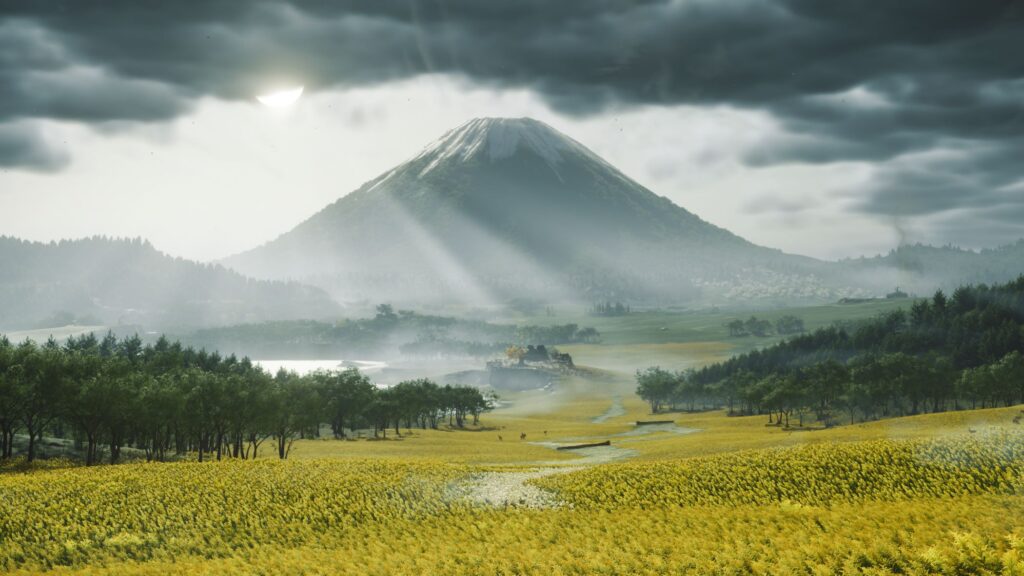
There is a sense of abandon when falling into the shadow of Mount Yōtei. Sucker Punch’s work to refine what was introduced with Ghost of Tsushima pays off with a enhanced sense of freedom, stemming from an abundance of tools to tackle any situation and an expansive world coated with style. Atsu carries the mantle well and while her quest for revenge makes her a deeper protagonist, it pales in comparison to the tales Ezo has about its people and culture.
Ghost of Yōtei is a phenomenal achievement in open-world design, being every bit the spectacle that players should expect from Sucker Punch’s prior efforts. Though it shares the fundamentals of Ghost of Tsushima‘s combat and navigational loops, Atsu’s open-ended journey allows players a gorgeous, profound sense of freedom. This is a world where players are invited to soak up every detail and bask in the natural, vibrant beauty of Japan, becoming lost in each new story.


