

Square Enix has pushed the console to its limit With Final Fantasy VII: REBIRTH on the Switch 2. It’s most evident when exploring some environments, but none of these issues impact the stellar gameplay that has kept players engaged all this time.
At the start of the year, I was taken aback by how well FINAL FANTASY VII REMAKE INTERGRADE ran on Nintendo’s newest hardware, the Switch 2. They did some black magic trickery to keep the game running buttery smooth at 30fps with the smallest of dips and jumps that are more evident, making it a must-have for a Switch 2 owner who had not yet played FFVII or its remade content. I knew that REBIRTH was eventually making its way to the Switch 2, but I was unsure of how it would run on the console. Square Enix would have their hands full with REBIRTH, as it looked gorgeous on PC.
It turns out that Square Enix cut very few corners were REBIRTH on the Switch. This is surprising because REBIRTH is a massive and gorgeous game. The two biggest offenders of the Switch port are the pop-in (in which objects like grass/rocks in the foreground appear haphazardly) and the lack of prop details. I’ve seen some folks mock the demo ala “Do you want frames or food?”, but I’ll say this much – even with the slight drawbacks REBIRTH plays exceptionally well.
Up until I originally reviewed it on the PC, I’ve been blissfully unaware of Final Fantasy VII’s significance in the personal sense. I was not an original PlayStation owner. I understand its significance in the broader sense thanks to my watching Let’s Plays and such, but in no way do I have the same familiarity with Cloud Strife and Sephiroth as many other players. To that end, I don’t own a pair of rose-colored glasses when approaching the remade Final Fantasy VII trilogy.
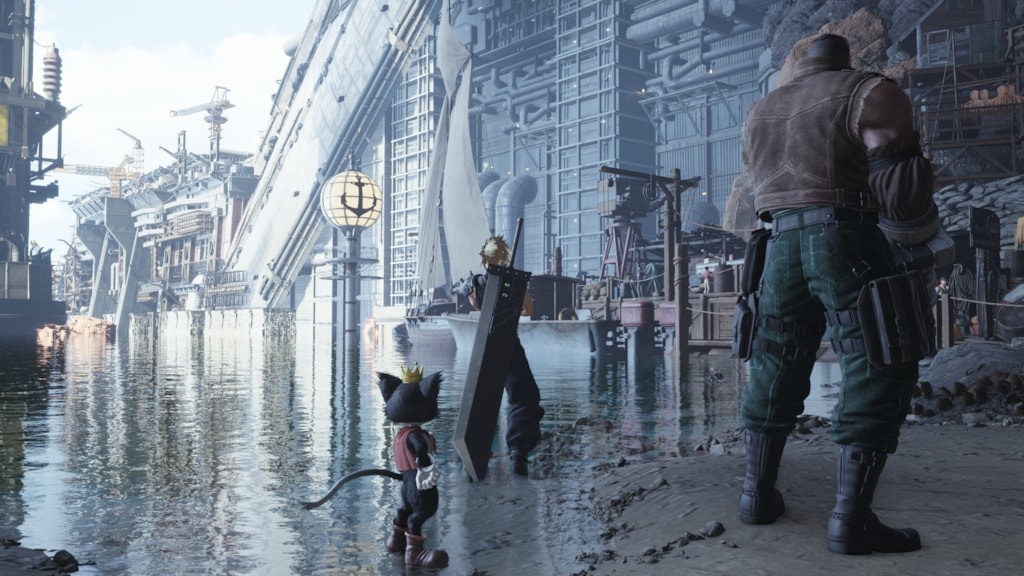 Knowing all of this, Final Fantasy VII REBIRTH is an impressive piece of work. Despite being the second entry of a nearly thirty-year-old game that originally spanned three discs, Square Enix succeeded in pulling on my heartstrings. It’s no wonder why fellow Chumps writer Ben Sheene considers it a “new miracle of execution, one that will be talked about until those missing pieces finally fall into place.”
From an outsider’s perspective, I’ve struggled with trying to understand the decision behind remaking Final Fantasy VII into three separate games. What if someone, like me, has little familiarity with FFVII writ large and is compelled to play another example of Square’s gorgeous RPGs full of emotional cutscenes, seemingly endless sidequests, and deep customization? What if they opt into jumping into 2024’s REBIRTH without playing 2020’s Remake?
After nearly many hours of REBIRTH across two playthroughs (PC and NS2), I was able to see parallels between the FFVII trilogy and the Horizon trilogy. While there’s an overarching narrative spread out over multiple games, each individual title can stand on its own feet and offer players satisfaction. Each title catches players up with the story so far and setting them on the journey without burdening them with required reading or mandatory cutscenes to figure out the who’s who and what’s what. If new PS5 owners could play Horizon: Forbidden West and love it without ever playing Horizon: Zero Dawn, then you can start REBIRTH without needing to play Remake or even the original Final Fantasy VII.
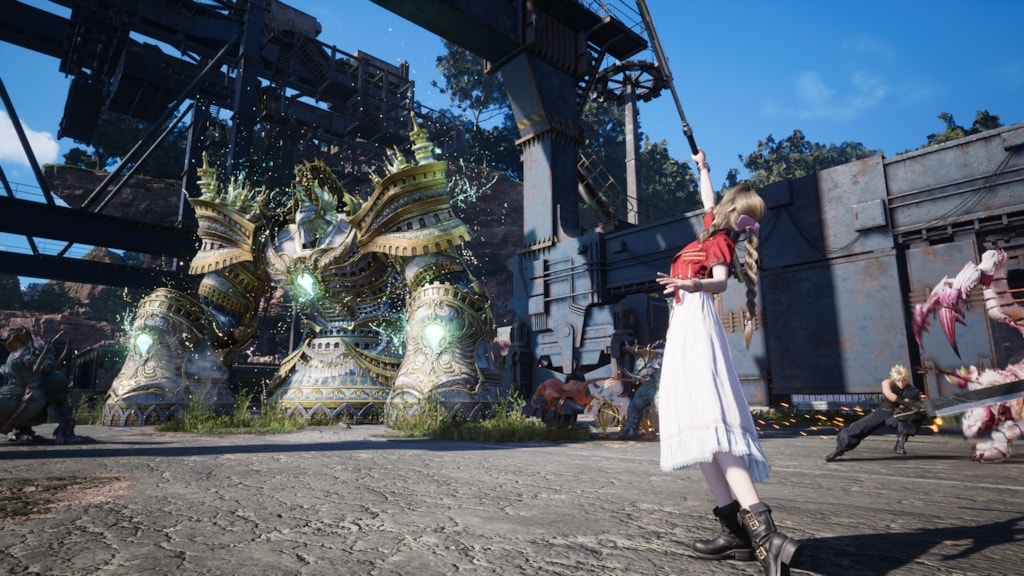 REBIRTH caught me up with the story so far very quickly, giving me the rundown of the events of Final Fantasy VII: Remake. The pinnacle moment of Sephiroth’s heel turn in setting Nibelheim ablaze after learning of his true origins is replayed in the first two hours of REBIRTH, but from Cloud Strife’s eyes. In retelling how Sephiroth destroyed everything and killed everyone, Cloud and the player are set on a revenge odyssey spanning gorgeous open worlds that only Square could design and refine with modern tools.
Those first few hours in Nibelheim and Kalm introduced me to just enough of REBIRTH’s combat depth while keeping me glued to major plot points that ultimately mattered further in the story. After escaping Kalm and emerging into the grasslands, the first open-world vista, a familiar gameplay loop emerged. REBIRTH’s open world was massive, but it contained a little of everything rather than pockets of meaning dispersed throughout an empty plane of existence.
REBIRTH is compelling in it how it offered me so much to do and explore all the while I could slay monsters. I lost two solid evenings mucking about just so that I could clear things off my map. Sure, I was slaying enemies in a good chunk of these activities, but I was pushed toward seeing what else I could find and complete on its massive map. In behaving like an open-world game, REBIRTH masks the typical RPG grindiness that artificially inflates playtime.
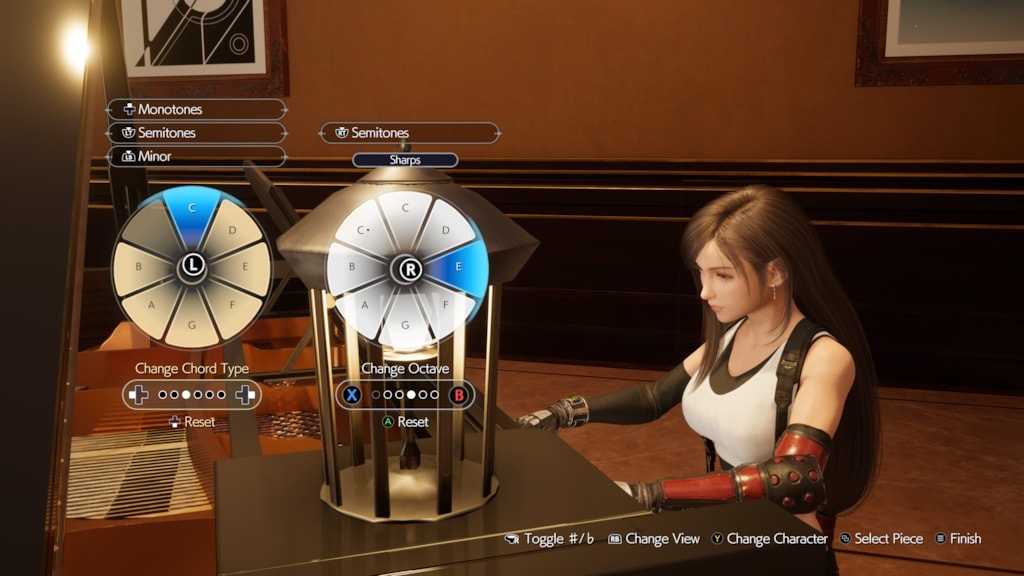 It was at the eight-hour mark where I figured out that REBIRTH, despite being the second remade FFVII title, shared much in common with Final Fantasy XVI’s gameplay loop. While Clive’s story is more action-oriented in a darker medieval setting, REBIRTH overlaps in the form of fluidly transitioning from action-combat reminiscent of Devil May Cry to the traditional party management RPG players expect on the strategic combat side of things.
As much as REBIRTH is an action-RPG, I spent a near-equal amount of time exploring, completing side-questy-fetch-quests, crafting materials, and marveling at the multitude of points of interest that were constantly added to my map when I interacted with Remnawave towers and assisting Chadley (an Android-NPC fascinated by knowledge). In roaming the lands, I was continuously on the hunt to restore each and every Chocobo Stop just so I could give the baby Chocobo a squishy pat on its head.
As I mentioned earlier in this review, REBIRTH’s combat is heavily action focused and had me controlling a single character. I had the option of issuing commands to my other two party members, occasionally utilizing them in “Synergy Attacks,” which helped me out when I had my hands full with larger groups of enemies. If my preferred character was pinned-down or incapacitated, a quick button press let me control a teammate. The swapping of characters felt natural while also deepening the combat beyond solely relying on Cloud to do the heavy lifting against mobs of Orcs, gigantic snakes, and other baddies.
The Materia system is REBIRTH’s method of character-building and combat customization. In the equipment menu, I could select Materia and slot them into my characters’ weapons and armor. In doing so, I could cast additional spells in combat beyond the character-specific abilities. For instance, equipping Cloud with the Cure Materia made it so that I could cast Cure in battle; after using it enough times, I could cast Cura. The Materia system made spell selection and character-building flexible, but I couldn’t help but miss having class-specific and/or permanently unlocked spells. Then again, seeing as my party was constantly in flux throughout the story, the Materia system granted me flexibility to ensure that I had all of my bases covered.
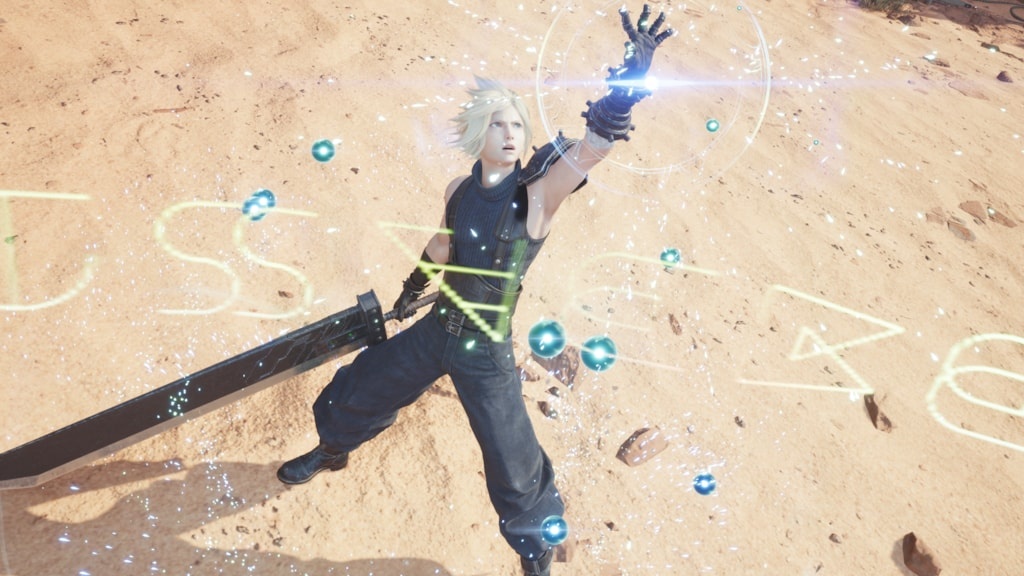 Coming from Final Fantasy XVI and its Eikonic-ability-infused frenetic combat, I appreciated the action of REBIRTH. Even though spamming melee attacks overshadowed the few abilities and spells I could cast (as I had to build charges from melee attacking) in REBIRTH, I missed the fluid combo chains and satisfying blocking/dodging/parrying of FFXVI. Yes, dodging and blocking exist in REBIRTH, but they feel clunkier and less satisfying. Beyond that, though, REBIRTH’s action-packed combat keeps the game fresh and less of a grind.
Before I end this review, I want to recognize and reiterate that I may have hampered my appreciation of REBIRTH by not playing the original FFVII (be it on PlayStation or otherwise). I’ve seen endless Redditors and fans of FFVII attempt to convince other players that they should drop everything and play the original first before stepping foot into the remade trilogy. I will not say that you should or should not follow those fans’ advice. Instead, I’ll leave you with this: The fact remains that 2024 alone featured some exceptional RPGs, ranging from Dragon’s Dogma II to Unicorn Overlord to Like a Dragon: Infinite Wealth to Metaphor: ReFantazio to Persona 3: Reload. All of these games require anywhere from 20 to over 100 hours to complete. Knowing that the original FFVII can take another 40 hours or so just for the main story, it would be foolish to expect the average player to want to invest that much time in older games.
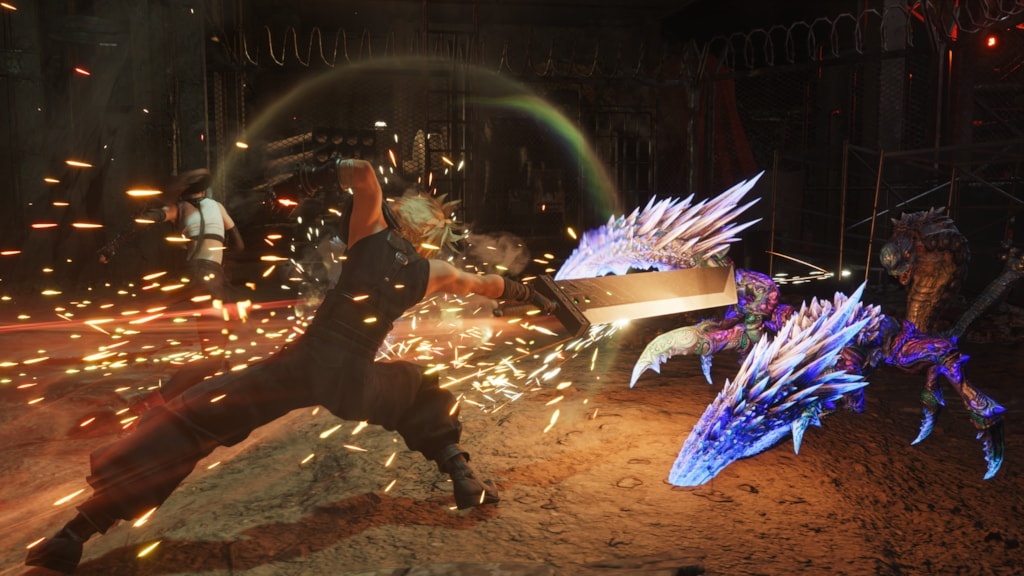 I say all of this because you can jump into Final Fantasy VII: REBIRTH with fresh eyes, having never before played Final Fantasy VII or any of the Final Fantasy games, and enjoy it like none other. I say all of this because Final Fantasy VII: REBIRTH has earned the titanic quantity of praise and accolades from gaming outlets and players alike. I say all of this because Final Fantasy VII: REBIRTH is an outstanding example of a modern RPG and tantamount for any PC players with limited experience in Square Enix’s portfolio.
Square Enix has pushed the console to its limit With Final Fantasy VII: REBIRTH on the Switch 2. It’s most evident when exploring some environments, but none of these issues impact the stellar gameplay that has kept players engaged all this time.