


Over the years, I have seen many anime and manga translated into interactive game experiences. Respectfully, many have fallen short of capturing the excitement and drama that typically accompany anime and manga. Most of the time, companies developing the games are counting on nostalgia, familiarity, and connection to draw fans of the series to them without giving much interactivity in return. If I were on the business side of the gaming tracks, I could understand doing that because delivering a name is valuable even if the gaming is shortchanged. Gotta pay off that license so that you can make money, ya know?
Now, this might seem like an ominous beginning to a review of a game that comes from the anime/manga world, but avoid jumping to conclusions just yet. Edens Zero, from developer/publisher Konami, brings a good amount of drama from the source material while attempting to show good design and effort baked into the finished product. There were times when I enjoyed this game, and other times when I wondered if some parts could have been better built. And those better-built parts would have worked wonders for this title. Overall, the experience was more positive than negative, which separates this game from others of its type.
So, sit back, get ready to gulp some drama, take care of your robot friends, and let’s talk shop with Edens Zero.
Background
The story of Edens Zero revolves around a boy named Shiki, who was raised by robots on an abandoned amusement park planet. While there, he learned how to take care of robots and keep them functional, while also being taught how to control gravity, a power that makes him especially dangerous. One day, a content creator named Rebecca, along with her robot cat Happy, found themselves on Shiki’s world. The robots forcefully push Shiki to depart with Rebecca against his wishes, which helps to begin the pair’s universal adventure that takes them to strange places with strange, and sometimes dangerous, people for them to meet.
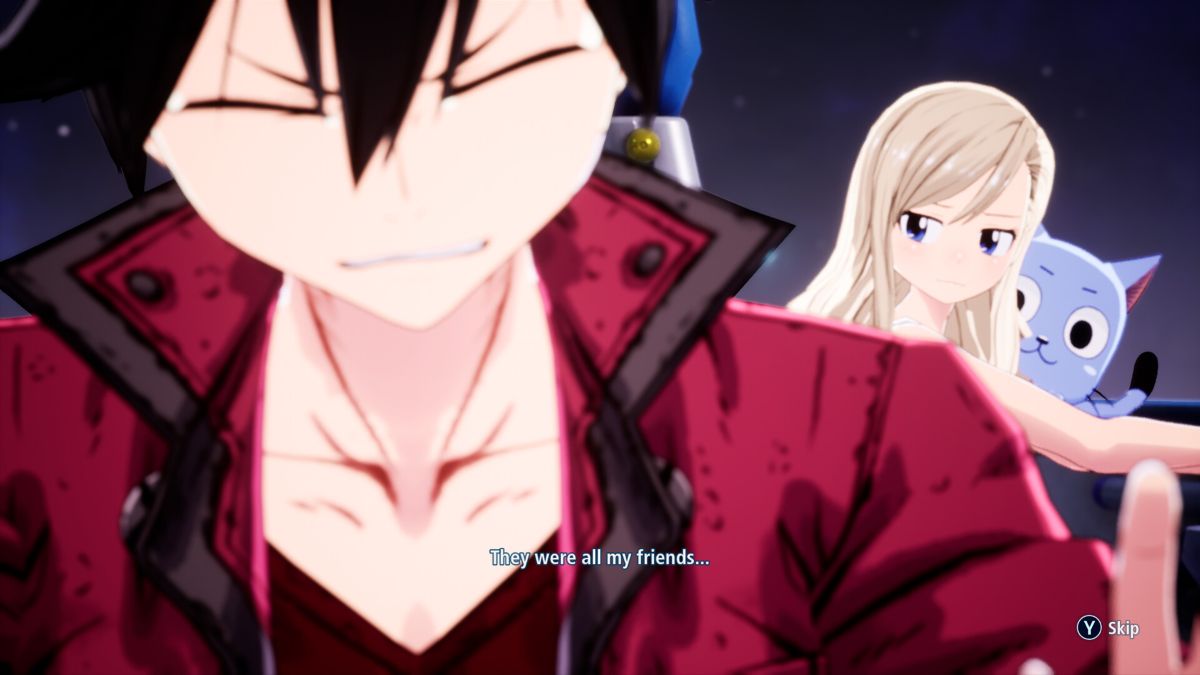
It’s a blueprint primer story structure that any good anime/manga serial writer would put together. The story of Shiki is perfectly replicated in this video game, and even from the beginning, if you know nothing about where it came from, you get emotionally connected with the characters almost immediately. For example, when Shiki is obsessing over helping his robot friends stay together and alive on his theme park home, seeing his struggle to keep his ‘friends’ from falling apart is heartbreaking, but it establishes his desperation to avoid losing his friends and being left alone. By the time he finally leaves his home with Rebecca, you can see and feel the heartbroken separation he is having with knowing that his friends may not make it because he isn’t there. I’m talking about a matter of 15-20 minutes at the beginning of the game, which makes Edens Zero the perfect example of respect to the source material that I haven’t seen in ages, with video games of this type.
That instant connection made from simple character development and proper treatment of the source material that is translated well into an interactive experience bodes well for this title, even as it continues and lays down the tracks for the rest of the story. It’s tough for some developers to understand the importance of bringing the entire ambiance of the original story while maintaining that connection and making sure not to damage it during video game translation. With Edens Zero, it does a great job of carrying its original content over to a new medium.
Translated Gameplay
Once the story comes over, the interactivity must be embedded within the experience, and I think this is a hit/miss with Edens Zero. While there is no doubt that the game contains some strong RPG structure, I think the implementation of it is a wee bit clunky. On the surface, the game does an admirable job of replicating what a good action RPG is built like, even taking some good pointers from a game like Final Fantasy XVI, where keeping it simple is the best method of execution. The hiccups in the game’s giddy up come from a severe lack of enemies, so-so gameplay execution with the fighting, and a lack of choice with gameplay paths.
The good
Edens Zero does a great job of making it easy to get the player into the gameplay and the story. The controls aren’t at all complicated, nor is the backend understanding of how the game works an enigma. Action RPG titles generally do a solid job of making sure you understand the macro system of fighting, such as holding R2 down means you launch X attack, while holding triangle means you launch Y attack. In this respect, Edens Zero does a great job using that structure to get you right into the scrum. You have certain power buttons you can use during fights that are recharged over time after use, while at the same time having at your disposal common fighting methods of punching your way through enemies. All of these are easy to grasp and execute, which makes the action immediately accessible and fun. This is a good structure for an action RPG. A little bit of complication mixed with basic execution.
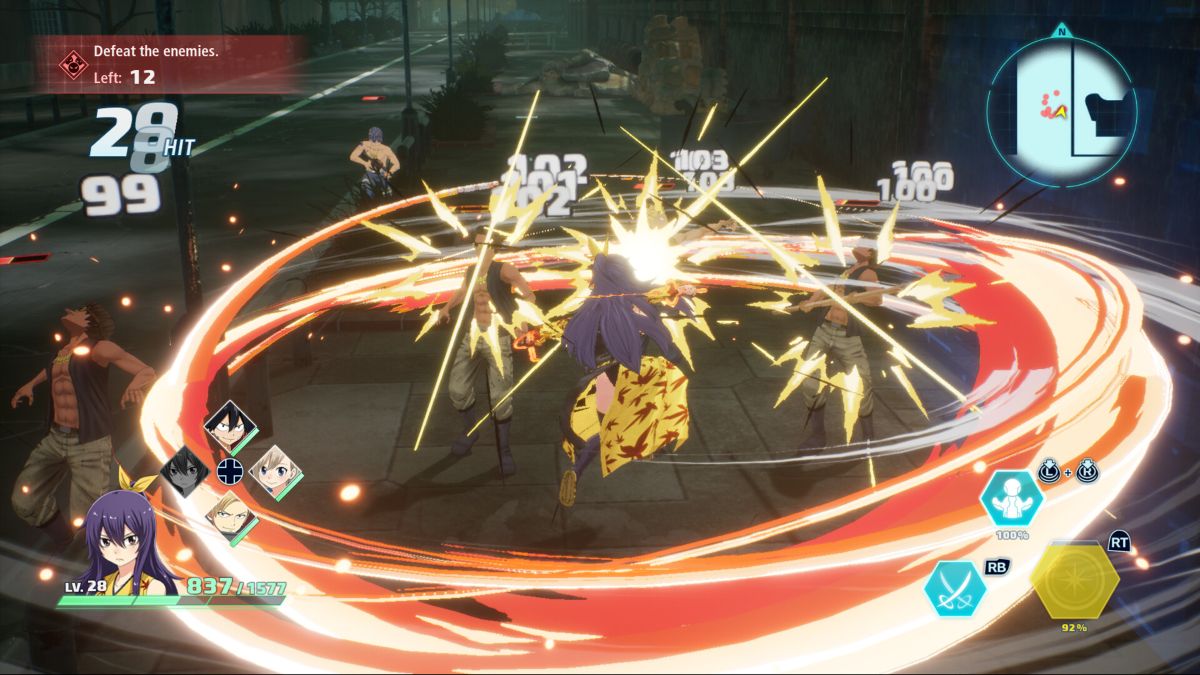
As you punch and power punch your way through enemies, you level up quickly, which makes you more dangerous to your foes. In addition, you also collect currency from fallen foes that allows you to purchase more powerful equipment, including offense and defense items, which also makes the gradual progression balanced and easy to follow. That feeling of progression creates the right amount of motivation to keep playing that game, even when it falters a bit. While that may not seem like a big deal in the scheme of things, it’s a huge deal because progression that motivates you in a game keeps you engaged. Engagement keeps players thinking about the game in a positive manner, which makes them want to return to it regularly.
In addition to these positives, the game also allows you to gather teammates and choose which ones you want to control. That perceived choice also makes you want to keep playing, as you get a good variety of solid characters that bring different types of fighting to the table. The more variety of characters, the more variety of gameplay. Having many choices helps to keep the game, at the very least, interesting.
The above are the three best reasons to play the game outside of its story. Getting into the gameplay is simple, and having a good push to keep going is ever-present. Having more personalities that bring more powers and fun to the table in different ways also helps to keep the gameplay fresh. Combined, the gameplay is fun because of this trio.
The hiccups
When you get into the game, and beyond the origin of Shiki and Rebecca’s fateful meeting, your adventure truly starts when you go to your first big city (the one that Rebecca is from). Before continuing with the story, the game offers two big choices of gameplay styles – story or open world.
If you choose the story, you’re going to be treated to a well-thought-through adventure that does the source material justice. You will have fights, but they will be filled with stop-and-go moments. You will get more dialogue than you may have wanted, which brings down the flow of the game, as well as its interactivity, but you’ll also be entertained by what unfolds. The sacrifice you make with this choice is consistent, flowing gameplay. It will certainly disrupt the action and adventure portion of the game. But! The game warned you of this by giving you the choice of story or open world. By choosing story, you’re choosing an honest-to-God story.
If you go the open world route, you have the freedom to go around and do what you want, including grinding. You will also find out quickly that the game goes from zero to 800 with enemy strength, which impedes your ability to truly go exploring or to fight anyone you want, which disrupts a grinding format to level up your characters. While you might think I might be implying that you travel far and wide to find overpowered enemies that can beat you like a rented mule, that assumption would be wrong. As soon as you’re outside the city, the first batch of enemies hanging out across the city’s bridge are ready to wallop you. You can try a touch-and-go method with them, but it’s time-consuming and nearly impossible to win battles. In a way, that strips this option away from you, as grinding through enemies from the beginning will be tough.
All this means is that you only have one choice to go with when the game gives you the option of story or open world. You must go with the story, which will put you in the loop of touch-and-go gameplay. You can revisit the latter in between story pieces, as you can break away from it, but jumping ship from the story isn’t truly an option from the get-go. There isn’t a good way to survive.
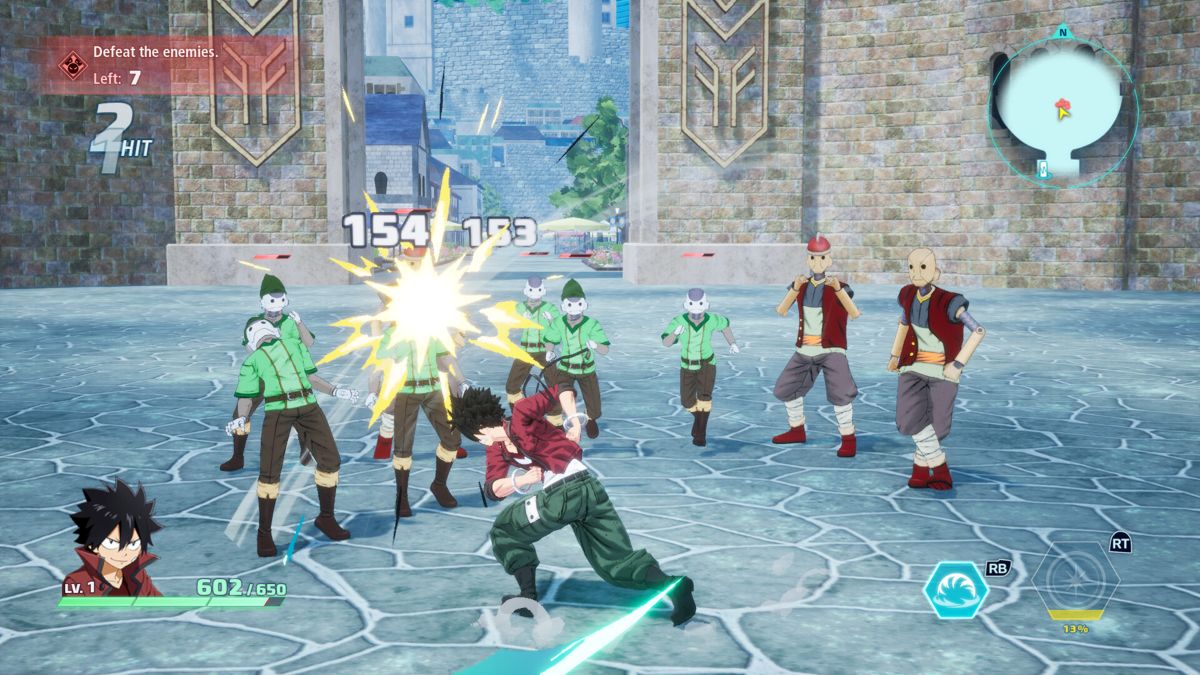
Now, staying with survival, the other hiccup of this game is how enemies are presented. While I don’t mind the repetitiveness of common enemies, I do mind the space between fights, as it slows down the grind, which means building up your characters will be slowed. For example, when you get to the junk planet where you find your second robot, who needs rescuing from an abusive a-hole, you will run through the torn-up streets of said junk planet and find more environmental space than you do enemies. It’s odd to see an action RPG have such space between fights. This makes the world feel empty, makes grinding tough, and this is something that repeats itself across the entire adventure.
Maybe I’m old school when it comes to constant enemy fights, maybe I’ve got turn-based blood in me where my heroes travel huge maps and get stopped frequently for fights, but whatever the case might be, having more fights means having more progression. You can level easier, and you can test out your moxie against enemies on a more consistent basis with more fights presented, while also dipping your toe into the open world option of the game.
Ultimately, I wanted more enemies, more of an active environment, and a steady grind that opens more options to access in the game. What you get in these categories isn’t bad, but they could have/should have been so much more.
Overall, the gameplay in Edens Zero is good, and it’s easy to jump into without a tremendous learning curve. The story helps push the gameplay along, but the gameplay should have been a bit more flexible in player choice, while being more meaningful with large numbers of enemies and less spaced progression that impedes open world access. Regardless, the game is a fun adventure, one that I will certainly return to as the review season winds down in December.
On that sweet note, let’s wrap up this review.
Conclusion
Edens Zero from Konami does a wonderful job of representing the source material it was born from. It comes with a meaningful and engaging story with great characters that are well-developed, while presenting an easy-to-jump-into gameplay design that is fun to dive into without much fuss. The hiccups lie with the lack of frequent enemy encounters and the choice of how you can play the game.