

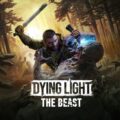
Dying Light: The Beast is a leaner, more cohesive expansion of the series' ideas so far. While it is more focused and the map embraces fun parkour, its smaller map and contained story may be a detriment to some.
As big and expansive as Dying Light 2 Stay Human was when it released in 2022, I am sympathetic towards players who eventually became exhausted by Techland’s parkour playground.
One of the major caveats with open-world games is their ability to keep players anchored to the bountiful amount of side quests, checklists, and things to do. We’ve all seen the criticism of overly packed worlds, forgoing meaningful content for, simply, content. What made Dying Light and its sequel special was the sheer locomotion of getting to and from that content, whether subpar or spectacular.
Parkour is a feeling developers have been attempting to capture for decades. Assassin’s Creed seemingly popularized the drive for worlds that had tactile handholds, allowing players to explore vertically, not just horizontally. And as technology improved, as did the capabilities to litter worlds with increasingly dense NPCs, buildings, and all amount of activities for the player to feel like they were working towards the end goal of fun.
While it may be strange that Dying Light: The Beast began its life as a DLC for Dying Light, it has made for an interesting shift in expectations for me. What I saw as a potentially half-hearted effort to merely give players more zombie parkour in a new kind of setting, turned into a surprisingly tight experience. An attempt to bring the story back around to Dying Light‘s protagonist Kyle Crane has resulted in a game that feels balanced, not bloated, mixing horror and action with pleasant results.
Dying Light–and by association, Dying Light: The Beast–live and breathe on their fluid movement mechanics based on parkour actions. Outside of wannabe motion that would be at home with Dunder Mifflin, I know virtually nothing about those wild people who scale buildings with vomit-inducing aplomb. But somehow, Techland has excelled at watering the seed Mirror’s Edge once planted, giving it the necessary care to watch it fully bloom. Both Kyle and Aiden proved themselves to be nimble and agile, deftly bludgeoning zombies to death while hopping across overrun streets to the safety of tall buildings.

While a few years have passed since my time with Dying Light 2, the weight behind Kyle’s movement in Dying Light: The Beast doesn’t inhibit the feeling of speed and vertical capability. In fact, I would argue that veterans will agree the parkour here has a tendency to feel satisfying from the beginning, with more hours only adding to the sense of accomplishment. My brain took about 30 minutes to reacclimate to the fact that jumping is tied to R1 rather than X on the PlayStation 5’s DualSense. Once that acceptance happened, Kyle was scaling walls, searching for handholds, mantling over cars, and swinging from bars with ease.
An enormous misstep would be to have the parkour system feel to light and loose. There should be a modicum of grace towards jumps that feel a little too unrealistic or impractical to make, while still allowing the player a sense of power and accomplishment on making semi-superhuman leaps and bounds. The act of navigating the new location of Castor Woods is exhilarating and that feeling washed over me the moment the map opened up and I got to the first dilapidated town. It was overrun with the undead, dozens of them shambling along the streets. “Oh yeah,” I remembered, “I’m supposed to get to the high ground.” My Dying Light memory flickered on and I rushed past zombies searching for the closest height to jump on top of.
But Castor Woods is also a focal point of why I think Dying Light: The Beast excels in the way that it does. While its inception may come from being an extension of Dying Light 2, Techland doesn’t allow this spin-off to feel like a meager offering. Importantly, Castor Woods maintains the vaguely European setting of Dying Light 2‘s Villedor, albeit drastically pared down in terms of size.
Being a once-thriving city ravaged by years of an outbreak may give Castor Woods roots in familiarity, yet it’s obvious that the smaller scale was not an excuse for Techland to slack off but a boon towards designing a smarter map. It feels less like Villedor’s intricate urban dystopia and more like a scenic, tucked-away haven. Dense woods that lead to secret labs, dangerous cave systems, industrial areas, and smaller villas give Castor Woods much-needed personality. In designing this new space, Techland became more thoughtful in how players would not only scale buildings inside and out, but how they would leap and move from one place to the next to avoid zombie hordes. It feels more personal and not just massive for the sake of being big.

However, this wouldn’t be a Dying Light game without the treacherous shift between day and night. This expected cycle has become one of the main points of tension in the series, acting as the tug of war with daytime scavenging and nighttime dread. At night the deadly Volatiles roam the streets and if they get a whiff of Kyle, they give chase, requiring skilled used of parkour movement and a good knowledge of the terrain. Castor Woods being bathed in darkness and now host to deadlier, more aggressive foes gives the map a renewed energy, transforming it from an open-world action game to a full-blown horror experience that leans into stealth and adaptive escape.
While I do praise Techland’s ability to not make Dying Light: The Beast‘s map annoyingly daunting in size, players will feel that slow burn of repetition in some ways. Side activities like Dark Zones may take players to the same places as side quests, squeezing out as much real estate from the space as possible. Key landmarks in Castor Woods will be visited and made a spectacle of but players who run into random encounters that frequently occur in the world may decide to just ignore them after several hours. Vehicles are also introduced to spice up moving from one place to the next but I never found it as engaging as the actual parkour system, how could it be?
And for all of Dying Light: The Beast‘s density and tailored map feel, I remained impressed at how well the game ran. During my time playing the game right before launch and in the past two weeks, I leapt through the golden path, numerous side quests, collectibles, and all the things one would expect from an open-world game that wants players to exist in it for as long as possible. But there have been multiple patches that have come out since launch consistently improving everything. Wandering crowds of undead that hone in on Kyle rarely caused the performance to stutter and pop-in was barely noticeable.

Almost graciously, the game has this gritty, drab look. Considering the tone and setting, it would have been off-putting for Dying Light: The Beast to use too much color and not have blood be its most consistently vibrant hue. The game is clean in the sense that it has the confidence to pull off an ugly world that is so frequently bleak. And when the night comes, there are sparks of light to make shadows dance and play tricks on the player’s eye. Of course, not enough can be said about the deformation effects when players bludgeon zombies with all manner of weapons. Watching their bodies crumple and fall apart is appropriately gruesome and shows the level of detail Techland has mastered over the years.
Though ranged weapon are featured a bit more prominently this time around, Dying Light‘s core melee system hasn’t undergone any drastic changes, not that it needed to. The heft of power attacks thudding against enemies both living and undead is relentlessly satisfying. Weapons will degrade and need to be repaired so players must scrounge the world for blueprints and materials to craft increasingly deadly objects to slice, stab, smash, and tear the world asunder. And yes, there are stupidly funny, unrealistic weapons that show enough cheekiness to give the game a bit of levity.
Incorporating a smaller skill tree was a good idea with Dying Light: The Beast, befitting of the game’s smaller scale. Nothing superfluous exists and the limited range of unlockable skills doesn’t make one choice outrageously better than the other. Yet players will always want to cater towards a specific playstyle in the beginning, becoming a master at melee combat and physical moves to knock zombies off balance and remain constantly agile is easy to do.
The biggest mechanical shift here is “Beast Mode” which gives the game its name. Basically a kind of deeper rage meter, Beast Mode initially cannot be controlled by the player. Merely doing and taking enough damage will cause it to activate once the meter is full, allowing Kyle to unleash a flurry of fists that are meant to decimate scores of weak zombies and deal significant damage to more mutated foes. To earn new powers for this mode, the player goes around the world completing story missions and side content to unlock perks that make Beast Mode more volatile and effective. Full-burst running, the ability to throw heavy objects, new finishers, and environmental movement make Beast Mode ideal for players who wish to be aggressive. Kyle can still take damage from strong attacks but I often found it to be a kind of death-saving maneuver that I would active if things got too hairy.
Still, I don’t think this mechanic is wholly transformative, merely another tool in the kit to give players a new method of survival. Some players may find it acts as a kind of gimmick that wears out its welcome over time. That is true in a way because Dying Light: The Beast does offer multiple avenues of completing tasks. But because the game is so often ridiculous, I didn’t mind the tonal clash when suddenly hulking out in a game that attempts to take itself somewhat seriously in its narrative.

Though I barely remember the overarching plot of Dying Light outside of “zombie outbreak devastates world”, Kyle is a consistently fun protagonist for the most part. After being experimented on for over a decade since the first game, he’s got some aggression that is directed at the main bad guy called The Baron, who has been running experiments unchecked on numerous other people.
As serious as the narrative wants to be, it can border on melodramatic and fall into tropes of a lone hero taking on the forces of evil. But in a game like Dying Light: The Beast, I’m not expecting the kind of nuance of The Last of Us or the absurdity of something like Dead Island 2. Rather, I enjoyed the aspect of Kyle progressing through Castor Woods attempting to unite citizens against The Baron and the damage he has inflicted on the hamlet.
And let’s not forget, one of the best ways to enjoy a Dying Light game is to hop into multiplayer with a group of friends running around like idiots ransacking the world and leaving heaps of zombie brain matter everywhere. Are you really going to be paying that much attention to anything outside of getting increasingly bigger and sharper sticks that may catch fire or crack with electricity?

When lined up to both Dying Light and Dying Light 2, Dying Light: The Beast embraces what made the first game so consistently enjoyable. An open-world experience is always going to have a varying degree of mileage for players who either want to get through the main content as fast as possible, or enjoy soaking up the shenanigans with friends or solo. Either way, Dying Light: The Beast doesn’t bog itself down on RPG systems and a branching storyline. It embraces weighty combat and thrilling movement, capitalizing on its smaller scale.
Dying Light: The Beast shows that Techland has learned from what players didn’t enjoy from Dying Light 2 Stay Human. While this new entry isn’t exactly a return to the series’ roots, it relishes in the trademark speed of running across rooftops and avoiding the undead. Hefty combat that becomes more horrific and tense at night provides enough variety to keep players moving in its scaled back but more inviting world. Sometimes a more cohesive vision is better and Dying Light: The Beast is certainly stronger for its more constrained scope.