

My only long-term exposure to Dune and its lore was through a failed David Lynch film, an RTS from the 90s (so good), and the more recent films (long-winded, but worth it). I did try to read Frank Herbert’s novels, so that I could understand more context with each house and its underlying tone, but my lack of concentration and focus always led my brain astray. In short, everything I know about Dune, I gained from video games and movies. Such a GenX thing to type.
Anyway, my latest experience with the sci-fi series has been with the latest edition of the series from developer and publisher Funcom called Dune: Awakening. The game is a survival adventure built on an MMO backbone. It follows closely with the lore of Dune, taking some exceptions here and there, and creates an atmosphere that is worthy of its license. With this game, you’ll find lots of ‘tip of the hat’ moments to Herbert’s novels, while also trying to wedge in a competent and complete gaming experience. The compromise with it, in all its beautiful complications, is that it paces at the same speed as the novels, at least at the beginning of the adventure.
So, let’s drum up some spice, go tripping with a sandworm, and get down to business with Dune: Awakening.
Glorious gameplay built on dunes for a slow pace
Depending on how you feel about the novels and your understanding of the Dune material, you may leap into this game with some high expectations about how it works. You might expect a fast-paced game with loads of action and sandworm riding. If this is you, then you need to tame those gameplay expectations for Dune: Awakening. Let’s dig into its pieces and parts.
Story
As stated above, I’ve had a crash course in the overall story of Dune. That crash course has various levels of quality and detail. Ultimately, I have a concept of how the narrative should work, but, in full transparency, I’m completely unqualified to tell you the details and/or complexity for Funcom’s treatment of the source material. What I do know with certainty is that your main character was on a ship coming to Arrakis, it was taken down by a Fremen, and the only reason your character survived is because the Fremen saw something special in you. Thus, your adventure begins.
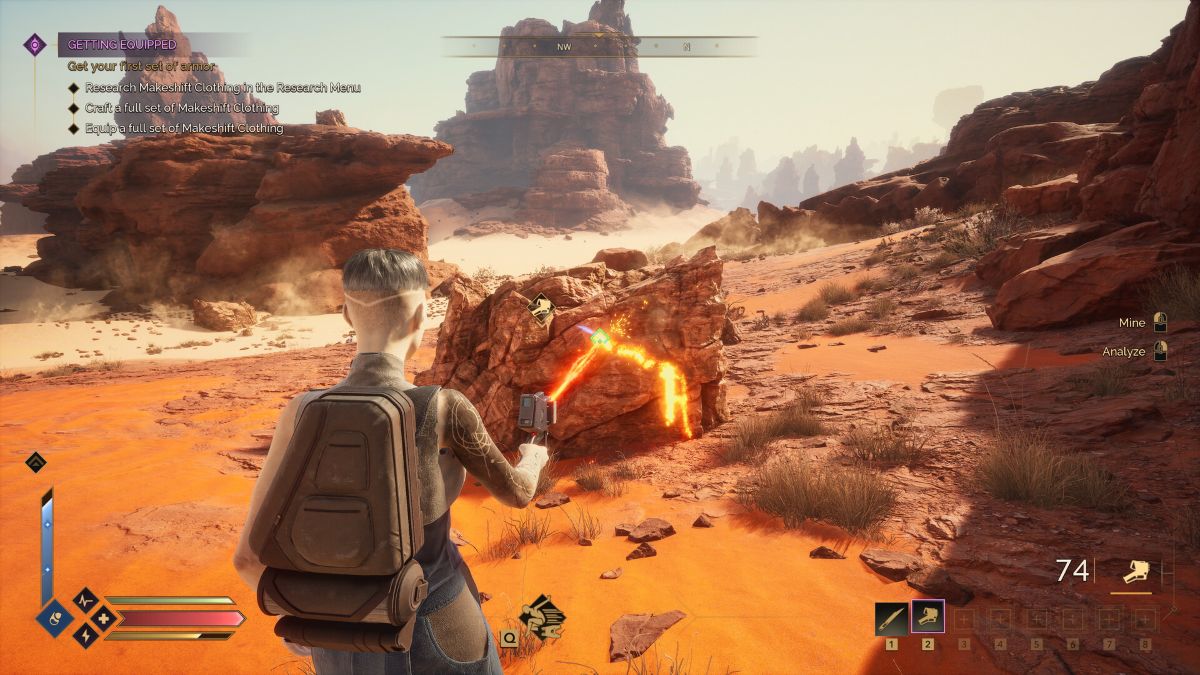
For fans of the book series, they’ll probably be far more connected and critical of the story that Funcom drummed up for the game. One of my good friends, who is an enormous Dune fan, told me that Funcom did take some liberties with the world, but for the most part, created a potent atmosphere and world that is respectful of the sacred story. You can see that with every movement you make while journeying through Arrakis. The game’s story is lush with scavengers trying to make a buck on the planet and survive its harsh conditions. It has an overbearing gloom/doom-ness with ships flying everywhere trying to clean up the riff-raff of those hanging around, so they can keep spice to themselves. There are abandoned and devastated reminders of past explorers and soldiers who weren’t so lucky with their survival tactics on the planet. Everything in this game supports the Dune world and helps back up what has already been presented in various media formats.
In short, the story is good, it’s complicated, and it is built better because of the atmosphere and care/love that Funcom put into it. If you’re looking for a strong story that is a world-building experience that can connect well with the original material, then this game does that, in my unqualified opinion.
I should have at least read the first novel. I could have been judgier.
As thick as the story needs to be, the gameplay must match that same volume. The story doesn’t throw too much, too quickly at you; rather, it’s a slow dribble. The gameplay matches that same pace. For the first 2-3 hours of this game, you’ll learn the ropes of the gameplay. For an online experience, that is a long time. The gameplay will have you dying all over the place, as you’ll need to get used to surviving the desert and its inhabitants.
The first big tutorial to get you into the game is breaking into a ship and killing all its crew. You’ll learn how to fight with knives, avoid attacks, and understand how to pick up basic material, such as clothing and other items, to survive. You’ll also learn quickly that the controls are a bit janky in some areas when it comes to fighting and menu surfing, though more than manageable at the end of the day, once you get some good hours under your belt. For example, going between knives and guns will have you stopping, opening a menu, choosing the item, then going back to the action. For a normal game, this would be an easy no-brainer to deal with, as action typically freezes when you’re switching between menus and items. Dune: Awakening does not do that; rather, it treats the entire experience like a typical MMO, which means when you’re switching between items, the world is still carrying on in the background.
Is that type of gameplay good? Well, yes and no. Starting with yes, the game does what any normal MMO would do daily, it lives and breathes without your presence and attention. It’s what you would expect from an MMO, and it’s what Dune: Awakening delivers swimmingly. Know your environment and the people around you before diving into a menu. It’s as simple as that when you’re trying to balance out the right moment to pop into a menu.
On the no side of the tracks, the game feels like speed humps on a road that was meant to be shortcuts around traffic. You will think you’re being efficient, but the HCI design of the menu system just feels like it’s slowing the action down considerably. And trust me, this type of menu system will get you killed in the end if you don’t watch out. For example, when I finally unlocked bigger portions of Arrakis’ map, there was a moment where I had to acquire an item to progress the story to the ‘next step’, and while doing so, I was randomly attacked by enemies and killed. What was hilarious about this was that the game launched me into a cutscene while I was being attacked, which led to my quick demise. Seeing the cutscene still play out while my dead body was on the ground was hilarious, but also somewhat frustrating. You must watch where you are and how/when to bring up the correct menu system that is 2-3 menus deep. This is probably one of my biggest complaints about the game is that you will be going in and out of that menu system so much that it will feel like you’re driving down a shortcut road that has many road humps on it. Humps that might kill you at any given point.
Fight club
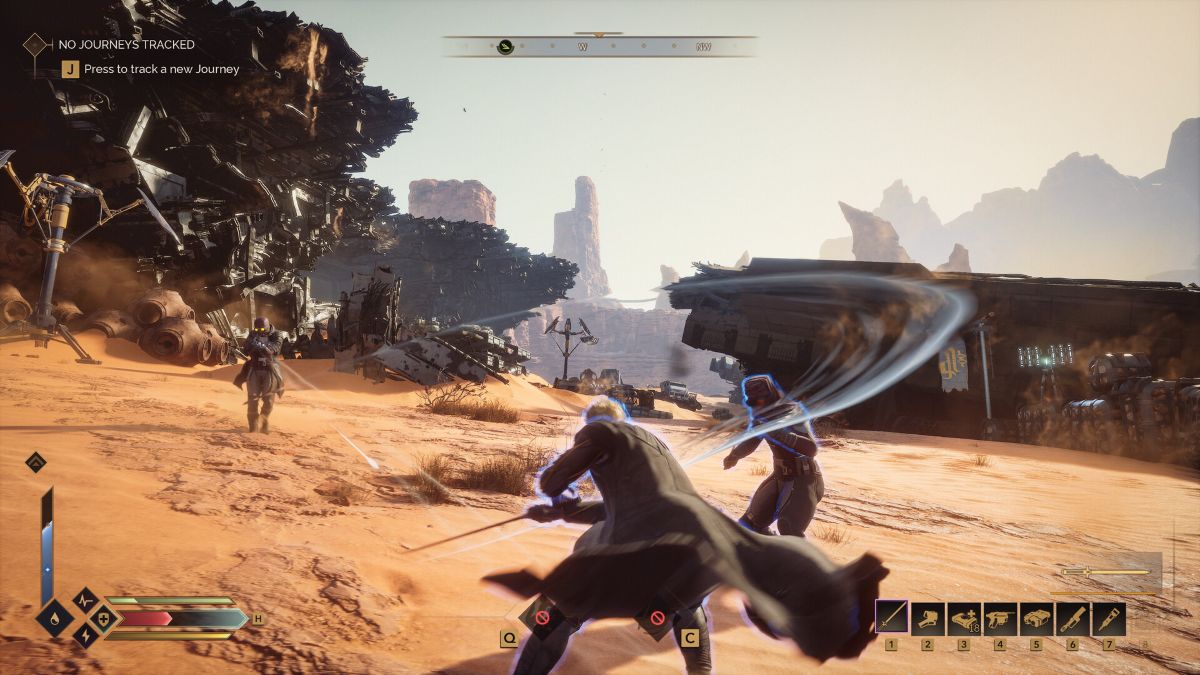
On the fighting side of the tracks, and when you have the correct weapon chosen from the menu system, the controls feel nice with firing weapons at enemies. I commend Funcom for making that nearly perfect in this third-person experience. I never felt like I was going to lose a battle with a gun or other handheld weaponry that wasn’t a knife. My aim always seemed on point, which I appreciated.
On the knife side of things, it was far more positive than negative, but at times could be janky. For example, if you’re stabbing an enemy, you will be tempted to hit R2 relentlessly on the controller (you can use a keyboard/mouse, you elitist, don’t worry). That works well until you run into an enemy with a body shield. When that happens, you must hold R2 down for a specified time and prepare a slow-blade attack that slowly penetrates the enemy’s shield to get to their body. The issue I have with the knife is that during panicked button-pushing moments, you will fumble between the two ways to stab someone and end up hurting yourself. In addition, the accuracy of knife stabbing isn’t on point. It’s hit most of the time with a side of miss. It can get unnerving at times, but nothing that can’t be improved over time. And that damned menu system (switching between weapons) gets in the way here as well, as a knife or blade can be slowly worn down over time, so you might need to replace it at some point.
Ultimately, as you keep pushing through the game, learning to use weapons more accurately, the fighting becomes a lot easier. It’s never perfect, especially on the knife side of the tracks, but it gets much more controlled.
Big world-ing
Once you get through the tutorial of offense and defense, the latter of which isn’t too bad, you’ll be shown the world and all its occupants. The game doesn’t pull punches when it throws you into Arrakis’ world. It is heartless and relentless. You’ll run into scavengers in caves, which, at least early in the game, will do their best to take you out.
Dune: Awakening will also throw other, more hi-tech enemies on ships at you from the skies, which will chase you down if you step into their spotlights. I did this once during my review period, and I will not do it again, as enemies floated down from these ships and chased me relentlessly through the desert. When I say the enemies chase you, I mean they do not let go of said chase.
And if those two dangers weren’t enough during the initial jumping off point of the journey, the game throws the threat of sandworms, surprising you and easily killing you. The game at least gives you some warning about sandworms approaching when you’re making too much noise on the sand, as you get an audio waveform reading onscreen that goes from orange to red when a sandworm approaches.
Other enemies show their violent faces as you traverse the world, and open more and more maps, which only builds the girth of the world.
Now, if a wide variety of living enemies weren’t enough to build the world in this game, then Arrakis’ harsh conditions certainly fill that void. At the beginning of the game, the harsh weather and heat play a factor in the world-building of Dune: Awakening. If you’re out in the sun too long, you’ll dehydrate and eventually die. If you get caught in a terrible sandstorm, which varies in size, you have the potential to be killed because of the debris blowing around inside it. If you don’t regularly keep hydrated through water and blood collection from enemies in the game, then you’ll also dehydrate and die that way. If you imagined a dangerous world when reading the Dune novels or watching the films, then congrats! Funcom has delivered it.
Overall, the world of Arrakis feels big and real with enemies, environments, and its physical girthy features. This planet is basically a sci-fi wild west that is lawless, as it is physically demanding and dangerous. I love the world-building done in the game, as it puts you in survival mode on multiple levels and has you constantly checking to make sure you’re in a safe area, away from enemies, and good health. This is as close as anyone could get to experiencing Arrakis.
Crafty Craftsmanship
Up to this point, if all the above sounds like an easy MMO experience to you, then just wait, because you’re about to see the more complex and slow-moving parts of the game. When I say ‘slow-moving’, I mean you’ll have to earn every inch to progress properly in the game through crafting.
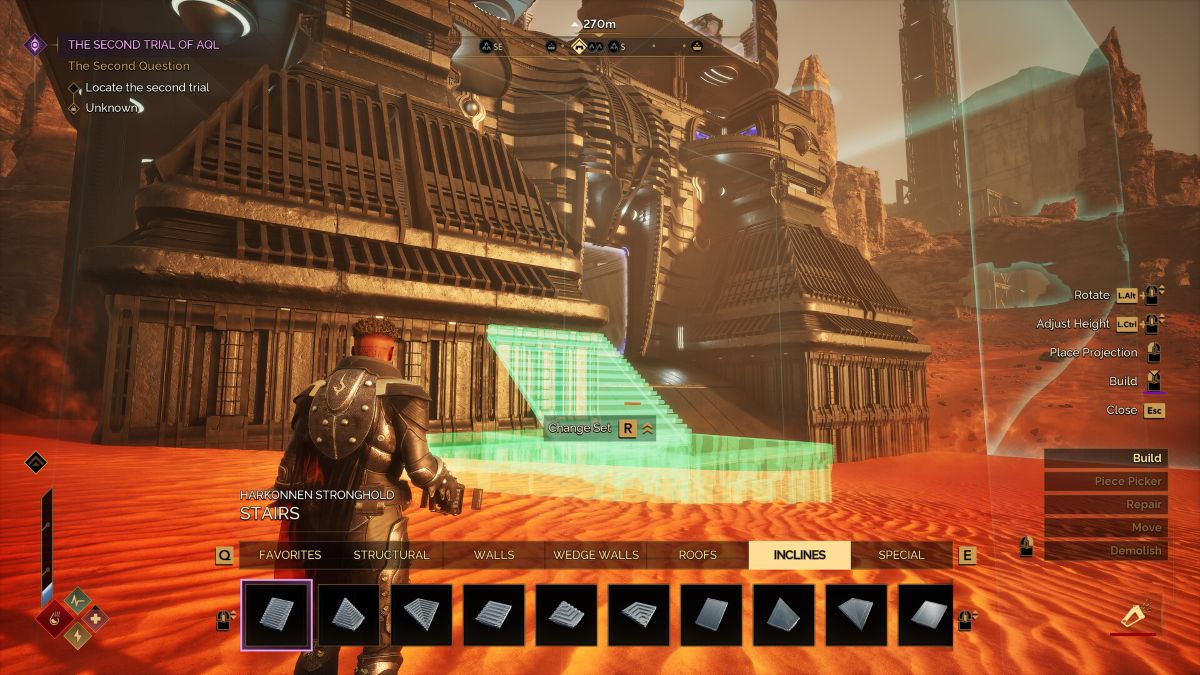
The crafting in Dune: Awakening plays a vital role in the overall gameplay. It affects the story, quests, and contracts, how you get around in the game, and it especially affects your survival. The game will have you build shelters, create machines to process water, put together fabricators to build parts, and even print new clothing to help survive Arrakis’ conditions. Crafting will also include refineries, storage, and having you collect materials relentlessly to meet the conditions of all the objects you will eventually need to build to progress.
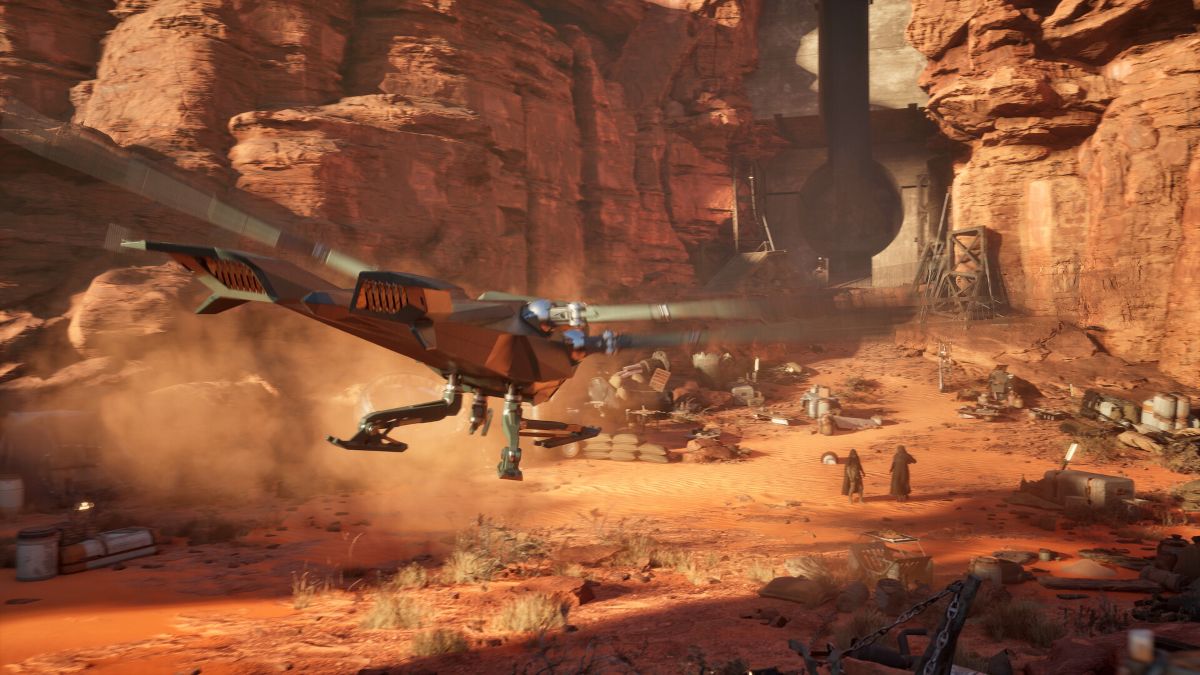
The building process in this game is methodical, as it is picky. You will spend a good chunk of time in the harsh environment collecting elements, such as ore, granite, metals, and whatnot, and then come back to build specific items from those combined elements, only to collect more and have a go at it again. As you get further and further into the game, the materials get scarcer and the crafting ‘asks’ become more demanding. For example, when you get to the point when you must build a sandbike, it will ask for every piece of that bike before you can use it. You must collect special material, mostly found in scavenger camps, and then produce a hull, engine, three treads, storage, and a fuel intake. Then, once you complete that process, which will take you an hour or two, you must produce fuel for it through…crafting.
Crafting relates to nearly every aspect of this game. It’s a slow process that helps lead you to new experiences in the game, which only helps to get you deeper into the overall experience. I think I visited more locations when putting that damn bike together, which only added to the world-building experience the game was trying to extend and got me hooked on. Well, it worked, and crafting, in all its glory, is a strong gameplay element that makes sense within the world of Arrakis and Dune and helps continually push you through the world to experience it.
There is a lot of crafting, though, so be prepared to do a lot of gathering with good payoff.
Backend complication
If more reason is needed to continue to play this game for hours upon hours, then the motivating backend structure of the game will push you over into an almost unhealthy obsession with Dune: Awakening. There is a lot going on with the backend of the game.
As you continue through the game, you gain XP through contracts and general actions, such as taking down enemies or collecting lost items. However, you do it, as you move forward with more XP, you earn skill points, which allow several skill trees to be accessed. These could be skills in the Weirding Way or using your Voice to control people. The skills might also include improving your exploration and/or doing tasks more efficiently. Regardless of what you want to concentrate on when using skill points, you have five initial categories to choose from and three trees per category.
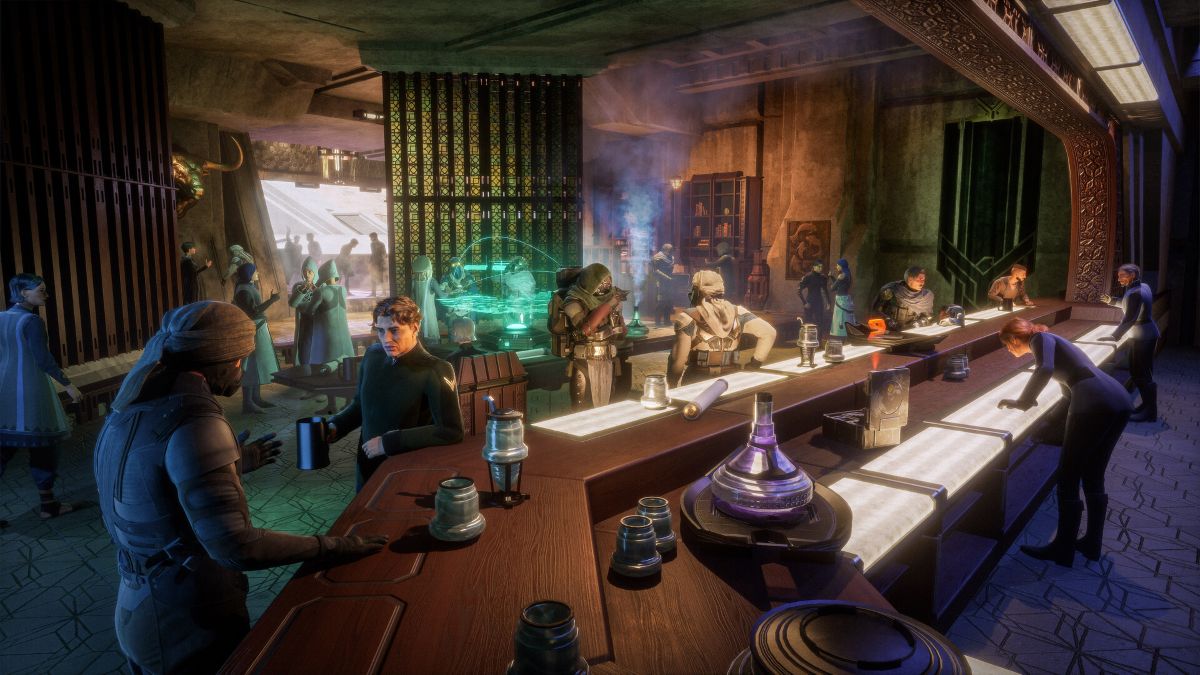
Because of the wide range of paths, and believe me, there are multiple skills per tree, you can put together some pretty wild strategies that deepen the experience and keep you motivated to keep coming back for more, even when the game becomes a little mundane (and it can happen). There is so much going on with the multiple skill trees, abilities, and techniques you can acquire. You can play this game several different ways and still come out with a different experience each time.
I’m thoroughly impressed with the size of the game’s backend, and I can only imagine how much larger it will become as it continues its journey.
On that sweet note, I’ve touched upon the main pieces and parts. Let’s wrap up this review.
Conclusion
Dune: Awakening, from developer and publisher Funcom, presents a massive world that feels and acts like what you would expect from a journey to Arrakis. The gameplay is led by extensive crafting, action, and exploration. While the controls can get finicky at times, as well as the slow pace of gameplay, especially at the beginning, the game represents everything that Dune fans will appreciate.