


Dragon is Dead has quite a bit of potential now that it has left its early access period. Its novel approach to character building, loot management, and skill trees makes for a complex and satisfying roguelike experience. On the other hand, some of its endgame combat may prove too frustrating, especially when compounded by the traditional difficulty curve that comes with the roguelike gameplay loop. Its pixel art is gorgeous, though!
I’ve now spent 13 hours playing Dragon is Dead. Most of that time was spent dying over, over, and over again to gorgeously hideous bosses, some of that time theorycrafting optimal skill trees to get me one room farther. The roguelike gameplay loop of “one more run” fueled me to play well into the night, at my own expense, even though I wasn’t “winning” in the traditional sense.
I know full well that roguelikes are the flavor of the month (err, quarter? Season? Year?) in the gaming space. Looking into the Steam charts shows a compelling tale of games wishlisting and playing roguelikes in many forms. Thus, when another roguelike enters the fray, it needs to stand out in some way to get players like you and I interested in what it brings to the table.
Dragon is Dead is from the folks at Team Suneat (creators of Blade Assault) and passes the vibe check of medieval pixel art, hideous monsters, and deep character customization. In each of its moody biomes, the player is subjected to an aesthetic that’s as much deadly as it is gruesome. Its hack-n-slash combat meshed with its light platforming sells the player on simple combat with deep roots that wrap the player into trying out different ways to slay its endless supply of skeletons, demonic horrors, and elemental atrocities.
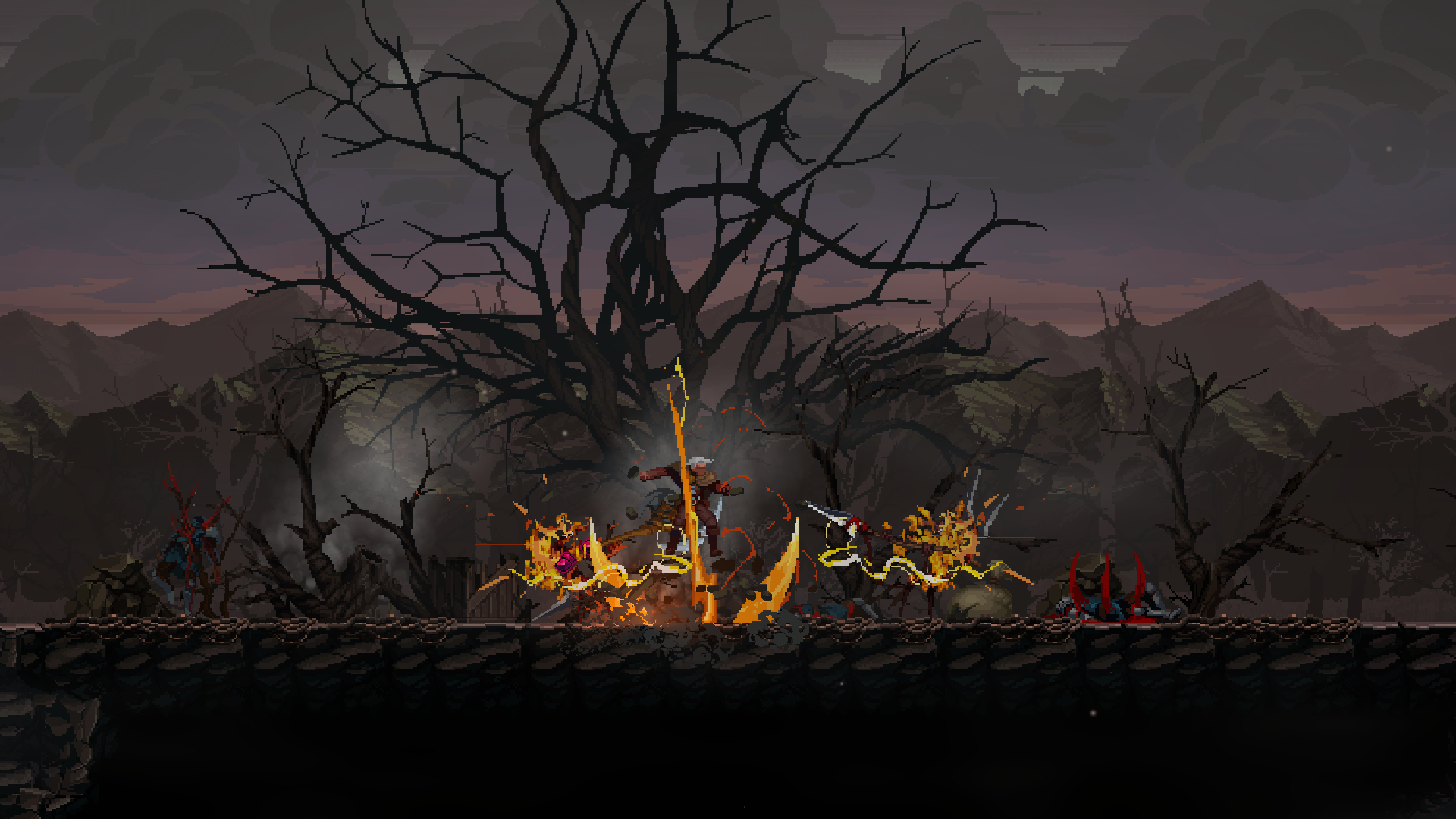 When I picked up Dragon is Dead, it felt like I was playing Blasphemous, Castlevania, or The Last Faith because of its moodiness. As I moved from a desolate battlefield to a gloomy swamp to a haunted yet ornate castle, it’s clear that Team Suneat is paying homage to classic 2D platformers set in a medieval world chock full of vampires and werewolves, except here there’s an air of dark magick at play.
As a Successor, I am to liberate the survivors of a desolate world from a corrupt leader who has embraced evil. Being a Successor is sort of like being a nameless character in Rogue Legacy II – my character lacks a backstory despite being on a quest to save the world. There are three Successors to choose from – Spellblade, Berserker, and Hunter. The Spellblade uses magic attacks (think fire, ice, and lightning) and relies on mana to augment his attacks. The Hunter gains access to ranged attacks and other elemental attacks (like poison!). The Berserker is the tankiest of the bunch, relying on slow animations to cleave through enemies in a single swipe.
As Dragon is Dead is a roguelite, its gameplay loop feels innately familiar. I’m thrust into a battlefield with a set number of enemies to slay. Upon slaying them, I can choose a reward from one of two treasure chests, and I’m off to the next room. After two rooms of enemies, I face a formidable boss. Should I succeed, I get a moment of reprieve in between biomes to restock on potions and other items before setting off to slay more monsters.
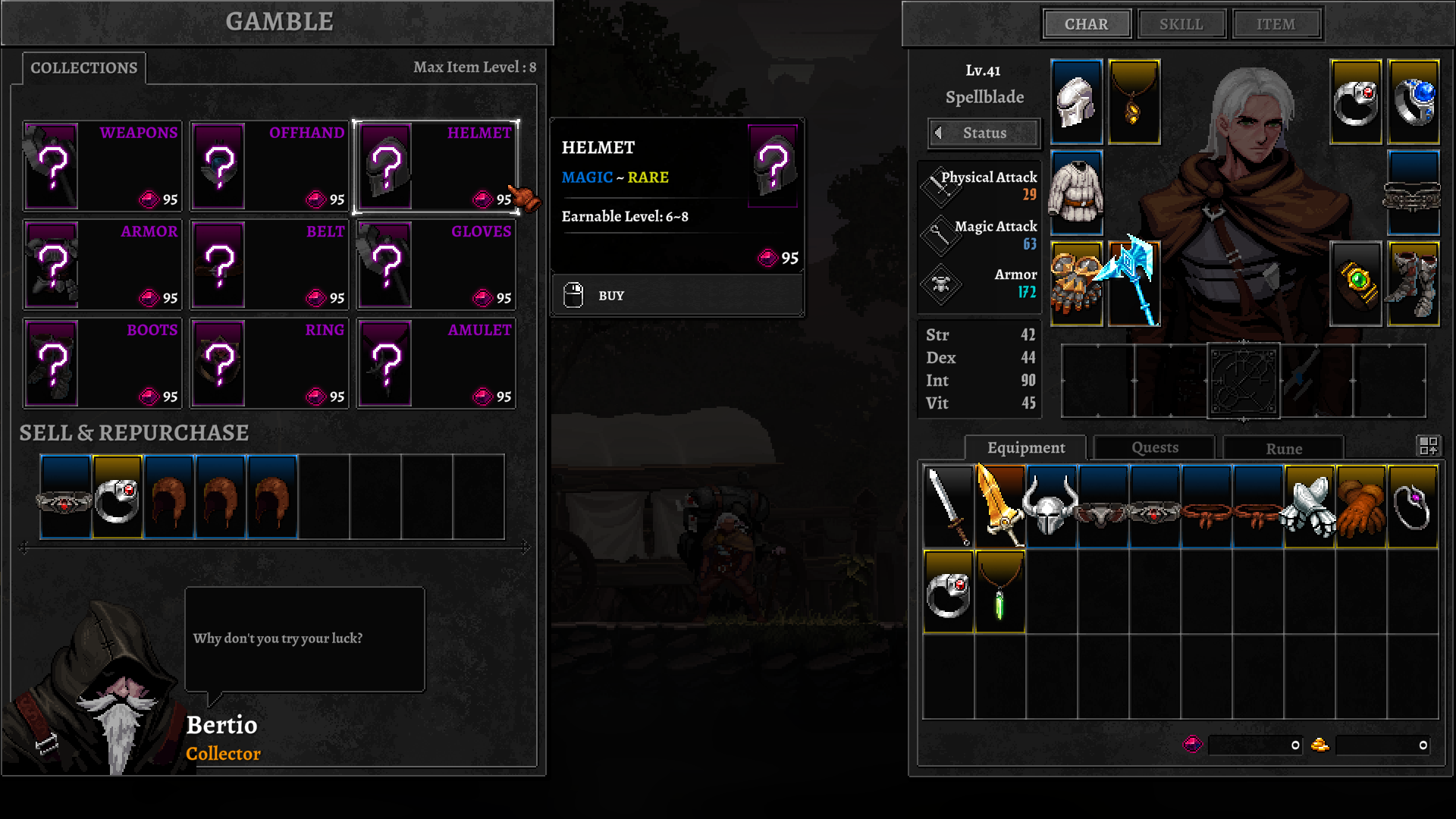 Each of the classes have a unique set of armor, weapons, artifacts, and skills to choose from. This makes for a compelling and deep character-building experience. After slaying a certain number of enemies, I can select a new skill from the skill tree (or level up an existing skill) and continue forth. Armor and weapons can drop from chests and feature random rolls of stat boosts, while artifacts can be bought from NPCs in between biomes. Thus, part of progression involves continuously swapping my loadout.
The weapon and armor management system works similar to what you might expect from Diablo or Destiny 2. Think of how weapon drops work – sometimes you come across a weapon that has great stats, but it is best saved for a loadout that emphasis an element different than your current skillset. Sometimes you come across a Legendary-tier weapon that modifies one of your skills, pushing you deep into a specific direction.
For instance, one run had me focusing entirely on lightning-based skills for my Spellsword. While I had some stronger weapons that augmented fire attacks, it would be foolish to use them as I had not unlocked the fire spells on this run. Instead, I had focused on lightning so I could wipe the screen free of enemies with bursts of lightning sparks. Thanks to some artifacts I had come across, I was able to compensate for my slightly weaker equipped armor and weapons and keep myself alive by relying on my spells that synergized with what I had unlocked.
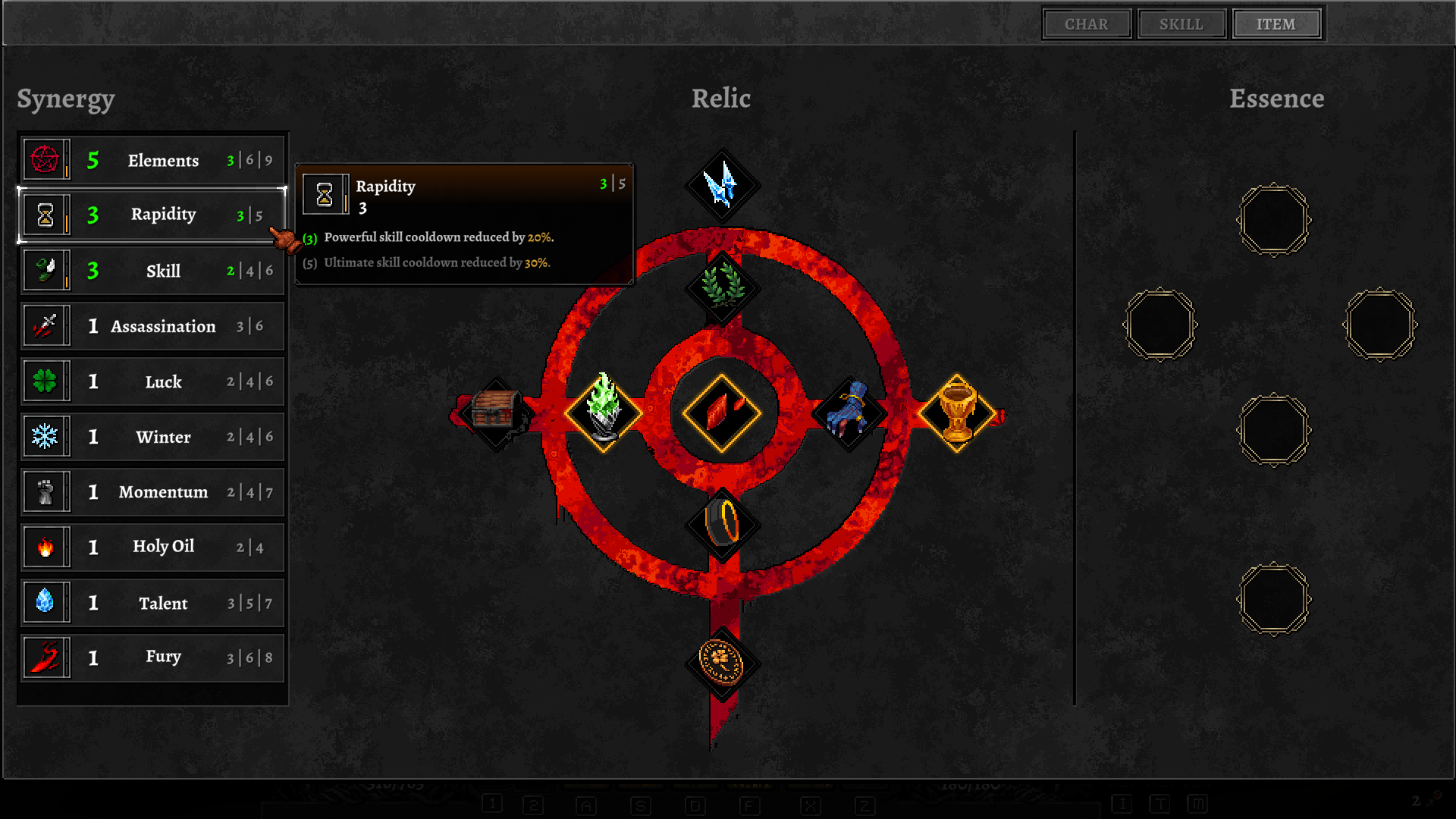 There’s a delightful degree of deep complexity that comes with Dragon is Dead’s character building process. After an unsuccessful run, I would think of other ways I could have built my character based on the artifacts I had randomly come across, pushing me into doing one more run just so I could see if I could replicate that novel build in my mind. Thanks to the variance of each run, it was rare for me to create carbon copy builds, so I was constantly put on my toes with attempting to build my character the best I could based on what I was coming across.
There is quite a bit to learn in Dragon is Dead thanks to its deep weapons and armor systems. While weapons can persist across runs, artifacts do not. Deciding between selecting a subpar artifact or a stronger Soul Gem (a temporary stat boost that is removed at the end of a run) can be difficult when you’re still figuring out your character’s class and strengths/weaknesses.
I fear that players will balk at Dragon is Dead’s difficulty curve, as it is one of the more punishing platformer roguelikes I’ve played as of late. In the late game, one biome is full of enemies that are perpetually shielded and can only be attacked when they attack, all the while enemies are firing long-range electric missiles that paralyze and take chunks out of my health. While this is alleviated by the notion of these enemies being confined to two rooms, the fact remains that these enemies are far more difficult and punishing than the boss of that specific biome.
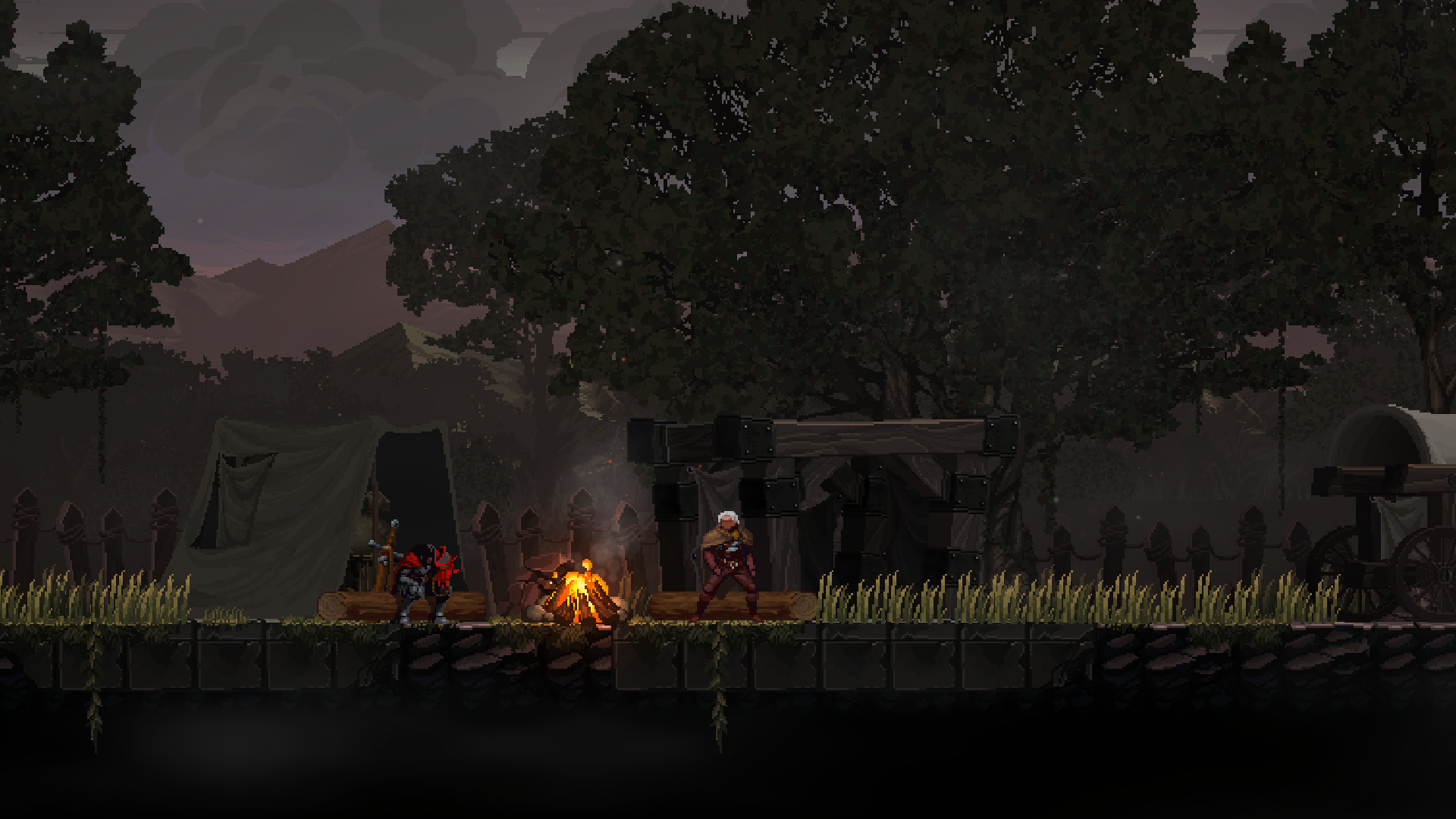 When compounded with the occasional unluckiness of bad RNG (i.e., not getting a much-needed synergy, artifact, or weapon), Dragon is Dead’s endgame feels far too painful and frustrating than needed. Even in situations where I was just lucky enough to have a character with buffs that synergized perfectly with my build, it felt terrible to end a run from attacks that seemed to override my invincibility frames that would have given me a half-second to heal. Being stun locked by a boss feels unsatisfying.
Roguelikes can be punishing, yes. Soulslikes, even more so, as they are an acquired taste for folks who love the punishing challenge without regard for how many times loss occurs before that one satisfying success. Dragon is Dead walks a fine line between roguelike and soulslike with the player in tow, constantly pushing them forward loss after loss with the promise of one more run.
There will come a point where progression will hit a solid wall in Dragon is Dead. Here, progression is evident in the form of upgrading potion capacity/potency and acquiring new weapons/armor. I jumped on the struggle bus when I had fully maxed out my potion and had a near full set of level 20+ armor. One particular biome proved frustrating, time after time, be it because of its enemies or its lightning-fueled boss. At that point, I realized that there was little else I could do on the permanent stat front; I was to start focusing on optimizing my loadout to ensure that I was taking advantage of the artifacts/soul gems I was coming across during my runs. Maybe, it was a matter of me changing up my skill tree or possibly using a different character altogether.
I digress – Dragon is Dead plays like your average roguelike with soulslike tendencies. Persistent progression exists in few forms, encouraging the player to improve and understand optimal loadouts instead of relying on simple stat boosts, perks, and other gameplay mechanics that make roguelikes slightly easier. If you’re wanting deep progression systems in the form of additional unlockable characters, mechanics, and/or smaller-form achievements, you won’t get much of that here.
Instead, Dragon is Dead is all about loadout variance. There are very few roguelikes that do what Dragon is Dead does on the characterbuilding front. It scratches the itch of intricate skill trees, weapon/armor collecting, and hack-n-slash combat well.
Prior to this review period, I took a gander at what some players were saying about Dragon is Dead on Reddit. There was a common misconception that Dragon is Dead looked like a metroidvania. It is not. I can understand why some folks were confused, though. Much of what I’ve seen from Dragon is Dead’s small previews and videos showcased some traversal and combat in its sprawling rooms, causing me expect to see a Rogue Legend II situation involving roguelike exploration. Again, it is not.
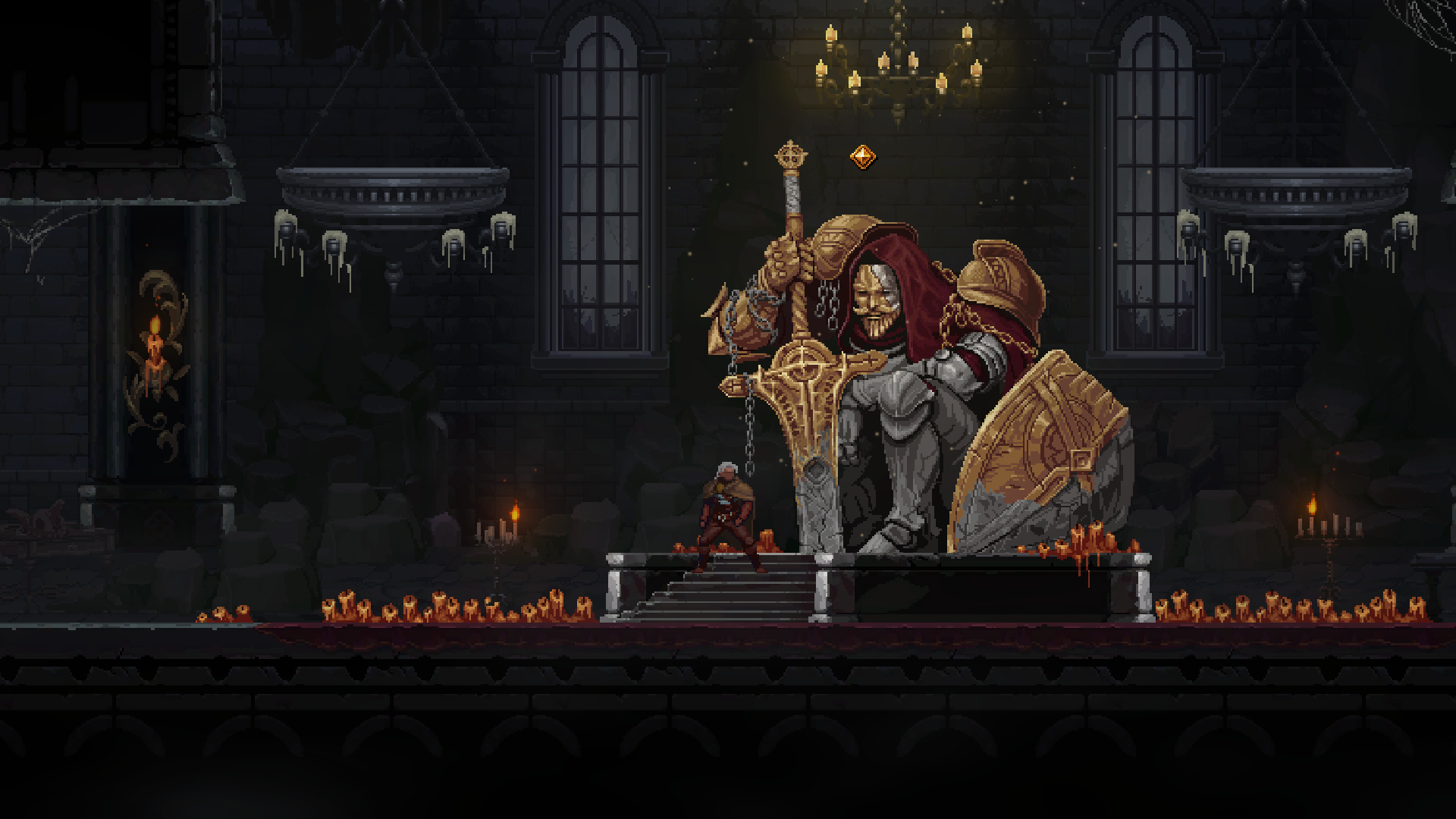 There are no tests of traversal skill in Dragon is Dead, which is missed opportunity in using some of its larger rooms and filling them with things to do and find other than the occasional treasure chest, which may or may not be locked. Many times I would find myself in a gigantic multi-leveled room that was initially teeming with enemies and little else. It’s a shame, because the larger levels have the space to accommodate slightly difficult platforming similar to how Astral Ascent packs its levels with a healthy mix of combat and traversal challenges.
Perhaps a future release of Dragon is Dead will offer the player another layer of challenge in the form of harder platforming, be it navigating a room of traps or adding some Easter Eggs to increase the immersion factor a smidge. The skeleton of Dragon is Dead’s mechanics, level design, and worldbuilding exists, but its muscles and organs need to be filled in further for the game to reach its fullest potential.
Dragon is Dead has been in Early Access and is entering its full release – a huge milestone for Team Suneat. I encountered a handful of bugs during my review period, but I’m confident that the team will iron them out in the coming weeks. Dragon is Dead is a gargantuan roguelike with seemingly endless variations, so it shouldn’t be surprising to come across a one-in-a-million combination of weapons and skills that don’t behave as expected.
Dragon is Dead has quite a bit of potential now that it has left its early access period. Its novel approach to character building, loot management, and skill trees makes for a complex and satisfying roguelike experience. On the other hand, some of its endgame combat may prove too frustrating, especially when compounded by the traditional difficulty curve that comes with the roguelike gameplay loop. Its pixel art is gorgeous, though!