

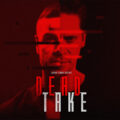
Dead Take is a sharp turn for Surgent Studios after Tales of Kenzera: ZAU. But the developer's attempt at first-person narrative horror via escape room is a bold jab at Hollywood's dark underbelly, helmed by some incredible performances.
Whiplash is one way to describe the sensation I had upon first discovering that Dead Take was created by the same developer as Tales of Kenzera: ZAU.
Surgent Studios head Abubakar Salim first came across my radar as one of the leading roles of the egregiously cancelled Raised By Wolves, a bizarre, fantastical show that had no right to be as good as it was. Of course it was short lived. Some of the best things are.
Salim crafted Surgent’s Tales of Kenzera: ZAU as a way to translate the loss of his father into a video game, a piece of interactive art. For a debut game by a small studio, it delivered consistently fun gameplay with a heartfelt story.
Who would have thought that Surgent would go from a Metroidvania to a first-person narrative horror game based on the dark underbelly of Hollywood, touching on how power and ambition can corrupt?
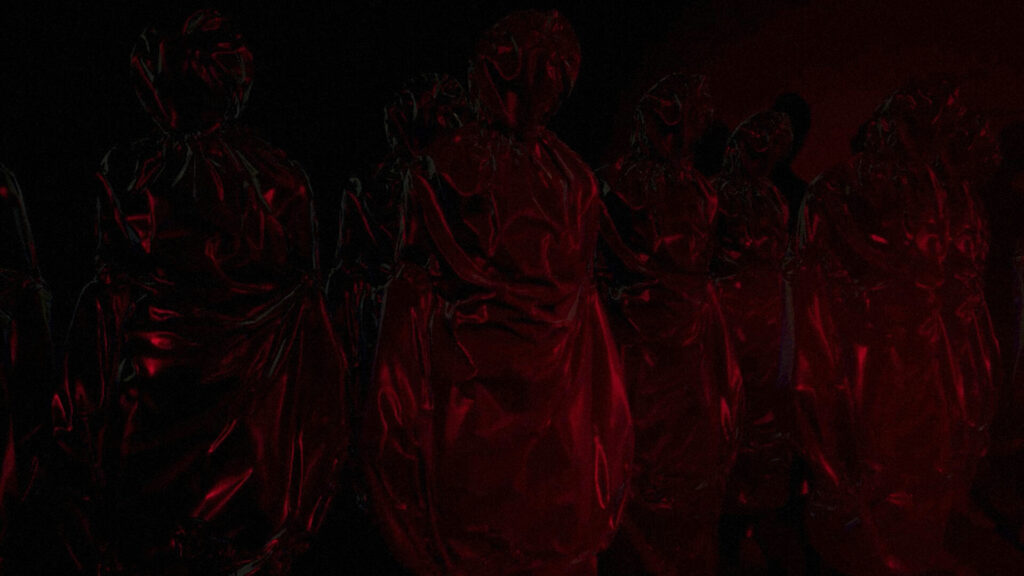
After Dead Take I wonder what kind of personal experience Salim will pull from next and what genre he may lead his studio towards. It makes absolute sense that an actor who has been entrenched in the machinations of Hollywood and the video game industry has something to say, both subtly and bluntly. But despite the obvious metaphors boldly painted across the span of Dead Take‘s brief 4-ish hours of time, it becomes an interesting hybrid of ideas that are relatively successful–even if players can guess at the end result.
Where Tales of Kenzera: ZAU borrowed from the hallmarks of Metroid and Symphony of the Night, players are likely to sniff out common ground from Dead Take. Across its length recollections of Gone Home, Layers of Fear, Immortality, SOMA, and varying other first-person puzzle boxes came to mind. For the most part, Dead Take aspires to be a self-described escape room. But it also plants its flag deeply in the roots of psychological horror, working to contort the player’s expectations and their foothold on reality.
Dead Take puts players in control of actor Chase Lowry–played by Neil Newborn–as he searches for the whereabouts of his fellow actor friend Vinny Monroe–played by Ben Starr. Both Chase and Vinny were vying for the lead role in the an upcoming film created by the seemingly mythical producer/director Duke Cain.
The events of the game unfold the evening after a pre-production party was held at Cain’s elaborate, labyrinthine mansion. Chase arrives to the location, devoid of human life but showing signs of a party. Confetti litters the floor, wine glasses litter tabletops but no one is around.
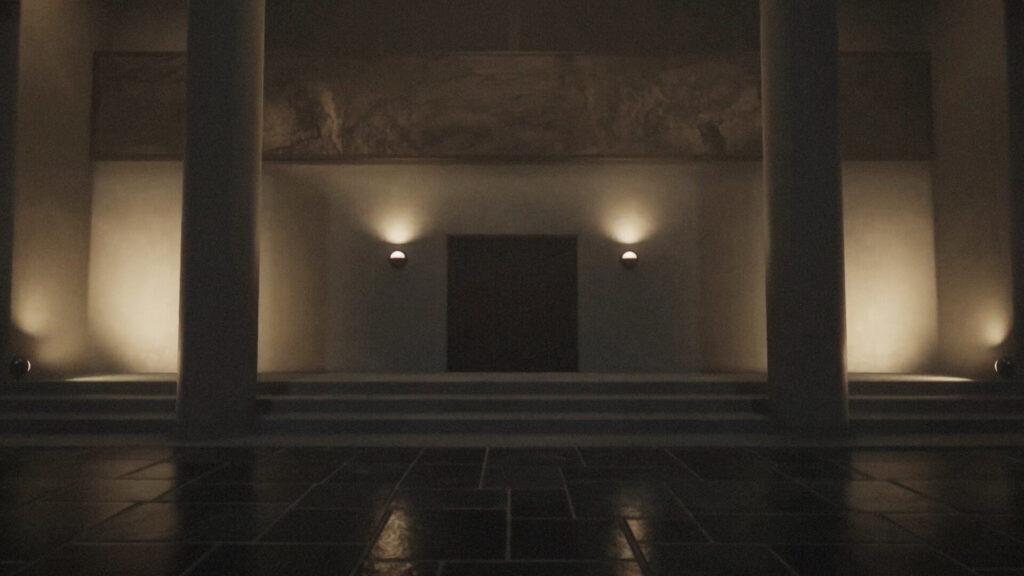
At no point does Chase speak as a character moving about the game world. His drive to seek out Vinny is a narrative thesis but also conducted by the player’s curiosity to progress the plot. Throughout the entirety there is a hollowness to the Cain estate, one that feels ferociously intentional. It won’t be lost on the player that regardless of how lavish a lifestyle a bigwig Hollywood icon may be, some of the elements of this house are not only bizarre, they are impractical.
Dead Take wears the escape room moniker well but borrows more from the blueprint of the Spencer Mansion or Raccoon City Police Department building. Entire rooms and secret stashes are obscured by elaborate mechanisms. Placing three prongs on the trident of a statue leads to a revelation. Striking the keys of a piano emblazoned with strange glyphs opens up a hidden compartment. Closets slide away to reveal malevolent backrooms.
Progression through Dead Take is conducted by the player’s ability to piece together clues and solve the many puzzles found in Cain’s mansion. A scrap of paper will lead to a combination that leads to an item that allows the player to earn a key that can be used to unlock a door leading to a new area. This carrot on a string is not drastically inventive but the contained nature of the location helps to prevent Dead Take‘s genre tendencies from being too taxing on the patience of the player.
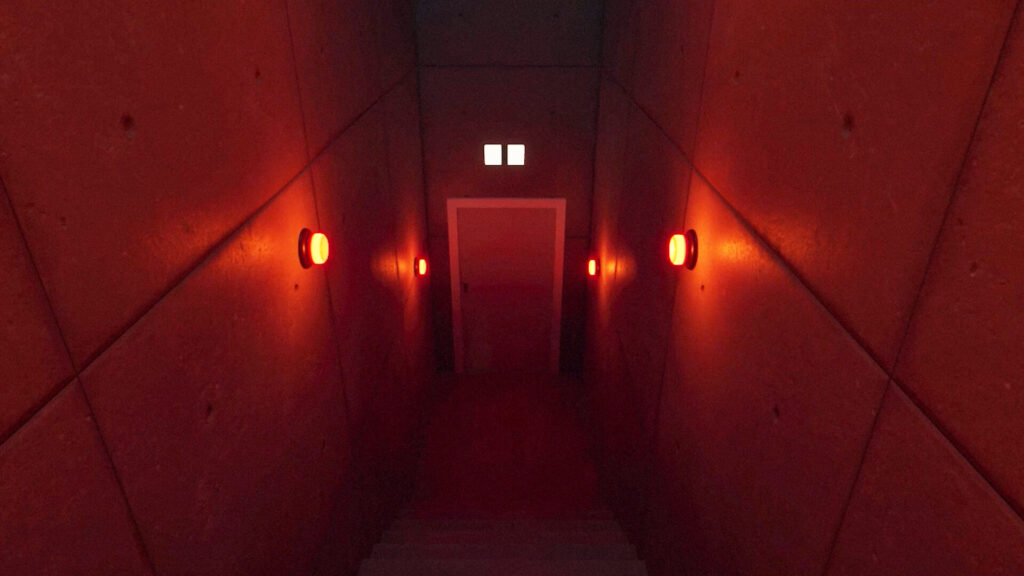
Being a puzzle game, there will be a handful of times the pendulum will swing to solutions either being entirely too easy or painfully obtuse. Backtracking might feel a little tedious but the house is not too sprawling and Chase has a decent run speed.
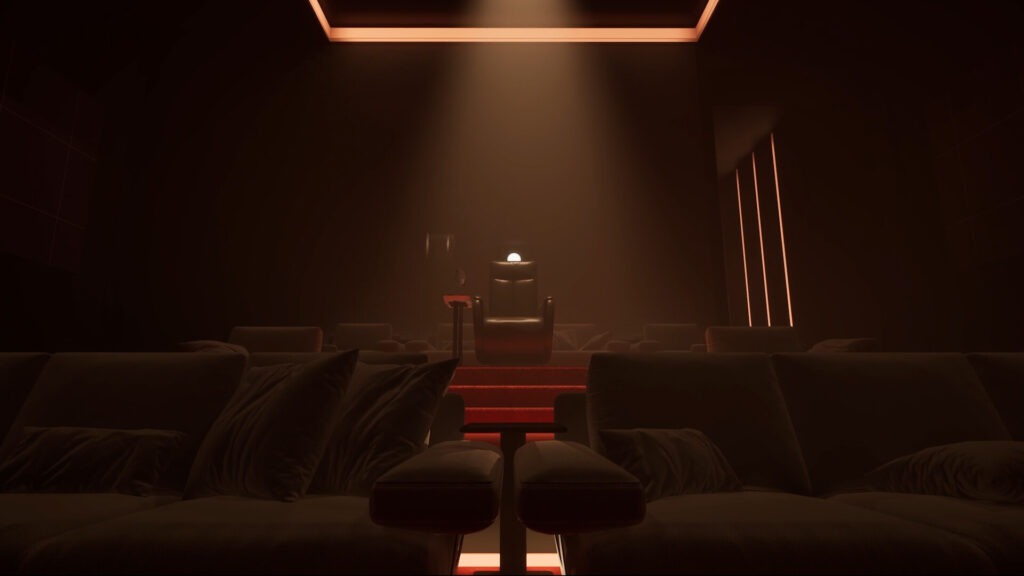
What becomes the game’s central “mechanic” is the player hunting down USB sticks that contain video files. Cain has a screening room where the player is meant to go and watch these videos unfold, revealing more about the Chase, Vinnie, Cain, and the other characters in their orbit. Shortly into the game, players unlock the ability to “SPLAICE” two clips together–the wordplay being that AI takes the videos and creates something new from them. Though the game subtly hints at which clips can specifically be combined to generate a new one, it is a relatively simple process that can be brute forced easily as well. But upon successful “Splaice”, the player will hear a knock at the door outside the screening room and find an item that will cause the process to repeat itself.
From the perspective of a first-person psychological horror game with puzzle elements, Surgent Studios has enough clever ideas to illicit a feeling of tension in the player. I’ll admit that the handful of noisy jump scares were effective enough and only a couple felt unnecessary. But the subject matter presented here is meant to make the player uncomfortable. Evocative imagery can at times dabble into over symbolic, bordering on supernatural. And while a lot of it is likely in Chase’s head or meant to play tricks on the player, it can feel on the nose.
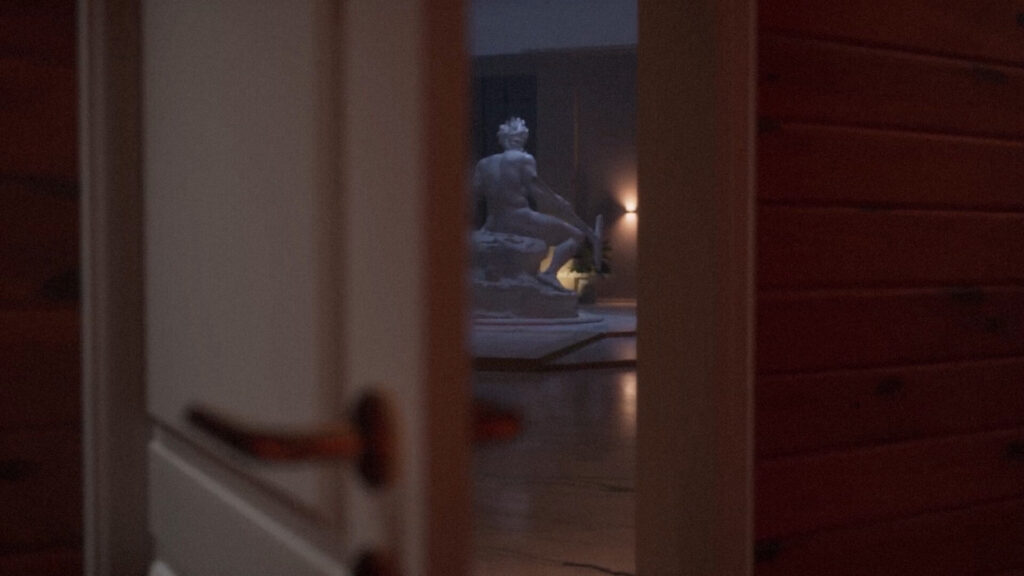
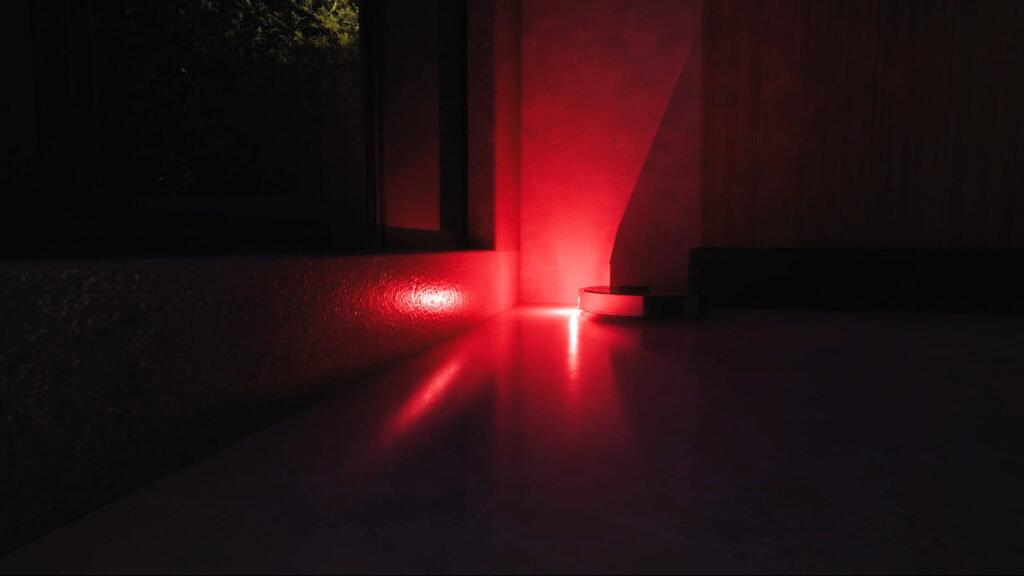
Where Tales of Kenzera: ZAU was a colorful, often child-like interpretation of African mysticism, Dead Take is starkly realistic and dark. Befitting the tone, Cain’s infinity pool of money is dimly lit, even in the most opulent rooms. Lighting is bleak, often flitting out or soaked in red hues. Being a PC-only game for now, Dead Take runs and looks great even on a weaker rig like mine. The game doesn’t want players to relish in small details, rather the sweeping moods and tones of what the moment allows.
Yet for all the variation between visuals, eerie music, and puzzles, Dead Take‘s most powerful aspect is the overarching theme of its narrative. Considering the short runtime of the game that leaves little room for introspection or doubt, discussing too much of the plot would risk stripping away the shock and unease Surgent Studios is attempting to foster.
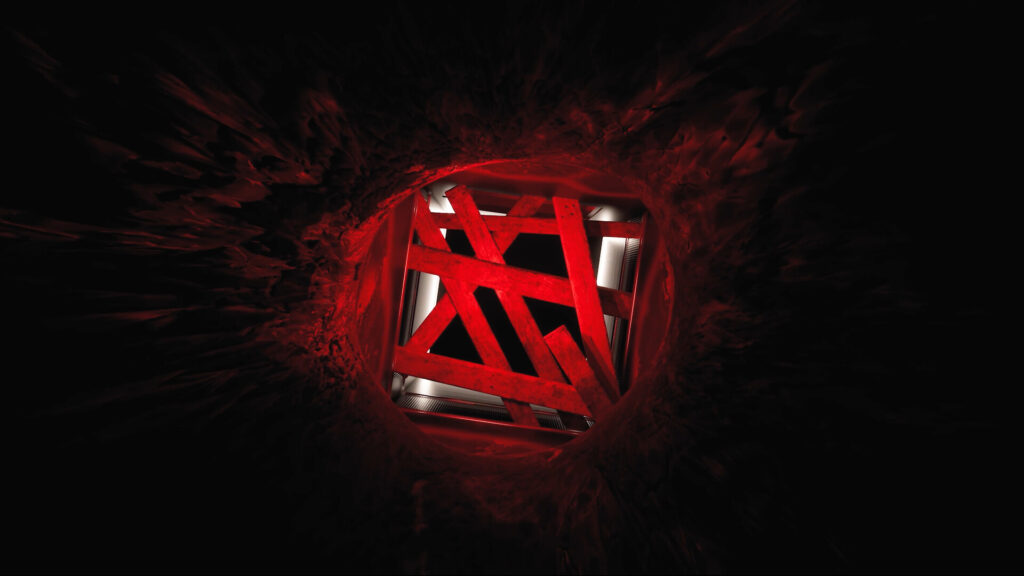
Across Cain’s mansion are notes, clues, articles, and visual details that work to sketch out the borders of this one, one meant to depict Hollywood as this seedy, dangerous, winner-takes-all world. Players will have elements of all the characters touched upon when they fully explore the hollow home. But these are only pieces of the greater whole.
Surgent Studios levies the commanding forces of Neil Newborn and Ben Starr, both of whom have become powerhouses in the gaming space. Here, however, FMVs are used when the player uploads a USB stick or SPLAICEs videos together for viewing in the screening room. It’s here a camera is placed squarely on the actors, allowing them to deliver incredibly powerful monologues.
Keep in mind, there is no guarantee at any point that the player will see a flesh-and-blood human in Dead Take that isn’t through one of these FMV sequences. The only hint that Chase is a person is the shadow cast on him. It is a stark contrast to have these moments interspersed throughout the game’s runtime, putting these familiar actors in front of the player like a raw nerve.
Each of these FMV sequences feel like a kind of checkpoint or completed objective where the player sits and soaks it in. Say what you may want about the context of the narrative or the content of the game, the writing and direction of these segments is outstanding. Starr and Newborn are natural foils to each other in their dueling roles, with Starr oozing charm with a film of sleze, Newborn screaming with raw desperation.
Even as the player may navigate towards a somewhat predictable ending, the underlying messages and themes of Dead Take resonate, especially by today’s standards. It’s painfully obvious that Salim is writing and directing from a place of knowledge about the inner workings of Hollywood and the film industry. This is a world that churns out talent from actors to writers and everyone in between. Cain is portrayed as this god-like figure but has countless skeletons in his many closets. And when actors like Matt Mercer, Laura Bailey, and even Sam Lake appear for cameo-like appearances, their monologues feel deeply personal. One can imagine that the talent working on Dead Take was at one point churned up in one industry meat grinder or another before forging their own success.
Dead Take works as a message, as a personal anecdote, as a performance showcase. It may not present a wholly unexpected take on the first-person horror genre nor dazzle with complex puzzles. But this dissection of power and the ones who wield it feels especially timely in our constantly-changing world that seems to reward ambition through viciousness. As an eerie, moody look at Hollywood, players may grow uncomfortable at Dead Take‘s honesty but remain enraptured by the phenomenal talent of its acting and direction until its final, stark moments.