


Though altering many of the original's fundamentals, Control Resonant is every bit an extension of Remedy's incredible universe. Frenzied melee combat and mind-bending exploration house yet another fascinating story across numerous planes of reality.
Control Resonant is quite a brilliant game in its own right but deep into its twisted version of Manhattan, the same thought kept echoing through my head.
This is fundamentally a “Control” game… yet it’s also not.
Much like its universe’s Objects of Power and Altered Items, Remedy is able to layer dimensions into a singular concept.
In 2019’s Control, players controlled Jesse Faden who came into possession of the Service Weapon–a gun that had multiple firing modes. The weapon could spin up like a machine gun, lob explosive rounds, and even zoom in for devastating shots. Over the course of the game Jesse also wielded psychic abilities to further devastate the denizens of the ever-shifting Oldest House.
Anyone who had nestled themselves into Remedy’s seemingly interconnected constellation of games was able to recognize Control as a culmination of the developer’s body of work. The shooting of Max Payne. The powers of Quantum Break. The heady drama of Alan Wake. Control allowed Remedy to be as weird as it wanted to be, converging into a wholly unique game with an unforgettable world.

A sequel to Control is fundamentally easy to conceptualize. The first game took place in a location representing a convergence of paranatural forces, alternate dimensions, and the Astral Plane. It was in the Oldest House that the Federal Bureau of Control set up shop. A seemingly humdrum, old-fashioned office setting with pneumatic tubes, analog recordings, and a refrigerator that could kill if you blinked. Where oh where could a sequel go?
Make it a prequel with a Director only referenced in notes. Hell, put it in an alternate dimension. Keep Jesse in power but have her solve more mysteries in the Oldest House v2. Given Control’s foundation and Remedy’s proclivity for the bizarre, a continuation wouldn’t be that hard to stitch together. Jesse could have a new gun with new firing modes, new powers. Enough variety and fresh flavor to justify another bizarre delve into an infinitely massive building that can warp to the wills of reality and an eager developer.
But that’s not Control Resonant.
Where Control felt like a culmination for Remedy, Control Resonant is an evolution.
Both spiritual successor and direct continuation, Control Resonant plays somewhat similarly to its predecessor but also not at all. Its devotion to melee combat is a far departure from guns, yet supplementary powers ripple through both games. The Oldest House was more open-ended than open-world but Manhattan eliminates most guardrails and is still restrained enough as to not overwhelm the player.
Control Resonant fundamentally cannot exist without Control. The sequel’s narrative being a direct continuation prevents it from being too independent of direct comparison. Outside of that, however, Control and Control Resonant are much like its core leads Jesse and Dylan, siblings, cut from the same cloth, sharing the same DNA but their own separate entity.
At the finale of Control, Jesse finally accepted the mantle of Director of the Federal Bureau of Control, one she stumbled into during the first five minutes of the game. She found her brother Dylan and freed him of Hiss possession, which unfortunately left him in a coma. But the Oldest House was still on lockdown because the Hiss threat wasn’t entirely solved.
Taking place seven years later, Control Resonant opens with the Oldest House being breached. That whole time Jesse and other FBC members were trapped inside, cut off from the outside world. And for those seven years, little progress was seemingly made. Answers led to new questions, morale dwindled, and the Hiss were never fully understood.
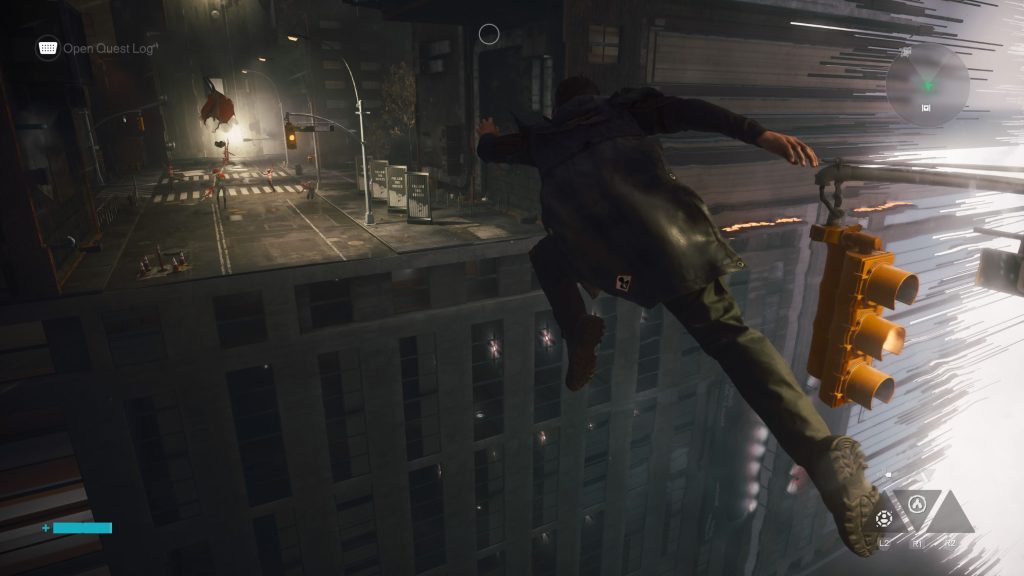
Manhattan has now been transformed, a result of the deluge of influence from the Oldest House pouring forth into our ordinary world. Buildings seemingly disintegrate into another dimension. Streets fold onto themselves and defy gravity. Hiss have possessed the populace and transformed the metropolis. Bizarre circumstances are causing the world to replicate, creating impossible patterns out of the natural and man-made.
Jesse begrudgingly departs, wishing for Dylan to wake up but he is still trapped in his coma. As a parting gift, she stabs Dylan through the chest with the Aberrant, an Object of Power that will soon serve as Control Resonant‘s transforming primary weapon.
Within the first hour, Control Resonant front-loads a wealth of questions onto the player and much of that intrigue grows exponentially more complex over the course of the narrative’s 30 hours. Quickly, Remedy establishes “The Patterning” as a focal point, drawing players’ attention to this worrisome development. While the Hiss are undoubtedly a constant concern, The Patterning seems capable of keeping the Hiss in check but altering the fundamental building blocks of this dimension.
But where is Jesse? In the days leading up to the breach, she was acting strange. What was going on in those seven years and why was the FBC unable to stop anything? Is Dr. Darling actually alive?
Using Dylan as the protagonist for Control Resonant is the most sensible choice for a sequel of this magnitude. Any player who lost themselves in Control‘s rich lore might expect their knowledge to be rewarded. Though this sequel refers back to what has already been established, Remedy delights in a seemingly fresh slate of confounding propositions. Dylan spent most of his life in the Oldest House amongst the strange and unusual but a large portion of what is happening in Manhattan is new to him and to us. The two siblings mirror each other in that way. Jesse walked into the Oldest House and had to learn the world was not what she thought it was. Dylan wakes up and realizes the rabbit hole can go significantly deeper than what he was initially trained to understand.
The cadence of Control Resonant‘s driving questions feel more important than the specifics of any particular reveals. Much like Control, players have the option of plowing through the main story, making a beeline towards gaining answers. And of course, supplementary reading and listening is littered throughout the world to further fill up the bucket of knowledge.
I spent the first 15 hours of the game moving through Manhattan and its varying side activities and stories before the main narrative hit a kind of turning point halfway through. And this is a testament to a number of things that Remedy does quite well and is finally able to expand upon using an “open world” as a factory for gameplay and ideas.
Over the course of Control Resonant, I grew to appreciate Dylan Faden as his own protagonist both well-written and expertly acted. Courtney Hope commanded the screen as Jesse Faden and it was easy to tell that she is held in as high regard as Max Payne and Alan Wake–the characters, not the games. Sean Durrie’s brief screentime in Control was quite hypnotic, his mutterings and monotone speeches proved captivating in the narrative’s bigger picture.
In Control Resonant, Dylan walks out of the Oldest House with the horrible burden of slaughtering hundreds of FBC agents while he was possessed by the Hiss. He is uncertain of himself, seemingly desperate to seek common ground, to find forgiveness, and offer help. Many reject the notion of his existence and aid but the main cast each handle him differently. Arish seethes at him with contempt while Pope has a guarded fascination and understanding. Most of the game an FBC agent named Zoe is tasked with being Dylan’s handler.
During the events of the game, Dylan and Zoe keep in regular contact over a radio, building a rapport and offering avenues to explore Dylan’s character and personality. Remedy has opted for a system of optional dialog choices during conversations. While silence can often be an option, players can massage a personality type out of Dylan. Do you want him to be subservient and constantly apologetic? Do you wish to give him a slight edge? Or will Dylan try and cut a joke to fit in a little better?
Initially I wondered if Zoe being brash and untrustworthy of Dylan would create an overtly quippy dynamic. Certainly she would be standoffish and warm up to him with moments of drama in between. However, I think because Zoe spends most of her time over the radio, it allows the player to also bond with Dylan. Often enough, the player has multiple ways they can respond or a number of questions they can ask. Do you want to stay on the subject or have Dylan follow a different emotional lead? After a point, I had leaned into who I wanted Dylan to be and I noticed that Remedy was writing dialog choices that provided those ways to express my choice. And better yet, it adds incentive on repeat playthroughs.
A number of players are absolutely going to miss Jesse being lead, that merely speaks to the quality of her character. But Dylan truly becomes yet another exceptional Remedy lead. His existence in this universe is enriched by how unfamiliar everything is. We simply did not get enough time with Dylan for how important he was propped up to be in the events of Control. With Control Resonant, not only does he get his moment in the spotlight, it provides ways for Jesse to also be understood more.
I’ve always been deeply fond of the way Remedy handles not only its characters but its writing in general. They build these worlds densely, allowing players to sit with them and explore them. The main characters are always that; they swallow up the bulk of the playtime and chew the scenery. Side characters are implemented to be quirky or to push the plot along or to build on the world and its lead. I appreciated the depth Dylan was written with but in Control Resonant–and by extension Alan Wake 2–I see the developer trying to make its entire cast intriguing. Zoe is a wonderful example of this and even the limited time with Jesse is deeply impactful.
And as the player explores Manhattan they will be exposed to a number of fascinating pieces of side content meant to build out the Control universe. Altered Items are back, creating wild scenarios meant to amuse, terrify, and entertain. Any game that can juggle creeping me out, making me laugh, and having me on the edge of my seat because of a piece of content that is over in a matter of minutes has my heart.
This culmination of character work and world building make Control Resonant a potentially better narrative than Control. Of course, that is an entirely subjective statement. But this is also coming from a person who just finished Control a few weeks ago.
When Control first released in 2019, I played it for several hours. In fact, I bought two copies of the game, a digital and physical version. But then I simply dropped it. Couldn’t tell you why. Probably got extremely busy with other games to review. A couple years later, I picked the game back up again and started it over. Then I got stuck. I kept dying in this section I felt that was far too difficult.
So in anticipation of Control Resonant‘s release, I wanted to finally complete a game many of my friends deeply enjoyed. I didn’t start over, I just powered through, knowing my memory served me well enough. Turns out years ago I was going to the wrong place. Whoopsie. But in the end, I was extremely satisfied by the game, loving so much of it. Yet I couldn’t help the nagging part of me that felt as if the reveal of Jesse’s brother, the payoff of that, and the resolution of the Hiss and what happened to Jesse and Dylan’s hometown of Ordinary was all wrapped up far too quick. The game was over and done in about 15 hours. And it almost felt too short and too long at the same time.
Looking back on my time with Control, I wanted to scour the Oldest House for every document and soak up the lore, really understand what universe Remedy was building. And I also just wanted to use my powers to blast things to hell. About halfway through the game I got in a rhythm of using the Charge firing mode on the Service Weapon and using Launch to throw everything at the Hiss. Nothing else beat that combination. And I knew that a lot of story beats would lead me into another strange room or work area where I would have to aim and pull the trigger.
Control Resonant takes its time and is a much better game for it.

As time grows more and more limited for all of us, it’s important that those moments aren’t wasted on pointless excess. Those worried a more open space like Manhattan would lead to open-world fatigue and tedium should rest easy with Control Resonant.
The option exists to bypass almost all of the side content presented here but it would no doubt leave the player utterly helpless as the main narrative missions play out. But the game isn’t about ticking arbitrary boxes. There is an almost effortless flow to how the player is subtly guided to conduct tasks and quests.
Dylan and the player’s quest for knowledge and power work in tandem. One of Control Resonant‘s primary tasks is to kill Resonant entities that act as unique boss fights unlike anything encountered in Control. The player is told that killing these bosses will reward new powers. So naturally, that’s what I pursued first.
At the onset, there are two “main” quests designated as such. One is to find Jesse and the other is more or less to aid the FBC is figuring out what the hell to do about Manhattan’s current kerfuffle. But understanding the Resonant entities are a part of that process because the first one encountered introduces so many unknowns that are too tantalizing to resist.
Control‘s narrative led players by the hand through the biggest story beats. Worse yet, each named “boss” was basically just a souped-up version of a Hiss enemy that would then be a normal insert during fights over the remainder of the game. In Control Resonant, that section of Manhattan is morphed due to one event or the other, the player learns more about it through collectibles, Dylan becomes more ingrained in his knowledge and understanding. Along the way towards these fights, expect to find small head-scratching puzzles that might explore a secret society or a strange encounter with an Altered item that leads to a unique moment for the player.
Quickly the player will realize that Remedy has constructed its interpretation of the open-world formula to maximize rewards for players engaging with it.
Control Resonant‘s economy centers around completing tasks, finding chests, and killing enemies. All the rewards are funneled into upgrading attacks and perks. Anything done inside of a particular zone of Manhattan will increase the completion level of that zone, granting players rewards with each level up. Maybe it is increased health drops, maybe it’s an actual item or skill point. But the brilliant part is that players don’t constantly have to engage with this system. It is there to fuel a sense of accomplishment. Do you want a specific material to unlock a higher tier of the Aberrant weapon? Maybe level up a zone and in turn, unlock more rewards at the Food Truck vendor, and purchase it that way.
There was never a feeling of being forced to exist in these areas and do all these tasks. Many will do it simply for the sake of being a completionist. I didn’t max out a single zone partially because I was enjoying moving from place to place.
But Remedy implements an interesting twist here.
World feats–those small activities like defending an FBC team or fending off a Mold outbreak–disappear after completed. More will appear if a player levels up a zone, though. Mobs of enemies can be killed and disappear. But once a Resonant entity is killed, it resets every zone. Enemies return, world feats come back, and everything gets a little harder. Enemy levels go up but the rewards for doing everything also increase to account for the challenge.
For the first half of the game, I found that Dylan, while putting up a good fight, was struggling a bit. Enemies took a few too many hits to die and his health was quite low. The first Resonant entity I fought killed me multiple times and I almost quit until I was stronger but was too stubborn to do so. I was cleaning up the map and felt a soft power creep but nothing dramatic. I wondered if Remedy wanted to keep me feeling like I wasn’t truly safe or if there was ever going to be a genuine sense of true power and growth for Dylan.
Getting the message that enemy levels were going up felt intimidating. But then I began to recognize how satisfying it was getting rewarded for going back into an early zone, being slightly stronger, doing tasks, and then leveling up that zone. The compounding sense of reward grows more and more palpable, especially because it allows the player to experiment with their loadout and try new things, or merely double-down on what they are already using.
Another fear I had with this approach was that Control Resonant‘s open-concept areas would allow for less fantastical moments of reality folding unto itself. I’m sure many players have fond memories of the Astral Plane, the Oceanview Motel, or the Ashtray Maze. Those were signature pieces of what made Control so impactful in 2019 and scripted setpieces like that are harder when players can go anywhere they want at anytime, right?
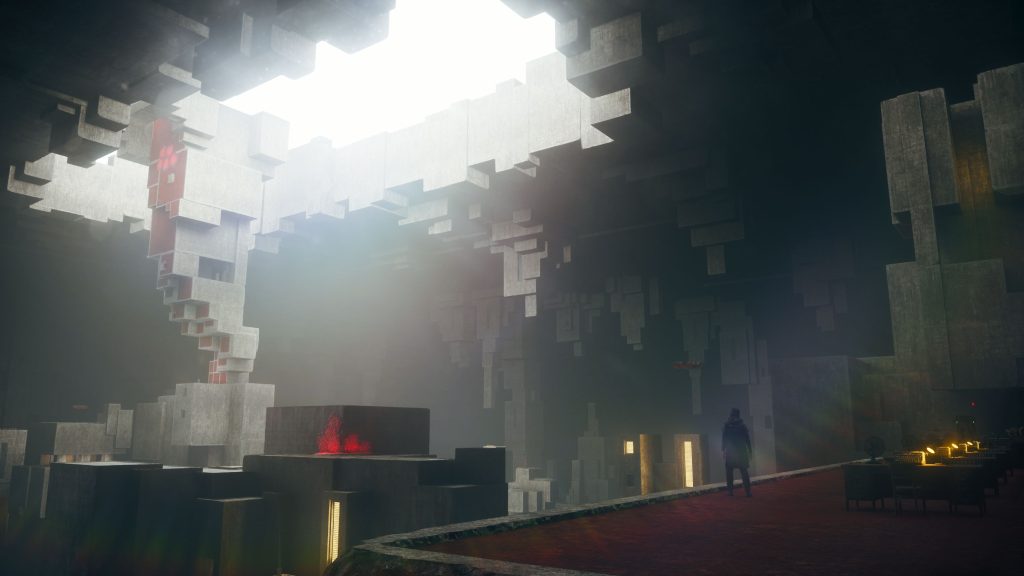
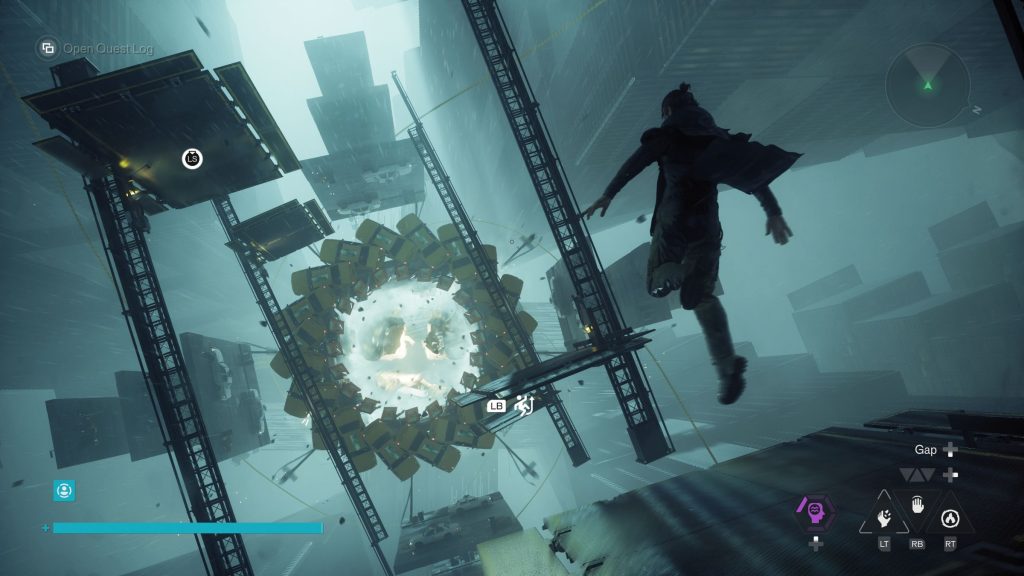
Control Resonant has no shortage of astounding moments that took my breath away. It isn’t often where a game makes you hesitate to progress merely so you can take in what your eyes are seeing. One of the driving forces of catastrophic beauty comes from The Patterning itself where reality is replicated like a kaleidoscope of horror. Remedy configures the world in such diverse ways but also enjoys playing tricks on the player or inviting them along for the fun.
Where Control took the mundanity of office and corporate life and warped it, Control Resonant does the same for architecture and the natural world. Both games use a similar palette and I would expect nothing less. When looking at Control Resonant through the lens of its predecessor, nothing here is entirely unexpected. But it is new and different nonetheless. The Oldest House didn’t contain labyrinthine railroads and crooked city streets and theater halls but Manhattan does.
And the way Remedy interprets genre staples proves that this universe is flexible enough to absorb tropes and make them fun. Fast travel points are seen as distorted doors that Dylan walks through and ends up miles away. A high up spot is merely a suggestion as Dylan can shift gravity and walk on ceilings or up the side of a building or road.
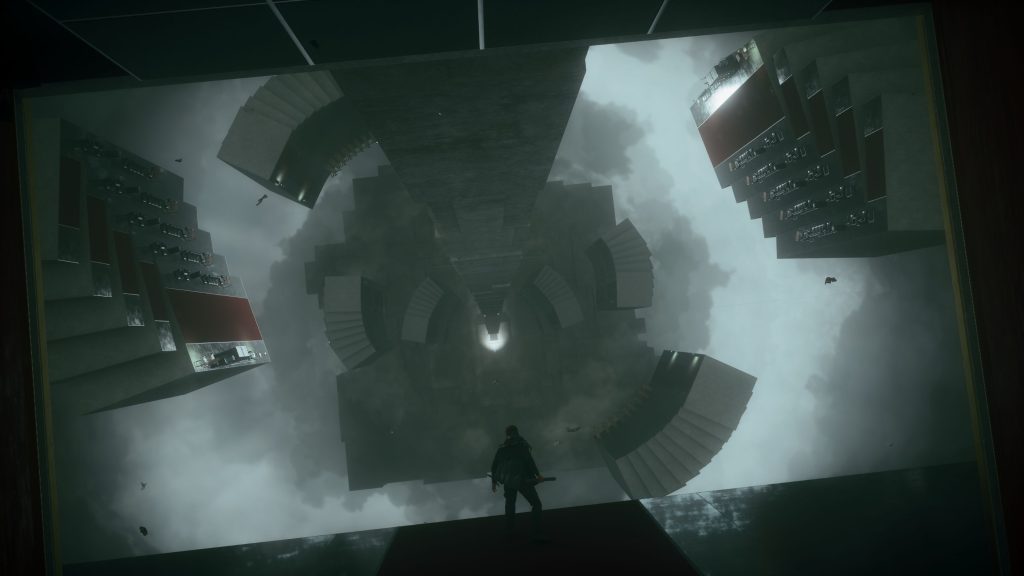
The world is constantly engaging to navigate through. I will admit that throughout Control Resonant, Remedy reuses certain assets like to reduce costs and development strain. Small shops will repeat themselves, as will the same purple gym. But these are seconds-long diversions that house a note or a chest, nothing that gnaws at the spectacle of the rest of the game. I’m pretty certain Remedy found a bunch of artists and featured their work in the dozen or so art galleries in the game. Small and large touches give the suggestion of creative license rather than overt cohesion. If the world doesn’t evoke a feeling of wonder and danger, does it really matter if it all makes sense?
Would I truly knock Remedy here, it would be for a few instances of tedium that results in backtracking. There are times where I would be a little far from a fast travel point in a zone and wish I could get there quicker. But other times–especially after a story mission or a Resonant fight–I would have to retrace my steps for a few minutes to get back a surface or a place I could fast travel from.
And as Dylan learns new methods of moving through Manhattan, there are instances where platforming and claiming a sense of direction can be a bit hard. The ability to shift gravity and magnetize to a surface in almost any orientation is frequently awesome. But sometimes it can be difficult to get your bearings. Dylan is not Peter Parker but can still cross rooftops with relative ease, yet there were many times I felt like a jump wasn’t connecting right or I wasn’t clambering over the edge to get on top of a building as expected.
Ultimately, these minor gripes fade into the back of my mind when looking at the whole of Control Resonant. It is easy to pick apart the little things that aren’t there entirely but recognize the minimal impact they have. Admittedly, I was worried on my base PlayStation 5 the game would have moments where it struggled. While there certainly are a number of minor bugs and visual glitches that will get ironed out, Control Resonant ran quite effortlessly. There was one instance where an enemy slammed its entire body on me and pushed me through the floor, falling past the game’s geometry for awhile before I eventually bottomed out. But I recall no instances of noticeable slowdown, especially on Quality mode during high-intensity battles. I wish I could speak for those on PC, Xbox, or even PlayStation 5 Pro but it feels as if Remedy knows what they are doing with the Northlight engine.
Control Resonant houses so much of Control‘s DNA inside of itself. The natural world that obfuscates other dimensions. The expert storytelling and writing. The fun moments where music and mechanics collide. But the one aspect where Control Resonant unquestionably excels over Control is in its combat.
As far as third-person shooters go, Control was competent enough. What gave it so much staying power were Jesse’s abilities. Possessing enemies, throwing up shields of rubble, and launching printers and chairs was fun. But the mechanics never evolved past that loop of using a power, waiting for the energy to recharge, shooting the gun, waiting for the ammo to reload, using a power, rinse and repeat.
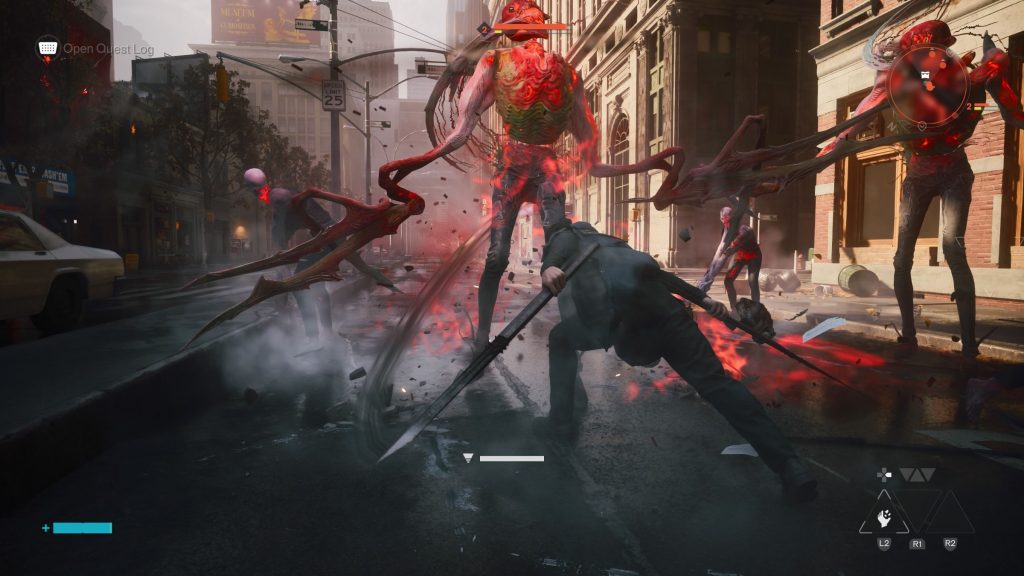
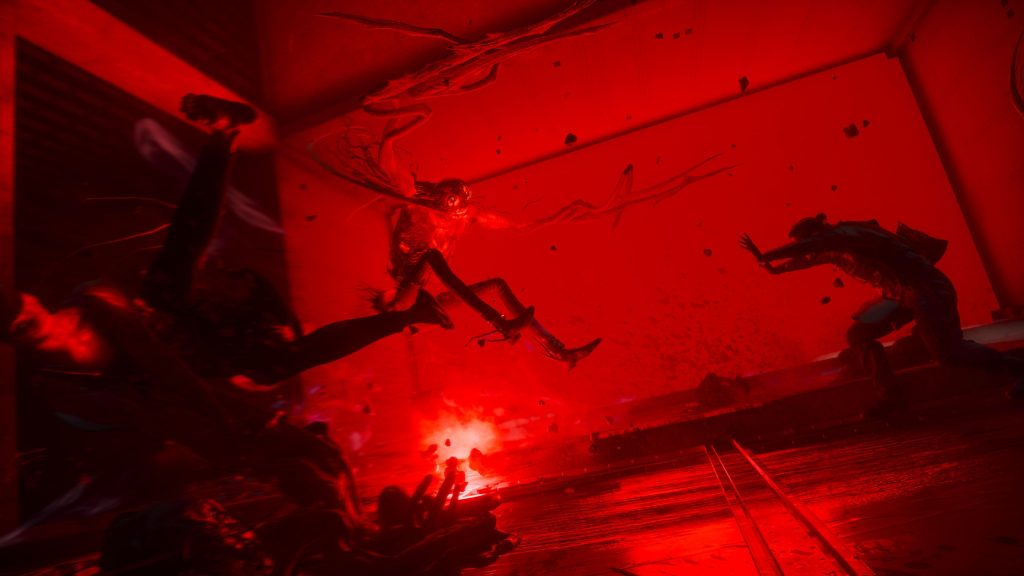
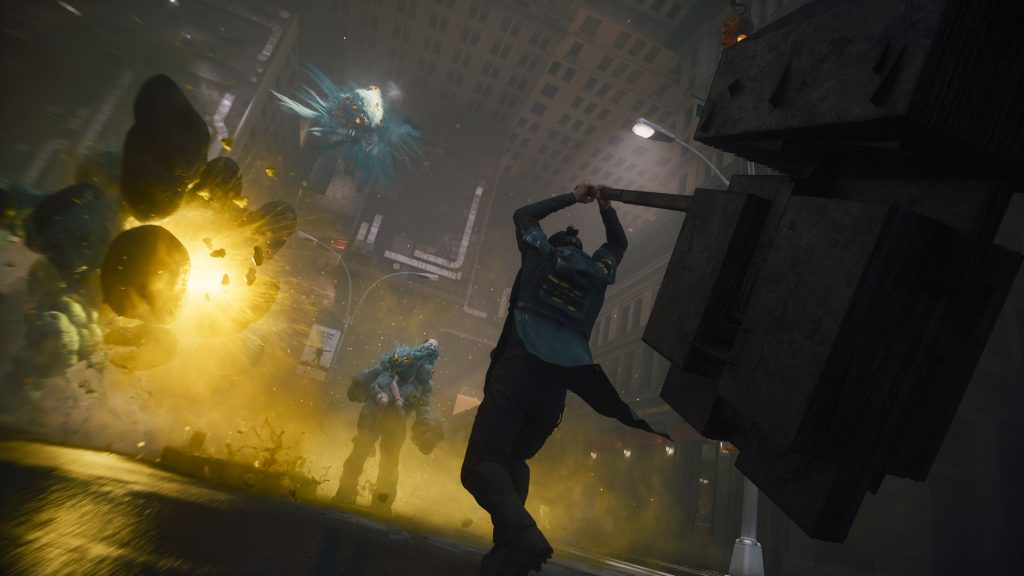
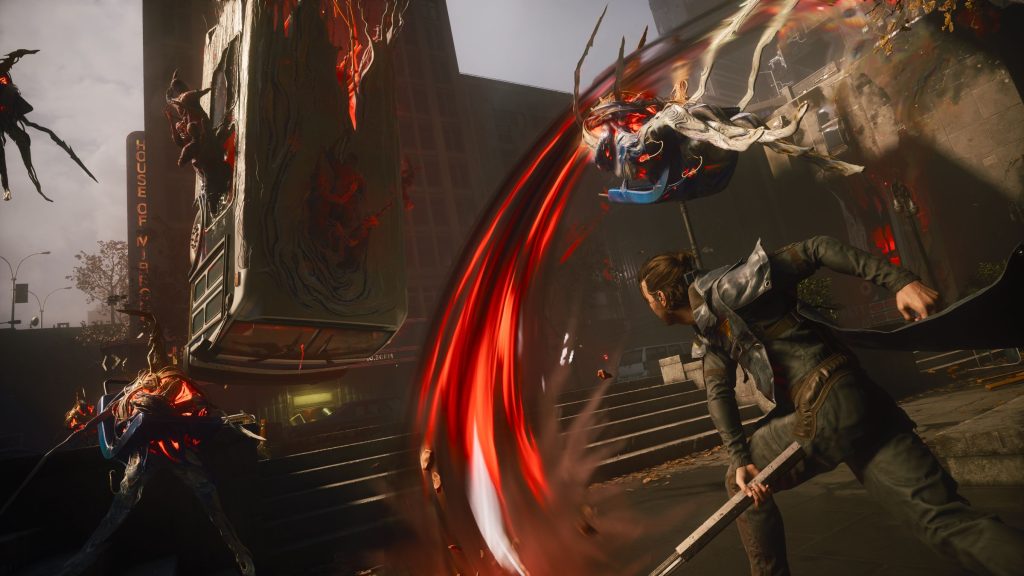
Much like Jesse’s Service Weapon, Dylan’s Aberrant can transform. It can become a scythe, twin blades, a hammer, a drill, even a spinning blade like something out of Dark Sector. Combat is vibrant and tactile, focusing on selecting which enemies to focus on while thinning out the herd and doing so in style.
At the game’s onset, players choose the form they want the Aberrant to take. A primary and secondary attack can be selected. Each form of the Aberrant acts a little different and upgrading them will enhance its specific capabilities. But the basics should suffice. Primary attacks will usually inflict a variation of basic and critical damage against an enemy. Secondary attacks are usually charged but also better at building up power, which is then used to summon combat skills.
Enemies take normal damage but can also take Falter damage, which acts as a kind of stun gauge. Build up enough Falter damage and the enemy can then be executed–briefly boosting Dylan’s combat capabilities–but also unleashing one of the most satisfying pieces of feedback in an action game. Hearing The Board’s guttural throat chanting upon each execution echoes through your ears and pumps adrenaline into your blood. Soon enough, players can assign a combat finisher to their three-hit combo, which usually has supplemental effects based on which finisher is selected.
The Aberrant is designed in a way to be instantly approachable. Quick attacks will get the job done for a bit. But players will notice that Falter damage is pretty low. Each form of the Aberrant has varying degrees of critical chance, Falter damage, and regular damage. So players can decide which combo finisher and secondary attack may fill in the gaps for them.
As Dylan is able to double jump, float, and double dodge, players should be mindful of his agility, which is often necessary as many enemies fly or can be launched into the air. Certain Aberrant forms dole out more damage types based on enemies being lifted. Perfectly dodging can also apply bonus damage on hits.
Within the first hour of Control Resonant I felt as if I was encountering more types of Hiss than I had across the entirely of Control. While many of them are returning, it is still significantly more satisfying to defeat them in melee combat. Knowing that small grunts will keep spawning until the bigger Hiss are destroyed but knowing those grunts can potentially grant health. There’s a delicate act towards understanding that opening with a power and then getting in hits to build back energy to launch another is the way to go.
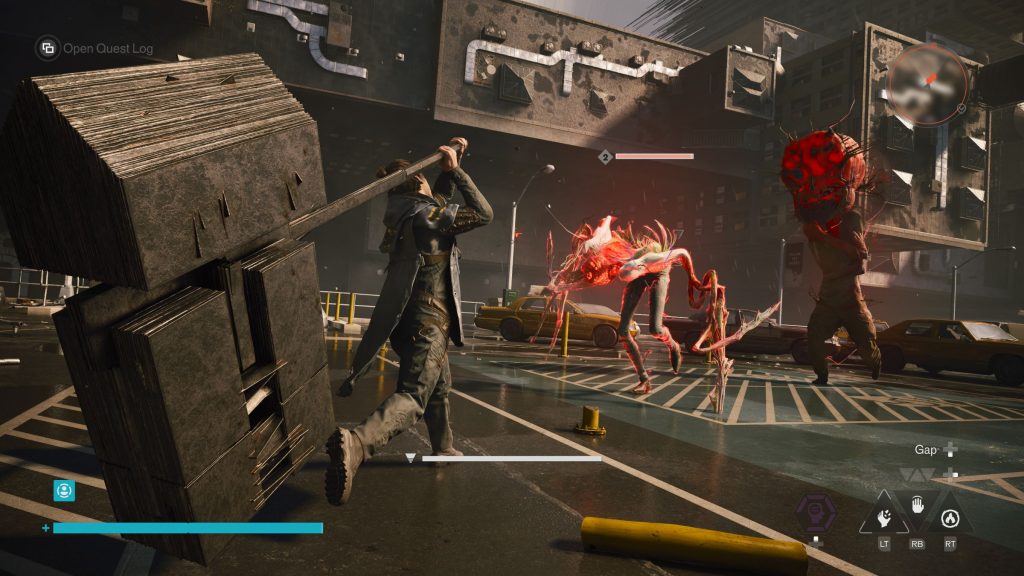
Though combat doesn’t fundamentally change outside of primary, secondary, and power attacks, it rarely grows stale. Control Resonant has flashes of games like Devil May Cry or Bayonetta partly because of how flashy it can be. But spamming the same attacks back to back is still a path to victory. And I think criticism can be handed towards the tendency to button-mash to victory. For some, the onslaught of blades and powers may wear thin. But I think experimentation also breeds its own kind of enjoyment.
However, satisfaction comes from the slurry of enemies that get decimated over the course of the game and then using those strategies on the Resonant bosses. When I thought I was becoming too reliant on setting my attacks on fire and then just non-stop hitting primary attack, the game introduced Spore turrets that could spawn, inflicting a status effect that could then explode if I ignited an enemy. At one point I became a summon master and had two blobs of paranatural forces and some spores attacking for me.
As players collect resources and gather strength, they will unlock new perks to work towards build-enhancing skills. But merely unlocking any node on the Aberrant raises its overall strength, meaning that players who want to grind out zones will be rewarded. Though players can unlock everything eventually, it is costly to do so. Remedy gives the ability to purchase a resource/skill refund that will return everything a player invested so they can apply it to different Aberrant forms and upgrades. It’s a smart option that pushes players to at least commit for awhile before making any rash decisions.
Control Resonant places a lot of emphasis on its melee combat and I have to say that I’m relieved there is no parry or perfect block mechanic. The game gets a little sloppy when a dozen enemies are honing in on Dylan. It wouldn’t be fun to try and time out moves like that. A perfect dodge is a great middle ground and even that is relatively generous in its window. I think players will be surprised at how difficult some parts of Control Resonant will be, especially if they haven’t properly invested a bit of time into exploring Manhattan.

The rest of the game is supplemented by extracurricular activities that are simply just fun to do. Arcade cabinets can be found across the world that unlock timed platforming trials or extreme combat challenges, granting rewards the higher up you score. Small, contained puzzles ask players to be observational or juggle objects to progress. Some of these are housed within the main narrative while a lot are simply optional.
Control Resonant is a shockingly massive game but none of it feels like misused space. One might argue that Remedy was at the top of its game with Control in 2019, especially after lukewarm reception to Quantum Break. But it’s with Control Resonant that Remedy feels at its artistic peak. This is a culmination of the developer’s phenomenal body of work over the last few decades. Rather than being a condensed exploration of established themes, Remedy decided to go all out. Few games burn this proudly and confidently across so much real estate. Control Resonant never relinquishes–a brilliant work that is awe-inspiring, thought-provoking, and at the apex of creativity.