


Borderlands 4 is not a groundbreaking entry in the Borderlands series, but it improves on several gameplay mechanics that fell short in earlier titles. The newest free Bounty Pack is a nice touch in making the game more of a looter shooter MMO, but I’m even more excited to see how the future expansions evolve this game into a chaotic looter shooter that you and I love.
I know that Borderlands 4 has been out for several weeks now. I also know that the Bounty Pack 1 DLC came out two weeks ago and is now free for all Borderlands 4 owners. The purpose of this review, then, is to discuss it post-launch and evaluate how it’s holding up with its first set of additions. If you have been on the fence about Borderlands 4 until now, this review should give you a better idea of how it’s playing and where I see some opportunities for improvement.
I was fortunate to spend over 45 hours in-game. I’ve beaten the main story, a handful of sidequests, along with some of the postgame content that amps the difficulty in replayable boss fights and missions. I’m thrilled that I was able to play this solo and play it with some of my friends, as my usual review process is an isolating experience until the review embargo lifts. Coming out of this review period, I’m confident in my belief that Borderlands 4 is a fun game, regardless of whether you’re playing solo or playing with friends. Gearbox has made several changes to the progression systems and the story that tells me that they’ve listened to players’ feedback after Borderlands 3 and brought the game back to its roots as a chaotic and satirical take on the shooter genre.
With the Bounty Hunter Pack 1, though, it looks like they’re setting Borderlands 4 up to be an MMO – something I never thought I would see from Borderlands. I’m not 100% sure I want a Borderlands MMO…but I certainly do like what they’ve done with it thus far.
 Let’s recognize the performance elephant in the room before proceeding. Yes, the game is still a work in progress as it pertains to its performance, at least on PC. My first few hours playing Borderlands 4 on my rig (my CPU is an Intel 9900K and GPU is an NVIDIA 3080) involved choppiness and frequent loading screens that presented me with the “Compiling Shades” message. I did some troubleshooting by making my computer’s shaders cache unlimited and enabled VSYNC, which seemed to be a quick solve. Even stranger, the default “Medium” settings resulted in a lower frame rate (~40FPS) than me pushing it to “High.” I’m unsure if all of these issues stem from Unreal Engine 5 or the game altogether, but these things are quite strange.
After setting the game’s quality to HIGH, enabling VSync, and maxing out my computer’s shader cache, the game ran fine. One of the friends I played this game with mentioned that his PlayStation 5 version was more-or-less stable, but recognized that improvements could be made as well. Be prepared to do some tinkering in the settings.
My time with Borderlands 4 was an enjoyable one. From the classic rock-fueled opening sequence set to Des Rocs’ “This Land” to the oodles and oodles of insanely creative guns that are less gun and more fun, I was continuously surprised by how creative and silly Gearbox designed the game. I thought that Gearbox had hit peak creativity in the gun department with Borderlands 3, but this was definitely not the case with Borderlands 4.
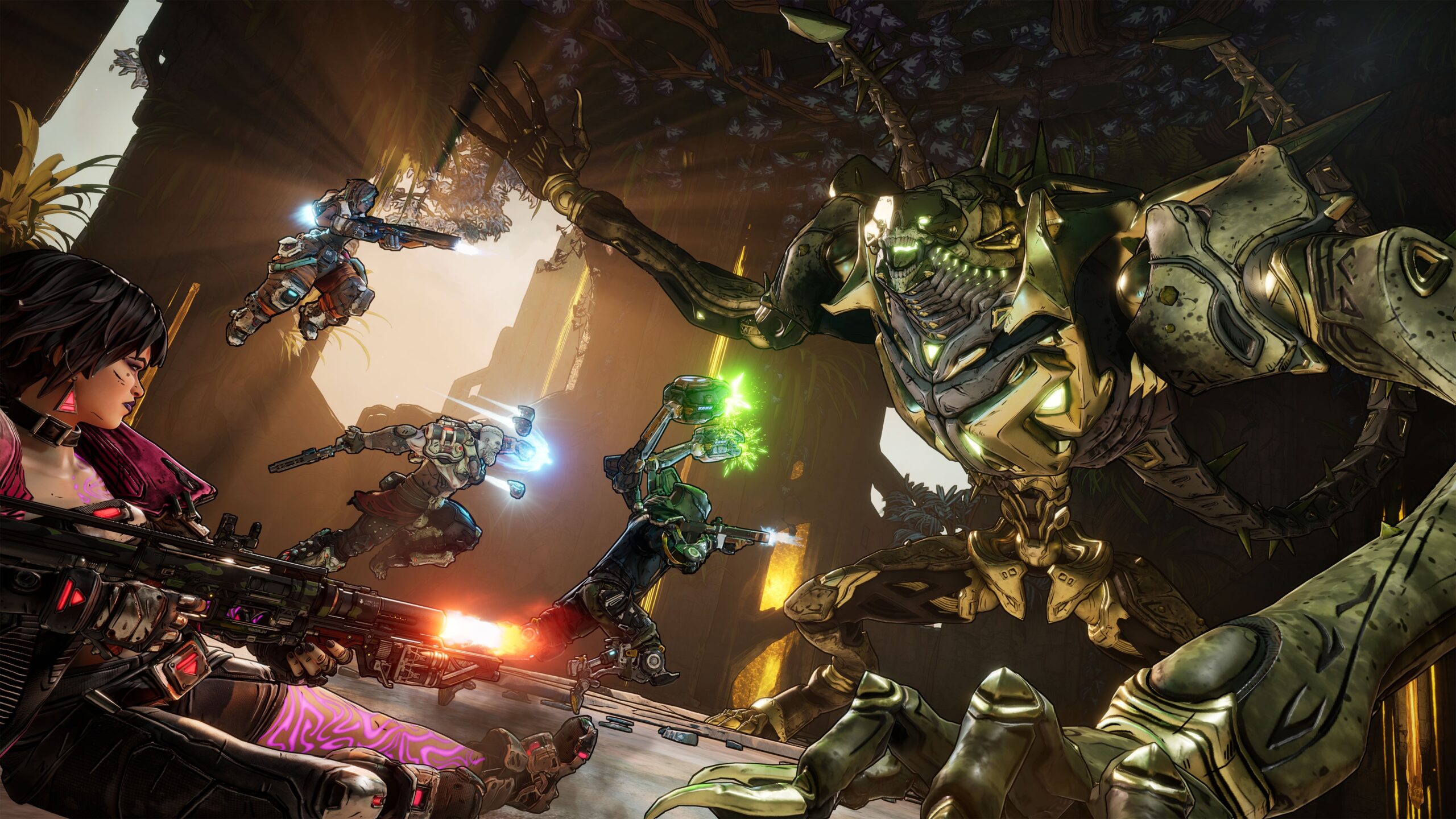
Borderlands titles are known for their creative and ridiculous weaponry, and Borderlands 4 ups the ante in making guns more creative and fun than ever before. Tediore’s gun-turned-explosive-when-thrown and Jakobs’ ricochet effects return, along with several other modifiers that give each gun a distinct flavor. New to Borderlands 4 is the Order weapons manufacturer, which turns any rapid-fire gun into one that can charge up and unleash a volley of shots fired at once. With eight gun manufacturers and seemingly endless configurations of traits, perks, and modifications, every gun felt unique yet fun to use.
As a result, my first 49 levels ended up with me experimenting with every gun I came across, regardless of it being a sniper rifle, shotgun, assault rifle, or something else. Borderlands 4 won me over on making every single one of its guns worthy of using.
Gearbox’s CEO, Randy Pitchford, mentioned in late 2024 that the term “open world” doesn’t really apply to Borderlands 4 because of “baggage.” He did not clarify what that baggage was, but after spending ~45 hours in-game, I can surmise why. Gigantic, empty, and lifeless fields of nothingness often come with traditional open-world games. However…Borderlands 4 is a pseudo-open world title because of one thing, and one thing alone: Invisible Walls.
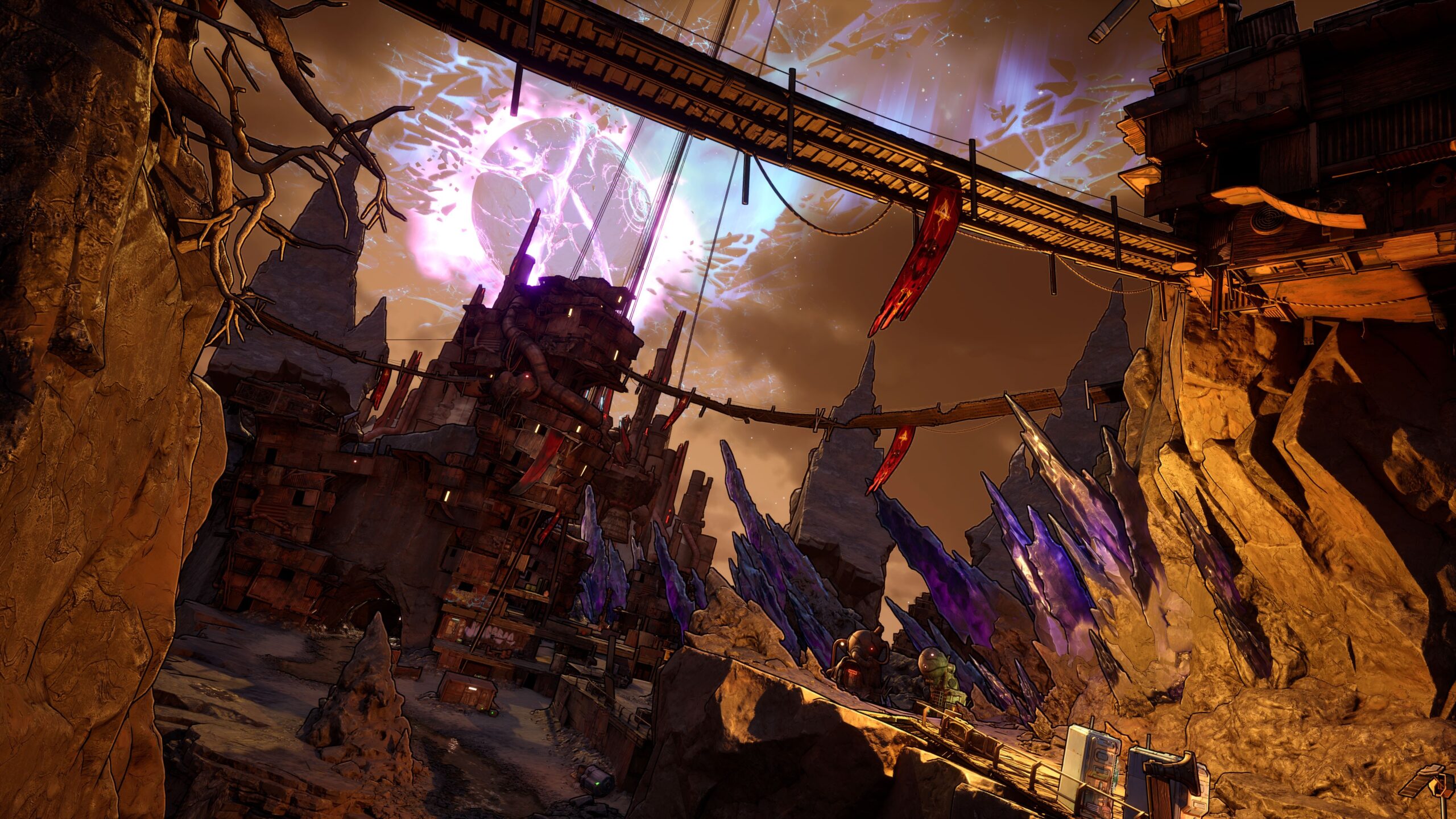 Borderlands 4 contains the illusion of an open world thanks to arbitrarily placed invisible walls, finicky climbing mechanics, and autopathing that intentionally takes the player the long way through large, open spaces full of enemies and not much else. I frequently attempted to climb cliffs to carve shortcuts through the map, only to be denied progression by an invisible wall despite having short ledges that would be otherwise climbable. Worst yet, ledge climbing and grappling felt far from intuitive, requiring me to position myself in a very specific way to proceed. I can appreciate Gearbox’s intentions in blocking off portions of the map to keep players from wandering too far off the beaten path and be disappointed by nothingness, but if something should be climbed…let players climb it.
Inconsistent fast travel spacing added salt in the wound on the traversal front. Some parts of Borderlands 4’s single planet had fast travel points appropriately spaced out, whereas other parts of the map had fast travel points positioned in disparate points on the map that ultimately required me to travel long distances just to get to where I needed to go. It’s one thing to explore a new area the first time, but it’s another thing to have to retrace steps and drive for several minutes just to get to some arbitrarily placed waypoint.
Most of the sidequests ended up feeling worth it in the long term, but Borderlands 4 has a weird approach for rewarding players. During my playthrough, I broke my long-and-firm-completionist-approach by avoiding most side quests…because of the end-game Ultimate Vault Hunter requirements that had me complete side quests with enemy modifiers, higher difficulty, and far better rewards. One of my colleagues playing on PC warned me against completing side quests during my first playthrough just so I could complete the main storyline and get better rewards from the post-game content. I followed his advice and was surprised that not only he was correct, but that attempting to complete side missions during my first playthrough resulted in rewards that just weren’t worth it. The weekly Wildcard and Moxxi missions felt like better uses of my time thanks to how much additional loot that were granted.
I’m torn on this approach to replayability. On one hand, it’s smart to reward players with increased loot in situations where they’re opting to replay the game with the other character classes, but on another hand…why have most side quests available during one’s first playthrough if it isn’t worth it? I’d rather Borderlands 4 lock sidequests as post-game content to encourage me to play the game with other classes. I don’t want to spend 60+ hours on a single class and treat replaying the game with a new character class as a chore.
 Remember how I said that Bounty Pack 1 made Borderlands 4 feel sort of like an MMO? The Vault Card system adds additional rewards in the form of XP and currency, the latter of which can be spent on cosmetic content to and a handful of weapons. I started playing Borderlands 4 with the Holiday Event, Mercenary Day, active, meaning that every day I had a new set of smaller-form quests that would reward me with currency to spend on whatever I would like. I didn’t see a FOMO countdown either, meaning that I could unlock new cosmetic content at my own pace rather than attempting to rush to complete something just to get some special skin.
I kept feeling like Borderlands 4 (with this Bounty Pack) was emulating Destiny 2 at its prime. I had longer form/grindy missions that involved slaying hordes of enemies, but I also was encouraged and pushed to utilizing weapons and mechanics I otherwise wouldn’t have considered. Being rewarded for doing so meant that I was constantly on the hunt to try out new weapons from Borderlands 4’s seemingly infinite pool of weaponry and complete missions. It’s a smart way to push me into stress testing the game’s mechanics.
The Bounty Pack’s side quest is cute and heartfelt, but it doesn’t add much in the form of novel enemies. I don’t consider this to be an issue for a free update, but I would have been disappointed if a paid update had me fighting the same set of enemies with virtually no differences.
Let’s move on to Borderlands 4’s story.
Borderlands 2 is highly regarded for its story and writing. After Borderlands 4’s release, I’ve seen many reviewers and players attempt to compare Borderlands 4 with 2, claiming that Borderlands 4’s storytelling pales in comparison. I don’t think it’s fair for players to attempt to make that comparison. Borderlands 2 was released in 2012, a time in which most (if not all) shooters contained near-similar story arcs and serious tones. Call of Duty: Black Ops 2 and its Modern Warfare 2 predecessor leaned heavily into cinematic action shots and vengeful protagonists; similarly, Far Cry 3 blended serious media tropes into an open world setting. Borderlands 2 stood apart from its competitors at that time – it was chaotic. It was a looter shooter. It was satirical. It openly mocked and defied the structure of first-person shooters as we knew them, avoiding repeating story beats that were in every other FPS on the market.
It makes sense for players to love it. It stood so far apart from its competitors and it was fun.
Switching back to Borderlands 4, it leans into mocking FPS gameplay tropes like Borderlands 2. It features a relatively serious, albeit grotesque, antagonist who openly mocks the Vault Hunter(s) throughout their journey. It’s just not the only looter shooter on the market…nor is it the only satirical FPS. The Outer Worlds 2 mocks capitalism and the player. High on Life is a fever dream. Destiny 2 has more guns than the developers know what to do with. Borderlands 4 is not alone anymore, so it has to find something to set itself apart from its competitors.
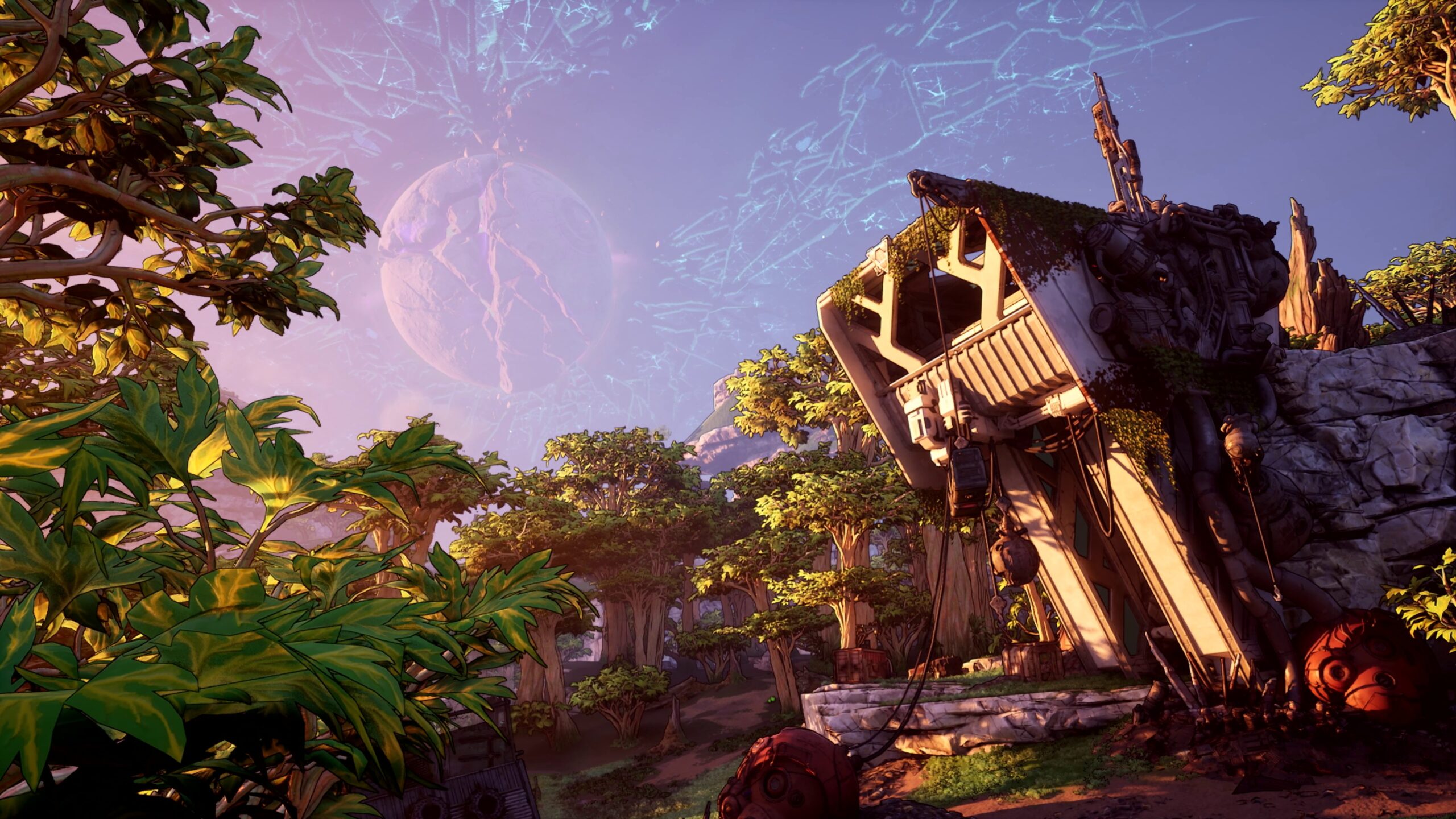 To its credit, Borderlands 4 is far more serious in tone than Borderlands 3. The Timekeeper is an excellent antagonist, especially when he and his counterparts morph into more grotesque creatures akin to Borderlands 3’s ending. It avoids attempting to mock influencer culture through performance and instead positions the Timekeeper as an overseer whose humanity is flimsily held together by a network of mind-controlled prisoners. When the Vault Hunters finally take him down, I felt satisfied in breaking free of his machinations instead of feeling satisfied for shutting him up. By the time I faced Arjay within the Timekeeper’s fault, it felt like I was facing him as a secret boss because of how late he was added to the story and how little he interacted with the Vault Hunters in the game’s final hours.
So yes, Borderlands 4’s story is technically better than Borderlands 3. It succeeds in taking Vault Hunters back into a slightly serious territory along with the bits and bobs of satire that make Borderlands so great.
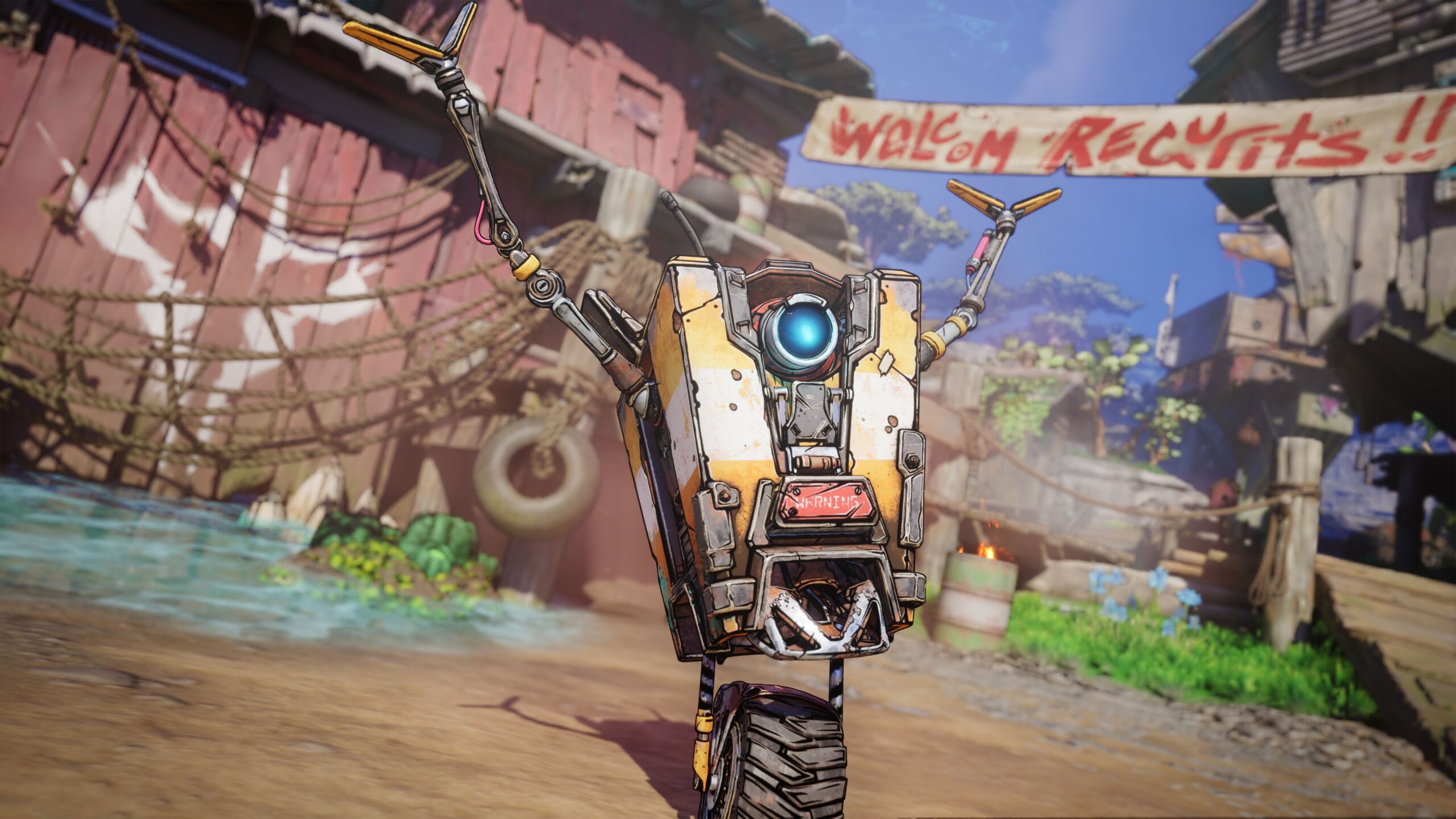
As a Borderlands fan, though, there aren’t enough callbacks and Easter Eggs to reward longtime players. The Twins and Handsome Jack are rightfully absent altogether. Lilith’s reintroduction begins as an ultra-powerful cosmic being who ends up spending most of the endgame recovering from a cosmic hangover. Her final appearance in the Phase positions her as something to worry about in the future. Zane and Amara’s return make some of the game’s more isolating parts less so; their inclusion in main story missions help make the game feel like a chaotic co-op. Claptrap is mainly present at the start of the game for maybe 2 missions, then disappears into the aether as other characters take his place.
What I’m saying here is that I wanted more characters from Borderlands’ past to be present and have a more active role in the game. Ellie (who’s supposedly coming in a future Bounty Pack) is missing, save for a few quips from other NPCs about how she used to be the NPC who allowed Vault Hunters to digistruct vehicles instead of having them always available at the press of a button. Tiny Tina (who remains my favorite character in the series) is missing as well. Zer0, FL4K, Moze, and other character-classes-turned-NPCs are not mentioned at all.
Borderlands 4 deserves a homecoming of sorts, just so we can continue seeing this world become fuller. Borderlands 3 did this homecoming well, and it’s worth emulating again to reward players who’ve been around for the series’ nearly-20-year-ride.
As I look to the future of Borderlands 4, I’m excited to see where Gearbox takes it. Just seeing the roadmap with C4SH, the Bloomreaper, and other endgame content feels like there’s more in store beyond the first few months. The fact that they quickly announced additional endgame content in the form of Ultimate Vault Hunter Levels and harder bosses tells me that they want those who made it to the end game to continue enjoying the postgame.
Borderlands 4 is not a groundbreaking entry in the Borderlands series, but it improves on several gameplay mechanics that fell short in earlier titles. The newest free Bounty Pack is a nice touch in making the game more of a looter shooter MMO, but I’m even more excited to see how the future expansions evolve this game into a chaotic looter shooter that you and I love.