
Roguelite tactical turn-based games are becoming quite popular these days. While the tip-top tier is led by Slay the Spire, as well as other notables, the genre is still trying to find new ways to innovate and evolve its gameplay. It’s a difficult task considering how restrictive the nature of its structure is, as its traits are typically path randomization, gradual progression, and eventual giant boss fights. It’s incredibly formulaic and rarely finds new ways to present itself. In one light, that’s a positive, as players will certainly know what to expect when they launch a game in this genre. Negatively, it doesn’t leave much room for new gameplay elements, so expectations on how this genre should work are pretty much set in stone.
This jibber-jabber leads to Blightstone from developer Unfinished Pixel. It’s a roguelite that follows the above formula precisely as it needs to, bringing a good turn-based tactical style of gameplay that is easy-to-follow. It checks all the necessary boxes to make this a fun experience. The areas that need improving are its uneven progression, its balance between common enemy and boss fights, and its more cohesive upgrading and buffs. On paper, and to the untrained eye, these are very fixable areas.
So, let’s pick our moves wisely, strategize before launching into attack, and let’s discuss Blightstone.
What it does well
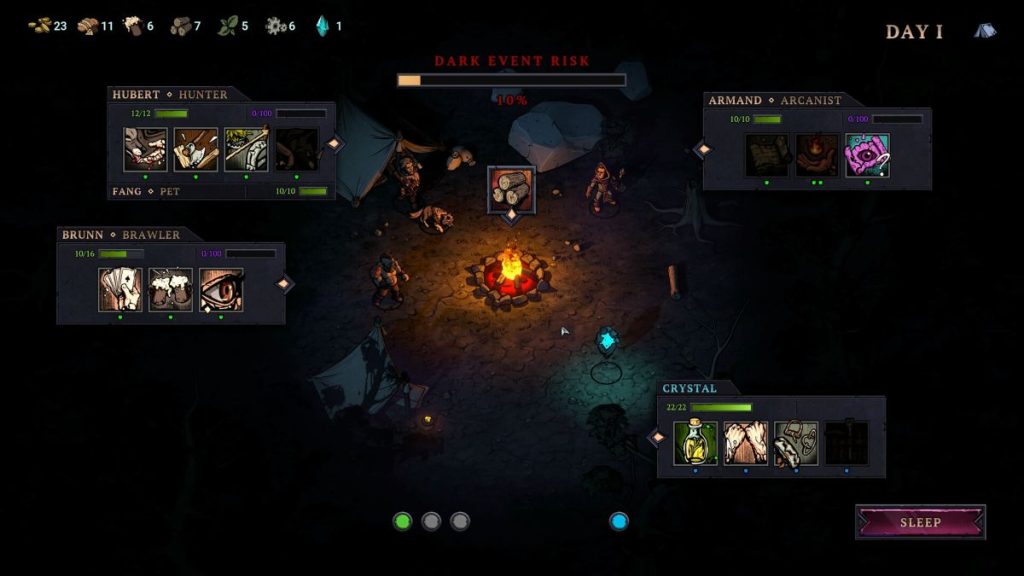
As mentioned above, Blightstone brings a typical Roguelite turn-based tactical structure that follows the blueprint of every successful game in its genre. When the player begins, they’re given four default characters to move around and strategize with. The characters are as follows:
- Brute: This is the character that uses melee as its main attack. This could be grabbing, punching, charging, or even clotheslining enemies. Their attack is brutal and impactful. They are wonderful in close-quarters combat (CQC).
- Mage: This is a sorcerer that casts spells, shoots lightning and projectiles, and keeps out of CQC as much as possible. While not as impactful (at first) as the Brute, they can hurt an enemy from afar, which helps when CQC becomes necessary.
- Archer: This character shoots arrows, while avoiding CQC, lays down traps, and commands a dog to take a bite out of crime.
- Crystal: This is the object your group is trying to protect, and if it gets broken, the game is over. While it may sound like a passenger on this voyage, it is actually an aggressor as well. It can cast spells, can be assigned to end-of-round blitzes, and can also help act as a buffer for the group.
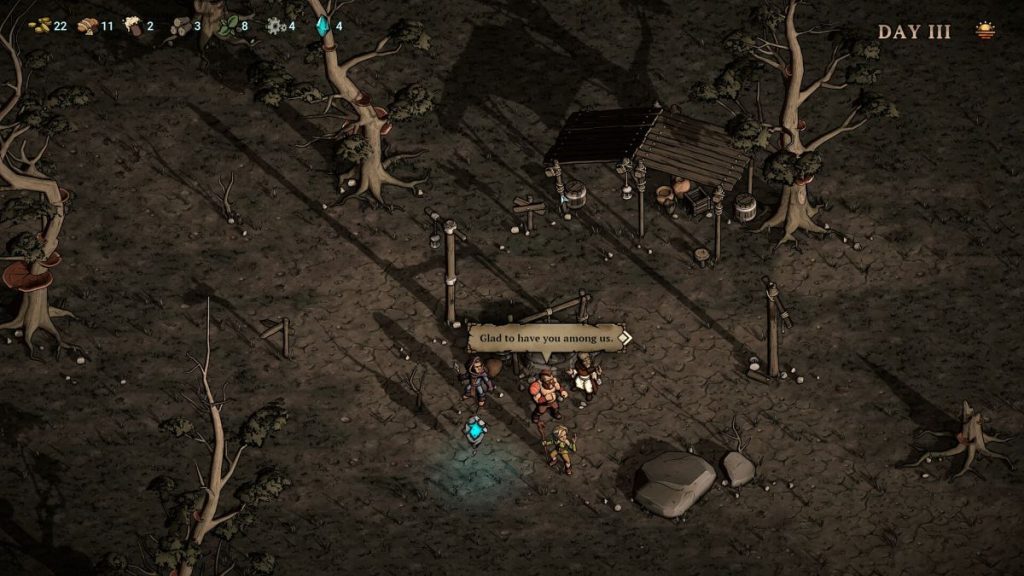
There are more adjustments and characters to this group, but these are the default characters that players will begin the game with.
On paper, these characters are wonderful primers when trying to fit into the gameplay structure. They have different abilities, offer a diverse number of strategies, and can be fun to mix and match depending on what enemies they encounter. In other words, there are plenty of ways to play this game, and that’s the hook and motivation to keep returning to its gameplay.
I love this about the game, and I have spent hours enjoying it because of this. It’s like a game of Risk, where finding out the best strategy through various character avenues means taking chances and failing towards success. It’s what makes the heart of roguelite experiences beat strongly, and Blightstone doesn’t ignore this rhythm one bit.
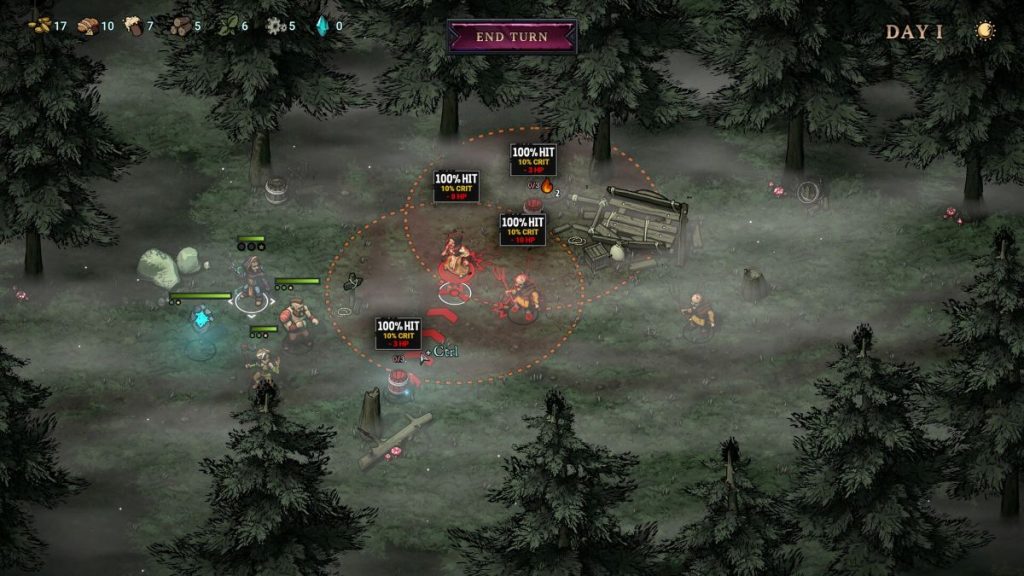
Now, to make this experience even more strategic and meaningful, the game features the possibility of damaging a teammate in battle. Typically, if a player has a character sitting in front of an enemy and decides to shoot an arrow at the enemy, the teammate is untouched by the arrow. In Blightstone, that isn’t the case at all. Players can damage their own teammates if they’re in the line of fire. This one tiny realistic detail sends a ripple through strategic decision-making and how to approach a fight. While it is no doubt irritating, especially when the player isn’t used to dealing with it, it makes sense and just gives richer meaning to gameplay moments. I realize that not everyone is going to like this detail, but it makes sense when bringing a true tactical battle simulator to gamers.
To make this an even more interesting and challenging gameplay construct, Blightstone features an expansive and randomized journey with each go around. Never knowing what is going to happen or what you’re going to run into with each replay of the game makes for a fun time. At the very least, it will expand a player’s ability to strategize a situation and encourage them to understand various scenarios.
As the player progresses through these randomized gameplay pathways, they will run into branching paths outside and within the actual gameplay. On the outside, the player literally chooses a path that leads to a series of forks in the road. Some of these are unknown places, enemy encounters, shops, camps, and even mid-boss fights. The randomization of the path keeps the gameplay fresh during each run-through, so players aren’t repeating a path.
At times, the player will also run into scenarios within enemy encounters that require them to choose branching dialogue. For example, the player may encounter a pack of wolves that appear to be running away from their forest habitat. The player has the choice to follow the pack to see what has spooked them, or just to leave the scenario. The latter of the bunch generally means moving onto the next fork in the road. The former means a fight with a pack of demons.
Ultimately, the gameplay makes way for player choice, which only stands to make the gameplay deeper. Choices that the player makes affect their current journey, even if it’s a malicious choice that goes against what is typically considered good. Related note: Try not to harm the farmer, if possible. The fact that there is a choice builds a richer type of gameplay.
Anyway, mix strategy, choice, and various characters and their abilities together, and Blightstone becomes a fun game. Again, this is a typical roguelite structure, and it is no different in this game.
What needs improvement
While the base game is easy to understand, the rewards, enemies, and progression are a bit unbalanced. While not deal-breakers at all, these are three areas that need improvement as the game is updated. Let’s dig right into them.
Starting with rewards, they come in a variety of shapes and sizes. Some are impactful, some are useful, while others are just downright confusing. As players win each round, they are given goodies for their efforts. These goodies are typically things like wood, herbs, and/or coins. The former two can be used at camp sites that randomly pop up to help players out with safety, health, and whatnot. While they don’t have much explanation to them, as players go through the gameplay, their usefulness quickly becomes apparent as the gameplay unfolds.
The coins gathered can be used to buy equipment and buffs at shop stopping points. These can be trinkets that buff up character stats or moves that can be used during battle. These are not as straightforward as the camping goods. They come with explanations attached to them, but sometimes it’s tough to see how they truly affect a battle. In other words, they just need a bit more obvious purpose to them, especially when players are trying to choose how to use their money. I can’t tell you how confused I felt when offered multiple items and how their impact might affect the gameplay. And that might be a ‘me’ thing, but it felt a bit overwhelming with choice and underwhelming with detailed explanations. If I am going to gather lots of loot to spend on upgrades, I want to make sure the upgrades are meaningful.
Related, enemies, and mid-bosses are a tad confusing with how they work. Typically, in a game like this, how an enemy moves and how effective it can be in combat is obvious, if not completely blatant, especially when a mouse is rolled over them. For Blightstone, it felt like a crapshoot when trying to figure out enemy movements and limitations. Every game in this genre, as well as tactical board games like Risk, defines how an enemy moves and shakes during battle. If the player doesn’t know how an enemy is going to approach or attack them, then how can a strategy be developed? For example, there was a moment in the game when I ran into a village that was being attacked by wolves. The animals were on the opposite side of the map from me, yet I couldn’t fully grasp their movement and attack ranges. Seeing a wolf coming from the opposite side of the map to nail one of my characters with an attack was infuriating. Not knowing or understanding how they move prevented preparation on how I was going to set my characters. It simply was not clear. Enemies and allies should be treated like chess pieces in this genre, as chess pieces have movement and tactics that are set in stone. The enemies in Blightstone just seemed to do what they wanted without regard to limitations or rules. Having that loosey-goosey movement takes its toll on strategic movements, which shaves away some bit of entertainment. No one likes getting their ass handed to them multiple times and failing right before progressing, while not understanding how to prepare for the battle at hand. There were so many times I didn’t fully grasp enemy movements or capabilities, which cost me multiple runs.
Adding insult to injury, the game features mid-boss enemies that are easily identifiable when fighting. Their movements and repetitive attacks are obvious, which helps when their HP is nearly three times that of regular enemies. In these fights, it’s easy to find ways to prepare and strategize, which makes these fights fun. So, what are the faults in their stars? Well, the rewards aren’t worth the chance taken. And these encounters are purely player-driven, so they can be avoided if necessary, and the underwhelming rewards make it necessary. For hard-fought mid-boss battles, players will obtain objects, slight buffs, and just enough to make it separate from typical enemy encounters. In my opinion, the rewards should be more profound considering the risk the player takes, as losing a teammate means they are lost forever on the journey. Knowing that risk should mean more profound bounty at the end of the fight. As a famous line from The Girl Next Door put it, the juice has to be worth the squeeze. As it stands, it’s simply not worth the squeeze.
My last complaint about Blightstone deals mainly with progression in the game. Games in this genre typically let the player know that they are getting better. Blightstone does a good job of rewarding players for their efforts at the end of the game by adding new powers for characters that can be impactful during gameplay. Sadly, that impact simply doesn’t translate well to the gameplay. For example, if players get to the final boss and lose, the rewards should be something profound that drives them towards being powerful enough to overcome the boss (or get closer) the next time around. Giving the player some glimmer of hope that the next time around is going to be better and easier makes for good motivation to overcome failure and jump into the fray again. For Blightstone, the game never offers that reassurance. While it does give the player some goodies, the profound effect seems minimal, which makes the gameplay feel like it’s a bit more of a grind. The progression, much like the boss fights, should be more rewarding and should show the progress a player is making without a thought about whether they’re actually getting better. This is probably one of the more important fixes for future updates, in my opinion.
All this said, these are just gameplay backend quality of life problems that could be fixed with a bit more work. While I fully understand that ‘a bit more work’ is hours and hours of coding and testing, these problems are still rectifiable over time, as well as achievable within the current construct of the gameplay.
On that sweet note, let’s wrap up this review.
Conclusion
Blightstone from developer Unfinished Pixel is a decent, if not good, roguelite tactical turn-based game. It has a solid gameplay skeleton that follows the genre’s perceived structure, while needing some love and care to improve some lacking gameplay elements.