

Ignoring its by-the-numbers single-player campaign, Battlefield 6 strikes an expected chord with its class-based, destructive multiplayer. Vehicular and infantry clashes shine across massive maps that are sure to keep players engaged.
If I love a good mil-sim, why have I not played more Battlefield?
The only two entries in the series I’ve touched have been Battlefield 1 and Battlefield V, the recent games not set in modern day but in World Wars of the past.
Gaming had, at least for a few years, seemingly exhausted its taste for first-person shooters set in the wake of 9/11 and the never-ending war in the Middle East. The escalating geopolitical nightmare and warring factions felt a little too real for increasingly advanced visuals and a medium so often concerned with the notion of escapism. The juggernauts of Battlefield and Call of Duty spent a few respective entries dabbling in the past, an homage to what put them on the map.
But as Call of Duty is looking towards an advanced future with Black Ops 7, Battlefield 6 is working to firmly plant itself in the now and, by association, the past.
Battlefield 6 is meant to be a realignment of the series, one evoking Battlefield 3 and 4 and the potential glory days Electronic Arts’ premiere shooter. Does it? Well that’s a question better suited for a person who has a wealth of experience across the breadth of Battlefield‘s various entries–Hardline, 2042, Bad Company, and so on. If anything, Battlefield 6 seemingly doesn’t want to be a repeat of Battlefield 2042. That game’s large maps and Specialist system seemed to be one of the numerous reasons why the title faltered rather than flourished.
I’ve always known Battlefield to be an entirely different entity from Call of Duty. While both have seen peak critical and commercial success when dabbling in modern-day military simulation, Call of Duty has without a doubt stretched the boundaries of its World War II roots. More so, a yearly Call of Duty release has been guaranteed for years now. It’s been 4 years since Battlefield 2042 and for a franchise in EA’s stable, that feels like a drastic amount of time to be out of the running.
Call of Duty may not seem fresh for every player considering its yearly cadence but that consistency does help keep it in the forefront. Likely then it speaks to the significance of Battlefield 6 being developed under the banner of “Battlefield Studios” rather than a singular entity like DICE. Now DICE, Ripple Effect Studios, Criterion Games, and Motive Studio have combined efforts to work on different spokes of Battlefield 6 to make the game as strong as possible after this much-needed long gestation.
What’s most unfortunate about the multi-pronged approach is that Battlefield 6‘s campaign is so lackluster. No part of me will pretend to truly understand the plot of any modern-day FPS game that centers around a military force. The ones that try to remain relatively grounded fall into the trap of pitting a small force of player-controlled units hoping to be the tip of the spear against overwhelming odds. Usually there is a tyrannical madman leading a private military company or an insurrection that hopes to topple geopolitical stability for whatever gain.
From mission to mission players will hop around the globe engaging in all manner of shooting. There will be reams of dialog hoping to string together events and make sense of it all. More often than, not I’ve had my eyes glaze over and needed to scrunch my nose in thought to recall why the hell I was doing a thing. Plenty of times, I was keenly aware of the here and the now but not remembering how the puzzle piece fit into the greater whole.
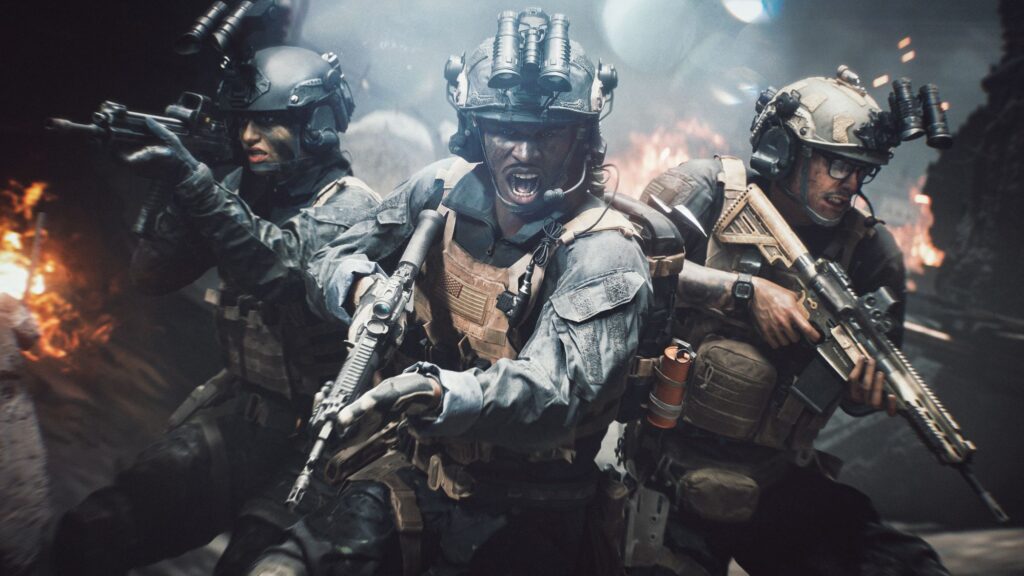
Battlefield 6 absolutely falls prey to these trappings. Across 9 relatively short missions, players will take on the roles of a handful of soldiers engaged in the fight against NATO and Pax Armata. The year is 2027 and the NATO alliance has suffered a blow that is causing countries to retreat from the alliance. In this power vacuum, Pax Armata acts as a private military company led by a foe with a chip on his shoulder from a past wrong and funded by other countries, including former NATO allies.
Players are sent across the world in hopes to snuff out the threat of Pax Armata and restore some semblance of sanity in the world. Attacks by Pax Armata escalate to the point of touching on American soil but eventually lead in a catastrophic event of explosions and gunfire.
Even when a story like this is overly complicated or enough military chatter is introduced to fill the spaces between dramatic shootouts, there’s opportunity for potential innovation. While 2019’s Call of Duty: Modern Warfare reboot was a high point for the franchise, subsequent entries felt like they were borrowing material from the same book. Last year’s Black Ops 6 took me by surprise because it opted to get weird in parts, a hallmark of what Treyarch has done for the series.
Battlefield isn’t really known for going against the grain. But I recognize that it has had beloved campaigns that I’ve heard about over the years, especially with the Bad Company entries. Hell, even Battlefield: Hardline‘s approach as a cop simulator seemed different even if it apparently didn’t work out too well.
Where Battlefield 6‘s campaign goes wrong is that, despite some incredibly beautiful and bombastic moments, everything can be disjointed, or busy, or familiar. The game’s opening mission sees an assault on a NATO base. Packed with explosions, vehicle chases, shootouts, and crumbling buildings, all the foundational bricks of a cool action game mission are there. But shootouts can feel slow as enemies relish hiding behind cover and protract fights. The adrenaline from chasing a train in the New York underground can be thrilling but ends in a gunfight at a construction site where enemies pop out of windows and pepper the team with bullets.
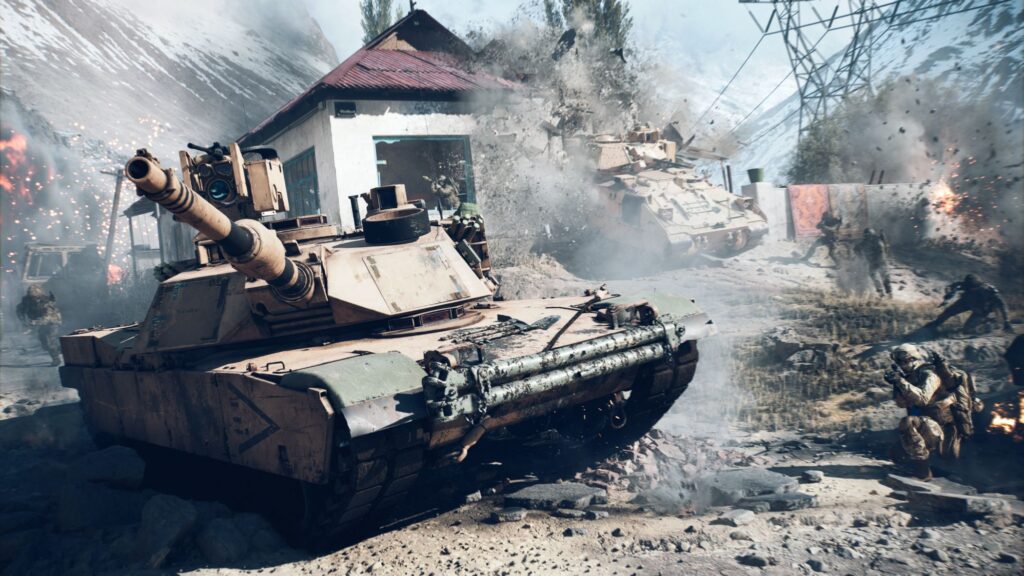
One mission that aims to be open-ended and allow players to attack three anti-aircraft SAM sites is stripped of any potential stealth because enemies have insane detection distance and the AI-controlled squad is quick to attack anyone nearby, resulting in alarms going off and a rush of explosions and guns as support drops in. But even so, all the hallmarks are here. A sniper mission, a night vision mission, a mission with tanks. I enjoyed storming the beach of a foreign city in some kind of aqueous vehicle that could decimate bunkers but something about it just didn’t have the kind of flash and polish I expected.
On the surface, Battlefield 6 is a gorgeous game. These single-player missions are very obviously meant to show off tech more so than provide a satisfying story or really allow a handle on the mechanics. For the first two missions I realized I wasn’t playing with HD textures installed on my PlayStation 5 version and was kind of shocked at the poor detail. But once that texture pack was installed, I was extremely impressed. Still, playing the campaign before launch did result in some buggy moments, especially with some ragdoll effects that do persist in the multiplayer mode.
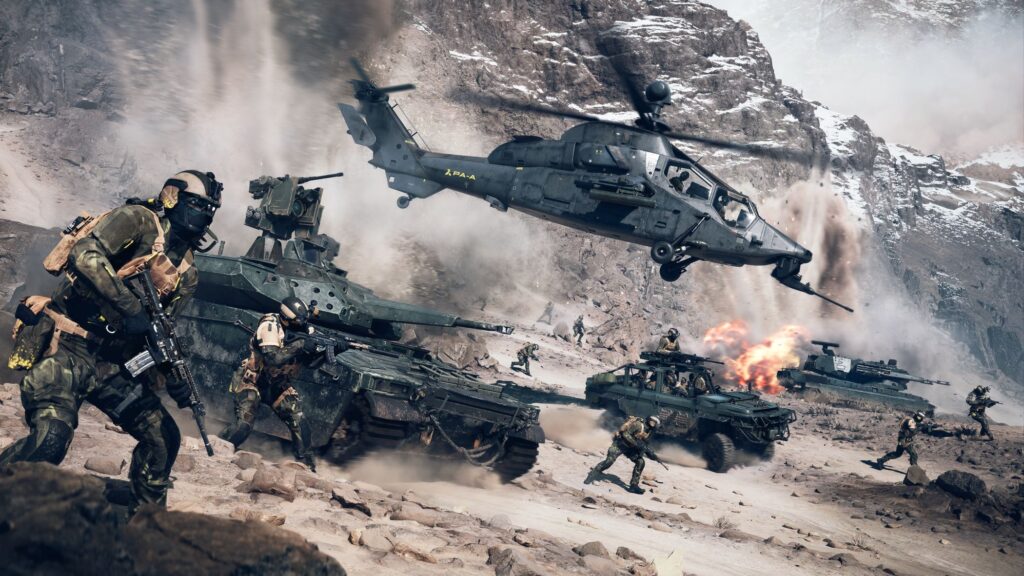
Perhaps one of the most enjoyable things about Battlefield 6‘s campaign and the game overall is its sound design. This is without a doubt with of the best sounding games I’ve experienced in quite some time. The clattering sound of bullet casings when firing a gun, the way bullets crack and zip, it all gives the weapons palpable weight and gravity. Friendly communications going from the static buzz that blends into the actual voice from their mouths was such a strangely pleasant touch that I’m not sure I’ve heard done in such a way before. In the massive maps it’s exhilarating to always feel some presence of fighting going on, whether it’s dogfights from above or an artillery strike on a distant pocket of buildings.
It really is a shame that the campaign in ways feels spectacular but never rises to be anything more than a series of missions that satisfy the check-boxes of what players expect from a mil-sim in 2025. I certainly felt a tinge of discomfort when the notion of armed troops on American streets is present. It felt entirely too real to have a virtual representation of a tenuous alliance of world powers and governments that seem to be bowing to the highest bidder. And while players and deep-thinking critics may want to wrest some semblance of gravitas from Battlefield 6, it hardly feels poised to stand up to such pressure.
And perhaps it’s an indictment on the campaign that as soon as players finish it, the main menu provides an easy button to uninstall it from the console to free up space.
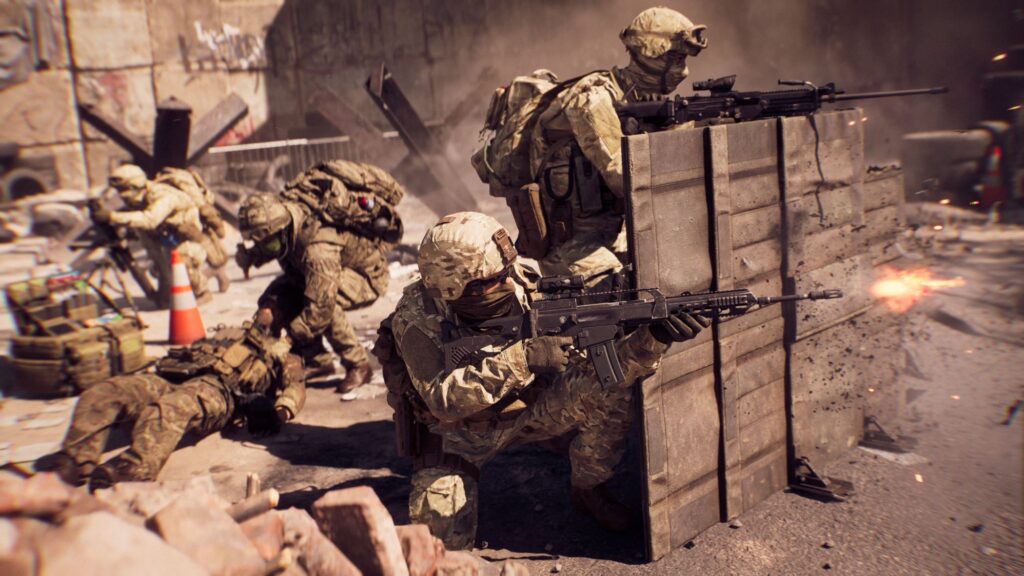
The collective forces of Battlefield Studios may have been better served to put their entire weight behind the multiplayer portion of Battlefield 6. Yet, I can’t entirely blame them for attempting a campaign, regardless of its few successes. I think Black Ops 4 suffered from no campaign at all and Modern Warfare III‘s pastiche of Warzone maps was gruesomely hollow. There’s a gumption and determination to have Battlefield 6 feel like a “classic” “modern” Battlefield entry and with that comes a campaign. Maybe next go round the campaign team can have the opportunity to flex their creativity a bit more, or attempt a more cerebral narrative.
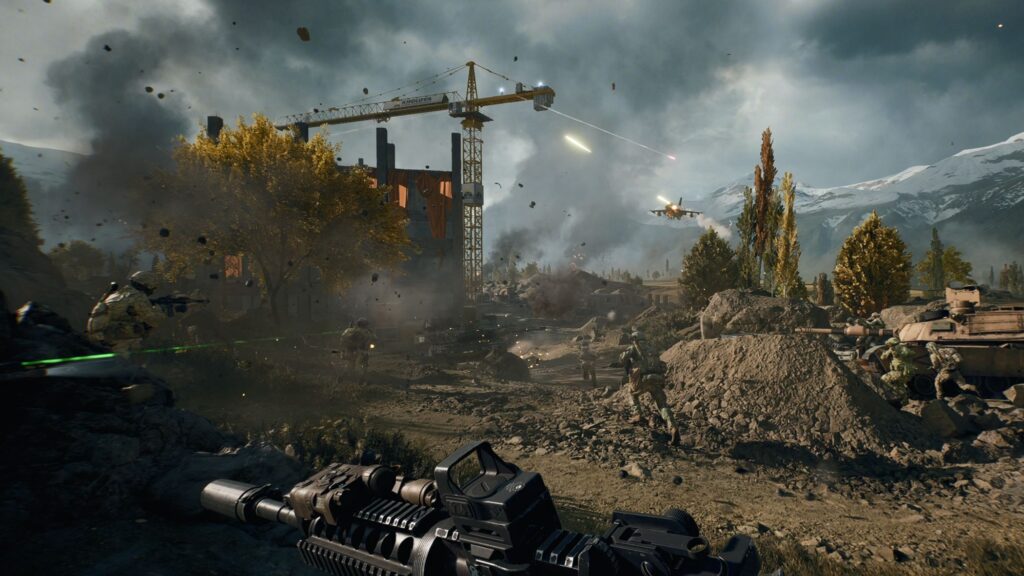
Regardless, we know the real crux of the Battlefield experience is in its broad, all-out war multiplayer engagements that pit up to 64 players against each other. Despite having not played the 128-player modes of Battlefield 2042, I have to say I’m glad they are not present in Battlefield 6. There is a certain friction that can become too unruly and too overwhelming.
Having the broad scope of a battle royale map that is meant to condense bigger fights in busy landmarks can work for a Battlefield game but you’re asking developers to focus too much on crafting enough interesting spots while considering infantry and vehicular combat. The 9 maps present in Battlefield 6 all have their hotspots which usually feature capture points and friendly/enemy zones. There’s enough empty space for traversing on wheels or tread and plenty of quieter spots to sneak around for maximum subterfuge. The brilliance in what makes Battlefield so singularly different is that it doesn’t bare down on the player’s need to have quick reaction times. Its combined elements are meant to give all types of players a broad sense of purpose to hopefully turn the tide of battle as it progresses.
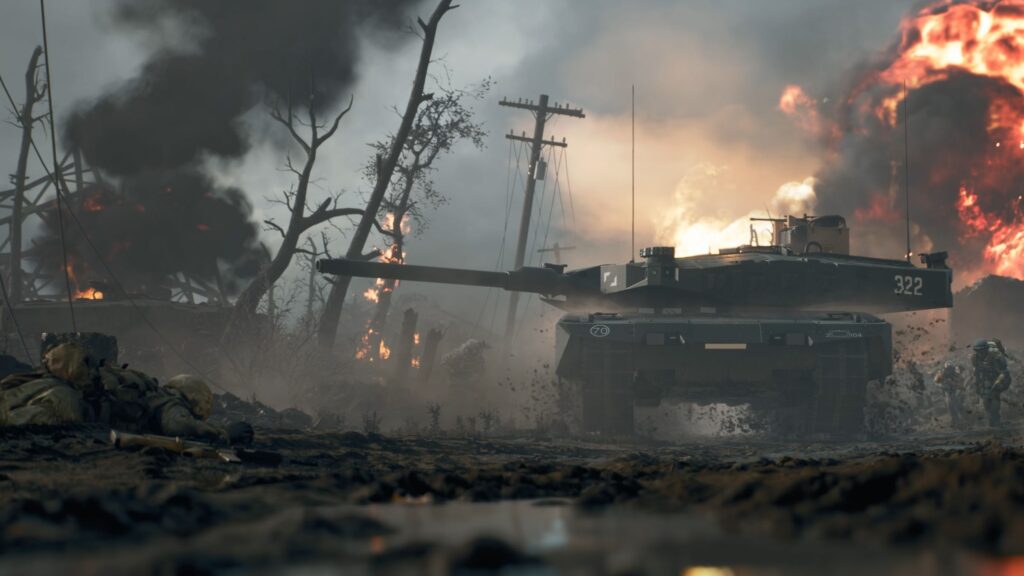
Conquest is the classic mode where players blast away at each other with guns and pilot tanks, jets, helicopters, and armored vehicles. Control of objectives goes back and forth as each team works to dwindle the stock of lives of the other. Breakthrough is the classic match of attackers versus defenders where the attackers hope to break past defensive lines and capture key points to have their limited lives replenished. In Rush, attackers plant explosives at key points in hopes of destroying these systems to move on to the next sector, while defenders hope to eliminate the attackers’ stock of lives. These three modes embrace ever-changing chaos well, constantly juggling where players are deposited when respawning and how fast points can be taken.
New to Battlefield 6 is Escalation. It works similarly by being all about wresting control from the opposing team by taking over key strategic zones. But once one team claims more zones than the other, a timer ticks away, indicating a point for the more dominant team. After the point is scored, one of the zones is removed, limiting the number of areas that can be controlled. If both teams are substantially skilled, matches of Escalation most frequently culminate with both teams having scored two points and the zones down to three. As a round of Escalation progresses, vehicles spawn, making the fight more intense as players flood a more condensed area of focus.
All four of these modes have their value in Battlefield 6‘s suite of engagements, bringing out the best of what this franchise has to offer. And I think Escalation feels like a worthy contender for future introduction. There is something to be said about the sweeping maps always being in play for Conquest, or the constant push that is gained from Breakthrough and Rush. But Escalation slowly condenses combat into three key zones that are usually close together, meaning that anything happening on the streets and outskirts of these points is done in service to flush out opposing forces or to exert control. It’s a smart interpretation of the all-out-war formula that the franchise uses to differentiate itself from the pack.
Those wishing to go against the grain can also engage with TDM, King of the Hill, Domination and a Squad Deathmatch where four squads fight to reach the kill target. I’d argue a lot of people don’t come to Battlefield for these modes but there is a sense that engaging in them makes the player sharper with the full roster of skills and weapons. I found myself needing to hone my Call of Duty instincts just a bit more when being mostly concerned with infantry units rather than the rumbling of a tank that could blast me with an artillery shell.
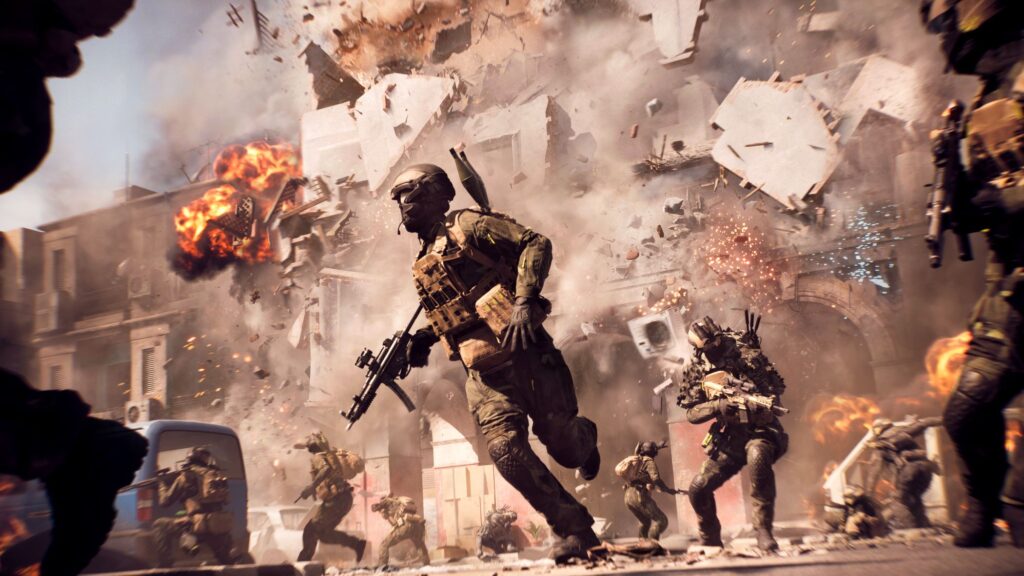
The 9 maps spread across all eight of these modes are suited well for the required engagements. Pockets of enemy and friendly headquarters and control points are carved out of each one where Conquest and Escalation keep the action open and Rush and Breakthrough make certain chunks no longer viable for defenders.
Liberation Peak was my first map that I played in Battlefield 6, a medium sized map that takes place on the mountainside of Tajikistan. With limited homes and buildings to hide inside, it’s perfect for tanks and air units. But the capture points are spaced out for infantry to not waste time and not be too exposed with long sight lines. Siege of Cairo is another standout for me because its war-torn streets have enough clutter that infantry can be comfortable in it. But the vast amount of buildings are perfect to snipe away or take potshots with rocket launchers, unless a tank blows the face of a building off. New Sobek City and Operation Firestorm that is returning from Battlefield 3 are more appropriate for the three-pronged hazard of infantry, land vehicles, and aircraft with their open, flat zones that don’t provide a lot of cover single units.
While I can see issues that may stem from Battlefield Studios needing to iron out the lines of a capture point, over the course of launch week these maps have resulted in blowouts on both sides and literal wars of attrition where the upper-hand keeps changing. No one map goes too heavy-handed with destruction but there certainly is attention made to alter the fundamental nature of a capture point by making it more exposed when cover is systematically destroyed.
Though it wasn’t extensively incorporated at launch, the Battlefield Portal is another potential avenue for worthwhile moments in the game. Custom matches with different sets of rules can be created by the community to offer traditional or bizarre experiences using what Battlefield 6 can offer. Sledgehammer only matches? Maps editors? Wave-based rounds? Race courses? It can be possible if the community deems it so. And this will hopefully extend the life of the game and create a greater sense of community for Battlefield as a whole.
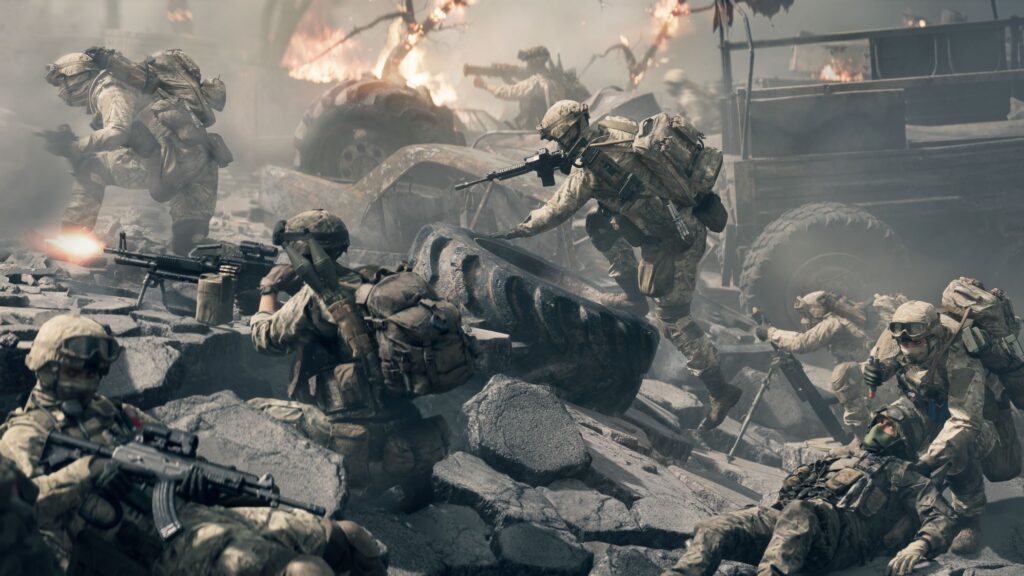
The four classes currently in Battlefield 6 do a phenomenal job of focusing players around a preferred playstyle meant to provide some method of a role in the fight. These roles are equipped with perks that are activated with earned experience and an ability that can be activated with a press of the shoulder buttons that usually provides a temporary benefit to the player and surrounding teammates.
The Assault class is essential in earning faster progress with objectives and uses an adrenaline injector to rush into the fray faster. Their active ability can apply temporary adrenaline effects to nearby squad members which can be extended by kills. Engineers focus on being able to repair vehicles and keep them ready in combat and usually come equipped with anti-vehicle weaponry like a rocket launcher and mines. The Support class not only can resupply and heal allies, they can revive friendlies faster with a defibrillator that instantly revives downed players. Finally, the Recon is the traditional sniper role and is able to spot enemies with a drone or by aiming down sights, marking them for other players.
I completely understand that a lot of players stick to their guns and only want to play one or two classes over the other. Often, no one wants to be the healer. But in Battlefield 6, that role is crucial to keep the stock of lives in check for modes like Conquest and Breakthrough. It might be a bit silly running around slapping people with a defibrillator but it’s a key path to success. And I can’t tell you how many hilarious times I had standing behind a tank and blow-torching its health back so it could fully hold down a capture point.
Though Battlefield 6 tries to move away from the system of Battlefield 2042, unless it’s a part of the selected mode, players can use any gun they wish with any class. While each class gets a small perk when using their signature weapon, it isn’t game-changing. And if sticking to the signature weapon system, shotguns and other weapon classes are left without benefits. However, I kind of preferred modes where class weapons are restricted to avoid the meta builds that can often dilute diversity in these games.
My biggest issue with the weapon and class system in Battlefield 6 is that it simply takes too long to progress through the required levels to get into meaty challenges and decent equipment unlocks. Once players hit level 20, new challenges for cosmetics and rewards are active but the process should be expedited. In additional to not being a fan of the menu navigation, I really didn’t touch customization options too frequently. Gun attachments and new weapon unlocks are tucked away behind several levels and might not feel extremely beneficial towards players who aren’t laser-focused on strictly getting kills.
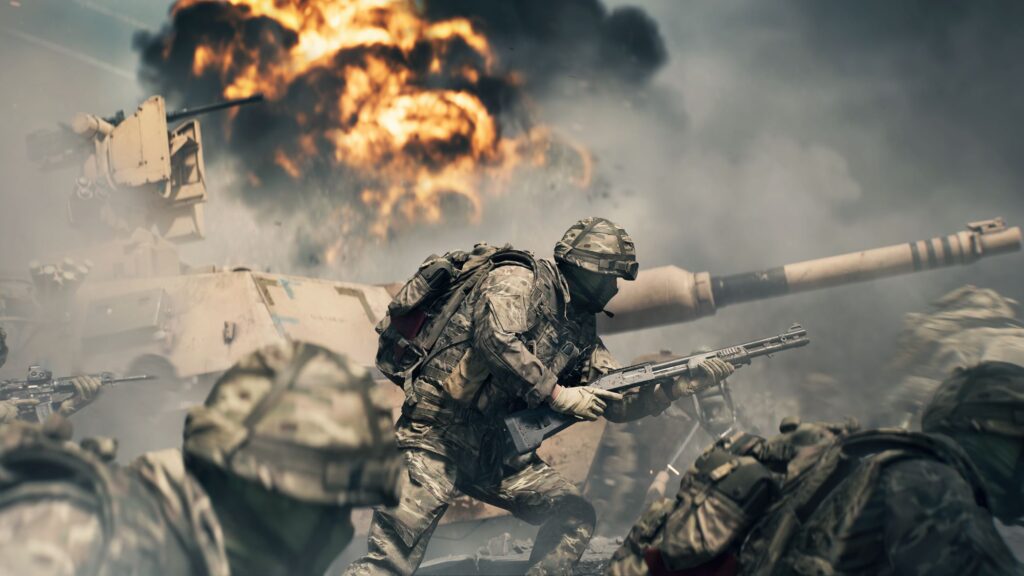
But despite these minor qualms, it’s all in service of the phenomenal multiplayer experience offered by Battlefield 6. While all its modes and maps feature a common rollout of fights for dominance, it’s the action inside those matches that is the bread and butter of Battlefield, what has allowed it to earn such high regard in the first-person shooter catalog. The numerous factors of PvP combat when destruction, vehicles, and skill are introduced means that matches are always grandiose in their controlled chaos. And as the lifetime of the game goes on, more will be added to keep players coming back.
Battlefield 6 has an expert grasp on what makes the series’ beloved multiplayer so treasured by players. Those scarce few who come to this title for the campaign alone will be left deserted in the wake of a quick, passable single-player experience that is meant to be digested before the full course. The all-out-war across fantastic maps and an emphasis on class play where players turn the battlefield into rubble is instantly memorable, providing a worthy follow-up to players’ best memories of Battlefield.