


The rebirth of Acclaim has brought back a resurgence of classic material and gameplay concepts. One such resurgence revolves around 8-bit experiences and basketball. It’s a perfect time for both.
Basketball Classics from developer Namo Gamo is a tip of the hat to an 8-bit basketball time that gave birth to such classics as Double Dribble and Lakers vs. Celtics. The gameplay for both titles wasn’t nearly as complicated as today’s NBA 2K series, and that simplicity offered some competitive charm and chaos as a result. Basketball Classics takes that same classic gameplay concept and delivers a wonderful title that harkens back to simpler times in a basketball gaming experience, though not as simple as those were delivered.
With that simplicity comes gameplay issues. While the crux of the gameplay design mimics those three-button (jump/shot/defend) mechanics, playing against the CPU can be a clumsy mess at times. But with the amount of depth the game offers, its playcalling component, and the number of basketball characters a player can unlock by continually playing and winning, some of that is forgiven.
Let’s get right into it.
Running up the score
Basketball Classics’ gameplay is built to get players in and going without much fuss. Jumping into the game means going up against non-licensed, yet easily identifiable teams from the 80s led by non-licensed superstars, such as Larry Bird, Magic Johnson, and even a fleeting glimpse of Michael Jordan. The game treats each star and team like a boss, via Mega Man in its presentation, which helps make the gameplay a bit more adventurous rather than just a straight-up basketball gaming experience.
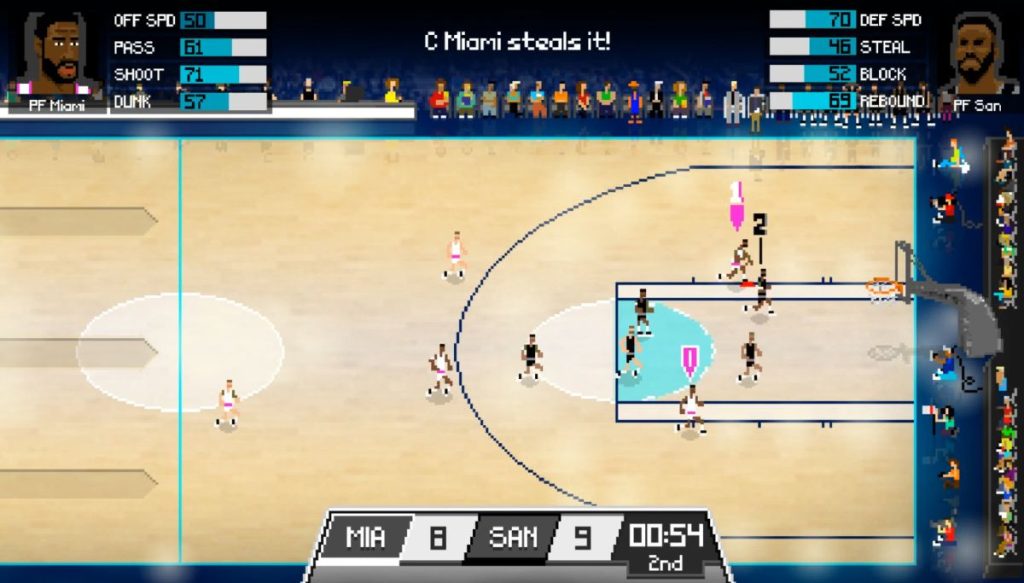
Once an opponent is chosen, the game goes right to the courts and allows the player to shoot around and get used to the mechanics. The shooting mechanics are very similar to NBA 2K, where the player holds down a button, activates an accuracy meter with a percentage, and then lets loose to see if the shot hits or not. The game doesn’t guarantee that even the best shots and percentages will go into the basketball, but it does guarantee that a shot either has a good or a bad chance at a basket. Having that initial shoot around helps to identify how this mechanic can work well when in the heat of play.
Now, to complicate that simple shooting mechanic, each player is given stats and attributes that translate to how well they shoot from a given distance. For example, if a player controls a center, then they more than likely will not shoot it well from the 3-point line. They are built for under-the-basket putbacks and slams. Namo Gamo did a great job of getting this part of the mechanics and player role identification correct. They did their homework on old-school concepts and executed this one brilliantly, as player stats generally draw player capabilities pretty well in those old games. Lord knows they had to do it that way because old games simply couldn’t go as complicated and as player-driven as today’s basketball gameplay experiences. Anyway, knowing who has the best shot of shooting from where is how it should always be in a video game based in the basketball world. The way the devs executed it here was done well.
In addition to the player roles and shooting mechanics, the game continues its simplicity with one-button jumping and one-button defense. These mechanics are not as complicated as what is presented with the offensive side of the tracks for Basketball Classics, as they simply work like a late-80s cart or PC experience should work, except for rim protection.
When a player goes up for a dunk, there is a single mechanic that happens for the offensive player and the defender. A meter will pop up with a given number of tiers to block or dunk a ball. The idea for the defender is to get on the same ball level/tier as the offensive player to block the shot. The offensive player must find a way to outmaneuver and place their dunk on a different level/tier than the defender to successfully dunk the ball. The catch for both is that there is a finite number of level/tier moves they can do to match or avoid the other player. Once that movement number runs out, then both players are stuck with the final move, which could result in a dunk or a block. Much like the previously mentioned mechanics, this is as complicated as it gets, and the devs try to keep the game as simple as possible. They do a great job of adding a sprinkle of complication to the process, but certainly don’t make it a chore to understand or execute defense or offense, especially when it comes to dunking.
Beyond these mechanics, the game does throw in the ability to call simple plays, such as a pick and roll, to make it more than just a three-button affair. I honestly didn’t use these play calls during my single-player run through of the story. Not once. I didn’t miss them, and they didn’t offer any advantage to a PvE type of environment. I am sure that they would come in handy should I play local, but they didn’t make much of a difference when going through the various CPU teams thrown at me.
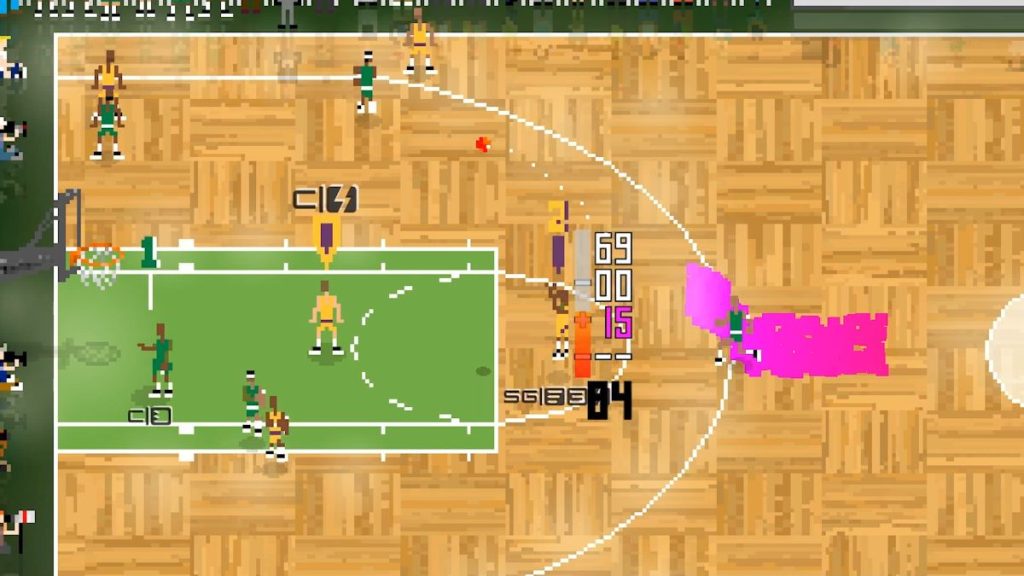
Now, all the above said, the charm of this game is how clunky the mechanics can be at times. If players know anything about old games back in the 80s/90s, the mechanics were never perfect. It was based on luck and angles, or a bit of both, as the game doesn’t base success on player skill. As stated previously with the shooting mechanic, no matter how much a player practices, no matter how good the percentages and the meter are with accuracy, at the end of the day, the mechanic is still a literal hit/miss happenstance driven by whether the game wants to give players points or not. That is so old school that Will Ferrell is probably interested in signing up to play. And there is nothing wrong with that direction, as I think there should always be some mystery about whether a shot goes in or not, thus creating a bit of drama. It’s just clunky and purposefully so, as it seems the devs don’t want any player to be constantly above others. It creates a more even level of competition all the way around.
Shifting gears slightly, the longevity of the gameplay is based on expectations. The game has a bevy of teams to go up against initially, as mentioned above, while also featuring hidden teams to unlock. In addition, Basketball Classics pushes the player to keep going, even when the matches end, as the more a player continues to play, the more basketball players they can unlock. The more basketball players are unlocked, the more customization and personalization are created by the user, and the gameplay becomes far deeper because of it. Players will want to keep going to see how good a team they can build from the rewards they reap.
While all the above is incredibly positive and fun, there is a hiccup to the experience.
Hiccup
The CPU during the story is a bit dim. The CPU does some crazy and repetitive sh*t that hurts its chances considerably during gameplay. For example, the CPU will actively and regularly throw a basketball in the backcourt after crossing the midcourt line. The first three games of Basketball Classics had the CPU constantly turning the ball over because of this midcourt mix-up. Having played and watched basketball my entire childhood and adult life, I can say that the over-and-back violation has been one of the least-called violations in the actual game of basketball. Seeing it as a constant hindrance to the competition during gameplay felt a bit off.
Of course, not all teams were plagued with this problem, but a good chunk of the beginning teams simply couldn’t work out that midcourt violation. Seeing that happen once in a while would be okay, but not as many times as it did in normal mode. It was a constant early on in the game, and a bit of a disruption.
Now, having said that, the game’s hiccup is made up by the level of rising competition, and that competition’s pettiness when they’re on the verge of a blowout. At times, Basketball Classics can give flashbacks of NBA JAM when it comes to a CPU getting an attitude about being blown out. Players will find that the game suddenly turns the opposing team into a stealing machine when the player is up by 10 or more. It does create a moment of drama, but it typically won’t go as far as NBA JAM when it comes to unlikely comebacks. Still, it does create uncomfortable drama that evens out the dumb CPU at times.
Anyway, the game has a few hiccups that are blatantly obvious but not overwhelming.
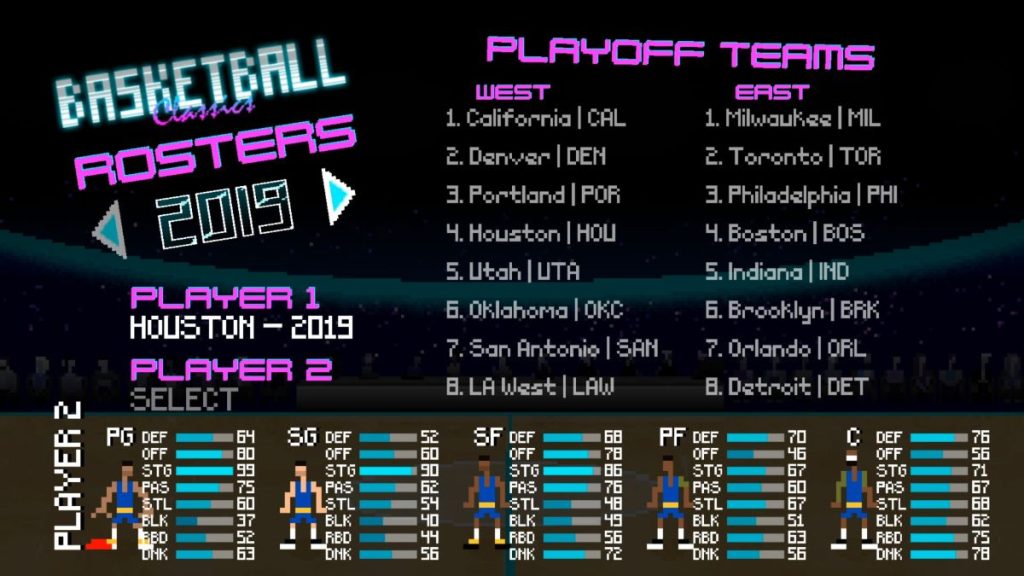
Overall, the gameplay in Basketball Classics is spot on for how a classic basketball game would go from the 80s or 90s. It’s fun 8-bit basketball action that anyone can pick up and play, while constantly making sure there is no overbearing complication to the mechanics or expectations of the player. It’s a good game that is fun.
On that sweet note, let’s wrap up this review.
Conclusion
Basketball Classics from developer Namo Gamo and publisher Acclaim, Inc., is a fun 8-bit basketball experience that is simple in its design and execution. While not perfect, it still maintains the essence of some of the best and earliest times of video game basketball gameplay experiences.