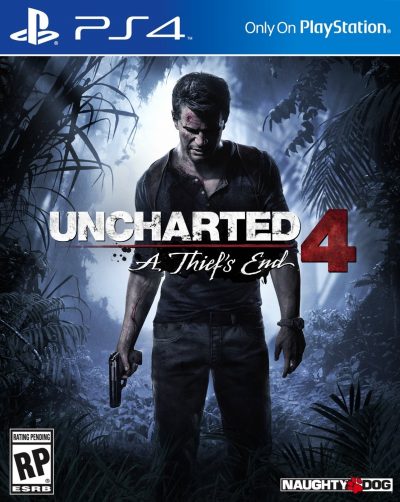
In 2011, Uncharted 3: Drake’s Deception put a bow on Uncharted. Nathan Drake and Elena Fisher rekindled their marriage and Nathan, in particular, seemed to quench his thirst for insane adventure. Trilogies are popular and effective creative arcs—foundation, realization, and precision—and Uncharted’s three entries helped define the PlayStation 3’s software library. Cover-based shooting was hot, Naughty Dog’s signature performance capture was second to none, and the HD-generation was a perfect fit for cinematic action. The fantasy of playing a blockbuster movie was made a reality, leaving Uncharted feeling relevant and clever in its time and place.
A fourth entry didn’t seem congruous with Naughty Dog’s ambition. With The Last of Us, Naughty Dog seemed comfortable with abdicating Drake’s frenzied throne. Their gifts for storytelling and interaction felt healthy inside of a more subdued and plot-driven narrative. Furthermore, their weaknesses (please, find me anything to do other than shooting people) were less pronounced alongside a wider scope of objectives. The gaming world was moving on, and Naughty Dog, like their generational leaps with Crash Bandicoot and Jak and Daxter, seemed poised to mature with it.
In defiance of suppositions by ignorant game critics (hello), Naughty Dog produced a fourth Uncharted game. In another surprising move, A Thief’s End doesn’t abandon the ideas that made Nathan Drake’s adventures so likable and exhilarating. It doubles down on the Uncharted’s strengths in a conscious attempt to surpass every single hallmark of the series. Through A Thief’s End, Naughty Dog realizes their profound technical ability, showcases a relationship between gorgeous locales and engaging level design, and executes a progressive yet agile and animated narrative. The viability of Uncharted’s action can feel out of sync with 2016, but A Thief’s End is easily the best it has ever been.

The first problem in need of a solution is Nathan Drake’s call to arms. A Thief’s End begins in media res and calls in a few flashbacks, but eventually settles on a present and placated Nathan Drake. He’s left high stakes adventuring behind and accepted a relatively conservative job of deep sea cargo recovery. Furthermore, his home life with Elena feels healthy, with Nathan daydreaming in the attic but living comfortably inside of his home.
Pulling a secret brother out of the ether may seem like a cheap move, but this is exactly the sort of expectation A Thief’s End works to avoid. We’ve neither seen nor hear of Samuel Drake, Nathan’s elder brother, but thoughtful (and playable) flashback sequences provide their estranged relationship with a plausible explanation and desperate circumstances. Part of this comes from the nuance of the Sam’s character; he feel and looks like a con artist and a thief, but so is Nathan. His story is dubious and absurd, but so are Nathan’s. His ability to create trouble and disturb balance appears divine, yes, just like Nathan. Very quickly the Drakes feel like honest brothers, with a flip of the coin dividing how their luck treated them over the last fifteen years.
Casting Tory Baker as Sam Drake is both predictable and perfect. Nolan North and Baker are two of gaming’s most well-known male voice actors, and placing them in complimentary roles is intended to add weight to both characters. North is basically Nathan Drake at this point, but Baker performs with a slight vocal affectation that casts Sam as a fast-talking swindler with a heart of gold. Throughout the A Thief’s End I was never completely sure which way the elder Drake was going to bend, thanks to ambiguity cast from a performance that seemed caught between a protective older brother and treasure-hungry thief.
Stuck in the middle of Nathan and Sam is Elena. While she’s given less to do this time around, her place in Nathan’s life has never been more crucial. Better, Elena is never damsel’d and actually shown to be quite capable in almost every critical action, providing her character with the momentum and proficiency needed to both confront and handle Nathan’s questionable conduct. Additionally, Sully, Nathan’s trusted partner and adventuring equivalent of Joe Biden, returns and remains sharp and austere as ever.

If A Thief’s End has a weak spot, it’s with its dueling pair of villains. Without revealing their identity or spoiling a handful of plot surprises, they both feel contrived and somewhat toothless against both Nathan and Sam. They’re supported by inexhaustible supply cash and a literal personal army and yet somehow unable to keep pace with a simple pair of thieves. Part of this is the obvious juxtaposition of talent against power, suggesting the exploits of the Drakes continue to stretch the boundaries of belief, but that basic observation shatters any illusion over their roles. Minus some twists and turns, you know how A Thief’s End will ultimately conclude well before it gets there.
General plot sequences and Nathan Drake’s humanity require additional leaps of faith. I lost count of the time I happened upon an incredible and remote discovery only to either meet the bad guys there or become joined by them with remarkable quickness. Along similar lines, every other bridge Nathan climbs tends to collapse, and every other handhold on a wall tends to fail his grip. In fact, Nathan suffers from numerous humungous falls and loses consciousness in water twice. All of this is easier to swallow if you consider Nathan (and Sam) to be divine and indestructible, but the gauntlet of violence these two are put through stretches Uncharted’s already-loose definition of personal mortality.
If it sounds like I’ve been reviewing a movie (we’re nine paragraphs deep with little mention of interactivity) it is probably by design. Uncharted 2: Among Thieves was one of the first truly cinematic equivalents in gaming. Among Thieves’ story was passable, but its action allowed its characters unprecedented agency over its set pieces. Climbing up wreckage in the midst of falling off a cliff, leaping through moving train cars while being stalked by a berserk helicopter, falling through a collapsing house — all of this greased Uncharted 2 with an action movie sheen no one had ever seen played before.
A Thief’s End is obsessed with outdoing everything Uncharted has done before. Every single sequence feels designed to outclass every major sequence from the previous three games. Remember when you fell through the house in Among Thieves? In A Thief’s End, Nathan falls through a ceaseless amount of collapsing structures. Remember the chateau in Drake’s Deception that was engulfed in fire? How about you climb this tower while it gets bombarded with RPG’s and set on fire while you find your way out? Did you like jumping across train cars in Among Thieves? How would you like to get literally dragged through wet mud while struggling to overtake an escalating series of jeeps? A Thief’s End even has a creative answer to Drake’s Fortune’s tepid personal watercraft sequence.

Every instance of A Thief’s End feels like Naughty Dog is showcasing some sort of advanced technical ability. Using a torch to light a cave displays some of the best fire and lighting tech around. The monsoon on the side of the mountain makes room for both the best rain and the clearest reflections I may have ever seen. The sense of vertigo induced when Nathan is inattentively shimming across cliffs is equally impressive and harrowing. Daytime in the Indian Ocean, sunset in the Madagascan outback, the parade of aristocrats at a lavish party, and the flooded visage of a collapsed city are as much as a story-driven sequence as they are a technical opportunity. Even indoor locations, seemingly the exemplar of mundanity, are thrilling because careful, realistic, and artistic construction. A Thief’s End, as expected and as proven, is one of the best looking console games out there.
Despite a constant desire to relive or improve upon its greatest tricks, A Thief’s End creates room for the new and the experimental. Chief among its ideas are two new mechanics; a grappling hook for Nathan, and a puzzling fondness for rockslides. While the grappling hook creates questionable story implications (dude why don’t you use this thing all the time) it’s safely confined to specific pieces of the environment. With his trusty new rope, Nathan can swing around like Tarzan, bail himself out of perilous falls, and cross wide swaths of cliffs with relative brevity and ease.
Most importantly, Nathan’s rope also adds a sense of quickness and additional verticality to enemy engagement. Almost every combat sequence in A Thief’s End takes place in a makeshift arena ripe with different levels of platforms. All of it is organically constructed, nothing feels out of place, but it adds a heightened sense of desperation to an already (if you’re playing on harder difficulties, anyway) tense sequence. Rather than duck behind fluctuating cover and make the best of it, A Thief’s End allows Nathan to instantly swing almost anywhere with just a bit of environmental awareness. This doesn’t necessarily have to be obeyed, but I found my deaths were usually caused by reluctance to exist in a perceived safe zone. The more I moved, the better I did.
Stealth, of all things, is an equally viable option in A Thief’s End. Most combat sequences are equipped with tall vegetation that serves as a hiding place for Nathan. It’s mobile cover, basically, and Nathan can instantly take down roaming enemies like raptors in Jurassic Park. Tall grass also serves as something of a reprieve for the player; if you’re seen but evade line of sight, enemies will basically forget you’re there and reset to their existing routes. A Thief’s End also grants Nathan the ability to survey the battlefield and mark enemy positions like in modern Far Cry games, though the quick succession of enemy waves and my own fondness for repeatedly getting killed didn’t make this feel useful.

As the Uncharted games progressed, so did their insistence on constant combat. A Thief’s End allows Nathan and his friends plenty of room to breathe, not even developing its first proper combat sequence until a few hours in. This leaves room for exploration and, pardon the pretention, breathing inside A Thief’s End’s captivating vicinities. This is an aspect the impatient or action hungry may not appreciate. Quiet moments aren’t new to Uncharted, the Tibetan village in Among Thieves was a model for tranquility, but Gone Home kind of changed the game and it feels like A Thief’s End took notice.
Raw combat is not when A Thief’s End is at its best. The crazy swinging and movement options granted inside of it create space, but basic shooting is serviceable. Rifles barely indistinguishable from one another compliment a couple of handguns and explosive weapons, all of which are wielded by a cavalcade of enemy types, each especially adept at bullet evasion. There are snipers, shotgun guys, and basic dumbass fodder at increasingly serious rates as A Thief’s End barrels toward its conclusion. It’s fine and it works, but if you’re playing A Thief’s End strictly as a cover shooter, it’s not going to outshine any of its recent peers.
A Thief’s End indulges in the freedom it can grant to the player. On a handful of instances, either by jeep or by boat, you’re free to explore a large (but ultimately closed off) region of earth and sea. There’s always an objective on the horizon, but plenty of sideshows, usually packed with optional collectables, are available along the way. It’s a relatively small change to Uncharted’s backend, but it adds a tangible sense of open-ended adventure to a series that has previously been as rigid as they come.
The most curious as simultaneously puzzling aspect of A Thief’s End is its insistence on sending Nathan down rockslides. Sometimes this is used to dramatic effect—you’re sliding down this mountain! Quick, leap to the cliff!—but other times it feels like you’re been funneled down a slide from Super Mario 64. It’s weird, somewhat silly, and happens entirely too often, but nevertheless omnipresent and unavoidable in A Thief’s End’s globetrotting tour.

A Thief’s End also boasts a considerable commitment to multiplayer. While its resources and progression systems—win matches, earn points, complete challenges, buy gear or cosmetic stuff—are in line with its peers, its necessity is in question. It plays fine, especially with its frame-rate boosted to a fluid 60, but it feels like it’s there for the sake of it. Standard death match, occupying territory, and capture the flag round out the expected modes.
While ultimately pedestrian, A Thief’s End’s multiplayer does at least try to create its own identity. Each of the different classes comes with its own upgrades available by earned and spending in-match money. My support class, for example, could deploy a drone sniper while the action class could issue a hulking bruiser with a Gatling gun. All of these can be leveled up individually as well, should you find yourself invested in A Thief’s End’s competitive modes. I felt the same way about multiplayer in the past two Uncharted games, and, while those ultimately took off and found a large fanbase, none of it really spoke to me after playing similar games over the last decade.
If the gameplay isn’t a sell and your PC’s performance outclasses the PlayStation 4’s abilities, maybe it’s easier to get lost in A Thief’s End’s details. Everywhere you look, there’s some personal touch to either the action or the environment. In an early cut-scene a villain is reprimanded for her subordinate’s use of dynamite, and later on a random enemy NPC is telling another NPC not to blow so much stuff up. Earlier in the game, a brief glimpse out of bathroom window revealed a barely visible guy on the street walking his dog. In-jokes, references, and somewhat unbelievable Easter eggs may call to fans whom are unimpressed by the more overt sequences in A Thief’s End.
Sometimes I wonder what all of A Thief’s End’s details are in service to. Does it matter than someone on the development team probably spent a year perfecting the animations engaged when Nathan gets close to a wall or another person? Does mud staining pants, accurate tire tracks, really sweet rope-bending tech, visible aging on Nathan’s face, flashes of remorse in Sam’s vocal disposition, or the design plausibility of a bustling marketplace really matter in a game overtly concerned with large explosions? Is the creative talent fueling all of these crazy ideas, especially in light of more gameplay-focused experiences like Dark Souls or Dota 2, being used for the good of gaming? I have no idea, but A Thief’s End sure is a lot of fun to play.
Questioning the necessity of another Uncharted game is a foolish exercise. The Last of Us wasn’t a step toward higher ground, but rather an application of lessons learned and progressive movement on the same path. Nathan Drake, one of the most free-wheeling and aloof members of the business, provokes a universal sense of empathy when conflicted between adventure and obligation. It’s a fun story, and watching the characters hash it out is as much of a draw as the gorgeous set-pieces or implausible explosions. A Thief’s End isn’t built to demolish expectations, but rather circumvent them as a means of moving its own goals forward.