

Tony Hawk’s cultural flashpoint happened during my impressionable middle school and high school years. The fever pitch around X-Games, professional skating, and other “non-traditional” sports hit in the late 90s and early 2000s. And as a kid who just wanted to be cool, it was only natural that myself along with millions of others became attracted to a movement that felt against the grain.
Skateboarding was punk. In a childhood dominated by the sheer athleticism of the god-like Michael Jordan, a lanky white dude like Tony Hawk felt more aspirational. Being a nerdy kid, I knew I was never going to be a “Madden”, or a Ken Griffey Jr., or a Shaq, or a Wayne Gretzky. But hopping on a skateboard? Riding a mountain bike? Those felt like a defiance but also possible, if I actually learned.
There was something about scrappy, normal people hanging in the air and spinning around on various configurations of wheels that felt cooler than tossing a ball around. So when Tony Hawk flew up a half-pipe, he soared and hovered… his own god-like moment, twisting and contorting in mid-air. And those of us who had a rebellious streak? Being independently stylish didn’t require playing on a team. It was competitive, point-based but also a reflection of just how cool and skillful you were. As popular as it all was, it struck kids like me as counter-culture.
Would the Tony Hawk’s Pro Skater games have merely capitalized on Tony Hawk’s rising star, they would have have sold exceptionally well. A ravenous base of this sports subculture already inclined towards gaming would gobble up any opportunity to have their own flagship series. But for four years, back-to-back, the Tony Hawk’s Pro Skater series received massive critical acclaim with each new entry. Developer Neversoft just understood how to translate skateboarding through the controller, adding more features and style every year.
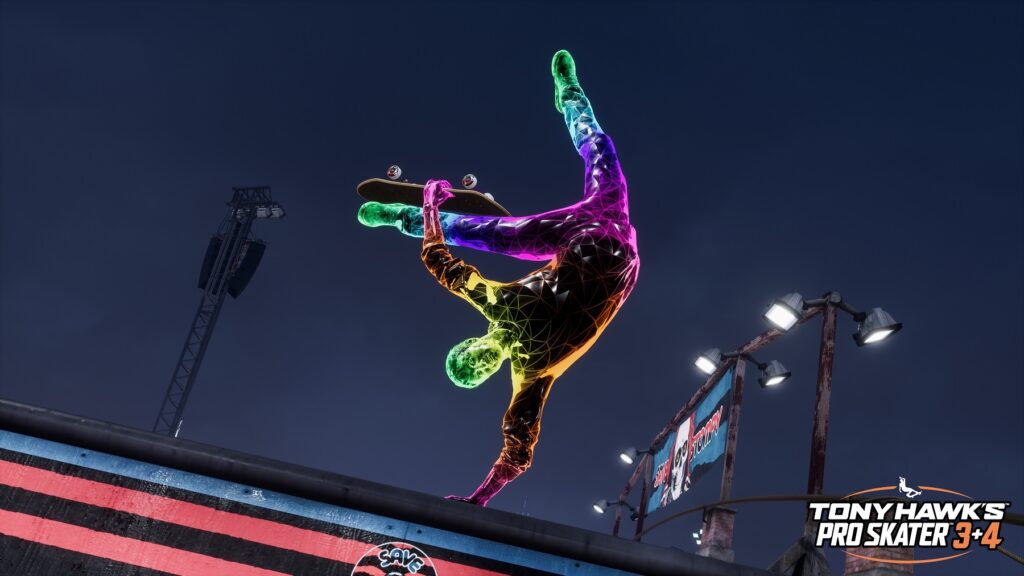
Tony Hawk’s Pro Skater 1 + 2 released in 2020, bringing the first two entries of the series into the modern era. Rather than merely attempt a pure experience with updated visuals, developer Vicarious Visions delivered a take on Pro Skater 1 and 2 that incorporated elements from the later games, making the remake cohesive and packed with features.
Five years later, Tony Hawk’s Pro Skater 3 + 4 is landing to complete the set–because Pro Skater 5 is likely going to flounder in past–and allow players to rejoice in nostalgia, or find out what all the fuss is about all these years later.
If memory serves, my first Tony Hawk game was likely Tony Hawk’s Pro Skater 3. The logic lines up as I acquired a PlayStation 2 around 2003 or 2004 and bought up cheaper games from flea markets and used stores that I had missed. You see, I’ve never been able to stay afloat on a skateboard. I can’t rollerblade. I’m bad at the iconic “cool kid” things and never got into sports. But I had heard so much about the Pro Skater series from friends who were into the scene and from the sheer staying power of the Tony Hawk name.
Upon booting up 3 + 4, those faint memories came flooding back of the summer I played Final Fantasy X and additionally spent weeks trying not to shatter whatever skater’s virtual bones in-game.
Tony Hawk’s Pro Skater is not a skateboarding simulator and it was never meant to be. As an arcade-like experience, it was all about extracting the fun and cool factor out of its chosen sport. Think Need for Speed or Forza Horizon versus Gran Turismo.
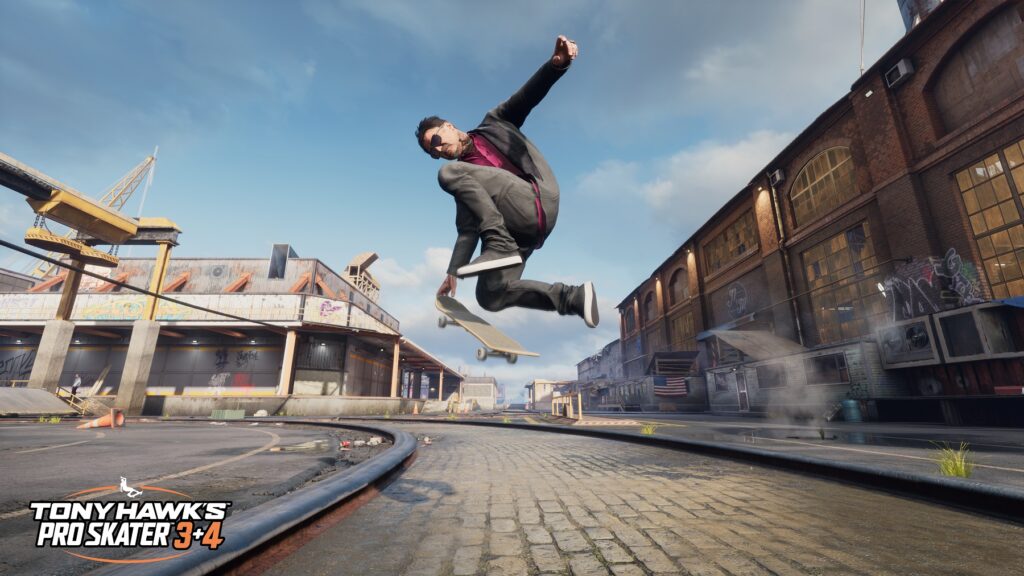
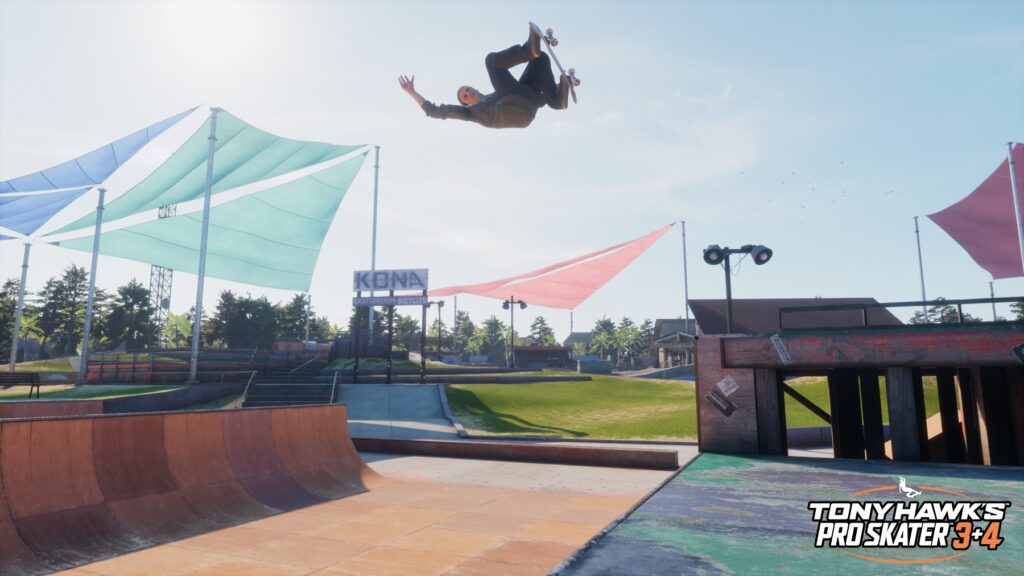
Similar to Tony Hawk’s Pro Skater 1 + 2, 3 + 4 is all about exploring bespoke maps and completing goals, many of them related to nailing high-scoring combos. Players build up speed, grind on rails, ollie over gaps, perform tricks, and attempt not to bail, losing any score built up during a combo. Gameplay in 3 + 4 is incredibly tight and polished, yet loose enough to not feel as if players are shackled to any kind of realistic physics engine.
Pro Skater was always about living the fantasy of some physics-defying skateboarder, capable of pulling off impossible moves in the air. For newcomers, there might be some growing pains towards remembering how to execute the simplest of moves, such as pulling off a manual to extend a combo on the ground, or simply to reverse direction instantly. But outside of the actual level goals, Pro Skater wants players to acclimate towards its loose rules and chill demeanor.
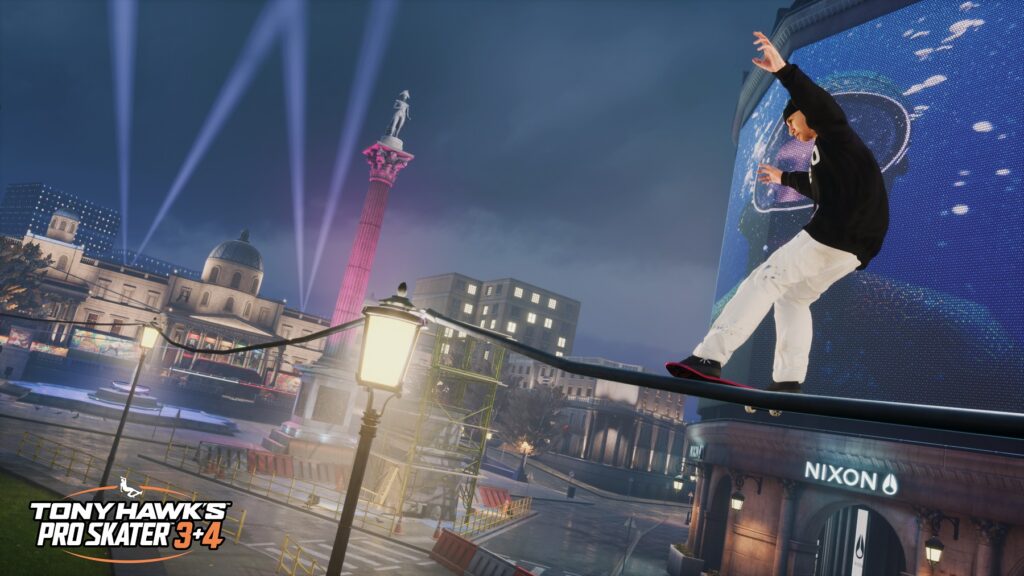
Cheats exist to remove the 2-minute time limit on a level. Players can enable the ability to always have a perfect landing or simply never bail. And while these adjustments section off a “cheat” score, it allows padding for comfort to set in. After all these years, I won’t lie that for the first couple hours I just wanted to skate around the pier and college campus, learning the systems and familiarizing myself with the mechanics. I simply forgot that I could spam the grab button for a few quick and dirty points to help ease my combo, that it was okay to simply jump and grind on every surface to just have fun.
What Pro Skater never attempted to do was be purely about complex combos. Across the series, emphasis was placed on accomplishing inventive and standard goals that would eventually unlock new maps and features. Collect S-K-A-T-E, find the secret tapes, get high scores, disrupt unruly NPCs, chase down and skitch vehicles. All these tasks had a certain fun factor to them that emphasized exploring and understanding the flow of maps.
Becoming familiar with these skate playgrounds emphasized the care that the original team at Neversoft spent to curate interesting and engaging moments for players to extract the maximum amount of fun from. The wealth of opportunities to actually build combos and get serious air to fly up and grab cash and objectives and skill points is one of the great joys of Pro Skater.
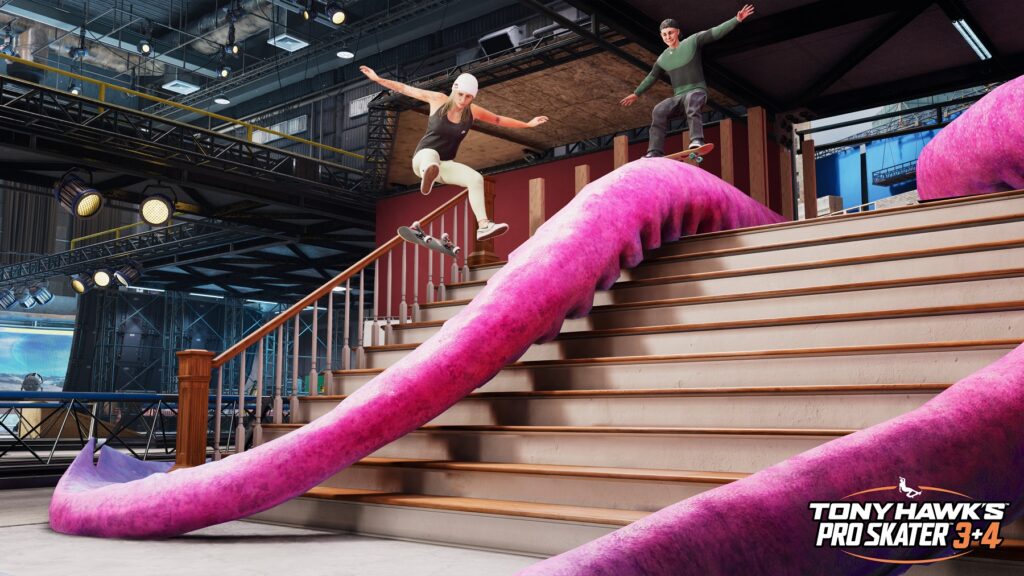
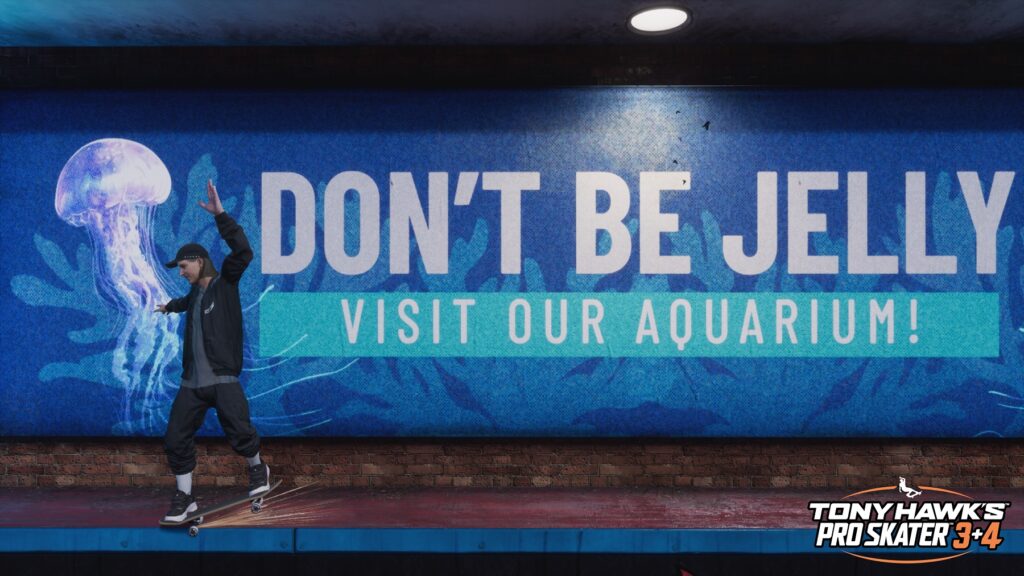
Taking over the reigns from the now defunct Vicarious Visions is Iron Galaxy, who have handled a wealth of port work over the years. 3 + 4 look phenomenal and a lot of that is because of the astounding environmental work. Placing the original PlayStation 2-era games next to these remasters, it’s instantly apparent that significant effort went into reinterpreting what the environments would look like in the modern day. Buildings are layered with color and graffiti, gone are the polygonal sharp edges that defined this pre-HD moment in time. While some levels may not be bustling with NPCs strolling around, they feel more lived-in and real than ever before.
Learning and interpreting where players can execute grinds and what constitutes a skateable surface feels more natural with this new coat of paint. Better yet, it doesn’t feel like anything is lost in translation. Despite the updated engine and visuals, landing tricks isn’t going to feel significantly different outside of a few minor instances where Iron Galaxy had to slightly alter the alignment of potential combo opportunities. If you put it under a microscope then sure, something might pop up. But after all, this isn’t an entirely 1:1 experience.
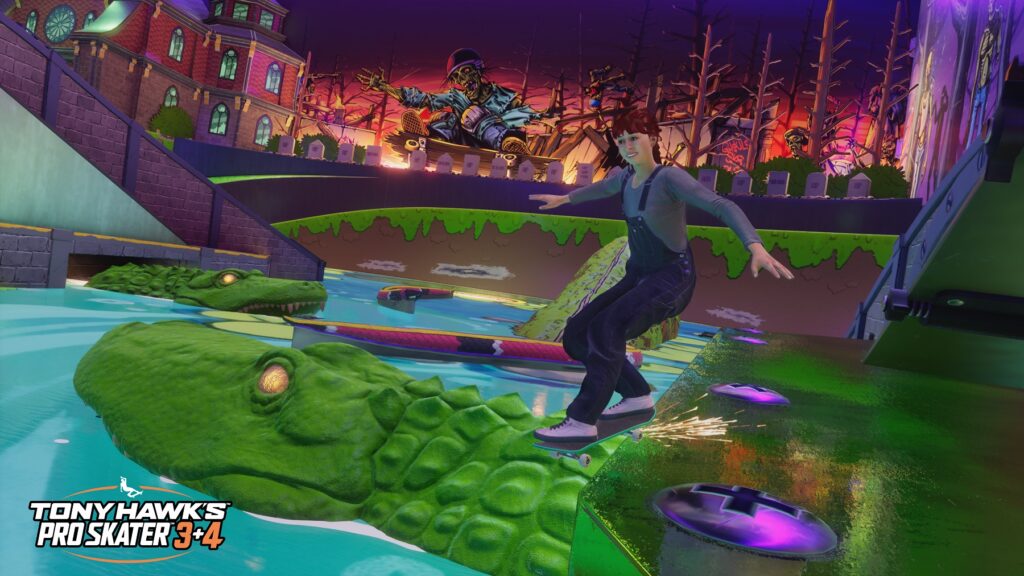
3 + 4 run phenomenally. At no point did I experience any hitching, or framerate stutter. Because I’m not pro skater myself, I can’t really account for instances of wonky collision but your mileage my vary on that. And it makes it harder to notice any minor issues, especially when the draw distance allows players to take in the scope of the entire map without having to skate towards foggy noise that has yet to render geometry. However, while I applaud the inclusion of a few dozen skaters across the generations, I do think some of their faces are a bit underwhelming. Though I know hardly any of these people in real life, I did note that their heads look a bit bland and not very well rendered.
Perhaps one of the biggest sticking points of this remaster are the alterations done to Tony Hawk’s Pro Skater 4. In the original game, levels were more open-ended and not done in the same strict 2-minute bursts as prior entries. While the mechanics and fundamentals from 4 are also available in 3, some may feel that 4 is a lesser remaster because of it. Goals are shuffled around or removed entirely and the interactions and conversations with other skaters are absent, too. As a kind of balm, the time limit can be changed to 60 minutes to allow for some of that old-school flavor.
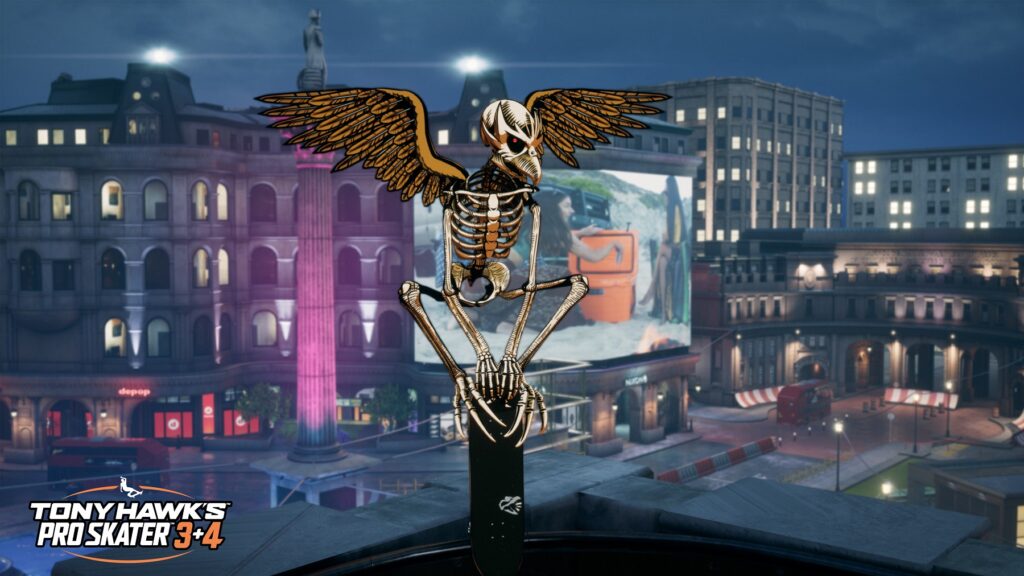
It’s hard to say what the justification was for Iron Galaxy doing this outside of making the experience as cohesive as possible across all four games. Not being a purist, I can’t say that I entirely lament for what I don’t remember. But that doesn’t take away from other players who may look back at those elements of Pro Skater 4 with fondness. It should also be noted that some levels do feature a few alterations whether they’ve been changed from setting or have become a bit less populated and busy.
Another drastic change players may need to comprehend is the fact that 3 + 4 features an almost completely different soundtrack than the original entries. Only 10 of the original 50+ tracks from both games are featured here. And believe me, I understand the cultural significance of the Pro Skater soundtracks across the years. The blend of punk, rap, and rock always fit so well with the atmosphere of skateboard culture and likely got a generation of kids into numerous bands they listen to as adults.
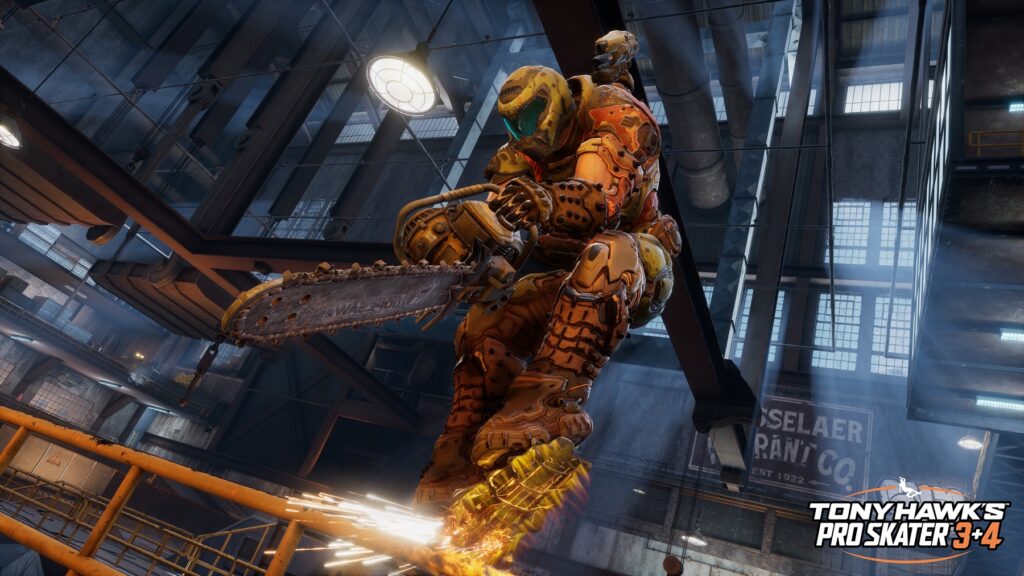
Navigating the unruly waters of music rights has always been a problem for legacy content. And despite Iron Galaxy’s efforts to infuse 3 + 4‘s soundtrack with similar vibes, it will likely be the biggest sticking point for fans. Yes, you could potentially stream the original soundtrack elsewhere. Yes, the new music features some bangers. Yes, newcomers won’t notice as much. These are all valid points. But it does somewhat detract from the overall package.
And even with that noticeable shortcoming, it’s hard to deny the generational appeal that Pro Skater has, especially in the context of 3 + 4. Iron Galaxy crafted new maps here that feel right at home with the original lineup. Their efforts to allow players to create their own skate park and update the feature will greatly expand the replay factor of product. Instead of just a random playground of obstacles to combo off of, players can now include goals into their park, potentially allowing for high-quality parks to be made by the community that would be right at home with the rest of Pro Skater‘s levels.
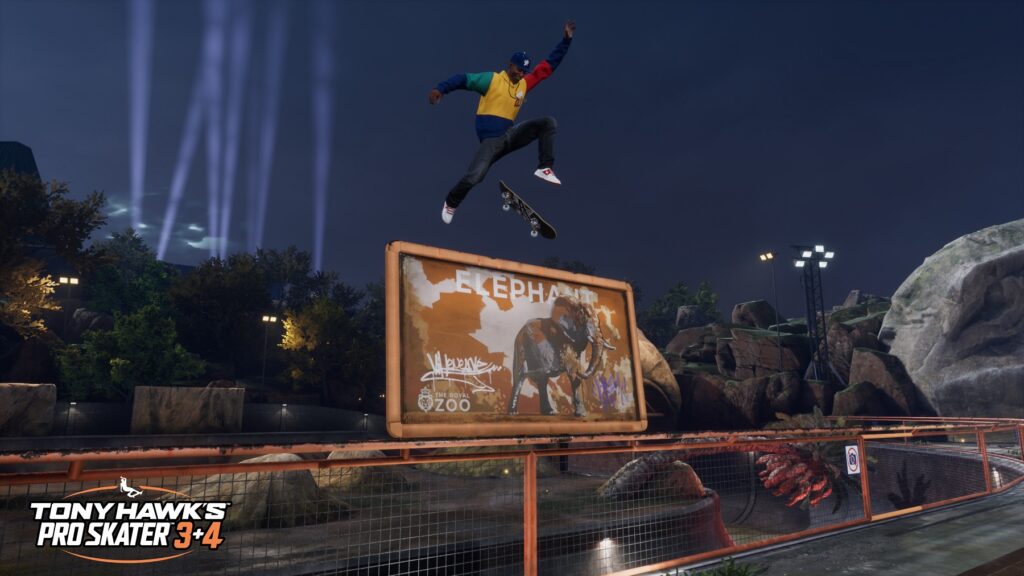
3 + 4 also include a wealth of content spread across all modes of play. Pro goals are unlocked after doing all the normal challenges in a level, offering significantly tougher goals for players to accomplish. Numerous lists of hidden tasks like combo strings and actions are all responsible towards funneling cash towards the player that will go towards cosmetic items and unlocks. Players can find stat point boosts to maximize their skater and thankfully these are shared across games and skaters when found, making them feel like less of a grind.
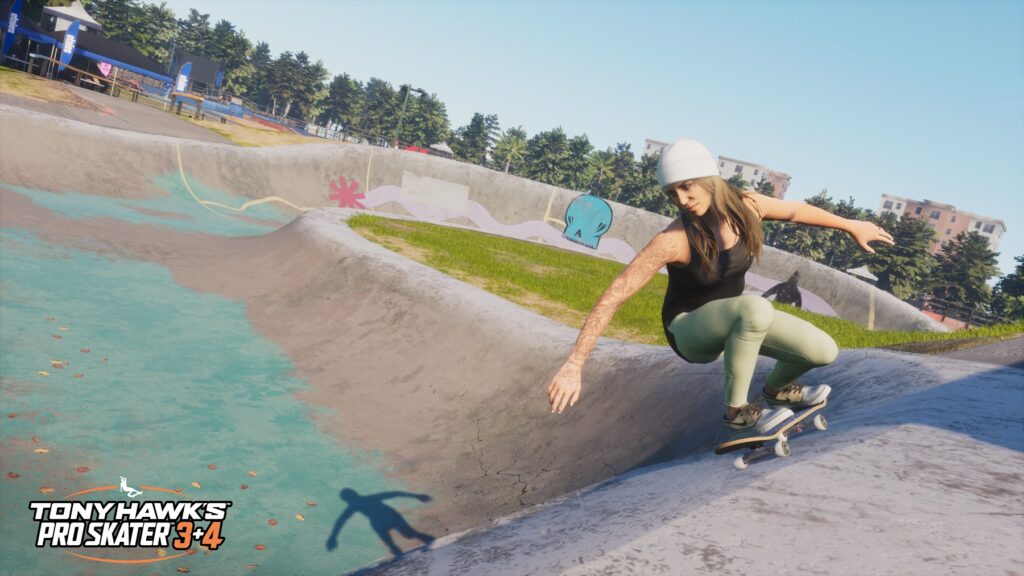
Players wishing to compete against others across the world will rejoice in a suite of multiplayer modes as well. Players will face off against others to land the highest overall score or best combo score for some intense competition. But the sillier modes were more fun for a person like me who simply just isn’t that great without a lot of practice. HAWK mode tasks players with placing the H-A-W-K letters on a map and having others seek it out, with points being scored for finding letters or having them not revealed. It’s an engaging and semi-intense mode that rewards player skill and ingenuity for understanding map design. I also found a lot of fun in the Graffiti mode that acts almost like a Splatoon-style battle where players decorate a level in a specific color based on where they performed tricks. A player who lands a higher-scoring trick on that same spot will mark the territory as theirs, creating an escalating battle of territory and skill.
While the collection of 3 + 4 may not entirely live up to the iconic standard that 1 + 2 did, it’s impossible to deny the effort made by Iron Galaxy to top off the Pro Skater experience with these two memorable entries. Of course, there are numerous Tony Hawk games to mine from–including Underground–but for now, the Pro Skater reign has been preserved well. All it takes is a few skillful runs of a park, watching your score dramatically increase with riskier moves to be transported back to a different time.
Tony Hawk’s Pro Skater 3 + 4 offers that much-needed shot of nostalgia, from a time where all any of us wanted to do was feel cool. Tony Hawk represented counter culture and Pro Skater was emblematic of that iconic time. While some reshuffling may dampen the experience for purists, the wealth of content found in 3 + 4 proves that Tony Hawk is a timeless champion and this remake is a thrilling reminder of how a legacy is made.