
The Spell Brigade separates itself from the pack of Vampire Survivors-adjacent games by letting up to four players engage in unruly, wave-based chaos. However, the power climb is locked behind a steep grind that takes too long to feel rewarding.
Vampire Survivors is my most-played game on an airplane. It doesn’t need an internet connection. I can use its endless waves of Castlevania knock-offs to potentially lull myself into a restless slumber in a cramped seat. I can upgrade a random stat after a match and feel accomplished. I’ve done it for years.
Since poncle broke the mold and created a fusion of roguelikes, bullet hells, and wave-based hordes, there have been countless imitators. A couple years ago, I downloaded some basic “Survivors-like” on my phone and bailed after a couple days. Why the hell do I want to grind and grind and grind for equipment that needs to be combined into about a dozen layers of rarity to become viable? Obviously the answer is that I’m supposed to pay but come on, your main competitor is free!
It’s easy to see why Vampire Survivors has so many imitators and so few peers. Any game can capture the thrill of growing in power to blitz through hundred of on-screen enemies. They are a dime a dozen now. But not many capture the bonkers approach of insane weapon synergies, cryptic unlocks, and casual fun that can keep you locked in.
The Spell Brigade doesn’t hide its inspiration at all. Why should it? Just because there is one success story doesn’t mean there can’t be multiple.
But for developer Bolt Blaster games, the largest differentiating factor between The Spell Brigade and Vampire Survivors is the implementation of cooperative play out of the gate.
I’ve never played Vampire Survivors with another person mostly because of the whole playing it on a phone. Admittedly, I can see the appeal of having fellow survivors bombarding the screen with pixels, confusing everyone as to what the hell is actually going on.
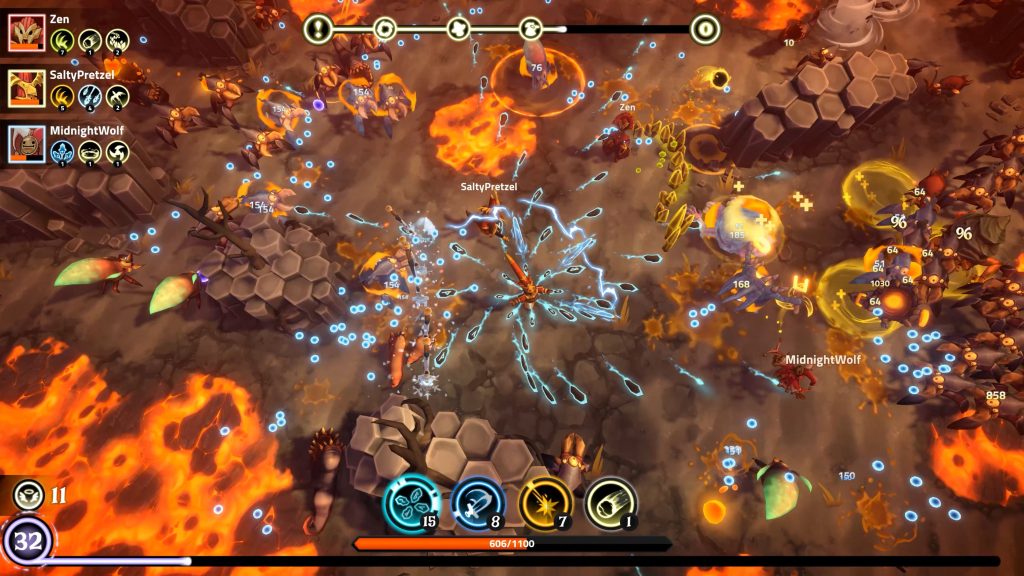
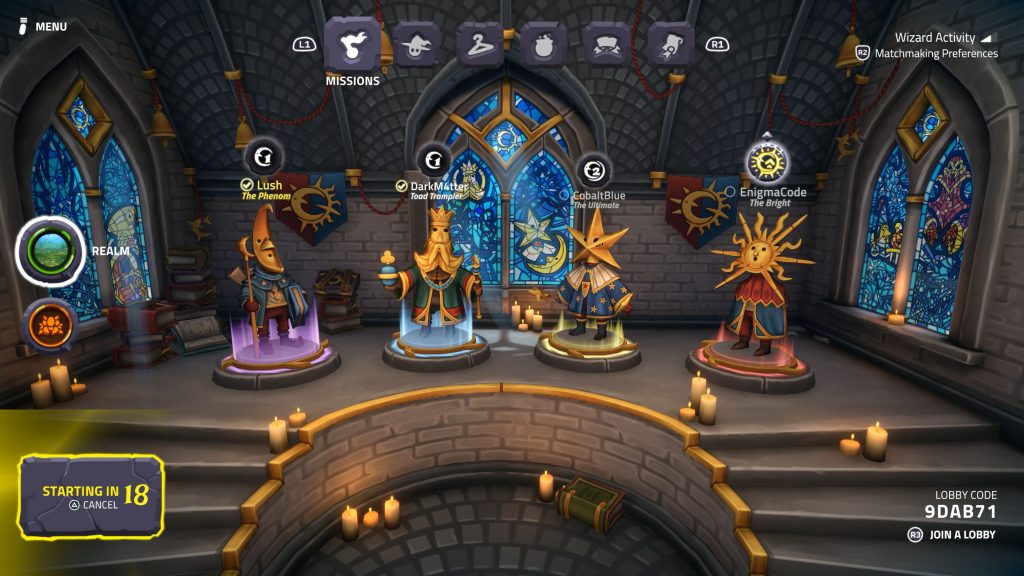
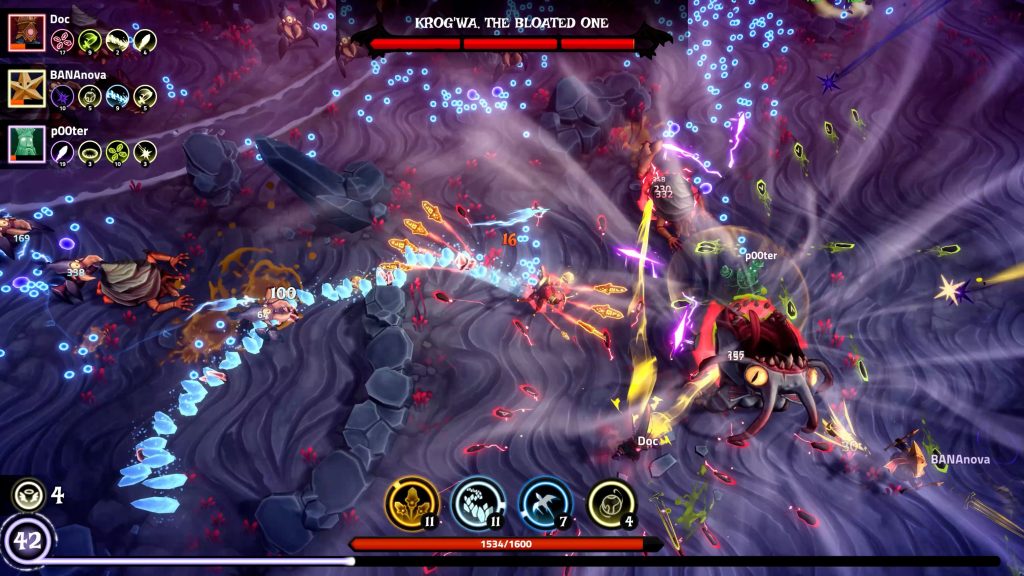
The Spell Brigade absolutely has that going for it right out of the gate. While I never played with a full stack of four players, my time with a duo and a trio were the best kinds of chaos. That feeling of everyone leveling up together, boosting spell capabilities, and pooling damage to the endless hordes of arachnids and bugs and weirdos is a thrill.
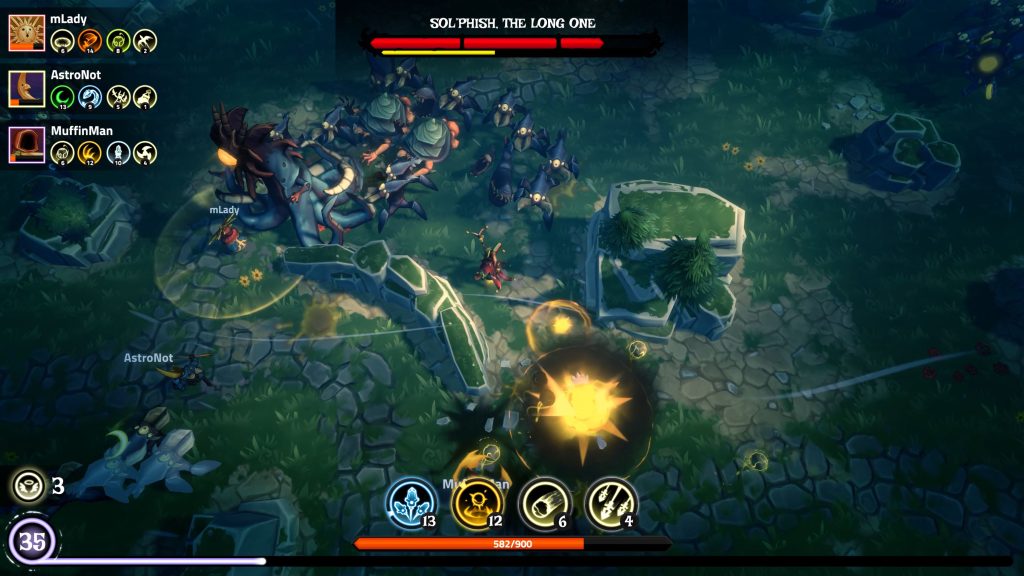
One interesting twist is that the spells used to clear the battlefield can not only injure fellow friends, they can harm the player. Numerous spells are all about casting constant damage or creating big explosions meant to decimate tight-knit groupings of beasts. But getting caught in the crossfire is absolutely detrimental to safety and can create an interesting tug of war in how players determine whether to keep moving or risk proximity damage.
On the other hand, after playing the game for a bit, a Covenant is unlocked that a player can activate to prevent friendly fire to self and others. For solo play, this is absolutely essential to preserve one’s sanity and every time I forgot to turn it on, I would immediately restart my run. As a kind of balm, many spells can be augmented to heal players, offering meaningful strategies on what kinds of upgrades to invest in.
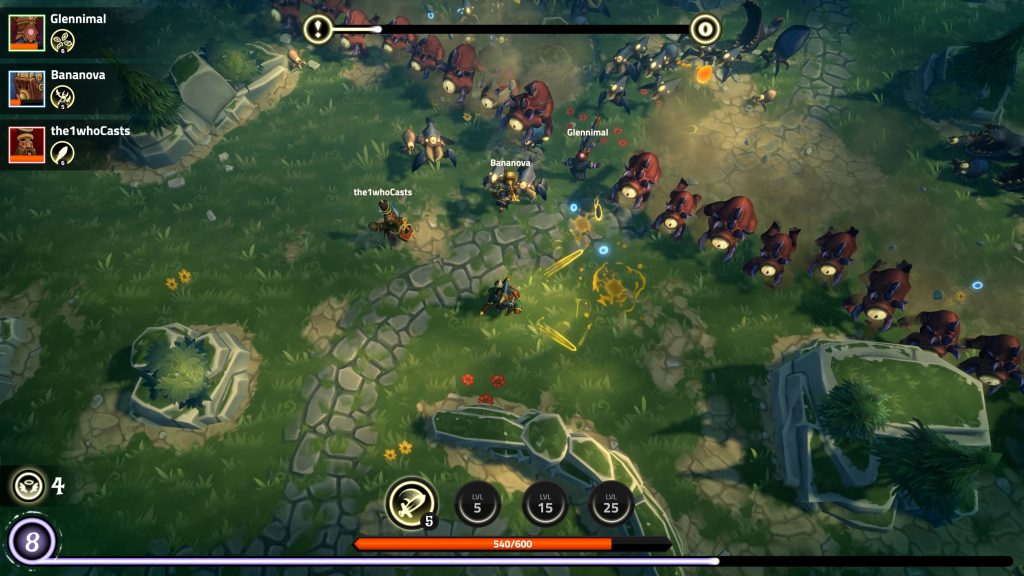
Spells are fairly recognizable for anyone who has dipped their toe into the genre. Magical birds flock around and dive bomb enemies. Spectral swords circle the player and can be upgraded to grow bigger over time or do more damage when standing still. Projectile attacks can split up or hone in on enemies with the most health. Additionally, after investing enough levels in a spell, they can be infused with magical damage like ice, fire, acid, and lightning, with new infusions unlocked by progressing through levels.
As the player runs around collecting mana orbs to raise their level, a selection of upgrades can be chosen. Spells can be boosted in damage, their cast speed reduced or life increased; player stats like luck and and max health or universal damage can be boosted; and beneficial scrolls can be collected that offer potential boosts.
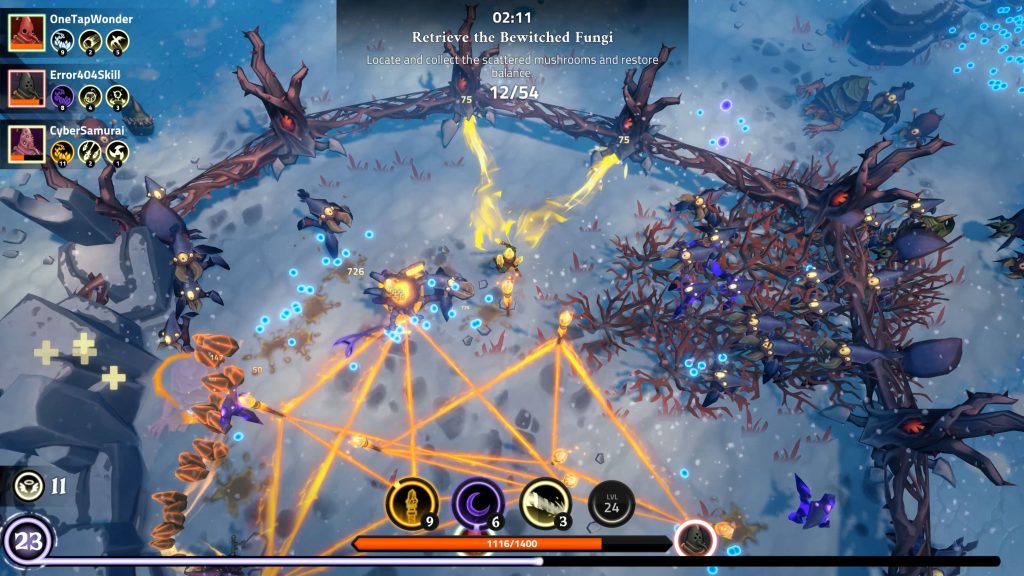
After spending quite some time in Early Access, The Spell Brigade is launching on PlayStation 5 and PC into its 1.0 version. Currently, four maps exist. The first map is relatively basic, a rocky area with greenery that funnels players and enemies around by placing blockades around. The second area has stretches of ice that are slippery to navigate and grass that will inhibit player speed. The third area is rife with damaging pools of lava and tornadoes that whip around and often harass the player with cutthroat efficiency. The final area features flowing rivers that boost speed when working with the flow and portals that send players in random directions.
Over the course of each round, objectives will pop up that players can tackle and when completed, will offer a way to augment a spell. These objectives are an interesting twist to the formula and have a way of throwing a wrench in the flow of a run. Players might have to destroy statues or collect mushrooms scattered along the map. They may have to hold down a point, clear up goo, or herd mana beasts into a pen.
While I appreciate the diversity of The Spell Brigade‘s maps, there is a significant difficulty spike when tackling everything but the initial one. The same can be said with the in-run objectives. Eventually, the overwhelming amount of enemies makes navigation almost impossible. Often, an objective where the player is meant to hold down a space can spawn over an environmental hazard, meaning damage is frequently taken in hopes of getting an upgrade. And some of these objectives are nearly impossible to complete without significant investment in permanent upgrades. Adding multiple players to the mix can ease some of the burden but it also has a tendency to raise the required amount of effort to complete objectives.
Some of these disadvantages can be curbed by unlocking new characters. A few take less damage over hazards or move faster along them. Others have boosted healing and revive speeds meaning that you can pick friends up faster to have them respawn with a damaging dive bomb.
But The Spell Brigade places a lot of roadblocks in front of players that can create some unnecessary friction.
One annoyance I had was the sheer frequency of enemies that explode when destroyed or when coming into proximity with the player. A circle appears in the radius of where the explosion will spawn and players have mere seconds to move away. Some unlocked characters can barely escape the range of this explosion at their base speed. But there are simply too many of these enemies. Yes, their explosions damage everything around it but too many times I would get flooded with these enemies and have no way to successfully worm my way through packs.
However, that’s a minor frustration. What really harms The Spell Brigade is the daunting progression grind.
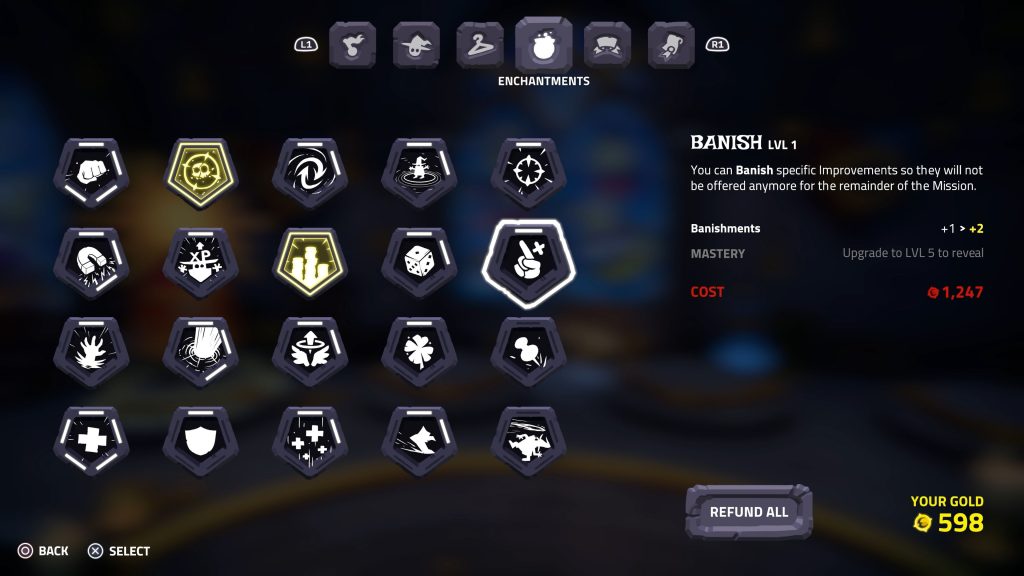
Players spend coin to permanently upgrade base stats. Max health and damage, boosted luck, increased revive speed, all of these make sense and offer tangible advantages to the player. The problem? They are far too expensive and coins are earned at a pathetic rate.
Completing an average round of The Spell Brigade would take me anywhere from 20 to 30 minutes. If I played with a character who had a 10% coin boost, I would usually net around 700 coins. That is barely enough to invest in one node of almost any upgrade after its first few levels. While players can generously refund all their spent coins at any point to reinvest, it’s still abysmally slow.
Luck is one of the best stats in the game and whenever I would see it, I selected that one from a level up reward. But permanently boosting my permanent luck stat felt like a pipe dream. Even worse? The ability to reroll upgrades requires the players to invest tens of thousands of coins before that part of the tree is shown.
The knife is pushed in deeper by the fact that unlocking new characters also requires coin investment. New spells are locked behind completing rounds with characters and because no character information is shown before purchasing, you’re best to look up who you might want to purchase first. Oh, and the coin cost of purchasing new characters goes up with each one. It made me miss the way Vampire Survivors tucked some of its character unlocks behind actual missions and discovering them.
To hammer the point home about The Spell Brigade‘s brutal progression: after I unlocked the infinite mode from beating all four levels, I gave it a whirl. At one point, I spent an hour and a half getting to a third full run. I wanted to do something else so I quit out and saw that I received a paltry 1500 coins for my time, barely enough for two upgrades, not even ones that I wanted.
A game like The Spell Brigade kind of hinges on player progression both in and out of runs. And unlike Vampire Survivors, there’s no real way to boost the speed of a round early on. I wanted maps that scrolled infinitely so me and my team wouldn’t always be boxed in. I wanted more upgrades to put my coin in but not with the stingy existing system.
Perhaps the ultimate issue with The Spell Brigade is that it has an extremely satisfying core that is amplified by the ability to play with others but everything around it feels limiting in one way or another. If the ability to refund character purchases existed that might shave off some frustration. But why should they increase in cost? I like that after investing five levels in an upgrade, a powerful mastery is unlocked… but I still have to purchase that too.
Once the deeper endgame is unlocked by trying to acquire titles and outfits and ascend characters, there simply isn’t that much left to do. Players can make runs harder to meet their upgraded power but what else? My assumption is that The Spell Brigade will continue to evolve over time with new iterations and content added. As a full 1.0 release, however, it’s a decent start, especially for the price point. But I imagine that one of the biggest pain points for players will be the upgrade economy and hopefully Bolt Blaster Games will listen.
The Spell Brigade separates itself from the pack of Vampire Survivors-adjacent games by letting up to four players engage in unruly, wave-based chaos. However, the power climb is locked behind a steep grind that takes too long to feel rewarding and players may yearn for more varied content to keep them truly invested.