


The Elder Scrolls IV: Oblivion Remastered is a great remaster of the original Oblivion. Virtuos Games and Bethesda’s decisions to use Unreal Engine 5, add new aesthetic content, refine some of the original’s UI, and update core systems to today’s standards are great to see. While the classic bugginess, jank, and rough edges remain, they’re not enough to prevent me from investing another 80-or-so hours into replaying this classic Elder Scrolls game.
The Elder Scrolls IV: Oblivion Remastered is one of the worst kept gaming secrets of 2025, similar to the degree of “secrecy” of the Switch 2 launch announcement. Folks on Reddit, Twitter (yes, Twitter), Facebook, Snapchat, TikTok, Myspace, and LinkedIn all knew that Bethesda’s darling 2006 remaster was coming. We all knew of its existence from drips, drabs, and leaks. We just didn’t know when it would hit our consoles and PCs.
Bethesda has made a bold move in announcing The Elder Scrolls IV: Oblivion Remastered on April 22, 2025 – the same day it was available for players to jump in and return to the beautifully white walls of the Imperial City in Cyrodiil. There was no waiting game to be had, no hype train spanning days, months, or years.
Heck, we didn’t even receive a copy of the game until several hours after the game was announced and available.
Worst kept secret or not, I am absolutely thrilled to return to Cyrodiil and relive the countless hours I spent in high school playing Oblivion on my PlayStation 3. If this is what a future Elder Scrolls will look and play like, I’m truly excited for what’s in store for us from the minds at Bethesda.
I’m getting ahead of myself. Let’s talk about the remaster. Virtuos Games and Bethesda have come together to refine the original Oblivion with a massive graphical overhaul, refined UI, a sprint button, new NPC voice lines alongside the original, and so much more.
 In some ways, Oblivion Remastered is a great example of what a remaster should look like. In others, though, there are some questionable decisions that show the game’s age.
The Elder Scrolls IV: Oblivion Remastered is functionally the same game I played almost 20 years ago. Despite Unreal Engine 5 making things gorgeous, the silliness of Oblivion’s unpredictable AI exists just as I remember it. Imagine entering the ruined city of Kvatch and slaying Scamps (miniature elf demons) one by one and then seeing one of their lifeless corpses bounce around the ruined city for several minutes as the NPCs carry on conversations around me. You know, typical Bethesda silliness.
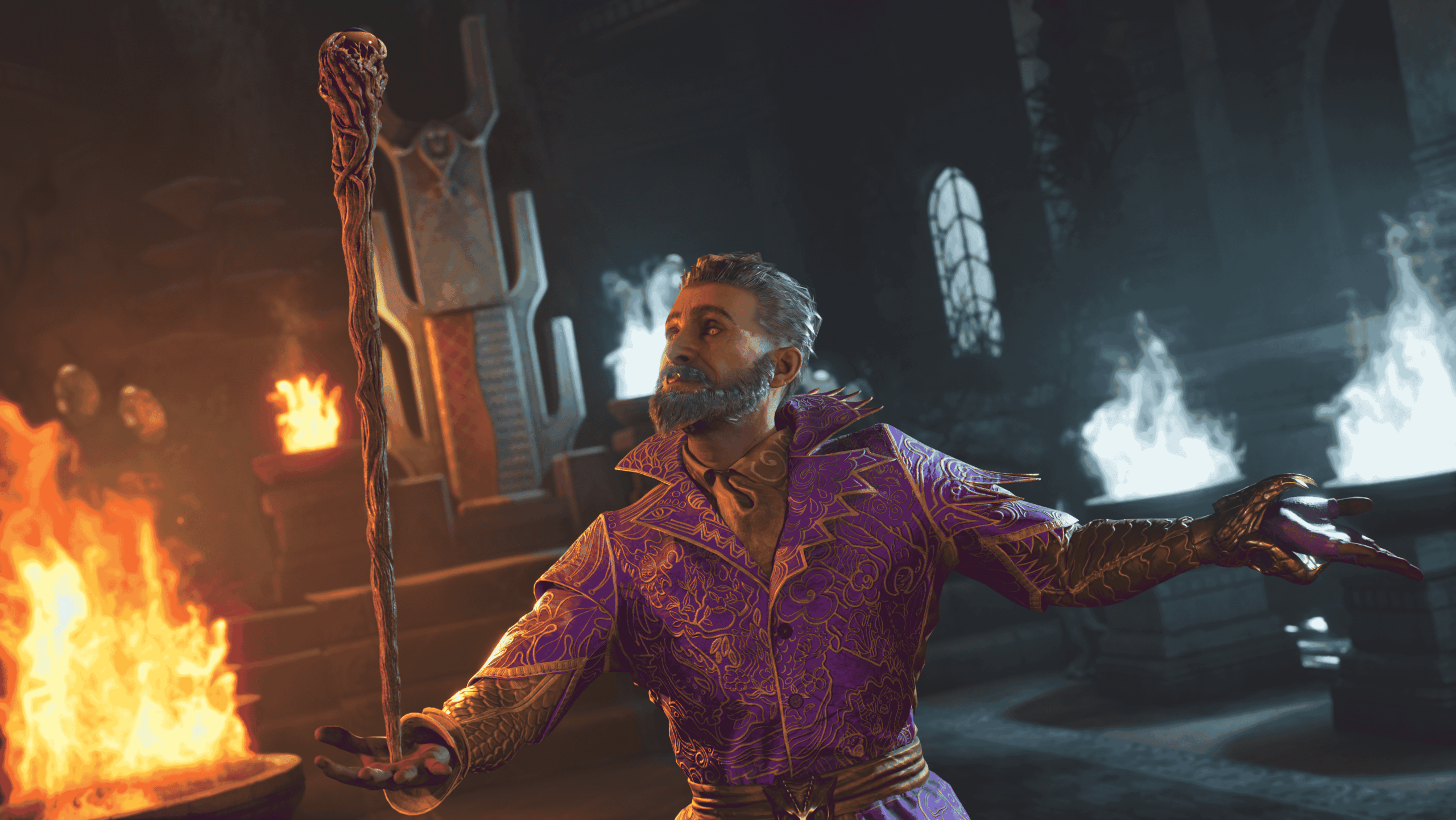
What I don’t recall is the remodeling of Cyrodiil, from the beautiful sprawling medieval landscapes to the NPCs’ designs. Orcs that were once grotesque green monsters have a stumpy yet rugged exterior. Khajiit, The Elder Scrolls’ race of felines, look fluffier than ever before. Even Uriel Septim, the Emperor whose death kicks off the game’s main quest, looks like a real pained human being.
Cyrodiil is as gorgeous as ever. Leaving the sewers and seeing the glimmering waters of Lake Lunare brought me back to my first encounter with Oblivion all those years ago – Unreal Engine is doing some heavy lifting with god rays, particles, and active environments. Harvesting resources like mushrooms or flowers involves a clear animation. Enemies react to my strikes, pushing immersion to the max. The changes to the dynamic night/day and weather systems remind me of what Skyrim can look like once I’ve modded it to a near-unrecognizable state (unless we’re talking about the next-gen update to Skyrim, which is nearly as gorgeous as Oblivion now).
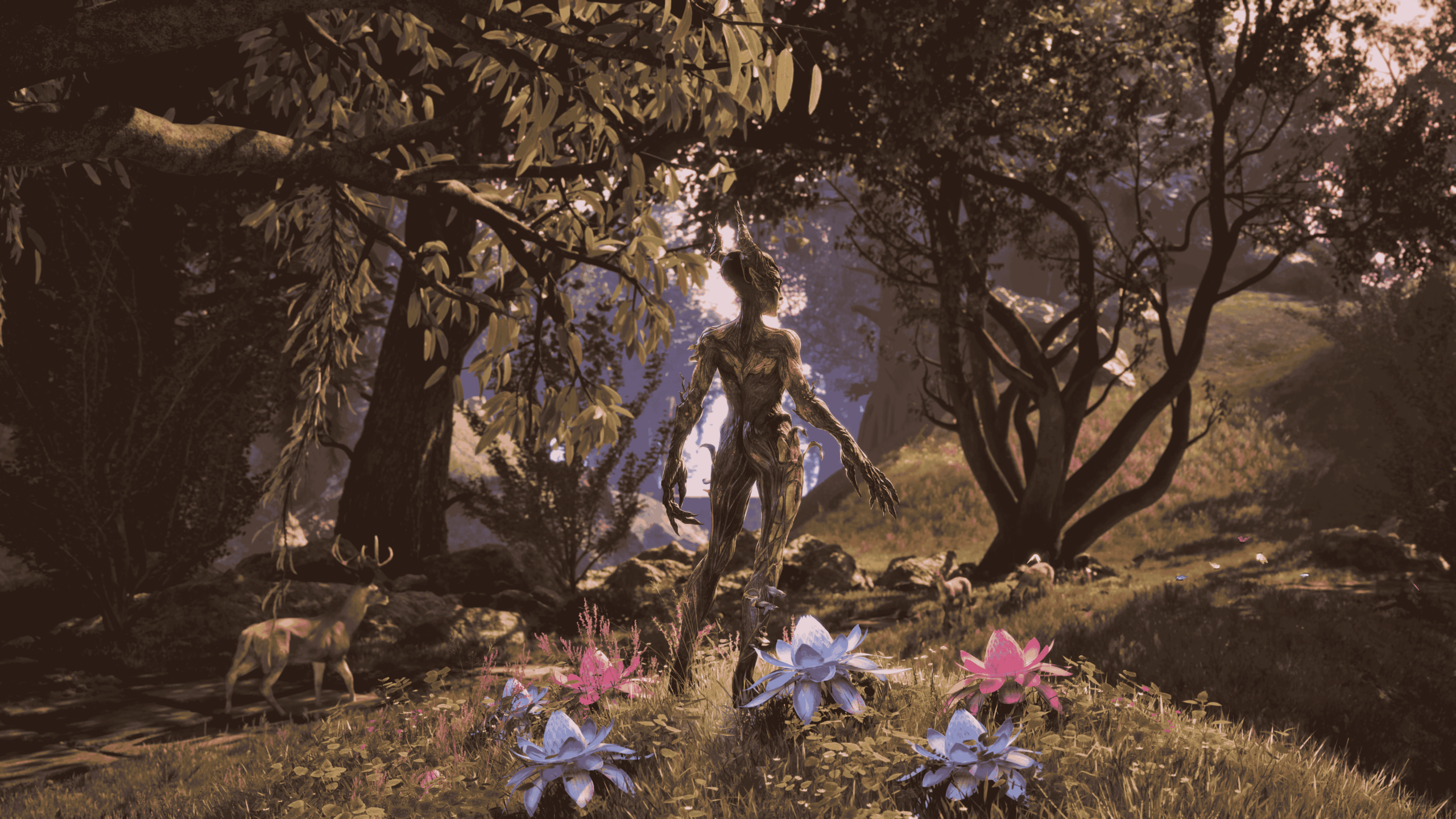 I’m thrilled to see Oblivion in this state. I attempted to replay Oblivion on PS+ (the PS3 version, streaming) a short while ago, and it felt far too clunky and stuff compared to the leaps and bounds of updates that Bethesda implemented on the likes of Fallout 4, Skyrim, and Starfield. Now? It’s a modern game, with modern systems, with next-generation gorgeousness, all with the familiar ridiculousness of a nearly 20-year-old game.
There’s part of me that is disappointed in Bethesda for going the route of remastering instead of entirely remaking Oblivion, but doing so would have compromised the nostalgia of reliving the original Oblivion chaos that is its AI. Oblivion Remastered, with its new coat of paint and some adjusted systems retains the nostalgia of the original without its ruggedness.
Oblivion is a monster of an RPG. Its systems are just as expansive as its beautifully designed world. Two decades ago, it was overwhelming to pick up this game and learn the harsh truth of in-game actions having consequences. I could pick anything up, but if that object was an owned object, I would be accused of stealing and incur the wrath of endless guards who would stop at nothing to prevent me from proceeding before I paid for my crimes or, worse, serve time in prison.
Coming from Starfield, Oblivion feels more alive with the world contained to a single plane. Cities are sparsely populated with NPCs on a set routine, interacting with each other should they cross paths. Nooks and crannies contain a potential Easter Egg, visually signifying a thoughtful placement of something silly by a developer. Cyrodiil, old as it may be, feels handcrafted despite its expansiveness.
When I originally reviewed Starfield and returned to it during my Year in Review of 2024, I mentioned that much of the biggest criticisms stem from many folks wishing for it to be Skyrim, but in space. Part of what makes Skyrim a stellar game is how its depth translates to unique experiences. The surprises that can be found on one run can be entirely missed in another run, making for excellent stories to tell around a water cooler.
 I bring all this up because Oblivion is Skyrim‘s predecessor. In some ways, Skyrim adopted Oblivion‘s methods of world building and exploration at a large scale, but with dragons instead of hordes of demons. Oblivion was a testing ground for Bethesda’s now-staple method of RPG game design. It’s stood the test of time and established a framework for immersion, exploration, and environmental storytelling that few other developers have successfully implemented in their games.
The best part about all of this is that now, new players can experience the best bits of Bethesda’s Elder Scrolls universe, chaotic AI and gorgeous world and all. If Starfield didn’t quite click because of the emptiness of space exploration, Oblivion will assuredly click with its gameplay loop of quest completion, exploring a medieval world, and occasionally creating potions/restoring armor and weapons when needed.
Most of Oblivion’s limitless NPCs can be attacked and slain, sometimes grabbing the attention of unseen forces who operate from the shadows that could send the player on a path of darkness should they choose to ally with the dark forces. Feel like going on a rampage? Oblivion lets you, but if you slay the wrong people or do so in plain sight, you’ll suffer the consequences.
There is so much to do in Oblivion, be it exploring its lush world, looting a castle, or completing one of its endless sidequests for Cyrodiil’s factions. The moment I left the sewers and visited new locations, my quest log began populating with things to do, people to talk to, and other places to visit. Oblivion is as linear as the player chooses to make it, so if you want to be let loose and accomplish side quests for hours on end, you can. If you want to go forth and close the oblivion gates one by one, you can do that, too!
If you want to visit the Shivering Isles (which you absolutely should), you can immediately jump in and meet Sheogorath. The Shivering Isles expansion is one of Bethesda’s greatest expansions, and it comes with your copy of Oblivion Remastered. Oblivion Remastered feels like an updated and complete version of Oblivion. Good on Bethesda for packaging everything up and making it available right at the start.
One thing irks me, though: Why did the “sleep to level up” system remain? This method of leveling up feels out of place for Bethesda’s now evergreen leveling system across its RPGs. In Oblivion, you can’t level up and assign additional points to your characters’ stats (that impact their other perks and abilities, mind you) until you go to sleep for the night. Sure, you can argue that Fallout and Starfield’s “well-rested” perk is incentive enough to have your character sleep off their ailments, but making it a mandatory part of the gameplay loop feels outdated.
Perhaps the biggest misstep of Oblivion Remastered is the lack of official mod support. It feels out of place for a game of its age and history of being modded to oblivion (heh). Heck, the developers of Skyblivion received a copy of game for free – the game should have supported mods at some level, be it Creation Kit or otherwise, at launch.
 I can understand that shifting to Unreal Engine 5 may have impacted the development cycle and added strain on the team. I can also understand that Sony (since, you know, I’m reviewing the PS5 version of Oblivion Remastered) is too restrictive of a role in supporting modded games on their consoles.
But it’s 2025. Oblivion is a nearly 20-year-old game. Bethesda was in a prime position to pave the way for modders to be creative and change the game however they wish. Bethesda’s history of releasing moddable games is one that few developers have successfully emulated. Recently, the Creation Kit was added to Starfield (nearly one year after its release). It would have been great for Oblivion Remastered to get it right at launch and get the ball rolling on community support.
The PS5 version has its share of new performance issues, be it framerate inconsistencies, buggy quests (some of them getting stuck), and occasional crashes. It’s in a far better state than it was back when I played it on my PS3, sure, but this remaster is far from seamless. It’s far from the polished playable state of Starfield at launch, which feels very weird to say.
The PS5 version of Oblivion Remastered takes full advantage of the DualSense’s adaptive triggers and haptics, which is a breath of fresh air. I’ve used a DualSense to play Starfield on my PC, but it doesn’t feel right. If Oblivion Remastered is any indication of future PS support, I have extremely high hopes for an upcoming Starfield port, assuming it exists.
Here’s to hoping that Virtuos and Bethesda will continue to support Oblivion Remastered for years to come. In some ways, I love Oblivion more than Skyrim; in other ways, there’s only so many times I can close an oblivion gate before I get tired of dealing with the demonic Daedra. That said, returning to Cyrodiil was a breath of fresh air and a nostalgia bomb that was worth the wait.
Let’s wrap this up.
The Elder Scrolls IV: Oblivion Remastered is a great remaster of the original Oblivion. Virtuos Games and Bethesda’s decisions to use Unreal Engine 5, add new aesthetic content, refine some of the original’s UI, and update core systems to today’s standards are great to see. While the classic bugginess, jank, and rough edges remain, they’re not enough to prevent me from investing another 80-or-so hours into replaying this classic Elder Scrolls game.