


The Adventures of Elliot: The Millenium Tales is the closest thing to a modern take on classic Zelda games I’ve played during the past two generations of consoles. It scratches that itch of bite-sized dungeon crawling and puzzle-solving that Nintendo has effortlessly refined over the past few decades. Best yet, it showcases the beauty of 2.5D pixel art that Square Enix has successfully implemented across its other turn-based JRPGs over the past few years. If nothing else, Elliot is a romp worthy of your time.
There was a time when games were simpler, harder, and to the point. The SNES-era Zelda games were most notable in their execution of 2D action platformers that were simple to pick up, rewarding for those who could creatively solve puzzles, and satisfying for those eager to explore. Square Enix’s The Adventures of Elliot: The Millennium Tales is a game reminiscent of that aforementioned era of classical gaming, albeit executed beautifully in accordance with modern Square Enix’s 2.5D graphical style. But this execution overlooks what is most delightful of these Zelda games: The player’s sense of joy when creatively pushing the boundaries of the game’s sandbox.
At first glance, The Adventures of Elliot: The Millennium Tales looks like a carbon copy of A Link to the Past, albeit one starring a talkative red mage (who does not use magic, ironically enough) and an even more talkative companion (more on this in a moment). The similarities are even more present with the simple melee swordplay, the charging up of most weapons, and a smattering of puzzle solving. The similarities end when the perspective shifts from the top-down to the oblique 2.5D perspective where Square has been recently utilizing in their turn-based RPGs. Combat rewards those who avoid taking damage – the more enemies I killed, the more I was rewarded with drops of currency I could spend on new weapons, potions, and other necessities that would assist me as I traveled throughout a world chock full of feral beasts and deadly traps.
Let’s get this out of the way now: If you approach Elliot with the expectation of it being a classic Zelda title, you’ll walk away feeling like the game lacked the creativity you craved. If you approach Elliot from the perspective of being a Square Enix fan, you’ll appreciate their take on a Zelda-like that relies on its worldbuilding, worldbuilding, and music to create an action platformer with heart.
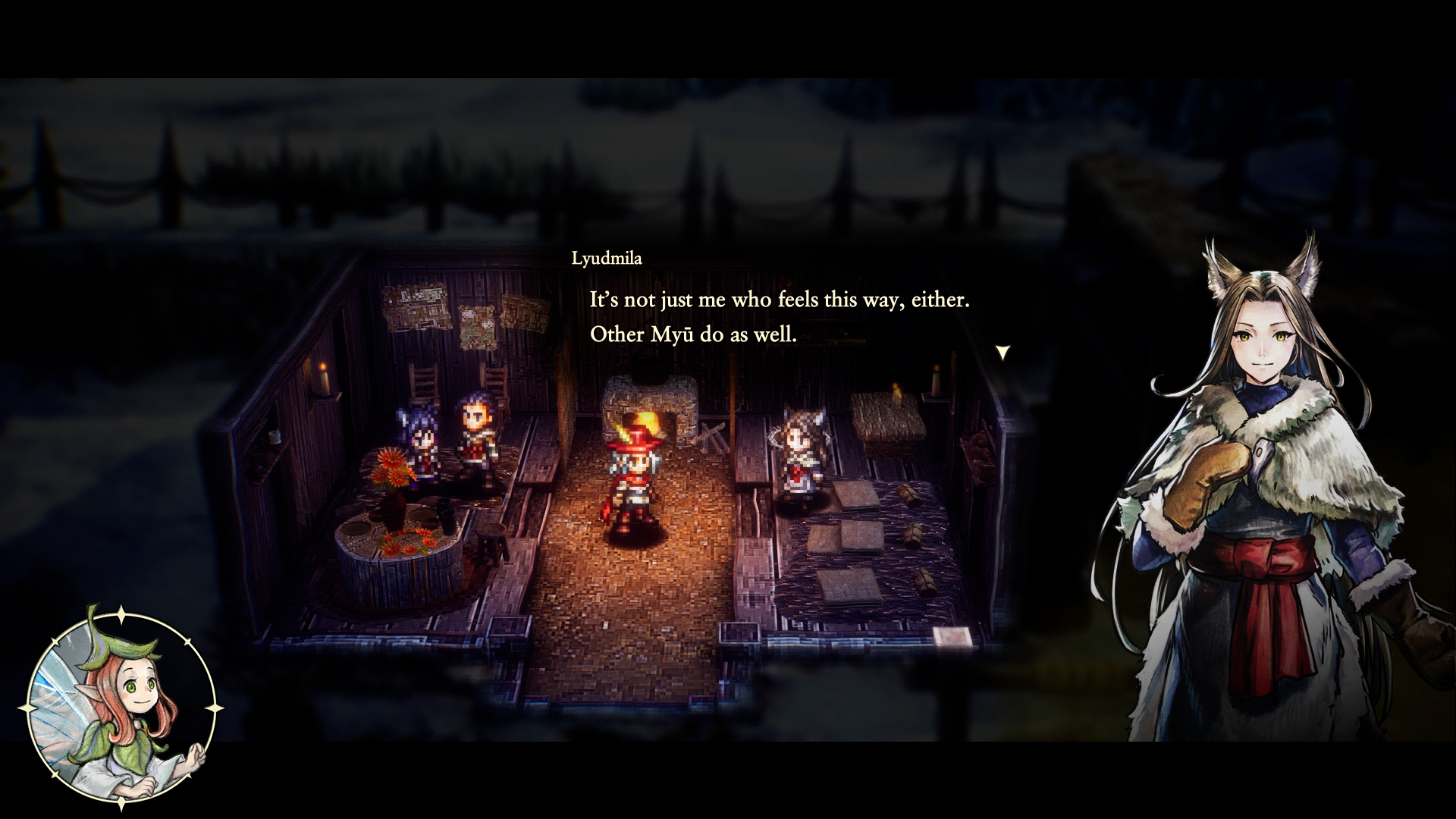 Elliot kicks off with placing the player (as Elliot) on the continent of Philabieldia. No, not Philadelphia – Philabieldia. Elliot was to explore some mysterious ruins in an attempt to save his kingdom, only to find a door that would take him back in time to stop someone from changing the past and undoing the present day.
At the start of the game, Princess Heuria assumes the role as Elliot’s companion. At any time, she can be called upon to replenish his health with a simple button press. After going back in time, however, Heuria is replaced by a fairy named Faie. Regardless of companion, they talk over just about everything in the game and rarely cease their talking. No joke – these companions repetitiously marvel at Elliot opening up the map (“Let’s see…where are we?”), blowing open a cracked wall to reveal a cave (“Wow! I didn’t expect there to be a cave!”), and commenting on Elliot taking damage (“Have you considered using your shield to block?”). If you thought that Link’s Navi was annoying with her persistent “Hey, Listen!” throughout Ocarina of Time, this is a worse territory of frustration.
I have no issue with companions in games with a quieter protagonist. Games like Zelda and Elliot can be daunting for the player who might be confused on where to go next, or what to do next, or figure out more about the world. What I do have issue with is when companions overshadow the details and wax redundant. There’s only so many times I’m able to hear, “Let’s see, where are we?” when opening up the map before I seriously consider turning off the Voice volume altogether.
Beyond annoying player one, Faie serves another purpose in this game: An odd implementation of co-op gameplay. A second player can control Faie to attack enemies and solve puzzles, but her powers quickly deplete and take twice as long to recharge. It’s like the co-op potential was made for a much younger sibling who’s forced to watching their older sibling play and defeat enemies. You’re better off controlling Faie as player one using the right joystick and calling it a day.
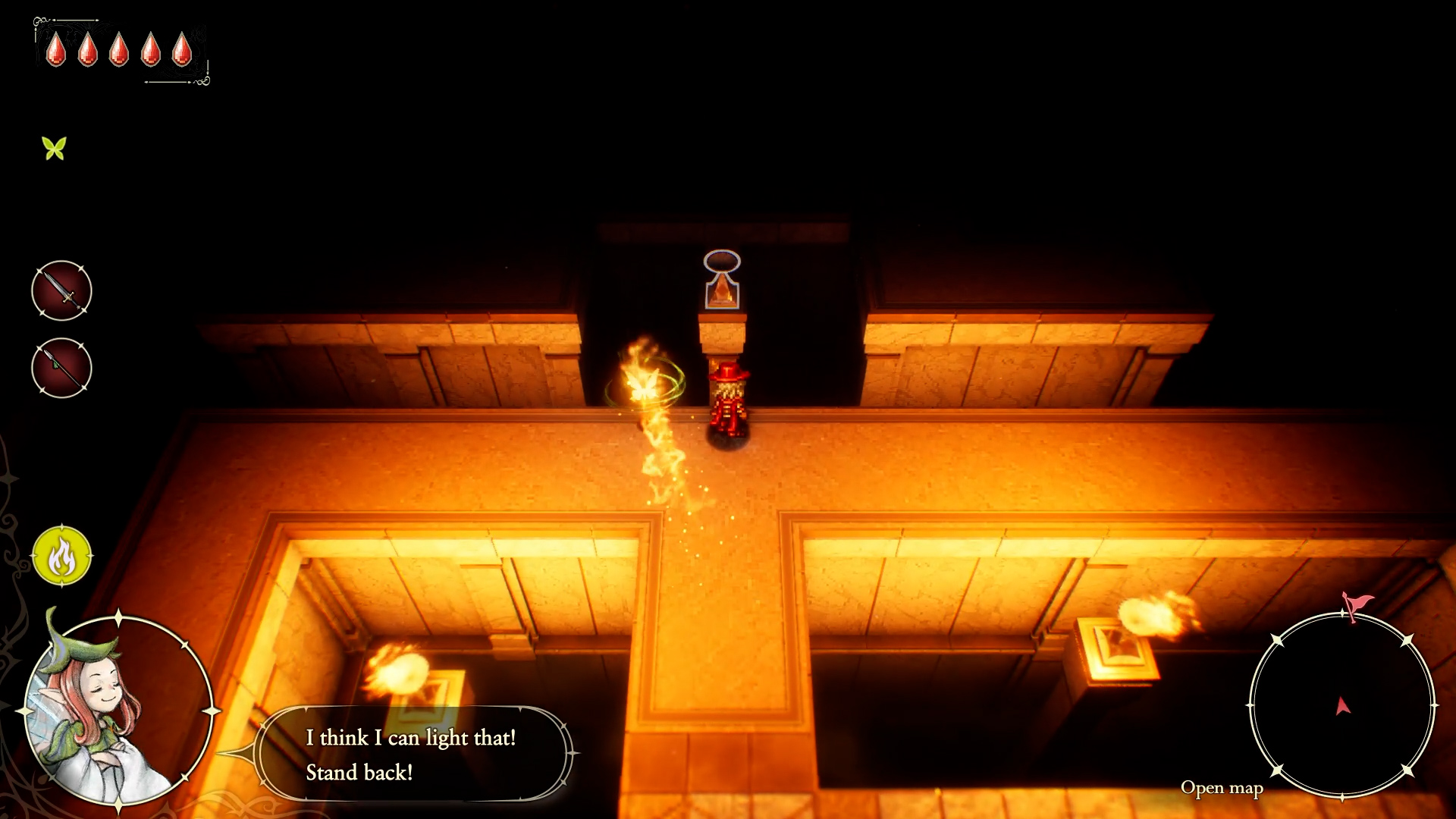 The progression ends up feeling slightly weird, at least at first. Coming from a Zelda perspective, I assumed that Elliot would follow the path of introducing a new weapon/mechanic on a per-dungeon basis. This was not the case – Elliot introduces nearly all of his weapons in its first few hours. Instead, Faie’s abilities are introduced in a drip-fed fashion, primarily used to boost combat and solve puzzles.
It felt easy to stray of the beaten path as I traveled through time. Small trials peppered the landscape Philabieldia (that name is a mouthful, yeesh). Completing them would yield stronger variants of my weapons, currency, unique magicite (perks that could be attached to my weapons to grant them unique properties), and other smallform benefits. Most of these trials are optional, but it was hard to ignore them on my trials.
The Adventures of Elliot: The Millennium Tales hits its stride at around the 11-hour mark. At that point, I had unlocked several Ages to travel between, I had all but one of the fairy abilities unlocked, and I had completed most of the side quests. The early game’s side quests effectively amounted to fetch quests – slay a few beasts here, find an NPC there, uncover a lost item. By that 11th hour (for me), side quests became deeper time-traveling jaunts: I was tasked with time-traveling to learn more about the world, find NPCs scattered across time to rebuild a band, and orchestrate emotional celebrations that made the in-game world feel fully realized. These mid-to-lategame side quests all featured cutscenes of sorts; I particularly enjoyed the side quest where I could reform an enchanting musical score and make it my own based on my preferred instruments and tempo. Sure, the accessories I unlocked were slightly rewarding, but seeing the thoughtfulness of the worldbuilding was a reward in and of itself. It was even more wild hearing accents of all kinds – I picked up on something that sounded Minnesotan/Canadian (of all accents in a JRPG) and wanted to befriend that NPC out of principle.
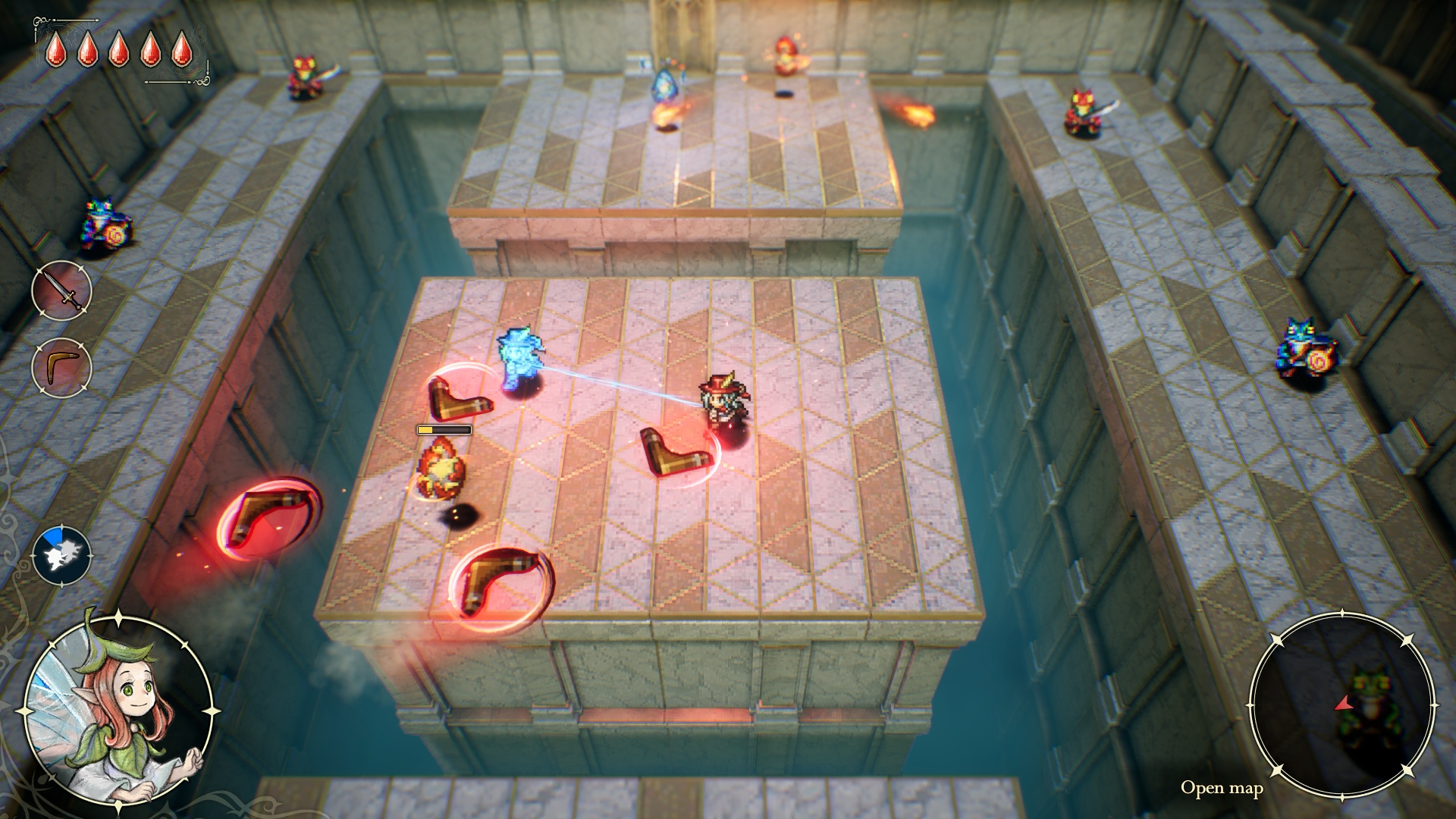 While the side quests added depth, the time-traveling thematic falls short in the design space. There are a small handful of differences between the multiple Ages I explored – I realized this when I was in the snowy biome and attempting to complete a side quest. If I hadn’t checked the map (that told me where and when Elliot was located), there would have been no other indication as to my place in time. Enemies were mostly the same across time, only differing when moving from one biome to another. The game’s single town changed dramatically depending on the Age (along with its citizens), but the layout was pretty much the same. Dungeons would occasionally have slightly different layouts (some avenues were cut off while others opened up).
When I think of creative uses of time traveling, I imagine environments that dramatically change over time. If I am sent 1000 years to the past, I’d imagine that I would see entirely different flora and fauna. In an era filled with magic (like the Age of Magic in-game), I would have assumed that the world would be teeming with otherworldly delights and mind-bending mechanics. This was not the case. It’s unfortunate to see this much repetitious re-use of assets because it’s here where The Adventures of Elliot could flex its creative muscles and showcase elements of humanity that persist through time versus novel takes on the past.
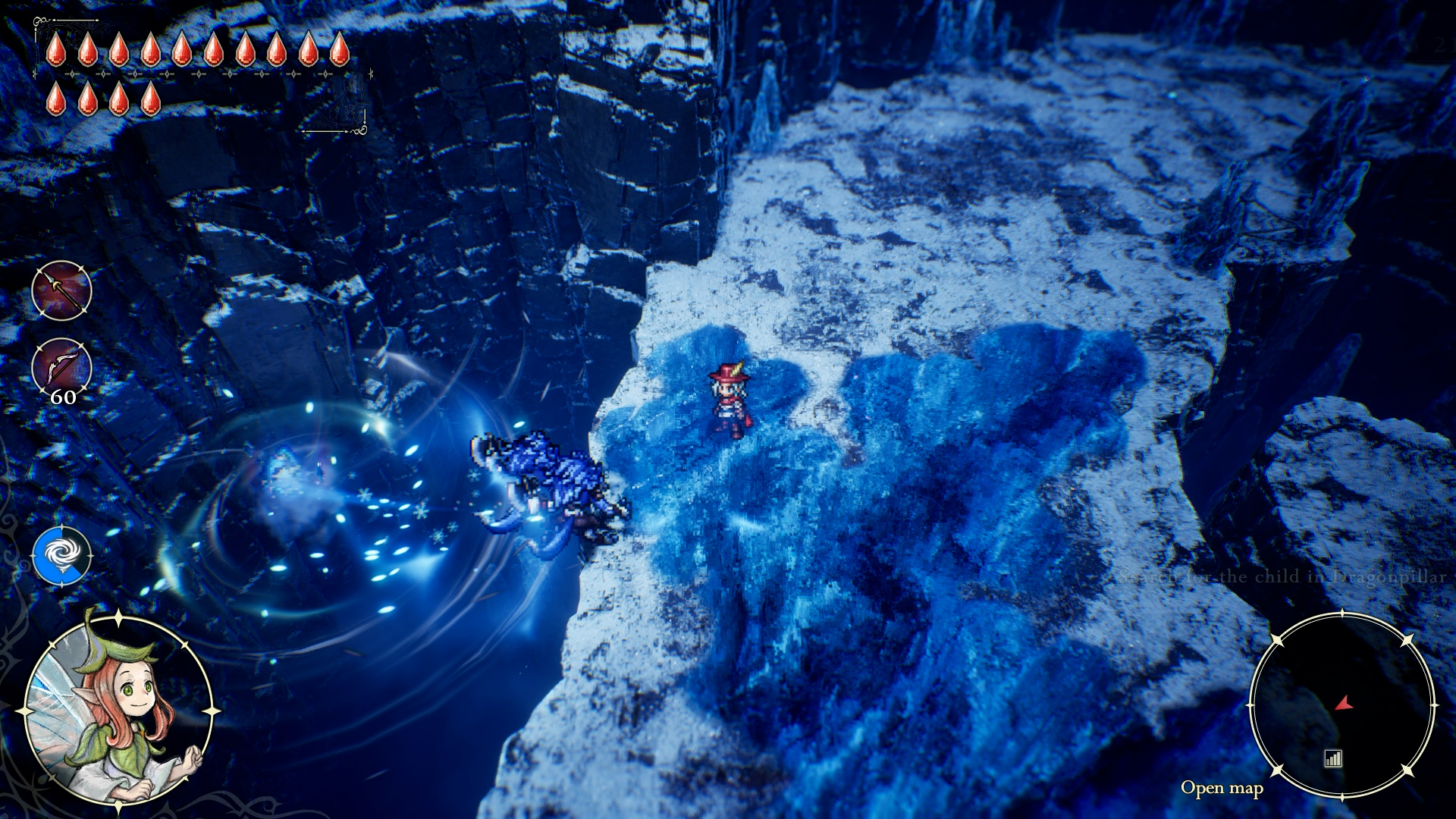 I sincerely hope that Square Enix continues to play in this retro-inspired action adventure space, as playing Elliot took me back to my childhood and my love for Link’s Awakening. To date, there are very few action adventure games that fuse real time combat, light puzzle solving, occasional platforming, and metroidvania-esque progression. Mina the Hollower and 2025’s Pipistrello and the Cursed Yoyo are two notable exceptions, of course, but the fact remains that the world needs more Zelda-likes. With Elliot, Square has what it takes to bring this gaming subgenre back to life.
We shouldn’t dwell on Square Enix and Claytechworks’ mishandling of Elliot’s time-traveling, nor should we criticize them for the overly talkative companion, nor the questionable co-op implementation. Instead, we should focus on its best bits:
The Adventures of Elliot: The Millenium Tales is the closest thing to a modern take on classic Zelda games I’ve played during the past two generations of consoles. It scratches that itch of bite-sized dungeon crawling and puzzle-solving that Nintendo has effortlessly refined over the past few decades. Best yet, it showcases the beauty of 2.5D pixel art that Square Enix has successfully implemented across its other turn-based JRPGs over the past few years. If nothing else, Elliot is a romp worthy of your time.