
After playing several rounds of K.O. Coliseum, I feel energized to see the TFT team increasing the game’s approachability, pushing thematics to their limit, and keeping each game fresh year-after-year, set-after-set. K.O. Coliseum hits live servers soon, so keep a lookout for Thresh’s Coliseum to disrupt the convergence!
Chumps Preview is a special kind of post where we unofficially preview games in Early Access, Beta, or are otherwise “unfinished.” This kind of preview is meant to be a first impression rather than a definitive review where we provide a rating to determine a game’s value. As such, we fully expect a game covered in a Chumps Preview to have room for improvement, some bugginess/incompleteness, and other features associated with similar games in the category.
Once again, we’ve reached the end of the Tactician’s Cup…which means that we can now talk about the newest update to Riot Games’ Teamfight Tactics, K.O. Coliseum! Earlier this week, DigitalChumps was invited take a quick glimpse into the upcoming set, along with its cosmetics, prior to its release later this month! As with prior TFT previews, our preview of K.O. Coliseum contained elements and features that are subject to change, rebalancing, and so much more between now and its official launch. The content that was shown to us (and discussed below) is NOT FINAL.
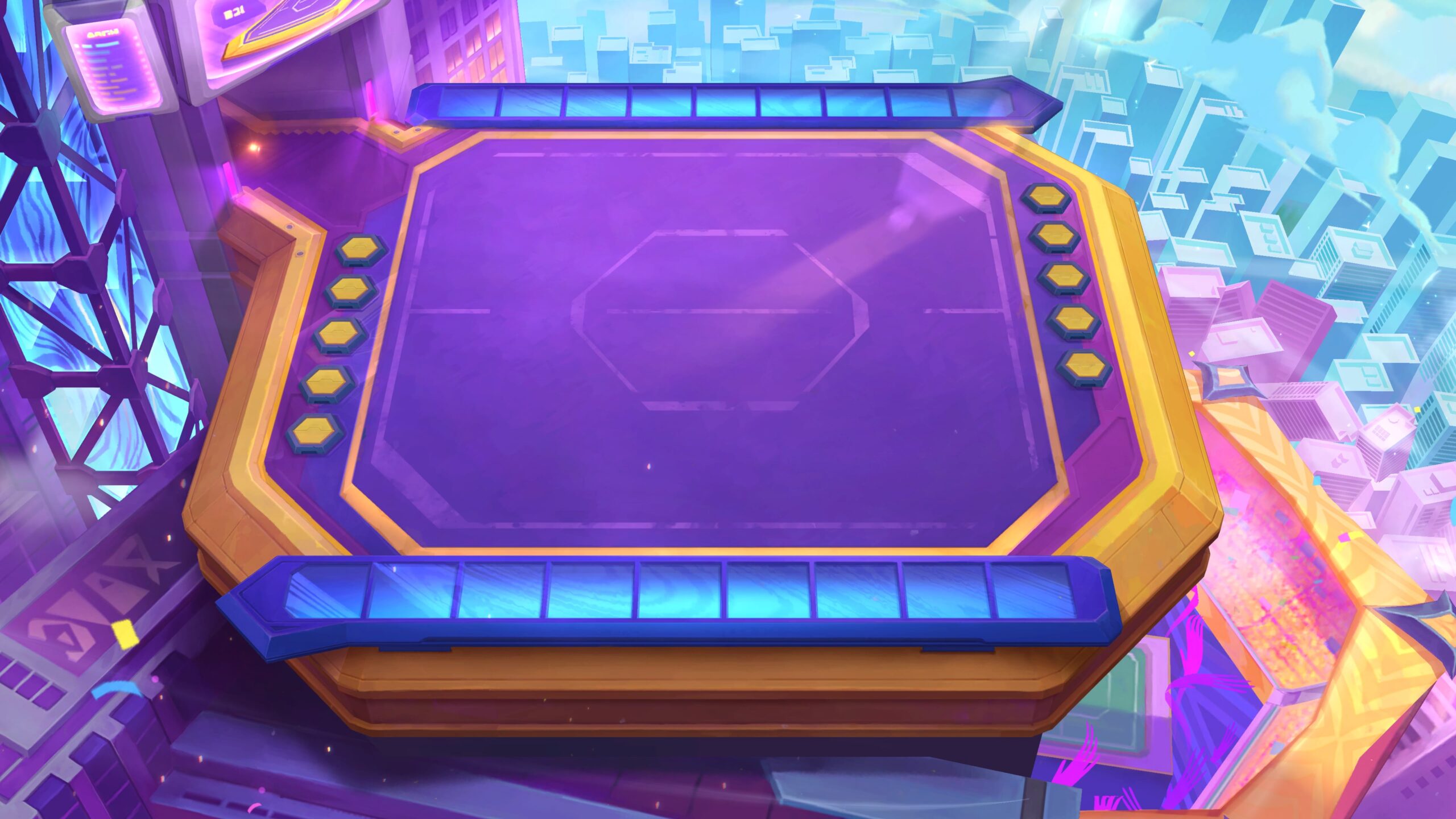
Exaggeration and Anime were two of the first keywords that we were shown at the start of the playtest, and it became evident within the first few minutes of my first TFT match that Riot has gone all out. K.O. Coliseum pushes the envelope in flashiness and color, emphasizing loud and impactful combat that’s taking place in the depths of Thresh’s Coliseum! From cel-shaded aesthetics, familiar anime tropes, to big and impactful displays of power, K.O. Coliseum will be a treat for those who have wished to see Choncc and their favorite show collide in one place.
Cyber City, the previous version of TFT, introduced Hacks. I will admit that I was excited when I first tried them during are previous preview, but it’s clear that some players weren’t the biggest fan of the uncontrollable variance despite its novel implementation. Hacks are out with K.O. Coliseum and are replaced by Power-Ups, a consumable item that can literally power up a unit of your choosing.
 If you were around during TFT’s Set 8: Monsters Attack!, you’re probably already familiar with the concept of Hero Augments. These are augments that dramatically improve a single unit for the entirety of the game by changing how it typically functions. K.O. Coliseum’s Power-Ups operate similarly to traditional Hero Augments, but in consumable form: When giving a unit on your board a Power-Up, you select one-of-three upgrades tailored for that unit. Unlike hero augments’ permanence, however, you can use another consumable item to remove the upgrade from your unit to upgrade another, assuming you have the consumable Power-Up. At most, you can have two upgraded units.
Power-Ups feel good to play in that there’s less of a decision-making finality (that you would typically experience with an augment round), but there’s a hefty learning curve that comes with it. For instance, I struggled in my first few rounds trying to figure out who to upgrade to get through the early/mid game, along with deciding the value proposition of Powering Up a 4- or 5-cost at the expense of my mid-game carry losing its power. I’m sure this won’t be much of an issue after 10-or-so games, but choice paralysis can be a real barrier for learning how to optimize a team.
That said, Power-Ups allowed me to play flexibly throughout the game rather than at specific breakpoints. During one game, I powered up my Gnar (a Luchador Sniper) by giving him a buff that caused his auto attacks to occasionally stun enemies (like the Frozen Mallet item from Pengu’s Party). Later, when it came time for me to pivot to a different carry, I popped the Power-Up off Gnar and moved it elsewhere without feeling like I was compromising my team’s power.
I see a world in which competitive players find far more value in the Power-Up system than most casual players. The learning curve may be steep, but having the freedom to fine-tune one-or-two units and make those adjustments on the fly makes me feel like I can, and should, be aiming to get the most out of what I’ve acquired thus far. “For-fun” players might get some enjoyment out of the Power-Up system, but it’s missing the chaotic fantasy that they tend to enjoy.
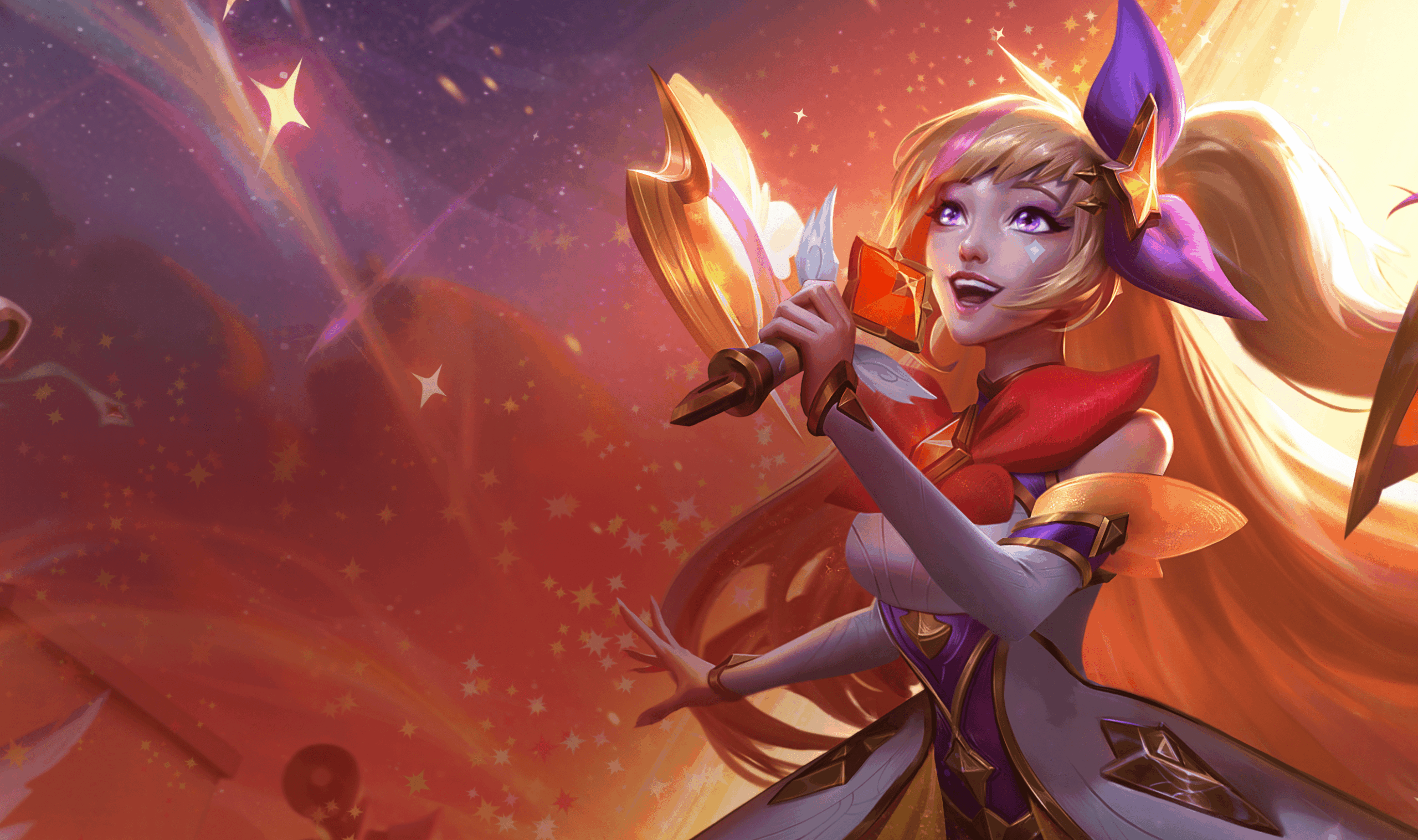 While I miss the social/community aspect of Cyber City’s interactive hacks (like the split-or-take prisoner’s dilemma hack), it feels like K.O. Coliseum is bringing us back to TFT at its best – a strategy game that pushes a thematic to its limits and rewards players for playing smart.
It’s not a new set without new traits and origins. In their Cyber City Learnings article (which I highly recommend you read), Riot Mort discusses players’ responses towards reprinted traits and origins. A “reprint” is a trait/origin that is similar to, if not exactly the same as, a trait/origin from a previous set. The developers of Cyber City argued that familiarity on the trait/origin side would make the game easier to pick up even though novelty might be diminished. In K.O. Coliseum, the TFT team has brought forth quite a few unique traits/origins while minimizing the reprints.
Some of these traits should sound familiar, like the Mighty Mech. Mighty Mech units summon a gigantic mech that fights alongside the units and scales with the units’ star levels. The more Mighty Mech units on your team, the more weapons it can use! Similarly, Star Guardians make a return and may sound like a reprinted Guild/Divinicorps trait, but upgrade units’ abilities differently.
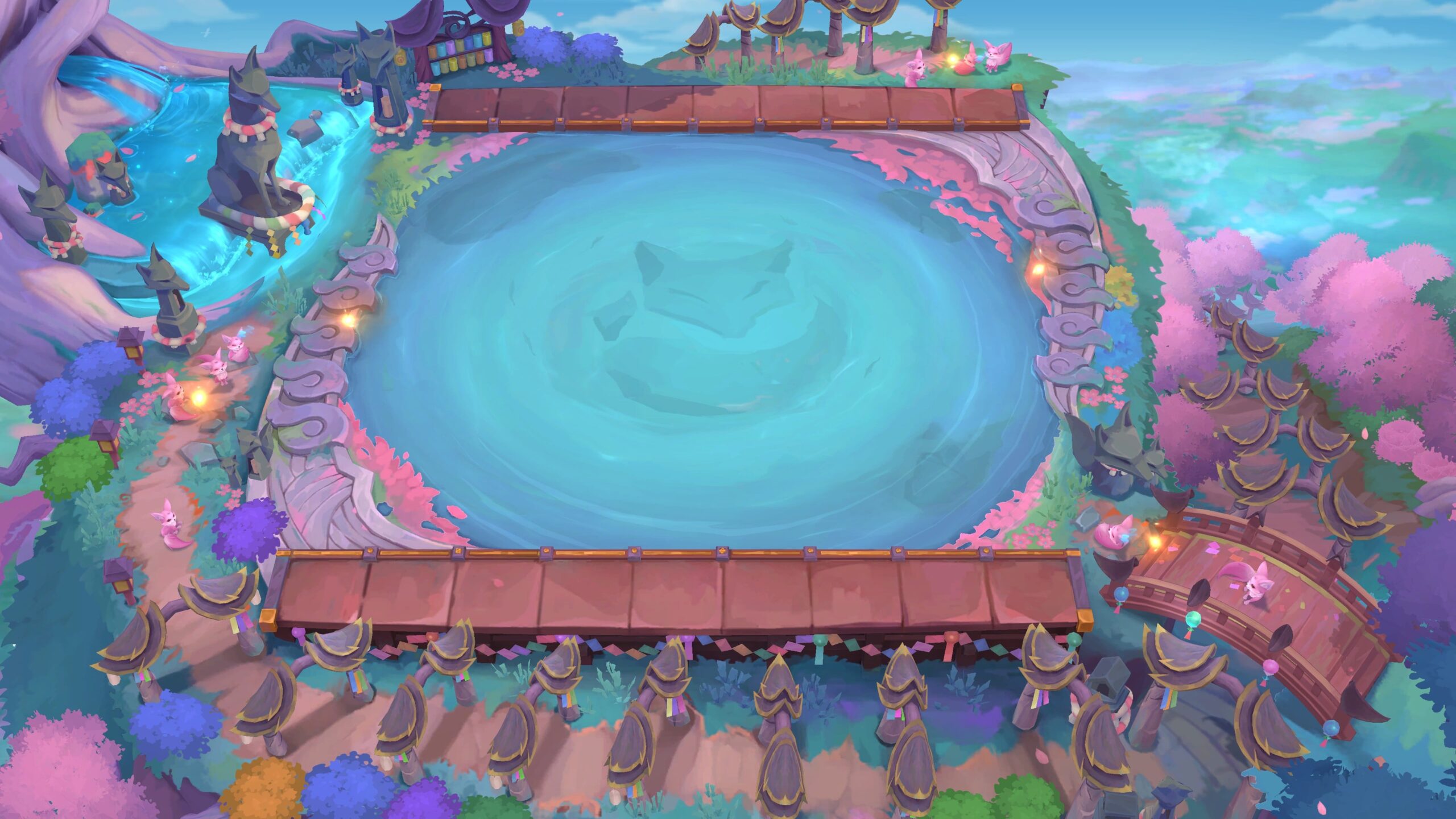 The Crew is one of the novel traits of the set. It’s a reroll trait that grants some stats to units in that trait, but grows in power the more you 3-star your units. For instance, having two units 3-starred gives you additional rerolls and experience each time you reroll. It’s a novel approach to a reroll trait that allows players to reach higher levels without being locked out of hitting the lower-cost units.
Should you 3-star all of The Crew, however, you’ll immediately end the game and emerge victorious. Literally. If you thought the Kayn encounter from Set 11 was silly, you’ll love The Crew’s novelty!
We were also shown a litany of item and system changes that should make TFT more approachable than ever before. On the item side, Blue Buff, Titan’s Resolve, Adaptive Helm, and Giant Slayer have been entirely reworked to meet different power fantasies. I’m especially thrilled with the Titan’s Resolve change, as it has a crowd-control immunity bonus if the item holder hits max stacks. This new version of Titan’s Resolve hits the protector fantasy, should the wielder reach its full potential by living long enough.
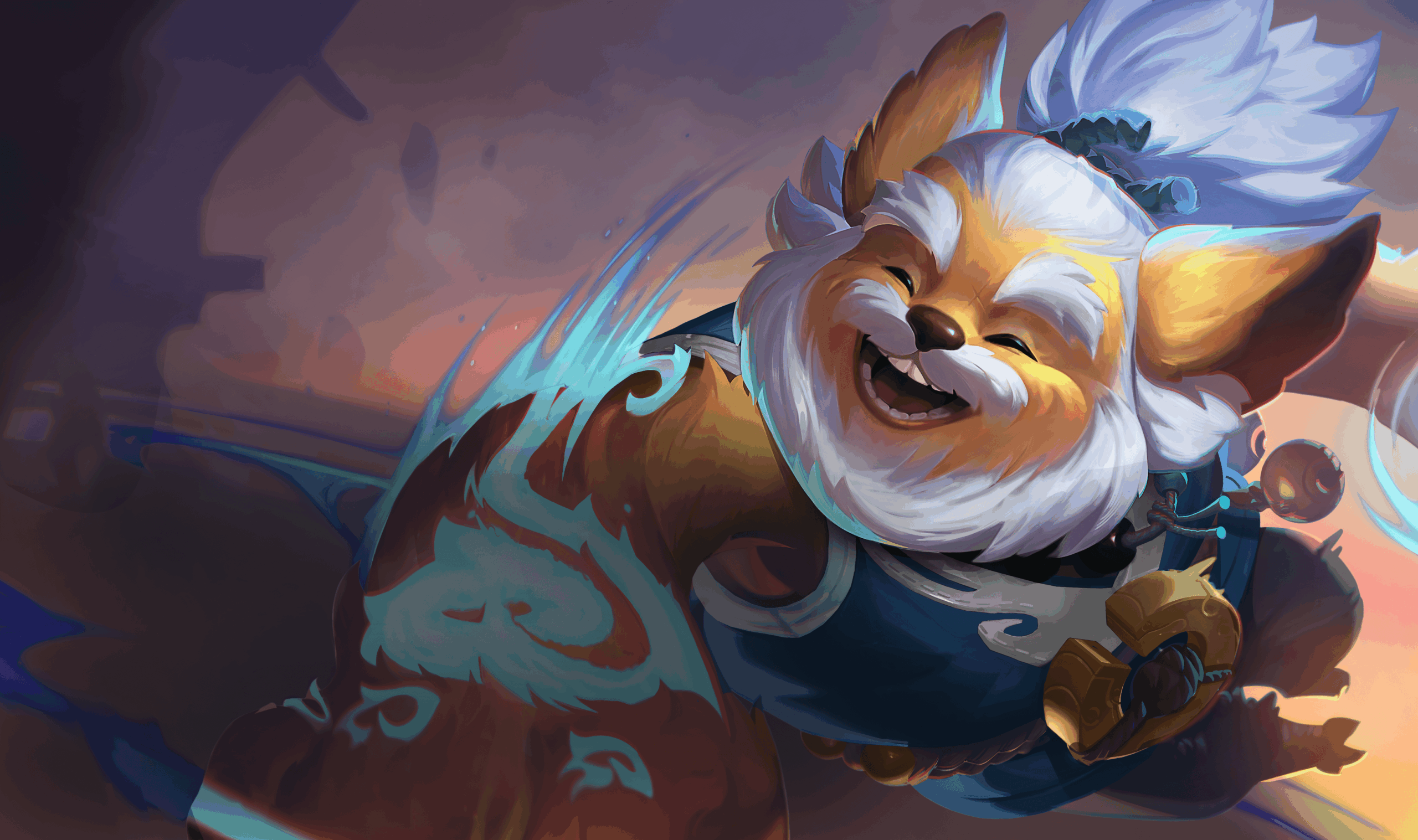 Before we wrap this preview, I want to emphasize how much I love the visual direction of K.O. Coliseum. As a longtime TFT player, and an even longer League of Legends player, cel-shading has been rarely utilized as an artistic thematic. Every single champion has been cel-shaded, giving them vibrance and an anime-inspired aesthetic. It feels highly unlike any other TFT set than ever before, making me excited to see other artistic directions to be explored by the team. This set is truly a treat for the eyes.
After playing several rounds of K.O. Coliseum, I feel energized to see the TFT team increasing the game’s approachability, pushing thematics to their limit, and keeping each game fresh year-after-year, set-after-set. K.O. Coliseum hits live servers soon, so keep a lookout for Thresh’s Coliseum to disrupt the convergence!