

Sometimes games don’t meet expectations. Sometimes that is good, and sometimes it’s not. Of course, fully understanding what expectations were set helps to sort out that good/bad scenario.
I bring this point up because you’re about to read the review for Tales of the Shire: A Lord of the Rings Game from developer Weta Workshop and publisher Private Division. I’m not sure what expectations fans had going into this game, but comparing it to other LOTR games is simply misguided, if not a self-sabotaging expectation.
Tales of the Shire: A Lord of the Rings Game is a cosy life simulator at best. While it does utilize the LOTR backbone to drive the game, bringing in familiar scenery and characters that could be found in a Shire from a Tolkien novel, I don’t think it was meant to be an extension of Tolkien classics. It’s a familiar game that incorporates cosy life simulator attributes that should only be taken at face value. While it was built on the backbone of a Tolkien idea, the execution of the gameplay is what matters.
This reminds me of my time last year in Rwanda, when I saw a restaurant with SpongeBob characters all over it. I thought it was cool that they took the SpongeBob theme, even painting the building yellow, to create a food joint, but not once did I believe that there was a SpongeBob experience waiting for me in that place. My expectations of the place were that it should have good burgers, and that’s all I could/should have expected. If the burger is good, I’m happy, even if it’s not a Krabby Patty. And the burger was good. This burger of a game is good.
Now, many apologies if I give you the feeling that chastising anyone who had built the above expectations of the game because of its theme. I promise that isn’t the case. It’s just that some gamers go into a game hating it, finding reasons to hate it more, and then must spread their feelings to others to create some weird mob. Truly, Tales of the Shire: A Lord of the Rings Game doesn’t deserve that sort of hate. It comes into the world sporting a cosy life simulator personality, where your Hobbit collects ingredients, grows their food, makes meals for Shire brethren, tries to build up their reputation as a good neighbor, and can spend time customizing their own space. Add that in with a silly amount of pointless dialogue that just gives you more than just a crafting/creating solution, and you have enough for a fun time. You aren’t going to save any land or take down Mordor with these gameplay elements. Again, the Hobbit backdrop is just to cast some familiarity and create a cut push toward a cosy life simulator.
That last comment brings up the next question for this: Is Tales of the Shire: A Lord of the Rings Game the best cosy life simulator ever? Lord, no. I’m not sure that Harvest Moon or Stardew Valley will ever be overtaken in that genre. But Tales of the Shire: A Lord of the Rings Game does enough to sprinkle on light entertainment, while also wearing a mask of Tolkien familiarity. It works as intended and doesn’t offer more beyond that sentiment. Is that enough for gamers? Maybe, but it certainly doesn’t feel like a wasted license by any means. It feels like a comfortable fit with the content.
So, put down those pitchforks, pick up a mug of good drink for a good time, and let’s get going on with this review.
Hobbit-sized gameplay
You don’t need much narrative to get Tales of the Shire: A Lord of the Rings Game started, so you’re not given too much. You play as a Hobbit who has decided to leave their home of Bree and set up shop in another Shire. As one would expect, the new Hobbit has a lot to prove, and that’s the point of the game. You must build up your reputation through your actions, which mainly include helping others out and feeding them.
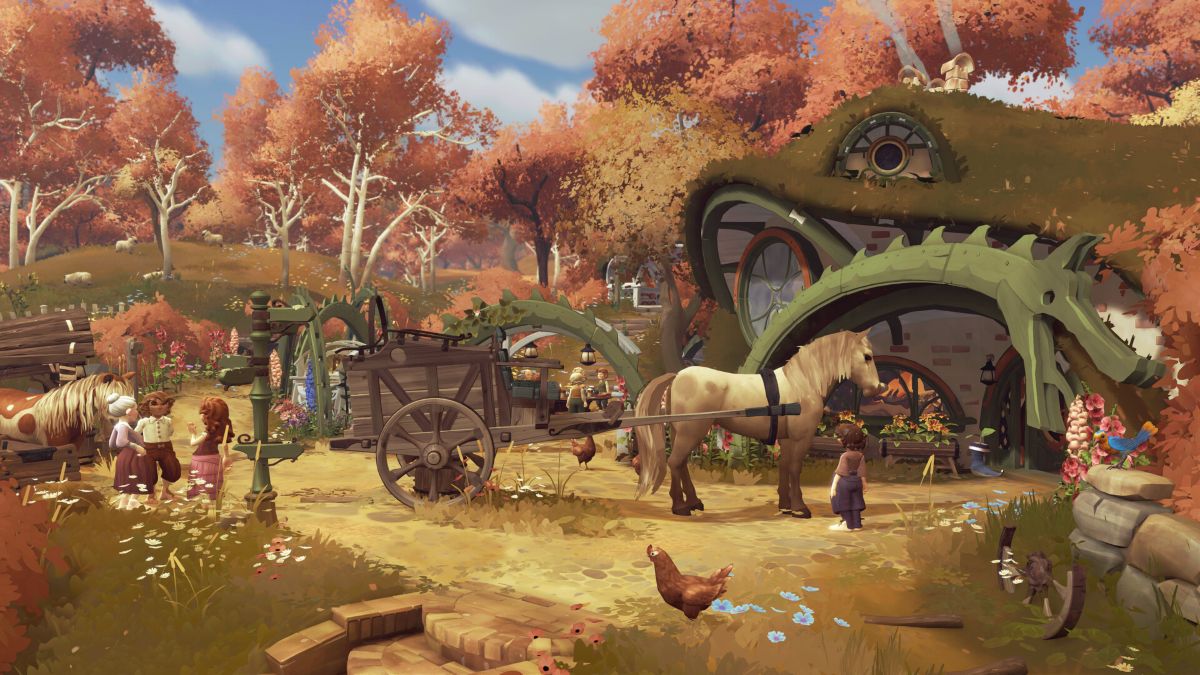
Part of the game’s charm is being the new Hobbit that no one knows, trusts, or wants to deal with. That’s a good representation of the source material, or at least the culture of the Hobbits. Taking that into consideration, gameplay aspects are driven by your Hobbit proving they belong in their new home and settling in with the townsfolk so that you can eventually, and officially, become one.
That type of gameplay gives the town residents good personalities that follow along more with a Peter Jackson LOTR vision than probably Tolkien, which is fine. Those personalities are magnified and brought out by your character, completing simple quests. The quests can be as simple as finding a book that takes you an abnormally long time, only to kick yourself when you finally come to locate it. Other quests could be delivering ingredients, finding lost cows, or even making meals for potential new friends to up your rep. The concept is simple, it’s there, and it’s executed softly and easily for a variety of ages to dig into it.
Now, those quests will not be the main driving point of the gameplay. They probably take a backseat to other aspects of the game. Since this is a cosy life simulator, the game uses its quest system to open other gameplay elements, such as gathering information about ingredient locations. One quest and a few Hobbits chatting unveil spots in the deep forest where you can harvest mushrooms for free without buying them. That quest introduces exploration and the concept of saving money by finding raw ingredients rather than buying them.
By bringing those ingredients home, the game also introduces the gameplay element of cooking. By searching and gathering material, you can bring it together to create meals. You can create meals from your ingredients by following recipes you gather, find, buy, or are given after completing quests. Creating the food is a mildly fun adventure, as you can choose how to chop up food and how to prepare it (dry or fry). While there isn’t much of a punishment for how you get a meal prepped, as most of the gameplay is geared towards a younger gaming audience, it’s still fun to mash buttons to create a good meal.
If the game stopped there, I’m sure it would be pleasant enough, but it doesn’t.
While completing quests to cook new food is cool, especially when you get new challenging recipes that require you to find/collect/gather/buy new ingredients, the game gives you further reason to enjoy its intentions. An added element of the cooking process is to invite other residents of the Shire over and get to know them by cooking for them. That cooking aspect is driven by more dialogue, where Hobbits tell you what food they enjoy the most, and your job is to decipher and find a food match to satisfy them, which helps build your reputation. I found this aspect of gameplay neat, though not incredibly difficult to figure out. Most invitees drop obvious hints of favorite foods, which doesn’t make the process of ‘winning the dinner’ difficult.
For a younger audience, they’ll probably find this part of the game challenging and fun. Nothing too deep to dive into, but just deep enough to keep their attention with an easy gameplay experience. For a parent, it’s guaranteed to feed some good logic toward the young gamer, where they will be taught to pay attention to dialogue details, which makes the experience more gamification than just wasting time.
For an older audience, this won’t offer much of a challenge. Like I stated previously, the game does drop some obvious hints, but it’s still fun to see how it works out and how far you can push the meals to get the most out of the moment. It wasn’t boring for me, but it’s not the most exciting because it doesn’t truly offer a strong challenge. Of course, I’m not wanting or expecting a challenging obstacle with this type of gameplay. It’s just a logical complement to the payoff brought by questing.
Now, what I thoroughly enjoyed during this game was designing my own home and gardening, which should be a huge draw to those cosy life simulator fans out there in the gaming world. After decades of playing action games by putting my time in with series like Metal Gear Solid or Call of Duty, I’ve finally reached the age where slow and steady gameplay is satisfying enough to get me through a tough day. And the home designing and gardening aspects of Tales of the Shire: A Lord of the Rings Game are enough to keep me engaged and satisfied.
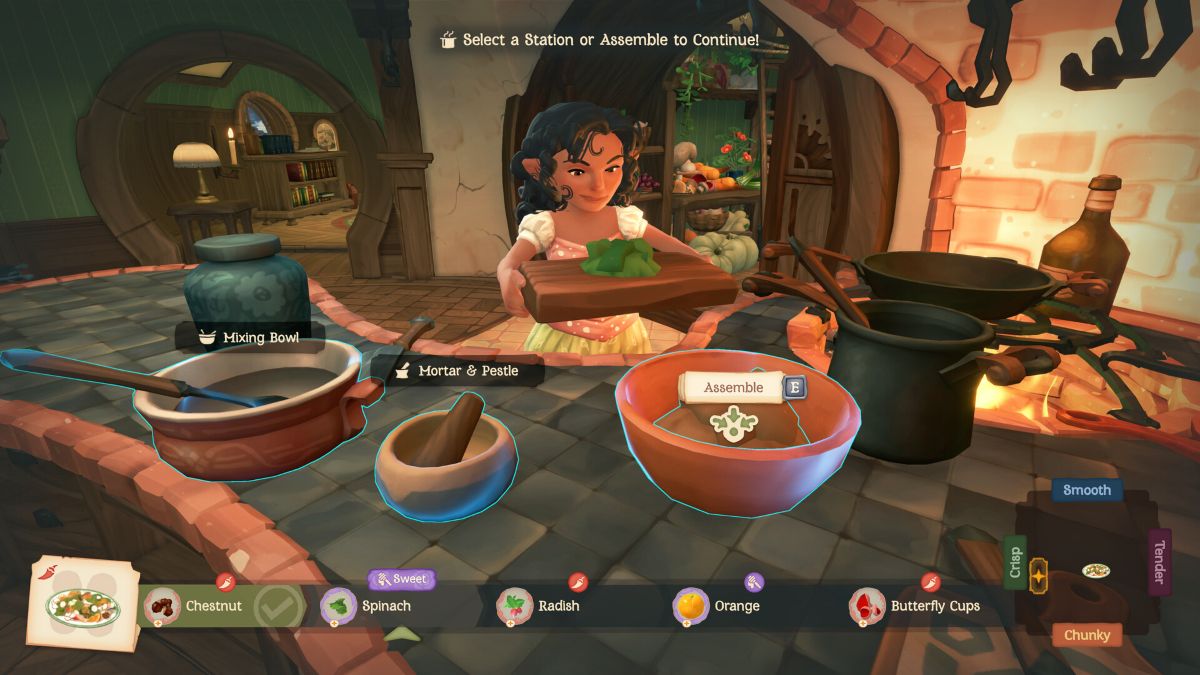
If you’re into putting together a unique place of your own in a Shire, then you have a home designing gameplay element in Tales of the Shire: A Lord of the Rings Game. You can move furniture around, add new things to your home to make it ‘yours’, and customize certain looks and aspects of your homestead. It’s a neat part of the game that gets you in the mood to find the right type of place to kick back one’s hairy feet and take in life. If you enjoy this type of gaming, then you’ll enjoy what this game delivers. I will say that it isn’t as intricate as Stardew Valley, so you shouldn’t expect it to be, but it’s enough to keep it in the cosy life simulator game category.
If that wasn’t enough to get your old bones creaking, then consider the gardening aspect of Tales of the Shire: A Lord of the Rings Game. Much like the core of the game, this aspect of the gameplay is simple, yet slightly addictive. You can find, gather, or purchase seeds to create your ingredient garden (among other things). You must keep track of your crops, feed them, and then harvest them to store in your storeroom. While the game will straight-up tell you that your crops won’t die if you don’t fully pay attention to them, or if you don’t water them, as it knows you will be questing and exploring, it still gives you some push by promising that crops will grow quickly the more you care for them, which ripples the other aspects of gameplay. I truly did enjoy this aspect of gameplay. I’m not certain why, maybe it’s the fact that my kids are getting older and I’m needing to take care of someone, but regardless, it was fun. Again, it’s not up to snuff with Stardew, but it’s good enough and simple enough fun to enjoy regularly. Nothing about gardening gameplay is life-threatening for anyone, but it’s neat to see an entire garden of multiple ingredients growing, so that they can be used for recipes and make others happy.
Overall, the game will feel limited with what it offers, as well as shallow with how it connects to the Tolkien universe, but in the end, this is just a simple and fun cosy life simulator. Nothing too outrageously special, but a far better use of a LOTR license than a Gollum game.
On that sweet note, let’s wrap up this review.
Conclusion
Tales of the Shire: A Lord of the Rings Game from developer Weta Workshop and publisher Private Division isn’t going to redefine the way a Tolkien license is presented in games, nor is it going to add more depth to the cosy life simulator genre. It’s a simple gameplay experience that brings easy quests, limited yet fun exploration, and an addictive ingredient and meal crafting component.