
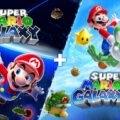
You should be relieved that Nintendo has brought Super Mario Galaxy + Super Mario Galaxy 2 to the Switch 2 without too many frills. It plays just like it did on the Wii and Wii U, albeit prettier and slightly more defined than I remember. It behooves any Switch 2 owner to acquire these masterpieces, especially those who weren’t around to play them in their original states.
The Verge’s Andrew Webster had some mildly critical things to say about the Nintendo Switch 2 port of Super Mario Galaxy + Super Mario Galaxy 2. Shortly after claiming that not a lot of work needed to be done in these games’ porting given their existing outstanding quality, Webster posits that Nintendo could have taken things one step further in celebrating the degree of innovativeness and successfulness of Galaxy and its sequel. He went so far as to mention Digital Eclipse and the Criterion Collection as success stories of publishers who do porting/remastering done right.
Here’s the thing, folks: Super Mario Galaxy and its sequel are incredible games in their default state. When returning to my own Nintendo Wii, Galaxy plays with the smallest of faults, a feat I struggle to give to another classic title of the Wii-era. It’s moments like these where I am glad that Nintendo left much of these classic games as-is (barring some exceptions), as changing too much would tarnish the game’s original success.
Super Mario Galaxy was one of 2007’s best games on the Nintendo Wii, let alone best games outright for the console. It fluidly incorporated the Wii’s motion controls via Nunchuck and WiiMote within 3D platforming along with introducing a now-staple in Nintendo’s cast of characters: Rosalina. Oddly enough, not much has been done with Rosalina by way of her celestial presence, but she’s made appearances in Smash, a handful of the Mario sports titles (including Kart and Golf), and collectible Amiibo figurines.
 I digress, Galaxy and Galaxy 2 are available on the Switch 2 for all to enjoy. Their pricing aside, I’m absolutely thrilled to see them finally available on the Switch 2 and even more excited to see them maintain their quality along with quality of life improvements that make them play better than I remember.
Top of that list is the graphical improvements. When upscaled to 4K, planets and other celestial bodies look ever so crisp compared to the original muddiness that came with the Wii’s aged hardware. Textures look far more detailed than ever before, even down to the finer glittery details just pop this time around. Better yet, the game runs smoothly throughout.
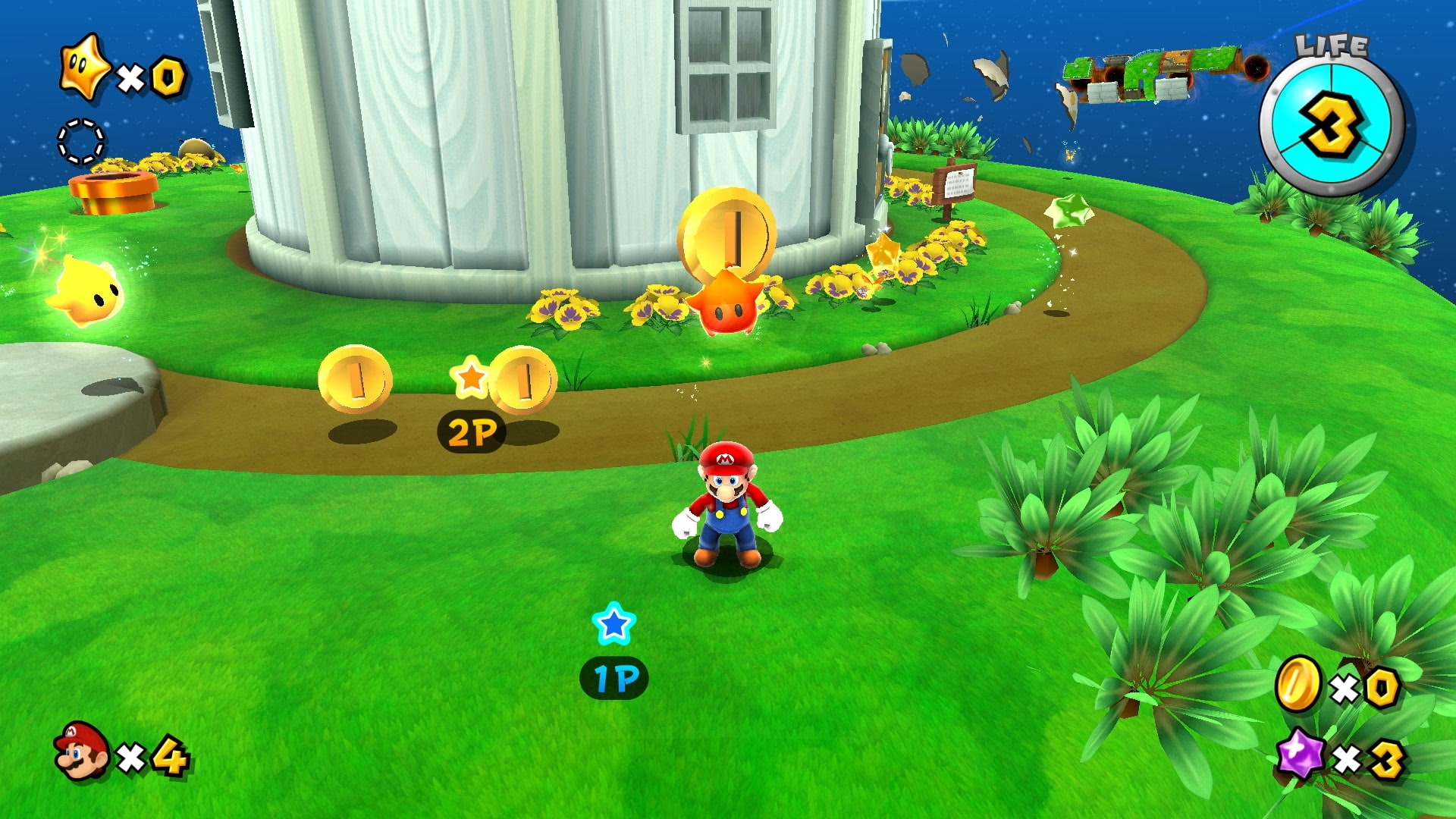
This time around, the Wii-specific motion controls have been replaced by the Switch 2’s gyro. It’s less seamless than using the Wiimote, sure, but it’s still something that plays moderately well with the Joycons. In the optional co-op mode, Player 2 can use the mouse controls to pick up stars and engage with enemies to give Mario/Player 1 a slight leg up. I don’t think it’s the biggest selling point, but it’s definitely something akin to playing a game with a smaller sibling.
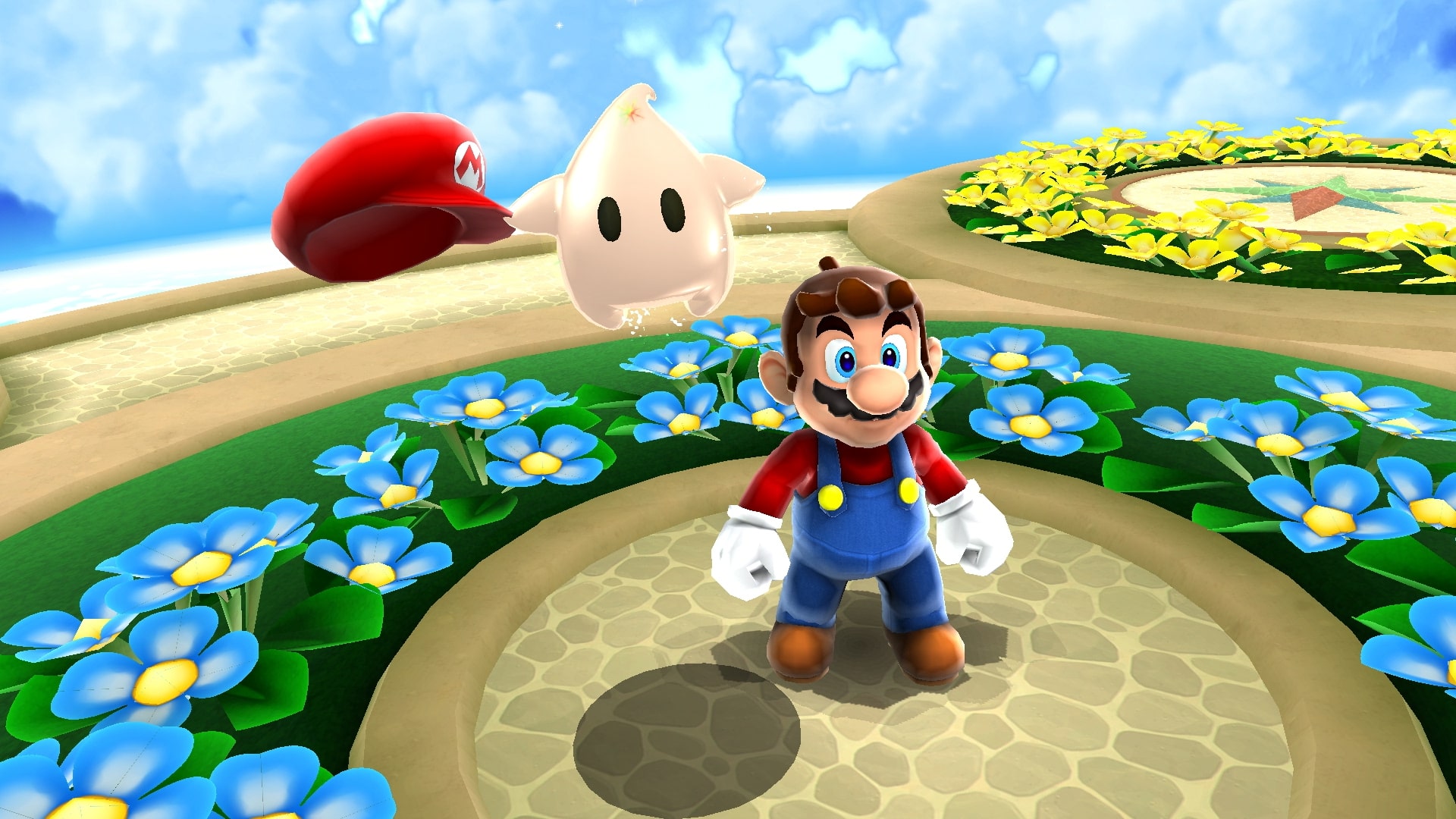 Assist Mode is the other major addition here, granting players who’re not the most-seasoned in 3D platformers additional cushions to make the gameplay easier. Personally, most of Galaxy and Galaxy 2 lacks sharp difficulty curves, but having additional health can make even the most challenging portions slightly easier.
Galaxy’s gameplay loop has aged gracefully, so has its sequel. The original’s gameplay loop of visiting smaller celestial bodies, finding Stars, and then returning to these bodies to find them expanded with more to explore is just as creative and fun as I remember. Even the anti-gravity portions feel fun, shirking the restrictive platforming of recent classics with stricter gravity. The sequel’s additions of Luigi and Yoshi layer onto Galaxy’s established platforming, blending 2D and 3D platforming throughout innovative levels.
Some things haven’t aged well, most notably the restrictive camera angles and the immersion-breaking loop of being returned to a hub after finding a Star. This is especially true when coming from Donkey Kong Bananza, another 3D platformer full of subterranean secrets requiring similar degrees of exploration. I would imagine that some players may find themselves wishing to remain in a level just as they would in Bananza or even Odyssey. It’s moments like these where I wonder if a deeper remake would have done Galaxy better justice.
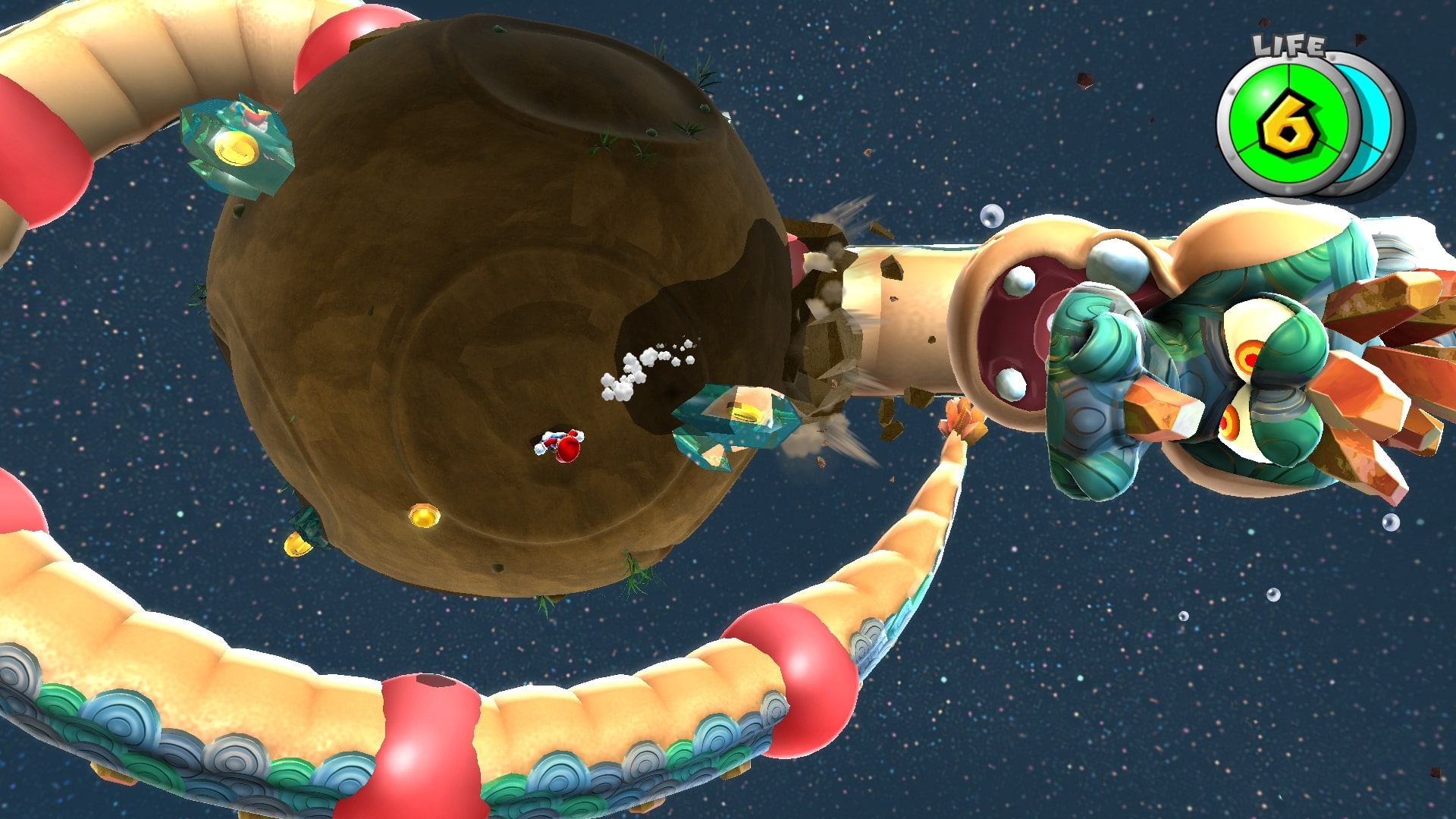 Super Mario Galaxy and Galaxy 2 are Nintendo at its very best, despite some of the things that haven’t aged the best. Level design alone, these games push 3D platforming to new celestial heights, and it’s hard to dismiss the magnificence of the games’ total package and impact on gaming as we know it.
Before wrapping this review, I should comment on Nintendo’s recent pricing trend that has unfortunately made its way to Switch 2 games, ports, and remakes. Individually, these games can be acquired for $40 apiece, while the bundle can be picked up for $70. The $10 discount aside, it’s concerning to see these games repackaged for the Switch 2 and sold for far more than 3D All Stars, a bundled game that included the original Galaxy. During a time where all of us are experiencing sticker shock across the board, it’s tough to justify these games when other games are now available for the Switch 2 for a fraction of the price.
 The Galaxy games are still ever so fun. I have to set aside my concerns knowing that new players will get so many good hours out of these games. I was thrilled to play them again, if it’s any consolation.
You should be relieved that Nintendo has brought Super Mario Galaxy + Super Mario Galaxy 2 to the Switch 2 without too many frills. It plays just like it did on the Wii and Wii U, albeit prettier and slightly more defined than I remember. It behooves any Switch 2 owner to acquire these masterpieces, especially those who weren’t around to play them in their original states.