

As I grow older, I’m warming up to cozy games and their slow-moving, methodical gameplay. Coming and going from games is starting to feel very comfortable. And I’m comfortable with this game right now.
Space Chef from developer Blue Goo Games and publisher Kwalee Ltd is an interesting cozy game that puts the player in space and makes meals for everyone in their galaxy. The game offers a deep strategy component and mixes in exploration, discovery, and murdering lifeforms for the good of a recipe. While certainly not perfect in its execution and design, there is a lot to love about this cozy experience.
Without further delay, let’s gather up the review ingredients and see where this meal is going.
Serving it up
There are quite a few components to make Space Chef work properly. The game is divided into exploration and discovery, hunting down ingredients to complete recipes, building up a proper restaurant station, and getting food to people on time to maintain a good chef’s reputation. While that might not seem like much, there’s a lot to dissect in each of those categories.
Exploration and Discovery
While the main point of the game is to become a chef and discover proper meals, the only way to do that in a large galaxy is to explore and discover. Space Chef gives the player a giant ingredient playground to go and explore, which means the player can land on planets, gather ingredients, and hope said ingredients lead to new recipes for customers. In addition, the exploration and discovery give players a chance to meet new races of aliens, which provide their own cultural way and tools to improve the cooking gameplay. There are a lot of things to discover during exploration, which can make the process sometimes overwhelming because of how big the sandbox for this game is during gameplay.
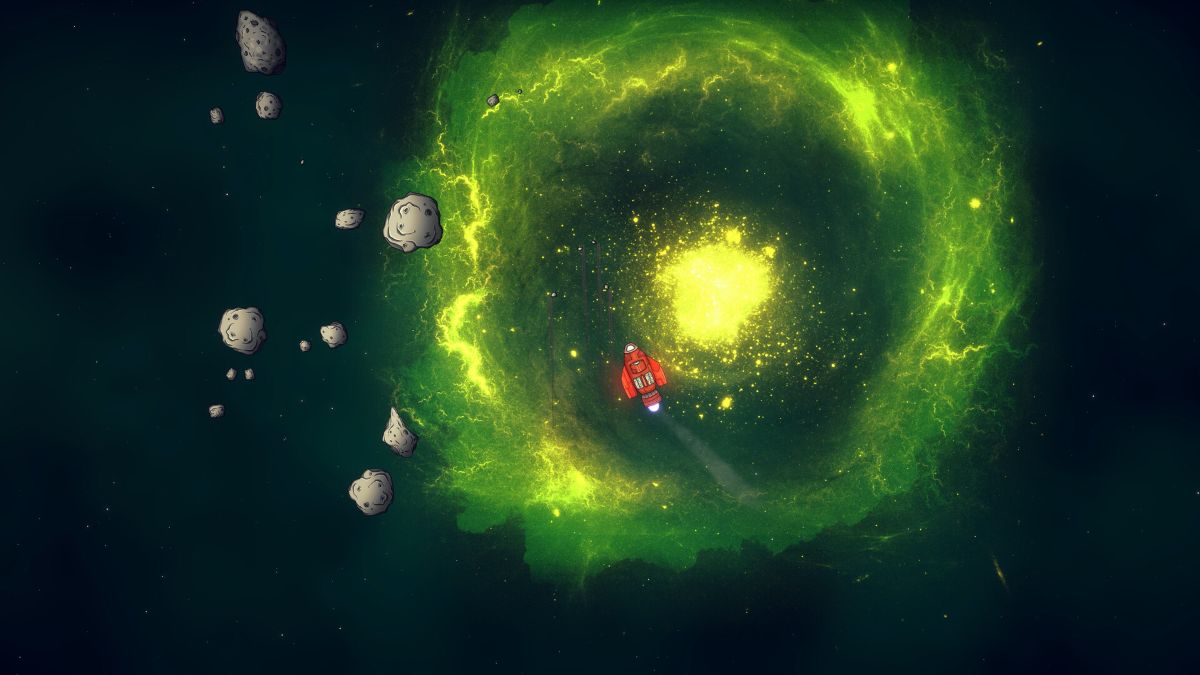
The sandbox on this playground is huge, and there’s sometimes no direction, which only makes exploration that much more fun, especially when a player runs into an element that they’ve been hunting for. That type of success creates motivation to continue to explore in hopes of finding random solutions to ingredient and recipe problems. Both elements of exploration and discovery work well together, but there are times when the game feels a bit directionless.
Now, the directionless point to the gameplay is likely to act as a road bump for players, as cozy games typically point players in the right direction to find answers. With Space Chef, you must explore space and run into answers, which I can imagine would be infuriating for impatient gamers (no offense). For me, I think this is a strength, as it just forces you to do the obvious and explore/discover new things, as well as take chances. It kept me hooked on the game, and even when frustration and directionless emotion hit me, pushing on reaped rewards.
Anyway, the girth of the galaxy that the player can explore and having the ability to land on planets or randomly floating objects to obtain new tools or ingredients is impressive and makes the entire gameplay experience addictive. It certainly ignited a Skyrim sense of exploration in my brain once it all got going.
Hunting and Gathering
The game throws at the player two different types of ingredient-gathering processes. The first is hunting, which first arms players with a spatula to kill enemies, and progresses to more effective items of destruction as players explore more areas. There is a bevy of weapons to choose from in the game, and they’re each delightfully destructive in their own way. While the thought of using a spatula violently and going completely American Psycho on every living creature in the cosmos for the good of a recipe seems delightful, the weapons have one caveat to them to keep players in check – they can wear down.
For every use of a weapon, a health meter for said weapon begins to decrease. Wearing down a weapon eventually breaks it, and the player will then be required to gather ingredients and parts to create more. The latter of the pair, specifically parts, means players must gather elements in space, like junk, household junk floating around, and the occasional asteroid element (those have to be drilled) to create a new weapon. With those elements gathered, the player has to process them at a junk plant, which produces usable parts, and then the player must go back home to recreate the weapon of their choice. It’s an added element to the gameplay that is both frustrating as it is time-consuming. I can see this being a real turn-off for some gamers, as this process can be disruptive to the main point of the gameplay, which is cooking. But if you jokers out there gave Zelda a pass for this aspect of gameplay that was disruptive as well, then you can get through this. I’m rooting for you.
When the player isn’t hunting for ingredients, then they’re gathering them via vegetation. Visiting planets generally brings specialized and pickable vegetation that the player can use to open new recipes. Some vegetation is simply pulling it from the vine or ground, putting it in the character’s pocket, and calling it a day. Other types of gathering can involve needing to acquire ingredients to build tools, such as a shovel or a pickaxe. This brings the player back to exploration, discovery, and using elements in space to produce the right material for the right tool to be created. This could also go as deep as needing to build a machine to produce the tool. It’s very meta in its methods.
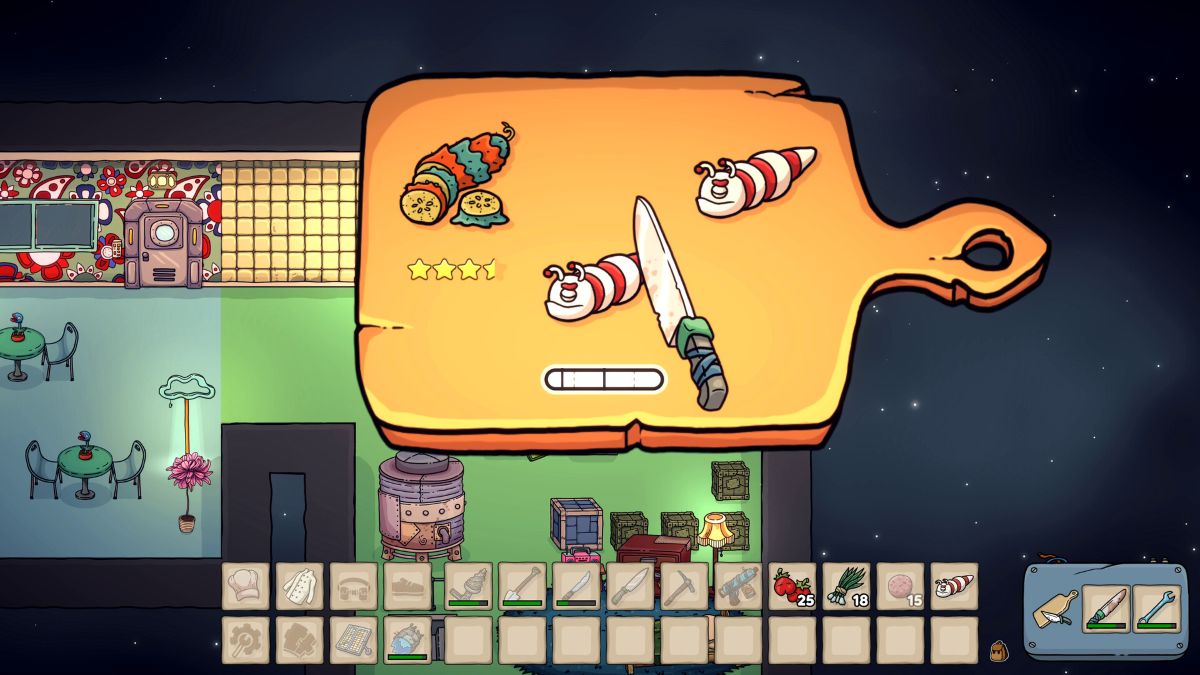
The moral of this section is that Space Chef goes deep in its gameplay to push players forward and requires them to jump through a lot of hoops that might seem like long-winded obstacles, but usually produce good fruit to motivate the player to continue forward in the adventure. Hunting and gathering are essential to the fun and success of this game. Thankfully, the way it is put together so loosely, it works well within the game’s intentions and boundaries.
Recipes and Delivery
While Space Chef doesn’t go a fast-paced, fun route like maybe Dave the Diver, exploring, discovery, and creating the right tools to gather ingredients adds another element of fun to the gameplay. As the game goes along, and players begin to expand the exploration boundary of the galaxy, new ingredients typically open new recipes. Those recipes lead to more exploration. Again, it’s circular gameplay elements that loop through each other to make for a wonderfully rich experience.
Getting back to recipes, the recipes require gathering ingredients from different locations and putting them together at home in the player’s kitchen. The most off-putting part of this game at the initial jumping off point is not being able to create meals on the character’s spaceship as they are exploring. Players must make meals at home and then prep them for delivery. This leads the player to explore space, spend large amounts of time gathering ingredients, and then have to go all the way back home to make a meal that is worthy of your chef’s reputation. It’s a process, and one that you feel when you’re trying and failing at speeding things up in the game.
To make matters worse, the game also features the ability for the chef to become too tired to work. Even when a player is on a roll across the galaxy with ingredient gathering for new recipes, the chef will eventually get tired and force the player to return home to sleep. It’s an unnecessarily added gameplay element that piles on time-consuming processes that are disruptive to flowing gameplay. While I get the grounded factor this gameplay element carries, because we all get tired, if you’re building a sci-fi cooking game, you shouldn’t add another time-sucking element to the process. A big world was created without it, and there are already enough hoops to jump through to progress.
Now, having said that, and after a tired chef is revitalized from a slumber, getting a new recipe to whip up for a customer is satisfying. Once the player gets a new recipe and its ingredients, and makes a meal, they get to open their restaurant and wait for delivery requests. How fast a player makes and delivers a meal equals how popular their restaurant becomes and how talented the chef gets (rated by stars). The game goes all in on the chef aspect of the game, as it should, because it’s the title, and it does a good job of rewarding players for their efforts. Each aspect of the chef’s life has a backend leveling to it, which means players get to see the fruits of their labor constantly.
Another aspect of this part of the gameplay that turned me off a little, besides going back to the kitchen to make a meal and sleeping, was how easy it was to accidentally open your restaurant without knowing it. By simply pressing a directional pad button, you can accidentally open your restaurant as you are exploring the galaxy without realizing it, and then have to turn away customers who randomly and quickly pop up with delivery requests. While turning someone away doesn’t dramatically reflect on the chef’s leveling, it’s still annoying to accidentally open the restaurant, as it adds intensity and stress to the process.
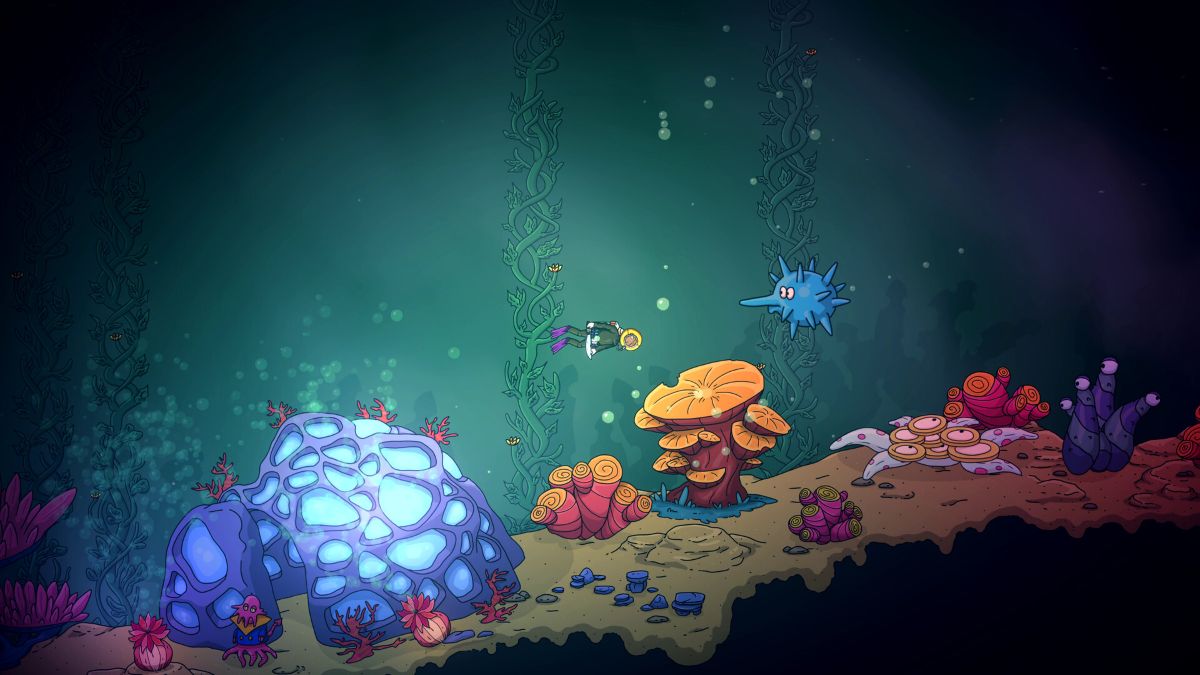
Overall, opening recipes, making meals, and delivering them to customers is actually one of the less intense parts that is incredibly satisfying. Going through the trouble of gathering ingredients and creating a popular meal (a measurement that shifts as your recipes grow larger) is paid off by customer reaction and payment. Ultimately, this aspect of the game is fun and rewarding.
Customizing
The last deep aspect of Space Chef’s gameplay is customizing the chef’s home and organizing their restaurant. It’s exactly how it sounds, and if you’re the type of gamer who is particular about where you might put a fridge or how you decorate your place, then you’re in for a treat. There is a large amount of customization available to make your space restaurant pretty, practical, and useful. Much like everything else in this game, gathering new items and ideas starts with exploring, sometimes just visiting people in space cities and looking at their digs, and then shifts back to ingredients and creation of said product. It’s a cozy game, so this type of customization is to be expected.
The exciting part of this gameplay element is finding new things to create. I made sure to explore every single destination when the game allowed, as it often offered new ideas for decoration. The customization is good stuff.
Anyway, on that note, let’s wrap up this review.
Conclusion
Space Chef from developer Blue Goo Games and publisher Kwalee Ltd is an enjoyable, user-led cozy game that requires your exploratory efforts to make it a fun experience. While not perfect, it offers a deep and rich gameplay experience that is different than the usual cozy game.
