


I love modern gaming. I love how far the industry has come with every aspect of modern gaming. Seeing the journey the industry has taken from 1980 to 2025 has been an absolute treat. I’ve been blessed to have seen it evolve. Pretty darn cool on so many levels.
BUT! Sometimes it’s fun going backwards and revisiting basic logic problems and coding, all going through a command line prompt. You all don’t know what you missed when if weren’t born with MS-DOS in front of you. Guess what? You have a chance to experience it.
s.p.l.i.t. from developer Mike Klubnika is a logic problem treat that uses a keyboard-only method of gameplay that will challenge your wits. I’m positive most of you young folks out there aren’t going to be intrigued by such a sentence, but stay with me. The game uses a command-line to drive narrative and gameplay, and it does it oh-so brilliantly.
So, pop out that clickity-clack keyboard with the creamy sound, and let’s get going on this hack-a-rrific old new way to play a game.
Gameplay
Want to be a pirate that saves the world, Neo? Then this is your game.
The story behind s.p.l.i.t is simple. You play as a hacker who is trying to infiltrate an awful company that is hellbent on controlling society to some point. With your group of fellow infiltrators, you must worm your way into the company’s system and do the damage you were born to do.
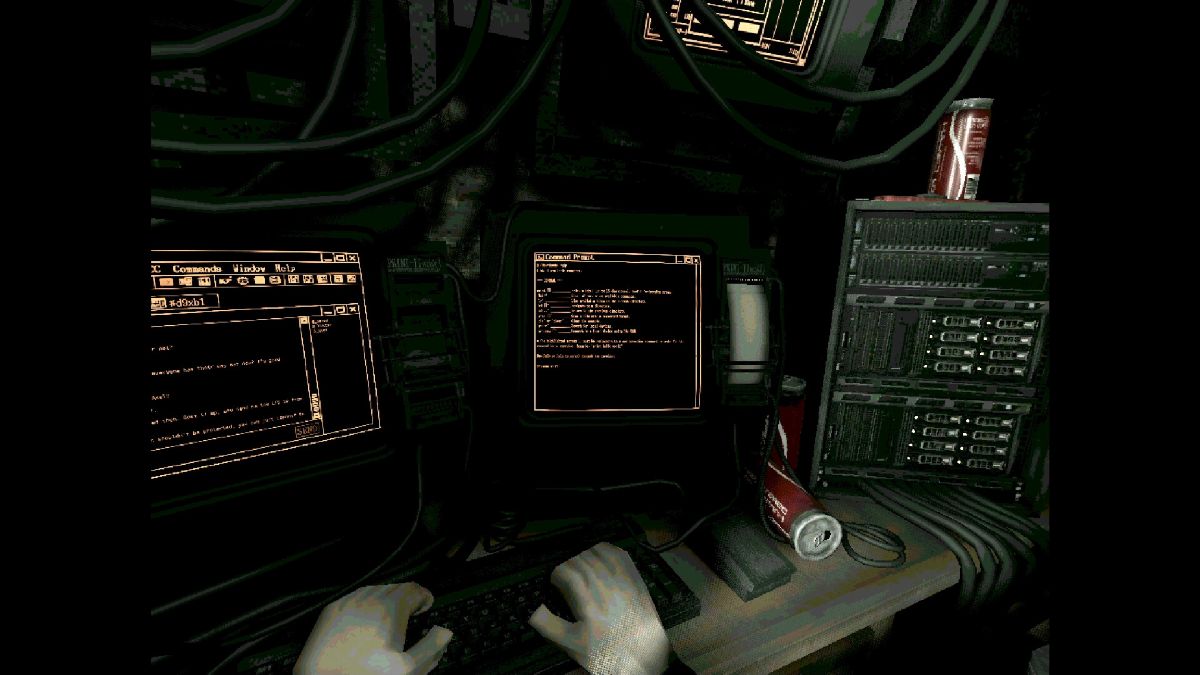
While the narrative is simple, it drives the gameplay, as every step you take to get further into the system, the more intensity the story presses on you. It’s a balanced mix of ‘just enough narrative’ with ‘more than enough good gameplay’ to create a complicated and fun adventure using command-line jargon.
The gameplay in s.p.l.i.t. is solely based on a command-line prompt. This means that if you have some sense of the Windows command line or a tad bit of Unix, then you’re going to understand what you’re trying to do in the game. And don’t worry, if you don’t have either, the game provides the commands you have at your disposal. With that structure in mind, let’s get down to what you should expect.
When the game begins, you’ll have a nice IRC chat going with your fellow hackers, which will drop clues on how you should be approaching the gameplay. At the beginning, they’ll ask you to connect an old terminal to a newer one. To do that, it will require you to open a case (using a Typing of the Dead method of access – literally, typing words quickly), and then use the given command prompt to figure out how to access said case. Once connected, you’re going to switch between talking with friends, who are acting as guides and clue-droppers to help you through logic problems/puzzles.
As you get more comfortable with input commands, the problems steadily become more complicated. For example, there was a problem early in the game that required me to figure out how to access a specific server that housed specific numbers that led to specific information that I needed to progress. Knowing what information to use, what to ignore, and how to input that information into the system was a wonderfully difficult problem. I had to decipher information from my IRC chat, take that info and try to figure out exactly where I needed to go in my command-line window, and then cap it off with having to put the information provided, and some that I acquired, in a specific order to reveal the next step.
While that might sound like a miserable time, don’t just blow it off. This is not a miserable time. This type of gameplay is akin to playing The Witness or any Phoenix Wright adventure. You’re given information, you must figure out how to use said information, and then unlock whatever is the next step with the correct answer. The gameplay is just out of this world fun in a logic puzzle type of fashion.
Will everyone buy into this type of gameplay? Not at all, as some folks need to use a controller or mouse to feel satisfied. For those who do buy into it, they’ll find brain teasers waiting for them. It’s a cognitively engaging game that will require you to think and sometimes write down potential solutions.
I didn’t know how much fun I was going to have with this game, but it has brought back some good memories of command-line programming and navigation. Love that stuff.
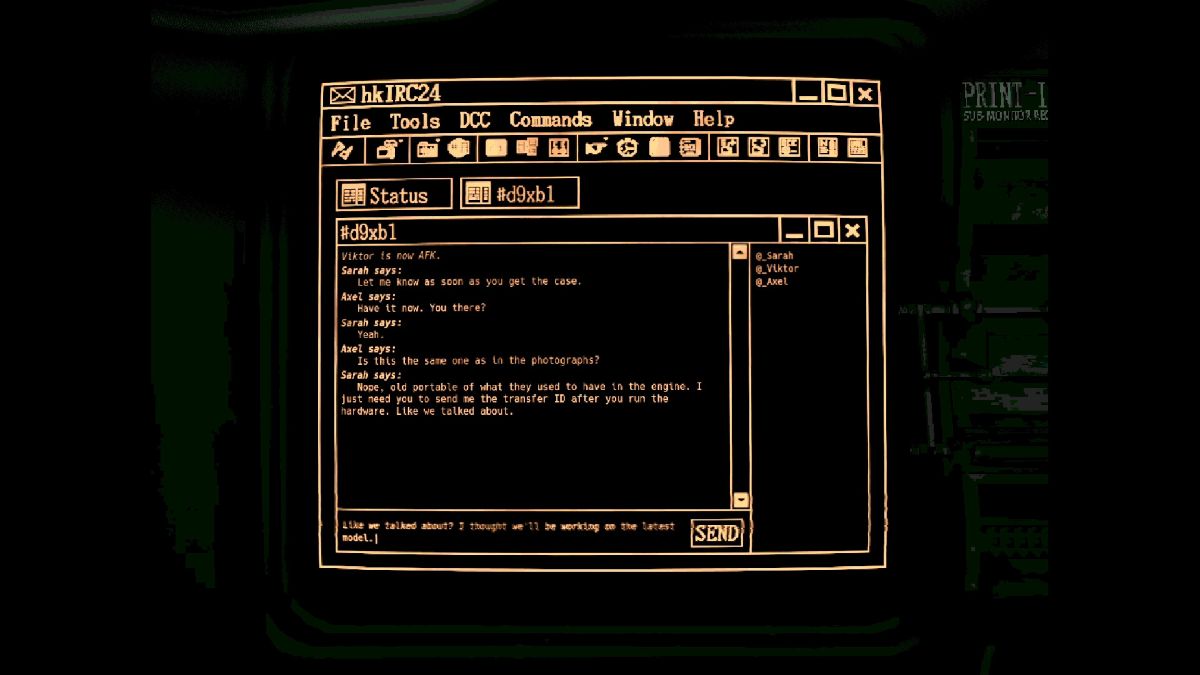
Anyway, the gameplay is short and sweet, but the logic problems will make it feel like hours of game time.
Presentation
The game is built after an early ’90s graphical scheme. You have a lot of ugly-looking pixels, a perceived 256-color scheme, and more black and white than not. It won’t impress you visually, but it’s not meant to do so.
The lack of visuals in the game helps the gamer focus solely on the screen their character is looking at. This helps magnify the gameplay and make it the forefront of everything you do. The screens are based on old monitors from yesteryear, which helps sell the type of gameplay the game is trying to deliver.
Beyond visuals, the music behind it pushes the intensity and urgency of the narrative, while making you feel like you’re truly breaking into a system that is locked down to prevent such a task. In short, the music works for the game, and it only helps to enhance the gameplay.
On that sweet and short note, let’s wrap up this review.
Conclusion
s.p.l.i.t. from developer Mike Klubnika brings mind-bending logic problems delivered through a unique command-line backdrop. While the command-line adventure doesn’t last long, it does enough to warrant a hard look for gamers in search of a good challenge.