


I cannot remember if I have played a game led by a rabbit before. Hmmm…I don’t think I ever played a Looney Tunes game. Nah. This is my first one.
If you didn’t have enough rabbits, eggs, and attitudes from this past weekend, then you’re in for a treat with Nitro Plus’ Rusty Rabbit. This 2D platformer does its best to make a mean and machine-obsessed rabbit into an unlikely hero full of grit and metal. The game takes on a classic platformer stance with tough obstacles, interesting controls and navigation, and a role-playing game backbone that makes the gameplay far deeper than expected. While there is a fair amount of perceived and felt repetitiveness to the gameplay, the storyline and action help to alleviate some of that from being too noticeable. Mixing mechs and rabbits helps as well.
So, get on your hoppin’ shoes, tuck those ears back and growl, and let’s get bouncing on this review.
Story
When things get cold, humans get going, and that’s exactly what happens at the beginning of Rusty Rabbit’s story. Another ice age emerges, and humans vamoose from the planet, leaving rabbits to rule. The rabbits eventually evolve into intelligent animals and begin to dig up human technology to better their world. Stamp, a digger, takes on the task of leading the charge with his mechanized robot ride, while fighting off regrets and obstacles. When he meets a group called the “BBs”, his entire view of life begins to change, and everything he knew about his civilization becomes bigger, even if it is eventually bittersweet.
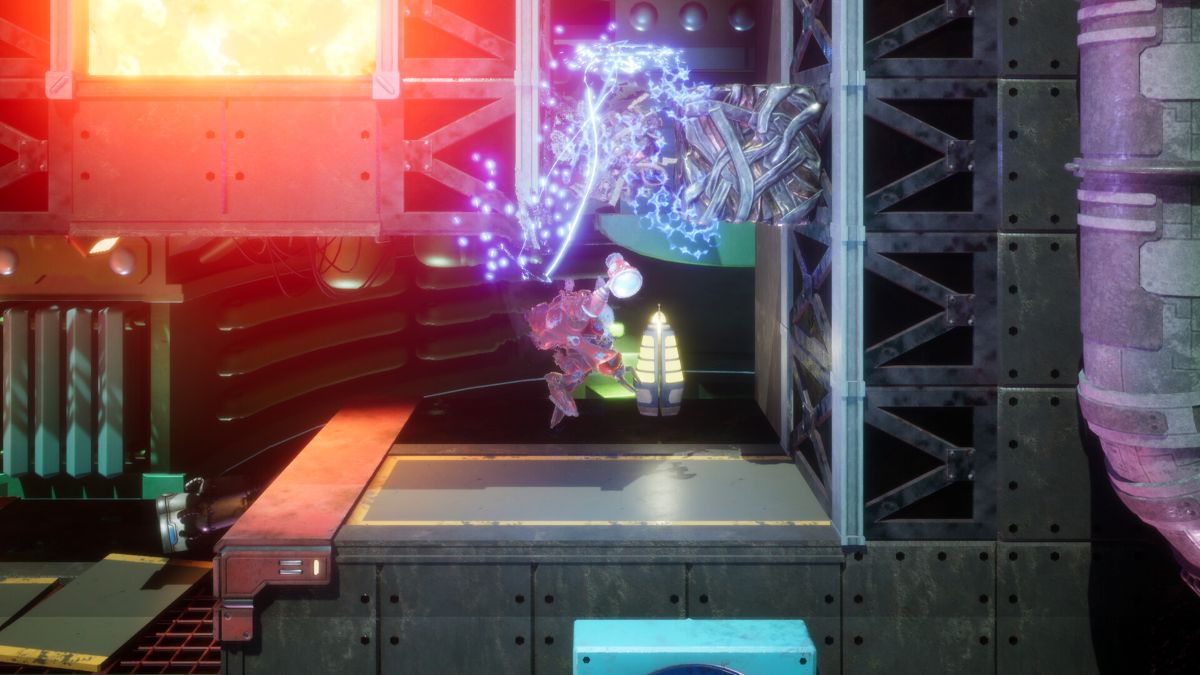
While there is far more to Stamp’s story, what you get is a typical 2D platformer narrative that does a great job of leading the player from point A to point B while keeping the story engaging and impactful. The overbearing tone of ‘there’s more here than meets the eye’ is undeniable with the narrative, so as an adult, it’s easy to see what was being told and the tough moments that come with it.
Ultimately, I did enjoy the simplicity of the story and how it stopped/started with characters, which gave them time to develop. Anytime you can develop characters is a good time. Overall, the story is good, entertaining, and the characters are endearing. It’s one big narrative that will take younger and older gamers down different paths, which makes the game even more delightful.
Gameplay
While the story will certainly kick-start the entertainment, the gameplay treats the adventure just right. The game is a typical 2D platformer at its core. You’re moving around obstacles, destroying things, and then making it through lightly tricky puzzles to progress. Sure, there are enemies, but the key to the fun here is navigating obstacles and doing it at a fast pace, while going along with the story. Not a bad combination of things that we are about to break down into rabbit-sized pieces.
Core gameplay, simple mechanics
Starting with the actual platforming, you control Stamp in a mech suit. The suit allows him to destroy junk, uncover parts, and quickly jump around (and sometimes slide) to and from places. The core gameplay is easy to pick up on and rather fun when you get on a roll with movement and progression.
Occasionally, you will run into small obstacles, like a button that temporarily unlocks a wall, and you must figure out how to slide through it in time to progress. These little moments of danger and stress are there to provide an adventurous flavor to the experience, kind of like Indiana Jones, but on a rabbit scale, where it’s not too difficult to circumvent. And that honestly fits the bill just perfectly, as you’re trying to cater to a younger audience, while making it challenging for an older one.
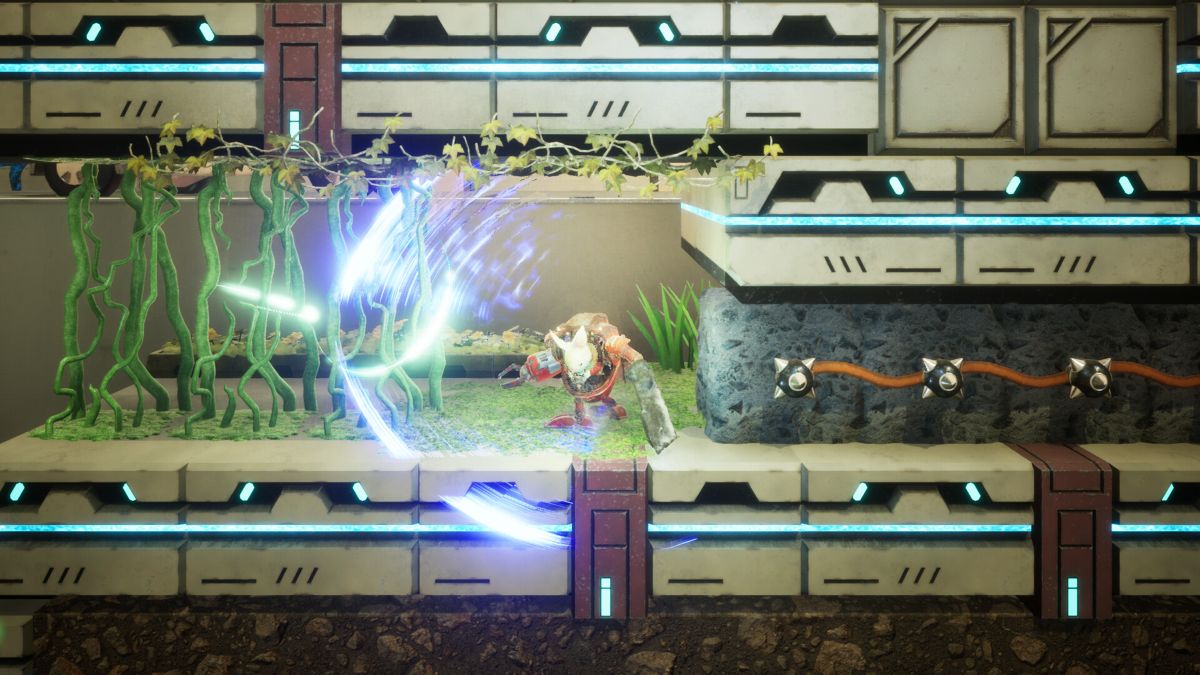
Anyway, there’s nothing cooler than knocking the heck out of piles of square junk to scale your way up or down a wall, then meet a decent challenge on your way to the end of a stage. It’s even better when you don’t have to give a single thought about the control scheme. The mechanics and controls of Rusty Rabbit are fun, easy, and light enough that anyone (young or old) can get into it quickly. Moving around in the game and navigating obstacles is just entertaining as heck. That alone should be enough to attract all types of gamers to this title.
RPG Backbone – a gold carrot for gameplay
As you get deeper into the adventure, Stamp begins to find parts. These parts help to provide upgrades for Stamp and create new pieces for the mech he is controlling. This is kind of like Sand Land from Bandai Namco, where you can collect parts, upgrade materials, and visibly become an even greater threat to enemies (and junk) along the way.
Much like the controls and mechanics, it’s simple to upgrade materials, and the reward for doing so makes the game far more interesting and deeper than expected. For example, the first part of Stamp’s mech that I upgraded was the mech’s arm. It became more powerful and was good at whacking enemies and junk. Seeing a different piece on the mech and benefiting from it creates motivation to keep playing, exploring, and earning upgrades. Ultimately, it’s impressive how much there is to upgrade in the game and what the results of those upgrades mean for the gameplay. I honestly didn’t expect what was delivered in this area, but it’s a welcome sight.
Hoppity hiccups
While I adore the mechanics, I’m good with the story, and I’m incredibly impressed with the backbone this game contains, it does have its flaws. Nothing is perfect, right? Right.
There are two flaws I noticed right out of the gate. The first was the length of time it took to get right into the game, which was maybe an hour. The game guides you gently through mechanics and purpose, including crafting parts and upgrades, and it takes a long time to get through it. Sometimes you just need to be shoved out of the nest, and this game needs that at the start, but doesn’t deliver it. Thankfully, the game does give you some Metroid-like freedom to go back and forth as needed once you get going, which makes it feel less restrictive and linear. It also provides you with a minor amount of exploration at your leisure. But it feels like it doesn’t trust the gamer from the get-go, which might turn a few gamers off from it. If people can make it beyond this initial launch point and tutorial, then the game opens up (see the previously mentioned exploration, for example).
The second flaw was how repetitive it felt during gameplay. I loved moving Stamp and his mech around the levels. I cherished climbing walls, whacking enemies, and just destroying things to progress. It’s an old arcade concept that feels familiar, and it works for the most part.
After a while, the game does show signs of repetitiveness with gameplay, which can lull your attention away from garnishing motivation it is trying to drum up through cutscenes and story progression. The story does its very best to distract from repetitive gameplay moments, but doesn’t do enough, even with the mature overtones that lie above a cute bunny exterior. It needed a bit more visual variety and less arcade construction. I appreciate what arcades did in the ’80s and ’90s, but there was always a lot of repetitive gameplay.
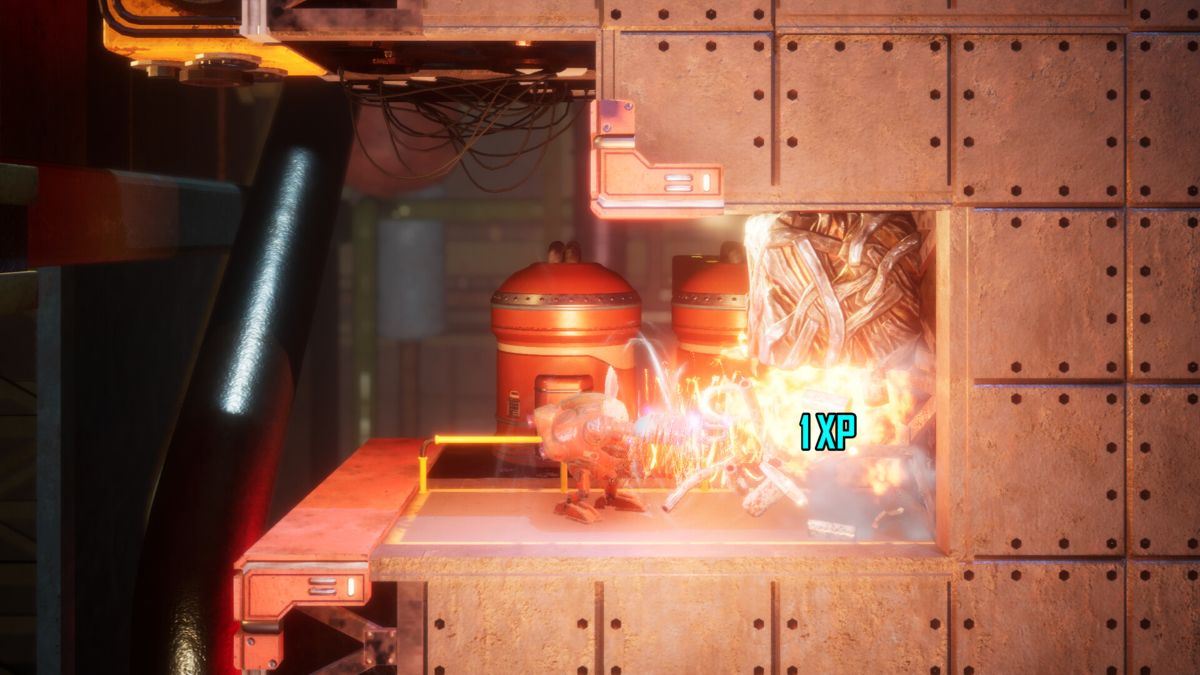
Anyhoo, as far as flaws go with games, both of these are minor. You might feel this repetitiveness strongly at the beginning of the game, especially during the hand-holding sections, but when you hit upgrades and snuggle into your bunny pads, it helps bite back a bit. By no means are these gameplay killers. There’s too much story, ease-of-use, and cuteness to get dragged down by these two flaws.
On that note, let’s wrap up this review.
Conclusion
Rusty Rabbit from developer Nitro Plus is a fun, deep adventure led by fun characters, a good story, easy mechanics, and a strong RPG backbone. Repetitiveness does drag the experience down a bit, but this 2D platformer stands strong with its positives.


