

I was never much of a simulator fan. Well, that’s not exactly true. I did love Jurassic Park, Genesis. That love revolved around building dinosaur enclosures, gathering huge crowds via helicopter, then nixing the helipads and dropping the fences. Sooo…I loved simulating the actual Jurassic Park film and book. The virtual dinosaurs and their bellies especially loved it.
Anyway! Back to the point, simulators are typically not my cup of tea. But when I ran into what I had been avoiding for decades, which is Atari’s RollerCoaster Tycoon Classic for the PlayStation 5, that attitude shifted hard. While not quite the joy of dinosaurs eating park attendees, building up rollercoasters, and trying to manage attendee expectations while juggling between keeping the park going and expanding it, it was a blast. An addictive blast. A blast that I will probably be playing once I retire from this whole video game writing gig.
So, on that note, let’s get into the goods of running an amusement park within RollerCoaster Tycoon Classic.
Running an amusement park is amusing.
While Atari could have made this game easy and accessible for all, it decided to make it difficult and require micro-level decision-making. Strangely enough, that might be better than making it easy and accessible. Weird, right? Very.
RollerCoaster Tycoon Classic is the type of game made for players who enjoy the smaller details of their simulator. For example, opening a park is easy, spending money on certain rollercoasters is super easy, but planning land expansion and trying to balance how much to charge per ride? Not at all easy. The game forces the player to think about how they are going to keep profitable while making rides exciting for the attendees. It’s a balancing act of sorts because the park must constantly attract new people and keep the attendance up, but to make that happen, it must make money to make new rides.
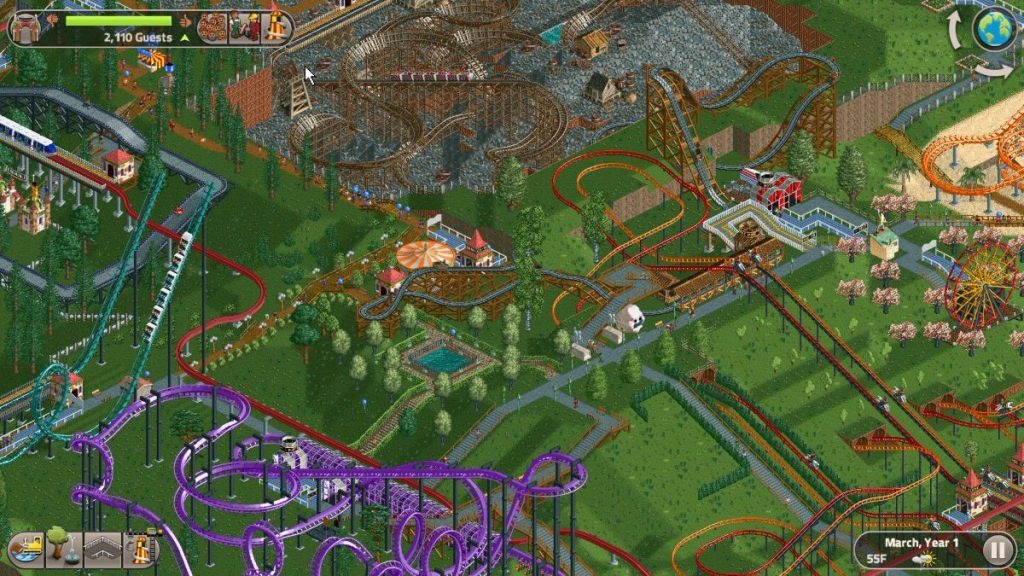
Now, by adding new rides in the park, which sounds super-easy on paper, the player must also financially balance the aging rides by slowly but surely dropping their price. BUT! By dropping the prices, the park starts earning money more slowly, which presses against the need to get new rides to keep a steady clientele and not miss out. While the thought of designing a park with particular rides seems easy, becoming an accountant to ensure the park is still thriving and not losing money, while waiting to spend it, well, that is not easy. It’s a balancing act. Doing it right means that it’s a slog of a time, but that’s the name of the actual rollercoaster game, and thus, the simulator that the player has bought into.
Of course, once money is finally made, the rollercoaster purchased has probably fluctuated in price. This is determined by the time of year and the popularity of the design. Building in October could be cheaper since the rollercoaster season is on the downswing, but doing it closer to summer means it’s a more expensive venture, and more people will be willing to pay a good price. And, yes, price points do move up and down in this game, which also plays into the balancing act of when to wait and when to pull the trigger, while also trying to make sure your attendees don’t go elsewhere for their mechanical excitement.
It’s absolutely crazy how much this game requires players to think about the bevy of variables instituted into the amusement park process. It’s a lot, and it doesn’t really stop at just the rollercoasters. If it did, it honestly wouldn’t be too bad.
The other crazy elements beyond just pricing rides and knowing when to pull the trigger on a new rollercoaster involve selling food, dealing with guides, and having to hire help to make sure the park and coasters are maintained. Those elements bring their own juggling act with them, as players will have to pay the hired help monthly, while also ensuring they are keeping park goers happy and the park upkeep going in a healthy manner. What that also involves is understanding that their salaries will be part of a monthly red number on a budget, so pricing coasters for attendees will have to account for the loss of money to keep the help hired available.
On the food side, players must also place food stands in strategic locations in order to get the most out of the attendees. The food also has to be priced at a certain level to meet budgetary needs, while also avoiding losses by overcharging (which isn’t a problem for most amusement parks these days – but it’s a problem with this game). If the food wasn’t enough of additional intrigue, then selling products such as guides and umbrellas for randomly changing weather conditions, and even deciding the price points for those, will add another layer of complication to the process. In short, it’s a lot, and it’s coming from all sides.
But, again, it’s a balancing act and a micro-level set of decision-making that makes this simulator incredibly deep and involved for the player. If players are in search of that depth inside a simulator, then welcome home. It’s nuts how involved players are going to get with this game and how engaging it can be for those who enjoy the finer details of amusement park management, or simulators in general.
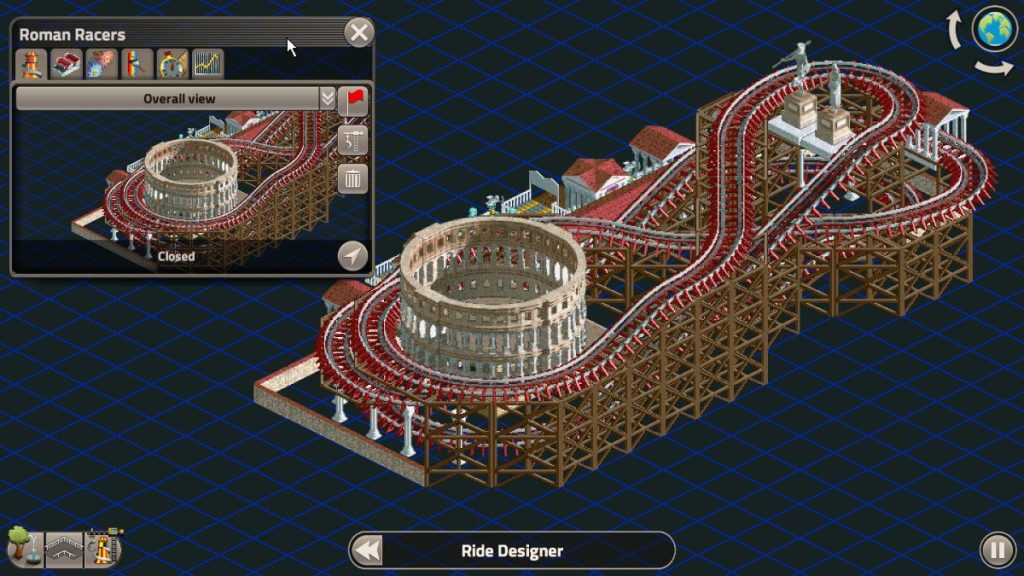
To drive all of the above, outside of the varying degree of coaster constructs and additional add-ons that attendees can be sold on, the player is tasked with goals. Those goals can be attendance requirements, money goals, or a bevy of other aspects that keep the player focused on the strategic elements of the RollerCoaster Tycoon Classic process. Combined with the previously mentioned number of pieces and parts to think about, and I didn’t list them all, just the major ones, goals help players keep focus and determine what they should be locked into when building an amusement park. All of this balancing act excitement before wacky mishaps and Jurassic Park Genesis-type of chaos. And there are plenty of both to be had when playing this simulator.
Old is sometimes too old.
Some items of RollerCoaster Tycoon Classic probably could have been improved. However, the ‘classic’ moniker pretty much permits Atari to deliver the 1999 version to the PlayStation 5 without much touch or fuss. That doesn’t mean that some of these complaints shouldn’t be considered when thinking about less-than-positive gameplay elements.
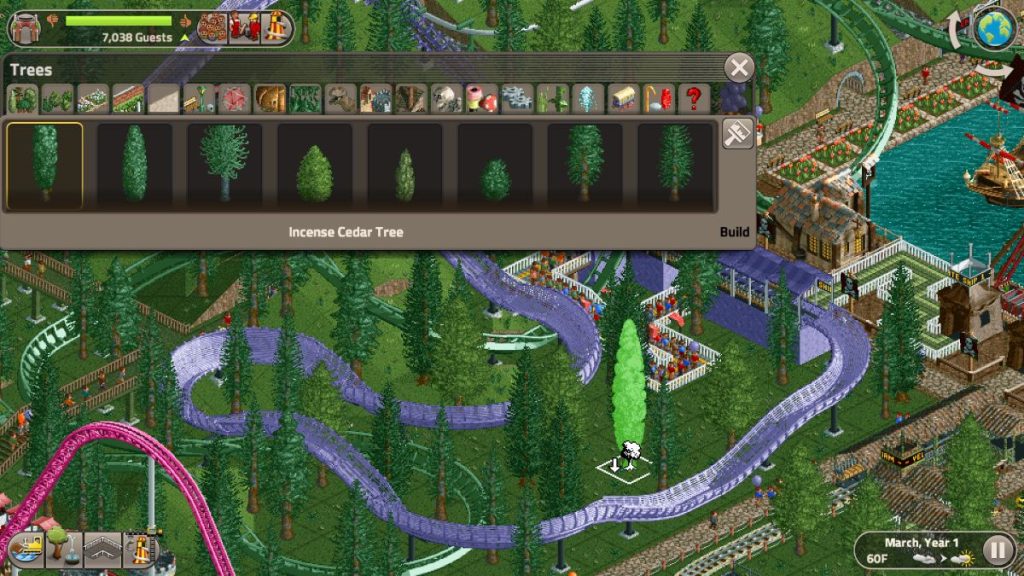
The first big one is how the game is presented and moves, which is just as clunky and four-angled as the original title. You can rotate the park by pressing the arrows in the top right corner of the screen. Those will jump from angle to angle, which is essentially just isometric north, east, west, and south. The views are jarring and sometimes not helpful, especially if a player is trying to build a walkway to the coaster entrance. The lack of a mouse for the PS5 makes the process even more maddening, as getting the right angle is just tough. I also found myself squinting intensely at the screen because of viewpoint problems, as everything was pixelated and old-style in its visual creation.
In addition to these issues, the game also isn’t the most accurate when trying to assign workers to specific locations or trying to prod them to fix specific rollercoasters. For example, there were a few times when my Ferris Wheel broke down, I called a mechanic for help, and they just stood there at the entrance. Even after shutting the ride down, the mechanic still had issues with going and fixing it. While I blame it mainly on my chosen location to send them due to aging visuals, it was also a little bit of old-time clunkiness with the gameplay. Eventually, I either moved the Ferris Wheel or I finally got the mechanic to do their job, but it was a chore nonetheless, and even more so when additional rides began to break down while I was trying to fix the Ferris Wheel.
Visual and proximity problems like these are typical of the 90s time period for gaming, as most gameplay wasn’t as refined or capable of delivering more with its coding or visual construct. The fact that the game features what it features from 1999 is impressive, but it’s not perfect by any means.
Overall, though, RollerCoaster Tycoon Classic is one of the more entertaining games I have played in months, and has changed my opinion of how much fun simulators that don’t involve hungry dinosaurs can be. I am grateful that the game featured its original sticking points, while also delivering the same beautiful gameplay that stuck with people so well over the years. I have friends who live and die by this title, and they are right in doing so because it’s still chaotic, fun, and incredibly detailed in its gameplay execution.
On that note, let’s wrap up this review.
Conclusion
RollerCoaster Tycoon Classic from Atari brings what it promises to the table – a classic. Building, maintaining, and improving an amusement park while not trying to lose attendees is such an addictive gameplay experience, even if it doesn’t hit all the modern gaming notes perfectly.