


Pragmata shines as a new IP that rarely plays it safe. Confident in its vision and unique third-person hacking combat, Capcom uses the relationship between its two protagonists to deliver an action game with plenty of heart.
Minutes into Pragmata, lead character Hugh Williams expresses his distrust for robots and AI. He and his team have been summoned to the Earth’s moon to establish contact with a massive lunar research facility. As suspected, everything goes to hell. But not before it’s established that on this base, AI automation is heavily used and a substance called lunafilament seemingly can 3D print almost anything.
Within a few minutes, Hugh’s team is attacked after a rogue AI that governs the base’s security causes a robot to attack. Hugh is separated from his group, heavily injured, and wakes to find a small girl next to him.
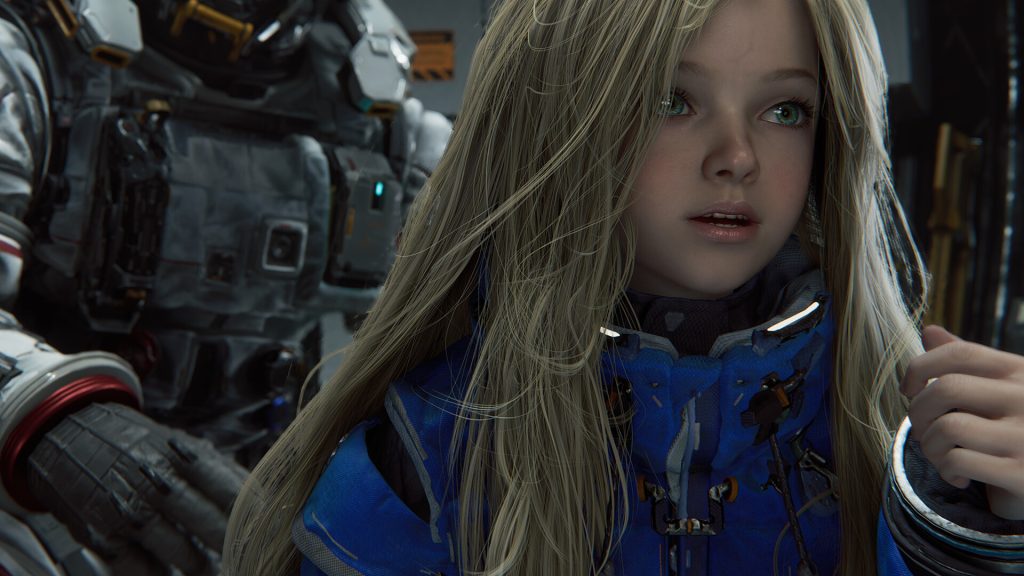
Of course, this girl is no human but the lifelike android Hugh names Diana because her codename, D-I-0336-7, doesn’t exactly roll off the tongue. After the initial shock of his predicament settles in, Hugh warms up to Diana and he takes on a protective, fatherly disposition towards her.
Throughout Pragmata‘s quite brilliant combat and its deeply heartwarming relationship between Hugh and Diana, I was left engaged. This is a tightly-paced and surprisingly emotional new IP from Capcom, who have been on fire lately. Not only have we seen the release of Resident Evil Requiem and Monster Hunter Wilds, stranger experiments like Exoprimal and Kunitsu-Gami: Path of the Goddess have come our way.
Pragmata has been a longtime coming. It was announced almost six years ago during the initial PlayStation 5 reveal stream, when the world felt chaotic and things like video games gave us deserved solace. Years passed without a peep from Capcom and the publisher bashfully and cheekily kept apologizing for any meaningful updates on where Pragmata was or what it actually was. But the hunger for something new and different was palpable.
To me, Pragmata delivers on the promise of that initial teaser and after playing it for a couple hours, I went back and watched it again. Hugh and Diana conceptually look identical and the mood struck a similar chord to what I was playing. And, for a few days, my YouTube algorithm really started to push game trailers from five years ago. Yeah, I laughed when I saw the “Coming 2022” at the end of the trailer and the recommended videos tab on the right showed another video saying Pragmata was coming in 2023.
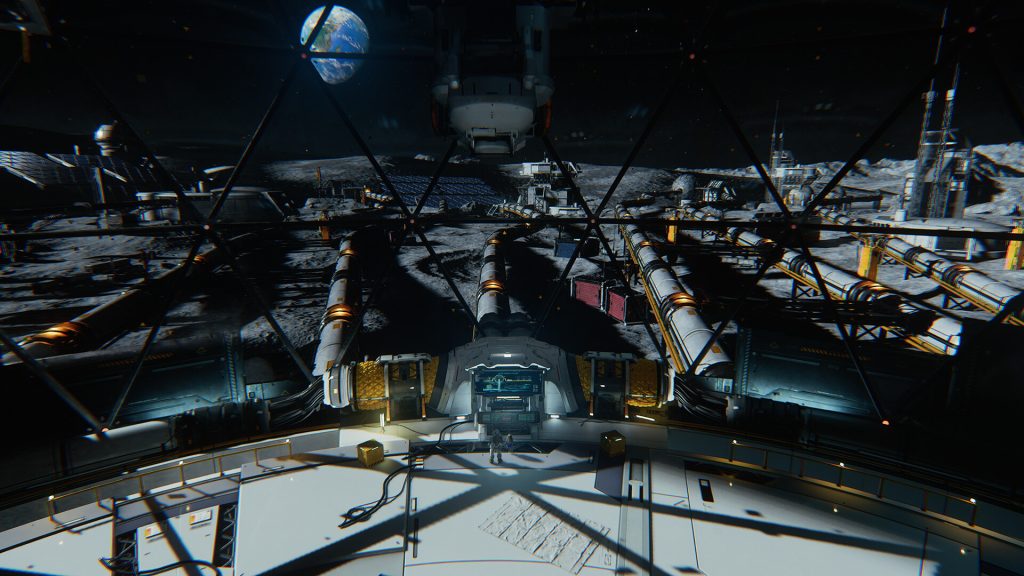
Despite a drawn-out development cycle, Pragmata‘s vision is confident and cohesive. The lunar base feels like a real facility where complex, massive research is taking place. Much of it is shiny, grey-white paneling, unbreakable glass, and automated machines cause it to buzz like a factory.
Remember how Killzone 2 received flak for being overly gritty and muddy? Yet Guerilla’s intention was clear. Killzone 2 was set on the Helghan planet, a pretty dreary and brutal place. Too much color would have felt off, stripping it of that noxious violence that exemplified the weighty combat and the actual design and purpose of the Helghast army.
Pragmata feels very much out of that era–a statement that I’m sure will excite a lot of people.
Games can often feel indulgent, perhaps too opulent for their own good. Guerilla went from Killzone to Horizon and, despite that breath of fresh air, Horizon can buckle under the weight of its own size. We used to live in an era where games like NeverDead, Lollipop Chainsaw, and Asura’s Wrath existed. Those were titles with the backing of massive publishers that were patently weird, received mixed criticism, and still managed to have an audience. Even the surest of bets now, simply aren’t.
It took me 16 hours to beat Pragmata. That time includes finding almost every collectible, upgrading a lot of what I could, and getting a perfect rating on 29 out of the 30 Training Simulation missions–that last one is savage. Could I walk away from it forever and feel satisfied? Yeah. Yet even in this constant deluge of games vying for attention, I want to go back and complete the new challenge area that opens up. I even want to go deeper into New Game+ on “Insane” difficulty where harder enemy combinations pop up early in the game and see how overwhelmed and accomplished I can become.
Pragmata just feels that great to play. It has the foundational third-person, over-the-shoulder combat we’ve seen since the Resident Evil 4 and Gears of War heyday. It’s chunky, deliberate, and kind of slow. But coupled with that weight is strategy and speed and flash.
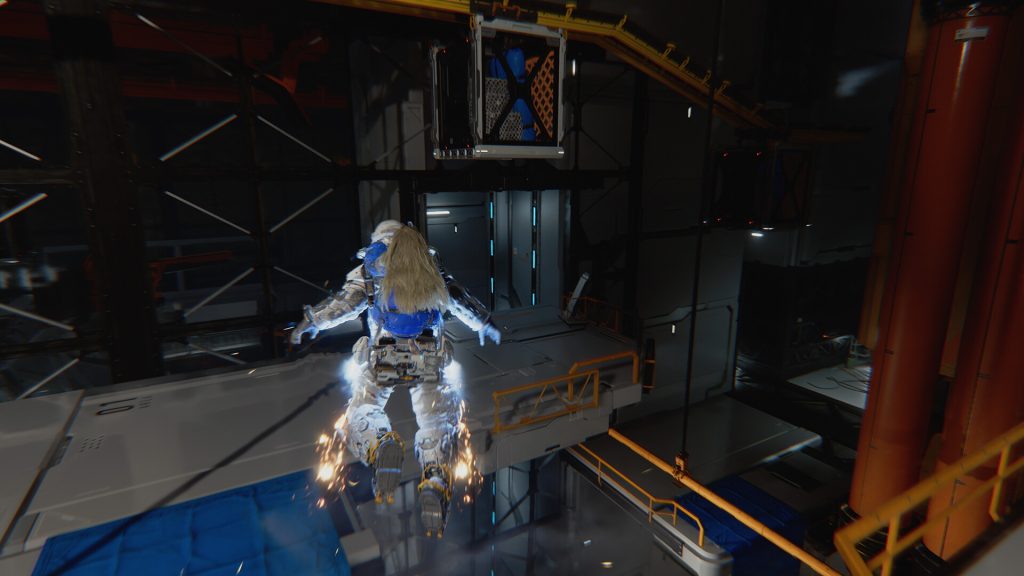
Hugh is not an agile guy. When he goes to run, there’s a slight delay in him picking up initial speed. He picks up weapons and stows them before the player can prompt him to grab another one. He’s got a great jump but really struggles to clamber over ledges. He might have a heart of gold but he’s certainly no Italian plumber. A handful of times–more so in the Training Simulation–the player is asked to traverse some tricky parts of the lunar base that caused me to grumble a few times when trying to leap and bound around the level. And it makes sense because Hugh is toting around an android girl, a massive suit, and a decently sized arsenal.
Capcom wants players to be on terra firma for the most part, grounded to take on the numerous corrupt AI machines. While Hugh may be imposing and heavy, he’s practically worthless without Diana.
There’s a helplessness to Hugh that I really learned to appreciate. His delayed dash is meant to feel desperate when darting through packs of enemies in hopes to provide space and distance. His suit comes equipped with jets that can allow him to hover and float but they are very situational, even in platforming. The suit’s emergency thrusters, on the other hand, quickly dart the pair around across gaps and away from danger. But those are acts of desperation, an escape.
Hugh needs Diana. Diana doesn’t really need Hugh.
It takes a bit for that concept to settle in. Being an android on the lunar base, Diana isn’t seen as a threat. The game implies that when Hugh “dies”, Diana is able to drag him back to their shelter, dust him off, and keep going–she’ll even offer him a tip on how to better kill the bot that took him down.
All the now violent bots are also extremely sturdy. Hugh’s gun does minimal damage to them. Instead, they must be hacked by Diana to “open” them up, making them more susceptible to damage and exposing weakpoints.
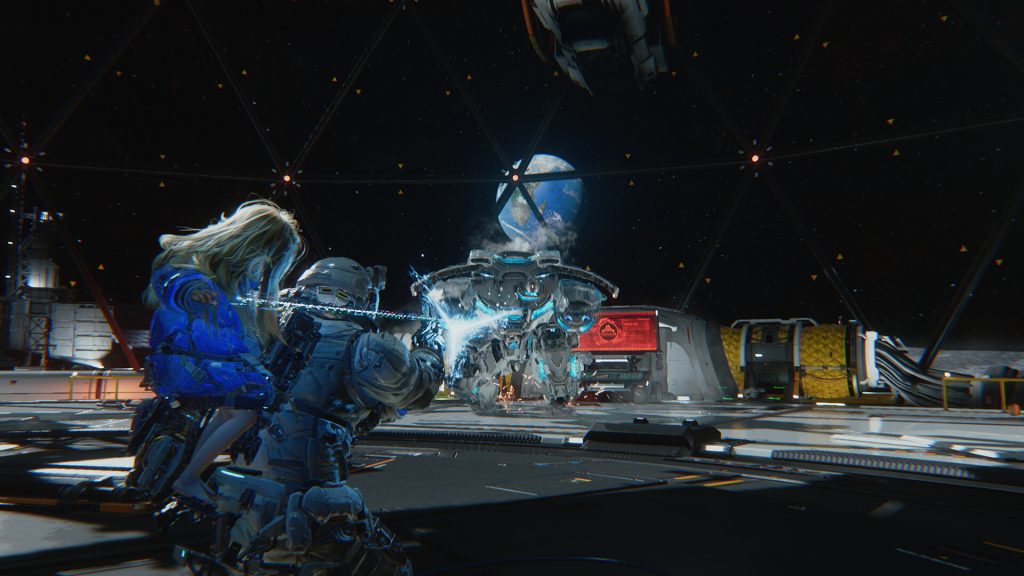
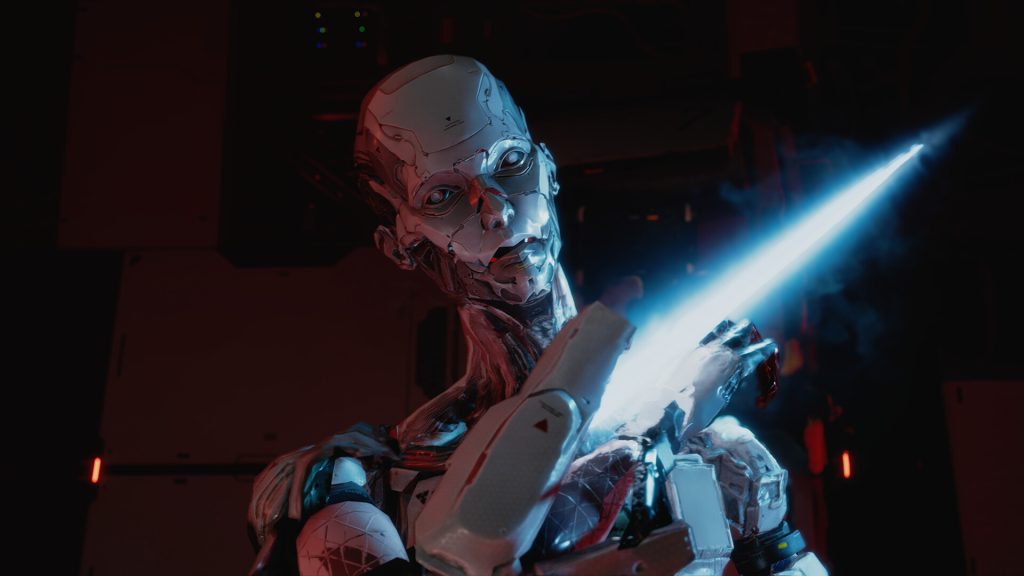
Pragmata‘s combat is phenomenal. The core conceit of darting around the field, hacking robots, and squeezing out as much damage as possible never feels stretched too thin. Over the course of the game, Capcom throws a variety of challenges that come not only from harder bots but difficult combinations of them. The lumbering Walkers slowly approach the player and only attack when close. Then new bipedal units get introduced that juke their movement, attack from farther away, or run instead of shamble. Floating units lock in on a position or can fire missiles which can then be hacked to be sent back to their owner. Freakish giants with human heads slam the ground and shoot beams out of their faces. Gundam-style foes dart around and slash violently with laser arms.
All the while, these robots feel housed in the world they were made. There’s never an opportunity where the player happens upon a factory assembling them, which would have been cool. Instead, they are 3D printed on the spot or delivered through platforms in the floors and walls. Pragmata is very much in the school of “here’s a room, kill the baddies, move on”. But it’s done so in a way that paces out exploration and combat. Rooms thick with a few waves of enemies are then met with moments of respite where the player can explore, or only have to fight a couple more manageable bots.
When Hugh aims his gun, the player can fire with the right trigger, just like any other game. But when targeting a bot, a hacking interface pops up for Diana. Using the face buttons, the player navigates around this grid leading into a node that will open up a bot. Hugh is free to inflict maximum damage until the robot needs to be hacked again.
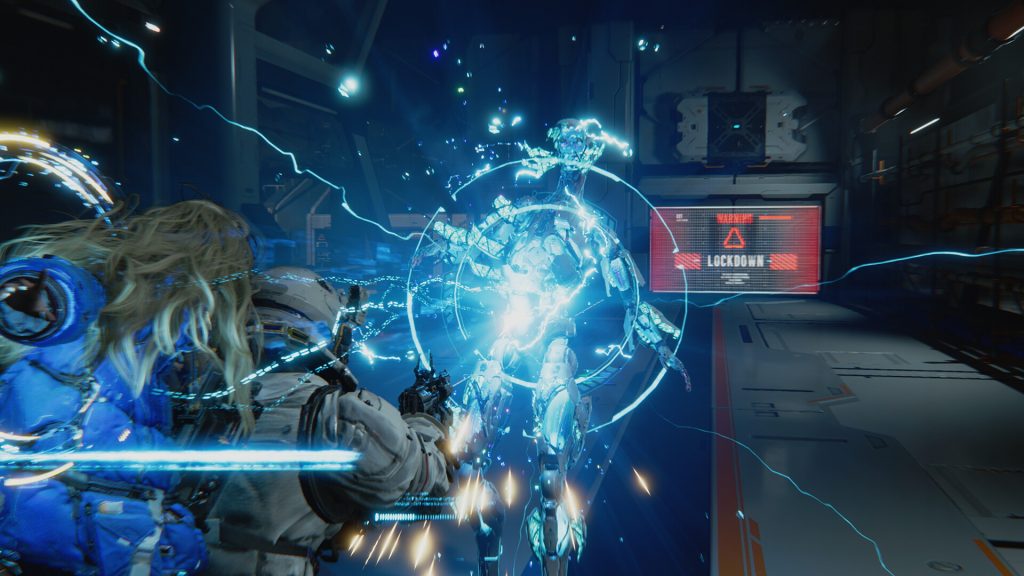
As Pragmata does a great job warming the player up to this unique mechanic. Initially, players need to keep focused on a relatively small, square grid that Diana can hack. On this grid are additional bright blue nodes that players can pass over when working their way to the green one. Doing so will help boost damage and cause the bot to stay open a bit longer. In this phase of learning, the player’s job is mostly working on speed and snaking the most efficient path.
Once the combat begins to evolve, new twists are introduced. The grid expands from a small square to bigger ones, or stretches out into large configurations. Grey nodes that can’t be passed over have the player puzzle out the best path. Red nodes will break the hack and reset it–as will taking damage, unless the player has a certain mod equipped. Additionally, Hugh can grab hacking nodes dropped by enemies or scattered on the ground. These appear as yellow symbols on the hacking grid and are consumed after completing a hack.
Hacking nodes can stun robots or make them explode with critical damage. Other hacking nodes can trigger a multi-hack, causing connected enemies to open up. Confuse will cause robots to begin attacking each other and an overheat node will build up heat in robots to eventually leave them open for a massive attack.
When I first saw Pragmata‘s combat I was so curious as to how it would work in execution. Would the player really be able to focus on targeting and hacking at the same time all while avoiding enemies?
It turns out the answer is yes. Hugh’s primary weapons have limited ammo and recharge over time. The player can’t open up an enemy and then pummel away indefinitely. This leads to many desperate encounters where the player waits for those last two shots to reload, knowing the enemy is closing in. Hugh also has secondary, limited-ammunition guns that can melt off chunks of damage. There’s a charging rifle that shoots a solid beam through multiple enemies, homing rockets, a beam that does more damage the longer it hits, and a devastating shotgun that melts up close. Support weapons also aim to divert enemy attention or keep pressure off Hugh and Diana. Throw down a decoy to distract enemies or pop up a bubble shield that can safely be fire through. One gun fires a stasis field that slows enemy movement while another plants mines in the ground that can be hacked, emitting damage from all the nodes Diana programs into it.
Capcom provides the players with enough tools to aid in success, not guarantee it. Across the lunar base, upgrades materials can be collected that boost Hugh’s health, his primary weapon efficiency, and improve Diana’s hacking. Players can also improve secondary weapons and hacking nodes, or increase the capacity of Hugh and Diana’s skill usage.
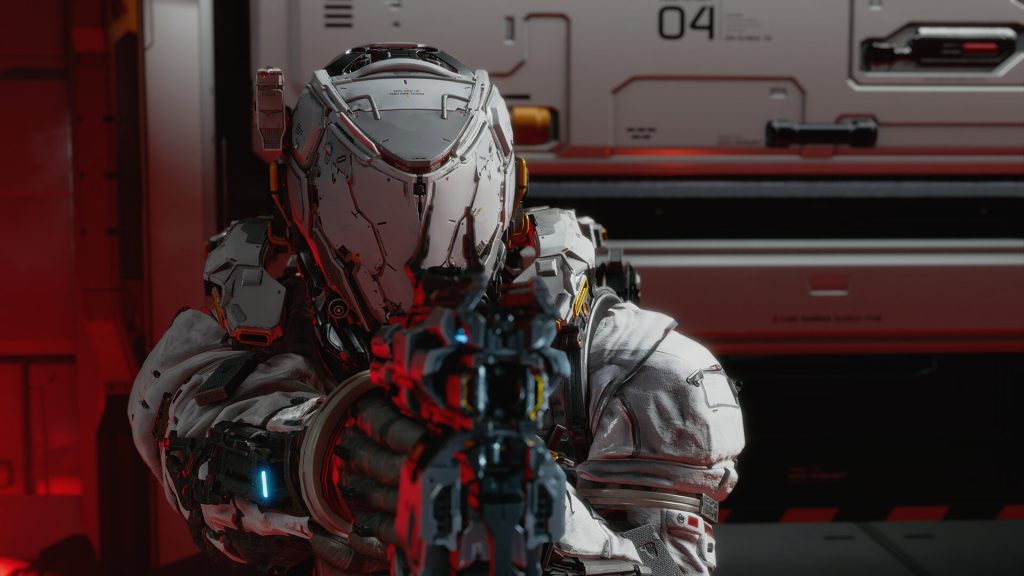
Later into the game, a handful of twists make hacking a little more complicated in an attempt to keep combat exciting. But I think a lot of the challenge is simply going to be from player experimentation. It’s easy to settle into a groove with the same core weapons and skills, especially with how costly they can be to upgrade. But when looking at the arsenal in Pragmata, everything serves a distinct purpose meant to capitalize on how the player wishes to engage in combat. Enemies can grow antennas that flat out block Diana’s hacking until they are destroyed but a gun can temporarily bypass that. Fast moving enemies are a threat but if they are distracted or slowed, it’s less problematic. Mods can help a player lean into doing more chaos with hacking, or they can boost Hugh’s damage under certain thresholds. It’s a significant amount of meat on the bone for a game I thought wouldn’t allow for so much player expression.
Every option feels like its own kind of meta in Pragmata and that’s rare for a game with so many tools. And Capcom doesn’t really hold the player’s hand. Boss fights are against towering beasts that assault Hugh and Diana with a variety of attacks. And while guns and aid are scattered frequently throughout the game, there are countless scenarios where I was left with just Diana’s hacks and Hugh’s primary weapon. And those tense, desperate fights were some of the best as victory washed over me with a heaving sigh of relief.
Pragmata doesn’t feel basic. Instead, it is a cohesive game with a distinct vision for what it wants to be. The length prevents it from becoming wrought with repetition or burdened with having to keep juggling variety for the sake of it. That notion of “is this it?” never washed over me and instead I craved more, which the game certainly delivers in its post-game content.
But all this attachment truly does stem from the relationship between Hugh and Diana.
One frustration out of the way: That initial beat where we establish Hugh as a man untrusting of AI felt unnecessary in the scope of the game. I felt as if it was done in service of the future onslaught of robots that would eventually try to kill him. Because almost immediately, Hugh warms up to Diana and acts as her caring protector.
Pragmata‘s story is isolated enough that it doesn’t make any grand, sweeping proclamations. There is commentary on replacing humans with AI as the player works to unravel why the lunar base is so devoid of flesh and blood life. And in Pragmata, humans are literally a commodity. Like I said, Hugh needs Diana to live, she does not need him. And at the game’s onset, I imagined there would be a kind of friction between the pair as Hugh worked to see Diana not as a tool, but almost as a person.
Instead, Capcom thrusts them into their respective roles. And while that little factoid nagged at me throughout my playthrough of Pragmata–especially because a handful of times I questioned what kind of reveals we would get about these characters–it doesn’t interrupt the loving chemistry written between Hugh as a parent/protector and Diana as a child-like character curious about the world around her.
The core of the story is laser-focused on Hugh wanting to get back to Earth and he quickly welcomes the idea of bringing Diana along with him. The mysteries about the lunar base and what happened feel almost secondary. Reveals are peppered throughout the game that provide context and lore but they don’t really alter the fundamental focus which is the relationship between Hugh and Diana. It is very much The Last of Us-coded. And I know that may be a complaint some players have who lament the notion of a companion that tags along with the player. But Diana is more like Atreus than Ellie ever was–at least mechanically. The importance of Diana in combat bonds players to her, making her more than a tool for the narrative. And no, I’m not taking shots at Ellie.
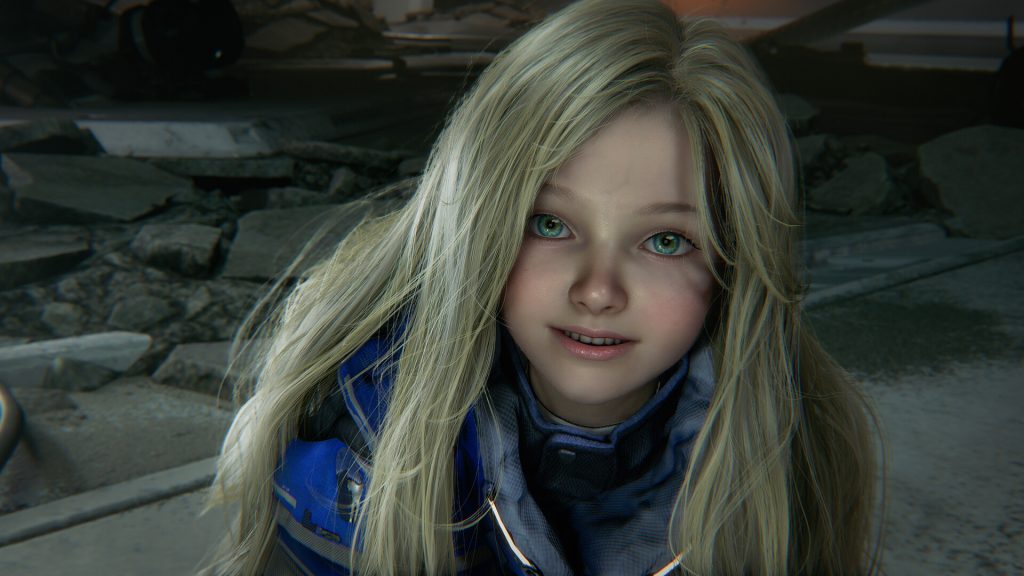
What I cared about was heading back to the Shelter after a particularly harrowing stretch of action and speaking to Diana. Players can collect projections of life on Earth that Diana can interact with. Eventually, the stark white Shelter becomes home to a kid’s playroom, a beach scene, it’s decorated with balloons and crayon art that Diana did. She feels like a little girl with a spark in her eye, curious about a world she is unfamiliar with. Hugh’s warmth pours out of him as both voice actors truly sell this relationship.
I think of Diana’s bright blue coat, the most prominent use of color in the game that isn’t explosions and sparks. It reflects the cool blue oceans of the Earth, lingering in the distance. It forces the player’s eye to focus on her. Her aspiration becomes a goal. And Diana is impossible not to love. She brings life to the cold of space. While character lip-syncing is a bit off, it didn’t matter. She expresses joy and doubt and excitement in so many ways that it is a delight to have her along every step of the way. Even when the story has a tendency to feel rushed, Pragmata allows the player to sit with this dynamic and explore it.
Pragmata is a remarkably high bar for players who wish to bond with the characters they embody. And for a new IP, Capcom succeeds by confidently not playing it safe. Third-person perspectives have become so fundamental for narrative-based games asking players to be absorbed in their worlds, undertaking the raw emotions their characters are inflicted with. Yet rarely does a game twist the formula in such a way that feels wholly unique and capitalizes on the traits of its individual protagonists. Pragmata is able to deliver an action game with a beating heart and a warm soul because Hugh and Diana are extensions of the player, sharing in their struggles and their emotional triumphs.