


Pipistrello and the Cursed Yoyo is a marvel of a little game that wins at being a “yoyovania.” The yoyo combat and progression are superb, its level design utilizing novel traversal elements without repetitious fluff, and its charm is off the charts. It’s no walk in the park, but it’s worth the payoff if you want a game that is a nostalgia bomb of classic Zelda fused with a yoyo thematic.
What is a “yoyovania?” Brazilian developer Pocket Trap claims that Pipistrello and the Cursed Yoyo is the world’s first “yoyovania” – a 2D top-down adventure with a protagonist whose sole weapon is not a melee sword or ranged magic item – but a yoyo. Yes, dear reader, the pre-2000s hunk of plastic on a string that you and I both saw many folks do cool things with but never manage to do ourselves. That yoyo.
Kids these days – I don’t expect them to know what a yoyo is…nor pogs, for that matter. The 90s are so underrated.
I wasn’t sure what to expect from Pipistrello beyond that it looked sort of like a top-down roguelike shooter. The past few years of reviewing games have exposed me to some really good top-down roguelikes, sure, but I was blissfully unaware of Pipistrello’s source material.
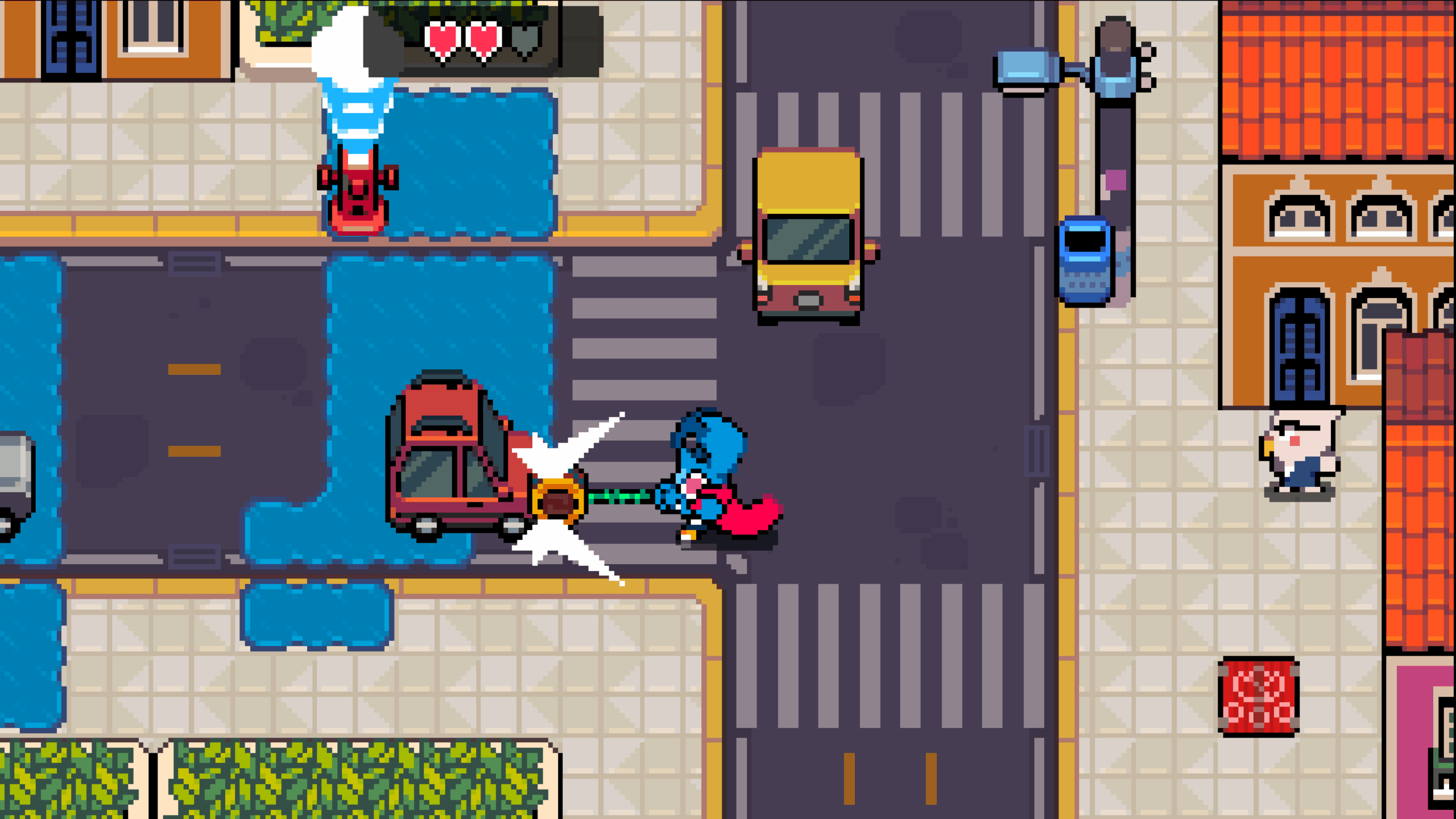
 The closest thing I’ve played to Pipistrello is a classic The Legend of Zelda game – think Link’s Awakening or A Link to the Past. Imagine a top-down adventure where you explore a city and each of its four districts acting as dungeons that cannot be accessed until you complete an entry requirement, like gathering fan club members or getting a key card disguise that makes other NPCs think you’re a worker named Mike. Best yet – there’s a degree of freedom in choosing which dungeon to finish first.
Pipistrello and the Cursed Yoyo put me in the shoes of Pippit, a teenage bat who comes from a long line of magnate energy owners who, until now, have been the gatekeepers of the city’s energy supply. On one fateful night, a quick family union is struck by a twist of fate that transports Pippit’s favorite member’s soul into his pride-and-joy of a yoyo. Now, it’s up to Pippit to reclaim the sources of energy and return things back to they were – and hopefully his family member, too.
The controls, while simple, fully connect with a fantasy of using a yoyo to its fullest extent. A simple attack is bound to one button along with a jump. I could use my yoyo to attack an enemy, or if I launcher it toward an angled wall it would change directions and extend my attack further. I could even detach my yoyo from its string to hit levers on far sides of the room. Later, I got access to yoyo-inspired special moves and charged attacks that made it so that I had an arsenal of attacks I could choose to use. While I had multiple attacks by the time I had reached the final dungeon, I could only equip a single charged move and a single special attack at any time. When visiting a workbench in my underground lair, I could change things up as I saw fit.
I never thought I wanted to play a game where a yoyo was my sole weapon, but after using that yoyo for several hours I cannot believe that this set of mechanics haven’t been implemented sooner. Pocket Trap has made something novel and incredibly satisfying with their yoyo mechanics. The flexibility of using this simple toy as a weapon of destruction and a missing puzzle piece comes to life when the player is presented with a seemingly impossible puzzle. I could use the yoyo to defeat an enemy and move on, or I could throw the yoyo off its string to temporary act as a platform while I stun enemies with the yoyo’s string. If I needed a boost, I would “walk the dog” that would jet me along on a straight line until I came in contact with a wall or a diagonal element that would change my course. You can walk on water with the yoyo, folks! Imagine being yoyo-Jesus!
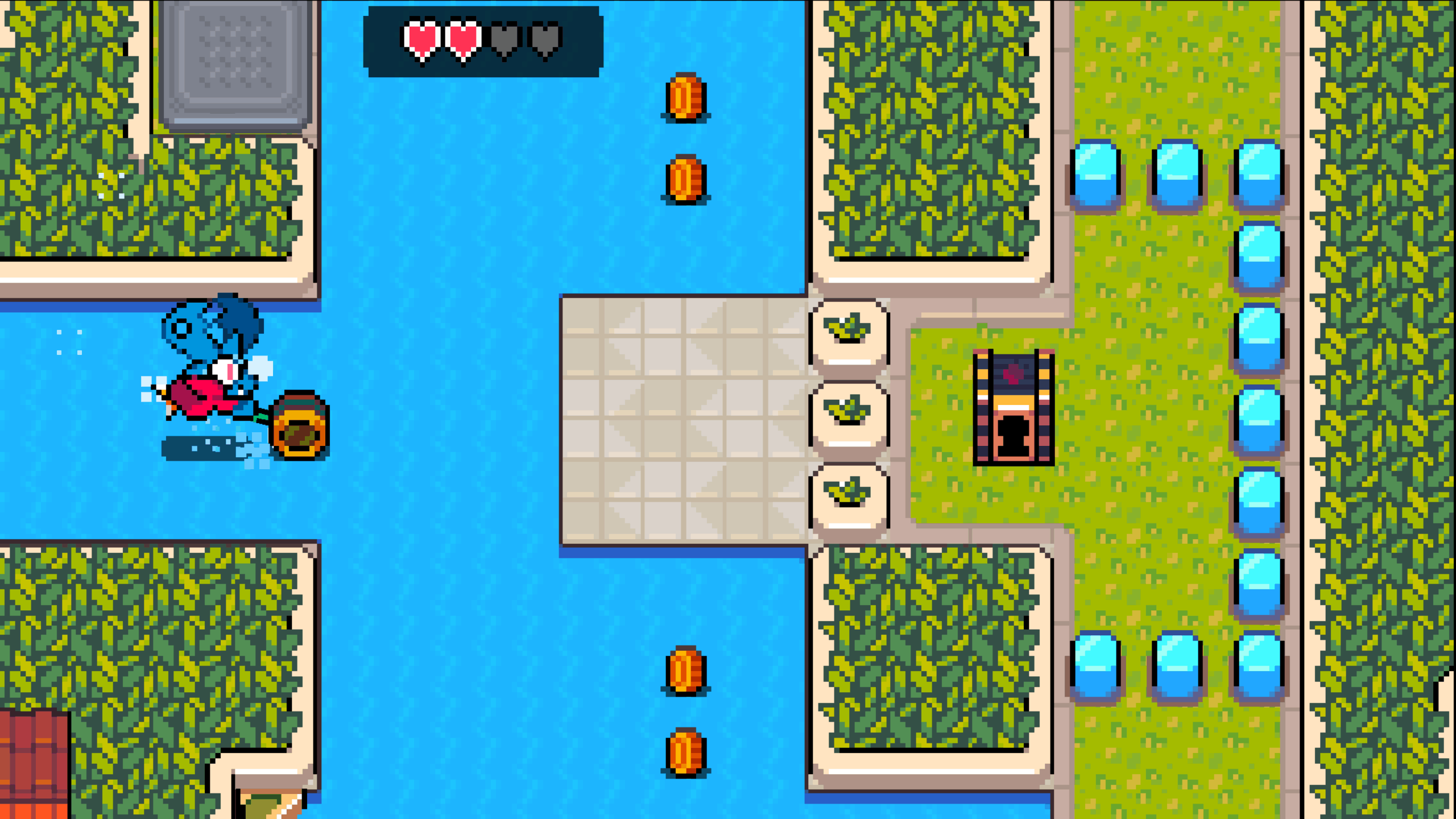 My progression mirrored that of a metroidvania, hence the “yoyovania” moniker. Upon visiting each new district in the city, I would gain access to a traversal move unique to that district and critical for advancement to the big baddie at the heart of each city district. There were some areas I couldn’t access in these districts, often requiring an endgame traversal upgrade to unlock whatever was tucked away behind a seemingly impassable gap. Thus, there were many opportunities for me to revisit areas I had since completed to collect small upgrades.
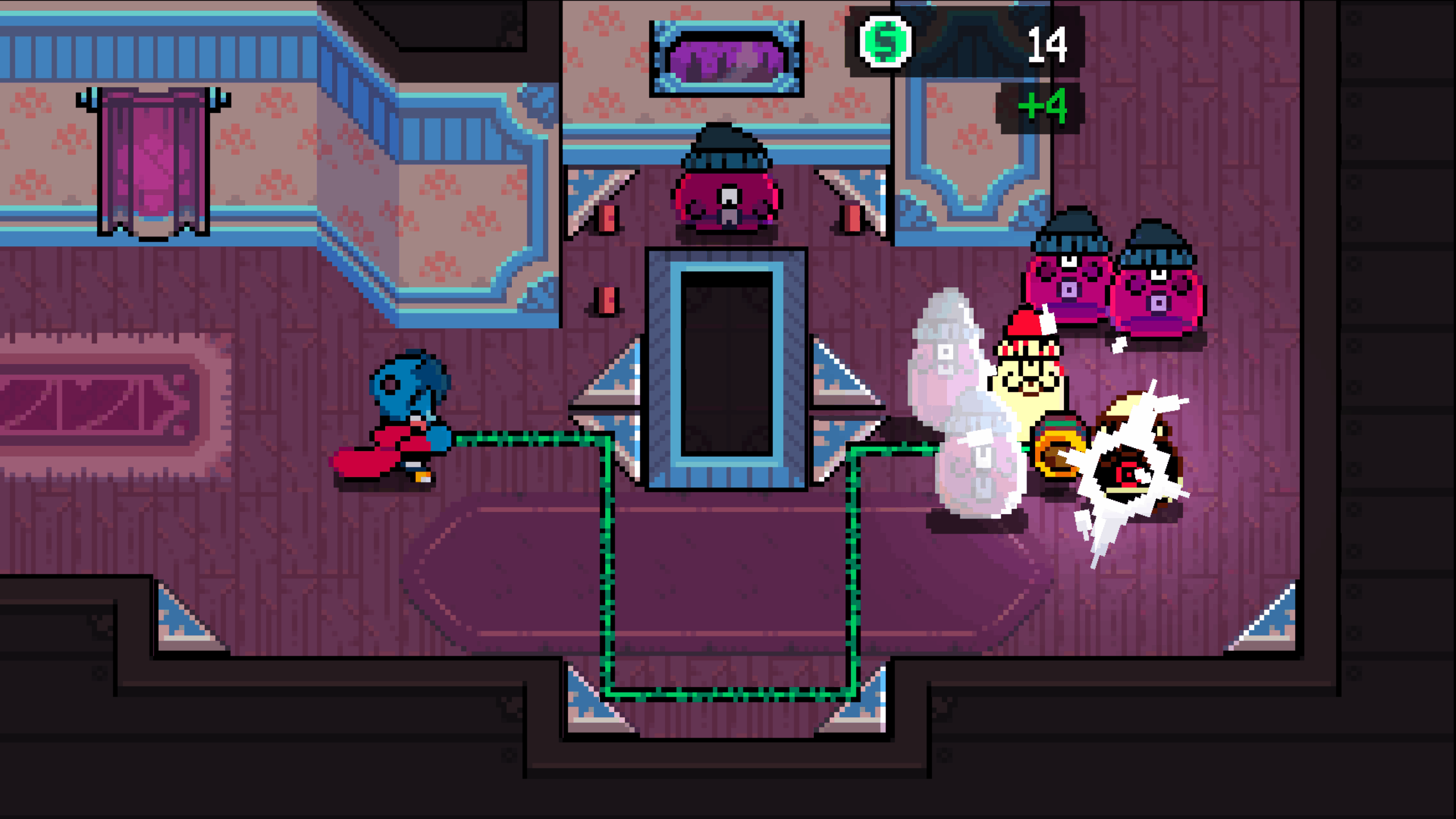
On the topic of upgrades, there are so many. Aside from permanent stat upgrades like bonus health, Pipistrello uses a badge system as a means of character building. If you’ve played Hollow Knight, this badge system will feel very familiar. I had a set number of badge points that could be filled when equipping badges, and as the game progressed I was able to equip more assuming I was finding the badge point (BP) upgrades. These badges ranged from things like getting bonus gold upon killing an enemy, extra health, to modifying my attacks to be more deadly. Badges were scattered throughout the world, giving me reasons to explore just so I could see how I could change Pippit and his moveset.
Pocket Trap opted to innovate on the permanent ability upgrade front by making it so that I could unlock upgrades, but I would be indebted to an NPC once I had unlocked a new upgrade. Upgrades made it so that upon going into debt, I would lose health and/or attack damage until the debt was paid off in full, but I was able to use an upgrade the moment I chose to “unlock” it. The debt would be paid off once I had collected enough money after choosing that upgrade – the money I had collected thus far would have to be used for something (or on someone) else.
I’m not going to lie – the early game felt especially rough because of the debt system. Every time I was able to select a new upgrade and go into debt, it sucked to suffer a temporary consequence in the form of a health, attack, or even a badge point setback. It made the difficulty curve steeper than I was accustomed to feeling in a game like this, but at the same time, it ensured that I was making miniscule steps forward in reaching an uber power fantasy. It takes some time to getting used to, but it kept me on my toes through the duration of the game.
 It’s okay if this steeper-than-usual difficulty curve ain’t for you – Pocket Trap has added multiple accessibility options in the menu that can override the indebted stat setbacks if needed. Want to make things easier by nullifying damage received? Okay, enable the damage modifier. Want to deal twice as much damage? Okay, update that value. Want to nullify fall damage but retain damage from enemy attacks? Okay, select that option. Want to deal less damage and make things a smidge more difficult? Congrats, you can turn Pipistrello into a souls-like and suffer!
Beyond the combat, the puzzles in Pipistrello make it a solid contender for my favorite thinky game of the year. While the main quest’s path is fairly linear and will utilize a specific traversal mechanic on a dungeon-by-dungeon basis, going off the beaten path to complete optional side quests often involve synthesizing multiple abilities in succession to solve a puzzle. One such puzzle had me walk on water with my yoyo, jump across a path and hook onto a floating hook, and then throwing my yoyo across the room so that it ricocheted multiple times in succession to an otherwise unreachable switch.
If there’s one thing Pocket Trap should be praised for, it’s of Pipistrello’s level design. Despite its massive size, every single room was designed quite well, be it incorporating unique platforms or full of enemies of varying compositions. I was constantly surprised by what I could do with my little yoyo, especially when it came to utilizing the dungeon-specific traversal in new ways. It felt great to see the world open up with each new upgrade, but it felt even better to become a yoyo master as I learned new tricks. When I solved a puzzle, I felt like I was actually becoming that yoyo master. It was so awesome.
By the time I had reached the 12-hour mark and defeated the final boss with a 90% collectible rate, I was exhausted. It wasn’t because the five-or-so dungeons are too big (they’re huge), nor was it because the game was too difficult (it’s quite difficult, but still manageable). It was because I had felt that feeling of accomplishment like when I completed Link’s Awakening for the first time as a child without the use of a guide. Pipistrello and the Cursed Yoyo is gigantic without being repetitive; it reminds the player of a time when games were naturally more difficult. Getting to that end credit screen with all that content unlocked (despite not being 100%) feels…well, fantastic.
I didn’t feel the need to enter New Game+, which I was pleasantly surprised to see once the credits finished rolling. I needed a break. My noggin was fully stimulated by the puzzles, combat, and story of Pipistrello that I was content with everything I had done thus far…but I know that I will definitely return to play NG+ once I play something else for a bit.
 I’m eager to see how players react to Pipistrello not just because of how it innovates in the classic top-down action adventure meets puzzle game genre. I’m curious as to how “good” players min-max it and attempt to speedrun the game. This would be a perfect game to watch during a Games Done Quick (GDQ) stream, as Pipistrello has tricks for those who dare to complete the game in style.
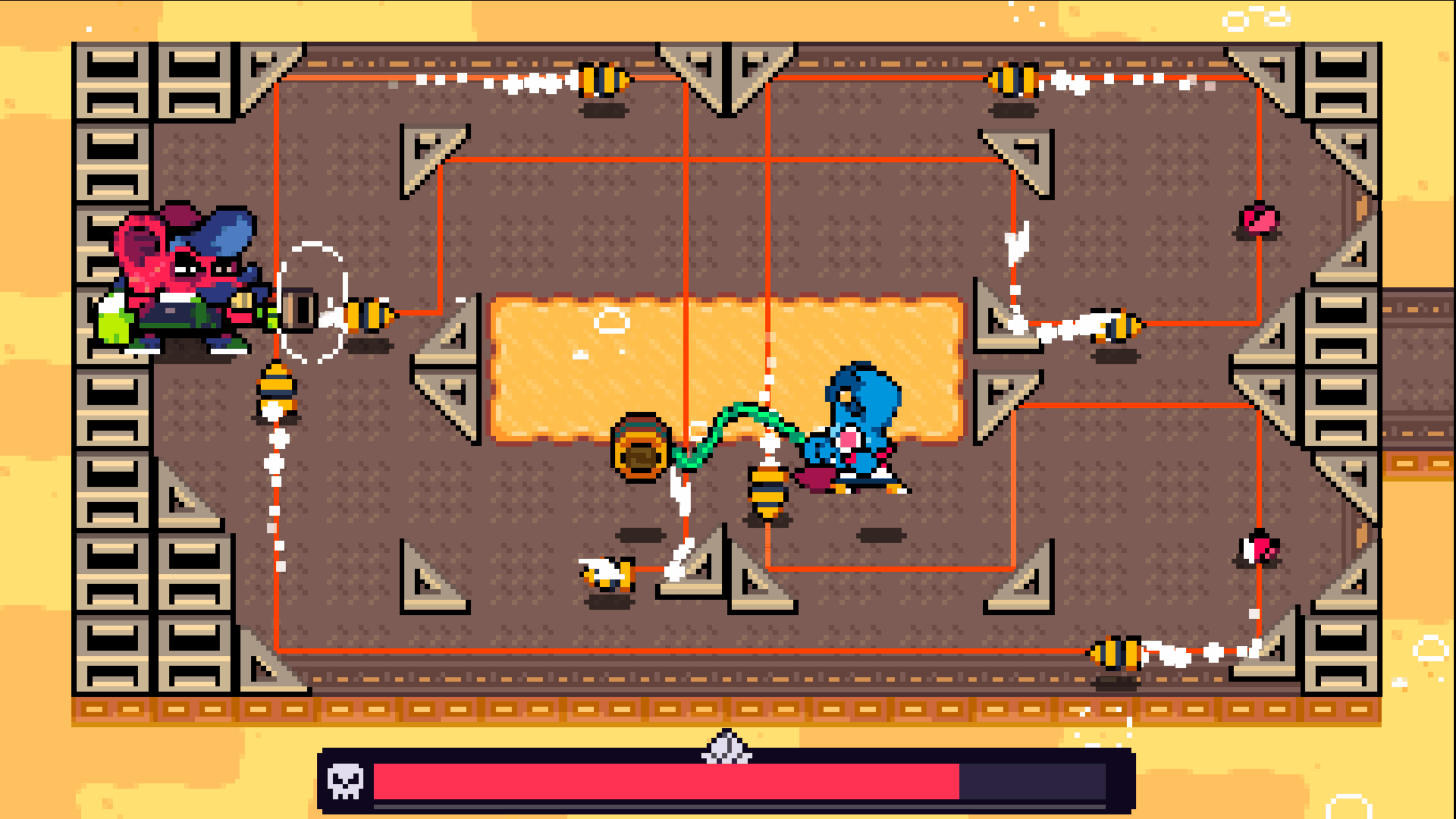
My only real complaint about Pipistrello was its boss battles. There were technically five, while minibosses simply involved adding a new enemy to face going forward. Most of the boss battles felt like I was against an overly spongy enemy with tons of health and able to withstand seemingly endless hits to the face with my little yoyo. While there were a few with some phases where they changed up the attack patterns and environments, I wanted to face a greater variety of bosses throughout the game instead of the small but spongy baddies I faced.
That said, Pipistrello was a treat. An absolute treat of a classic adventure game that leaned into its yoyo fantasy unlike anything I’ve ever played.
Pipistrello and the Cursed Yoyo is a marvel of a little game that wins at being a “yoyovania.” The yoyo combat and progression are superb, its level design utilizing novel traversal elements without repetitious fluff, and its charm is off the charts. It’s no walk in the park, but it’s worth the payoff if you want a game that is a nostalgia bomb of classic Zelda fused with a yoyo thematic.