

Phantom Breakers: Battle Ground Ultimate is a ridiculously hyper 2D beat 'em up, reworked from the original release. Eschewing complexity for vast hordes of fist fodder, the ability to play with numerous others makes for an entertaining slug fest.
The 1990s taught us that beat ’em ups didn’t need to engage in a lot of complexity. Instead, developers merely needed to slap a license onto a title and let kids beat the shit out of semi-recognizable pixels as their favorite, intended characters.
I could not tell you much about the Batmans, Ninja Turtles, Power Rangers, X-Mens, and countless other heroes and cartoon characters that walked around streets and spaceships and elevator shafts. Just that I was controlling them. And as those characters I watched on television, got to beat the snot out of basic enemies until a more recognizable boss popped up to further pummel.
Phantom Breaker: Battle Grounds Ultimate is such a game. While the Phantom Breaker license may not ring any bells for most–and it certainly didn’t for me–the game is also an updated version of a game released a decade ago. It is a pure beat ’em up that has a feverishly basic plot stretched into mildly incomprehensible complexity. It has, what I assume, are recognizable characters clashing against each other. But, most importantly, it features hordes of enemies, dozens of them at once, to clobber.
Forged in an era that brought classics like Castle Crashers and Scott Pilgrim vs. The World: The Game, Phantom Breaker: Battle Grounds was released in 2013, a spin-off of the fighting game Phantom Breaker. But is that history really important in the here and the now? Sort of.
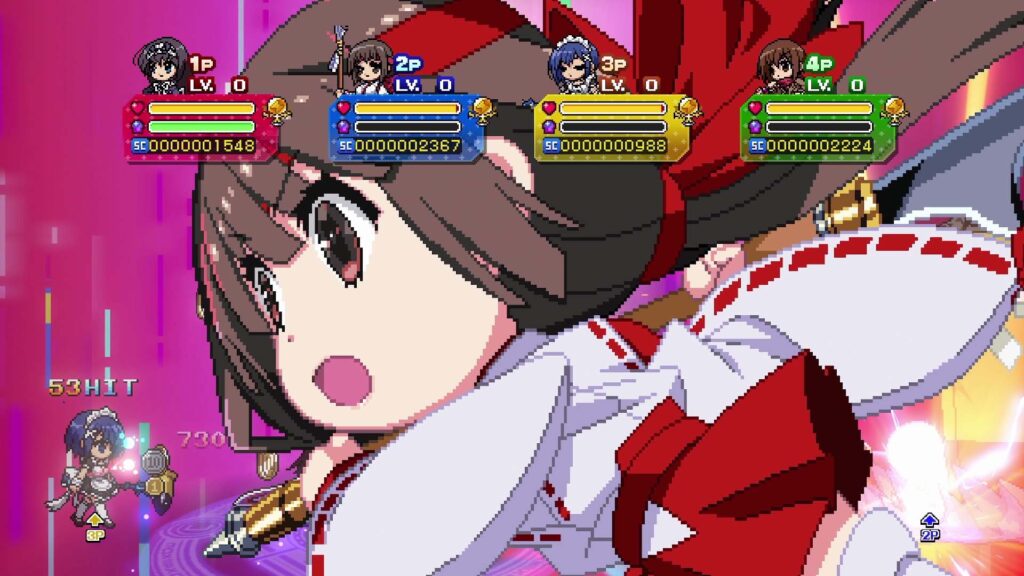
Ultimate has been rebuilt from scratch using the Unreal Engine 5. Having not played the original 2013 release, I can’t attest to how the updated game feels in contrast. But based on screenshots and videos of the original, you can tell that there is care put into the sprite animations and pixel art, yet it looks somewhat unrefined. Ultimate boasts all the benefits of being crafted using UE5, in terms of visuals and performance. At no point did I run into significant input lag, slowdown, stuttering, or framerate issues. Considering the sheer amount of action that can be inflicted on-screen at once with multiple playable characters, it’s a noticed accomplishment.
Smooth gameplay is complimented by the pixel art employed for Ultimate. Despite the foundation being ripped up and redone, developer Rocket Panda Games has managed to preserve a “dated” look in terms of sprite animation. And that’s definitely not meant as a slight. Static and single-digit character animation frames and movements when striking poses have a kind of chunky charm to them, a stylistic choice over one made deliberately due to limitations. The pixel work here is decidedly bright and noticeable, where some scenery and characters have sharp, angular touches.
It may sound like a dig but Ultimate aims for a classic look without striving for over-polish. Its cast of powerful, magical schoolgirls and the numerous grotesque opponents revel in this kind of artwork and action. And while the numerous baddies tend to blink out of grey existence rapidly, I still appreciated every time I saw a strange human with exaggerated features pop into frame.
As is often the case with a large portion of beat ’em ups–even the best of ones–the barebones story may provide a handful of quips and moments that induce some kind of reaction based on the player’s attentiveness and proclivity to not mash through dialog.
The handful of hours containing the made story mode of Ultimate is about a group of four girls attempting to rescue the sister of one of the group. She’s been kidnapped by a mysterious man known as Phantom who is hoping to absorb the girl’s power for nefarious deeds. Cue dimension-hopping and a revolving door back and forth between bosses at the end of chapters to progress the narrative.
The fact that most of the game is fully-voiced truly surprised me. The girls are voiced with a sugary sweet tone packed with snark and if you’re patient enough for the limited runtime, it’s worth it to soak in the absurdity. But again, the story, while not necessarily an afterthought, is relatively sparse. And I’m certain fans of the Phantom Breaker property are likely to enjoy the platter served to them, it really is about
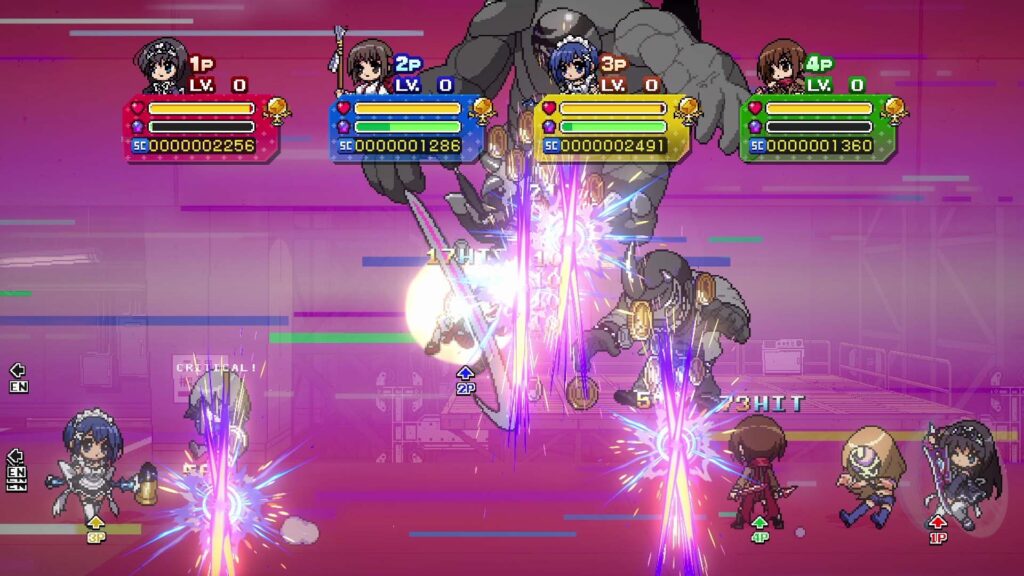
Being a beat ’em up, Ultimate is relatively complex. I think crashing through the story on Normal difficulty may seem like a cake walk for numerous experienced players. Enemies can be deleted in a handful of quick attacks and the entirety of the campaign can be cleared in a few hours.
There is an argument to be made that Ultimate feels like a button-masher because that basic quick attack shreds. And that notion doesn’t entirely change when spamming attacks. But interestingly, the game leans more towards a fighting game in both combat and control. This is exemplified by jump not being mapped to its own individual button but by moving the directional pad or left stick upward. Initially, it feels like a stark reality and makes jump attacks a touch awkward.
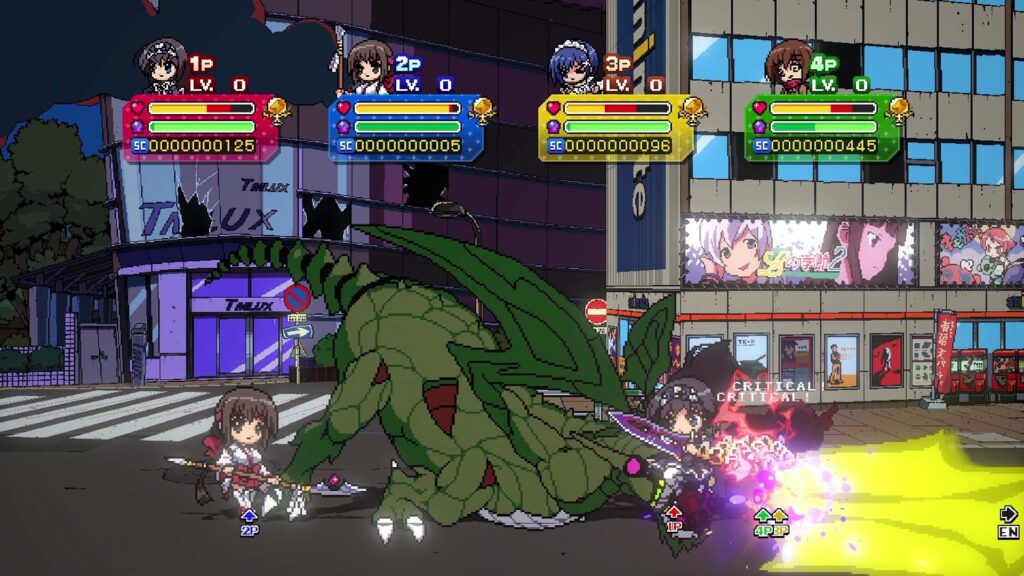
When players wrap their brains around that truth after a few minutes, Ultimate feels better. Light, medium, and heavy attacks can be mashed, but also chained together to unleash combos on dense groups of enemies that hone in on the player. There’s a power meter than grows over time and emits devastating attacks. And each of the four main playable characters in the campaign have their own unique moveset.
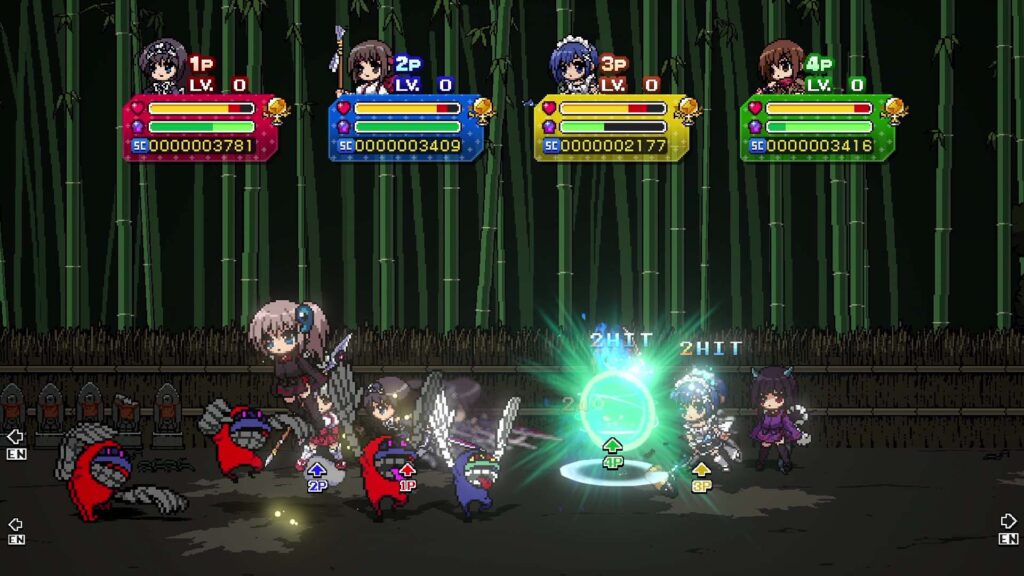
Players level up their character at the end up every stage and can invest points into the three base attributes of strength, speed, and defense. From there, a suite of special moves can be unlocked as well, spilling out more complexity. Double or triple jumps. Backwards attacks. Dash attacks. Heavy combos. Power grabs. These all add to the player’s capabilities and may seem like overkill on all but the hardest difficulties.
The complexity is really what I enjoyed about Ultimate, especially on my stroll through Nightmare and Nightmare+ difficulty. There were frustrating times where my character would be stun-locked and I had to remember that not moving the control stick could block some attacks but that I had also unlocked grabs and other abilities as a kind of jailbreak. And that grind might not be for everyone but leveling up each main character is a fun task that doesn’t become a slog because of the game’s feverish pace.
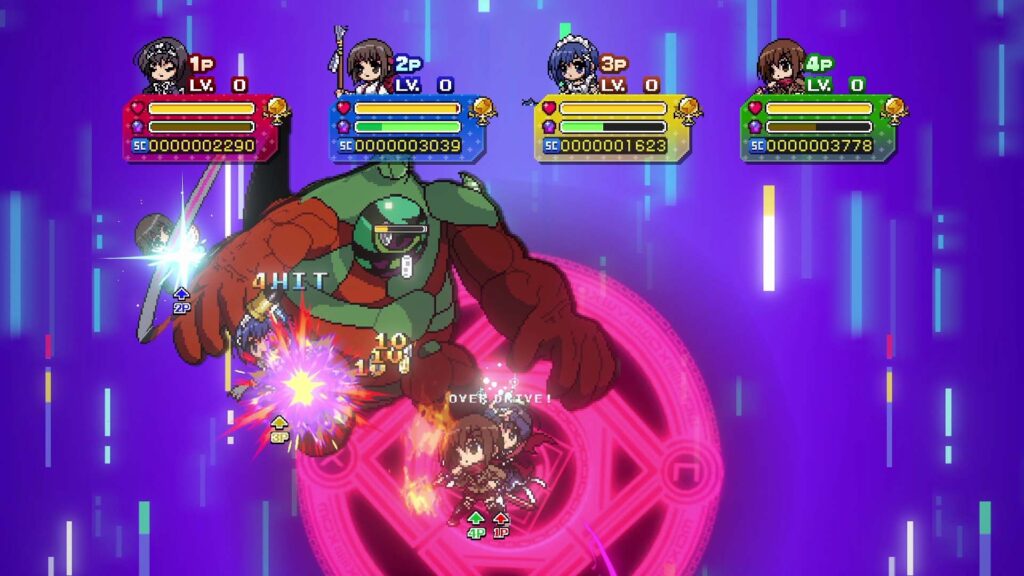
However, players should also be interested in the packed online capabilities of Ultimate. Being in Unreal Engine 5, players can expect cross-platform play online. Why play the main story by yourself when up to four friends can join on the couch? But online any cooperative mode can contain up to six players, meaning literal chaos when the fights get heaviest. And, because the game does adjust for the amount of players, the amount of congestion is hilarious fun.
An Arcade mode acting as a kind of stage and time attack throws players around the game for some simple fun. But Battlegrounds is where some of the dumbest, goofiest entertainment is to be had. Imagine that horrible fighter mode in Double Dragon on the NES but actually good and with eight people beating each other up at once. Rocket Panda has made every boss and enemy playable–yes, that includes the massive trucks and mutants that take up a third of the screen–and allowed them to not only fight each other but play through levels, albeit with a limited moveset.
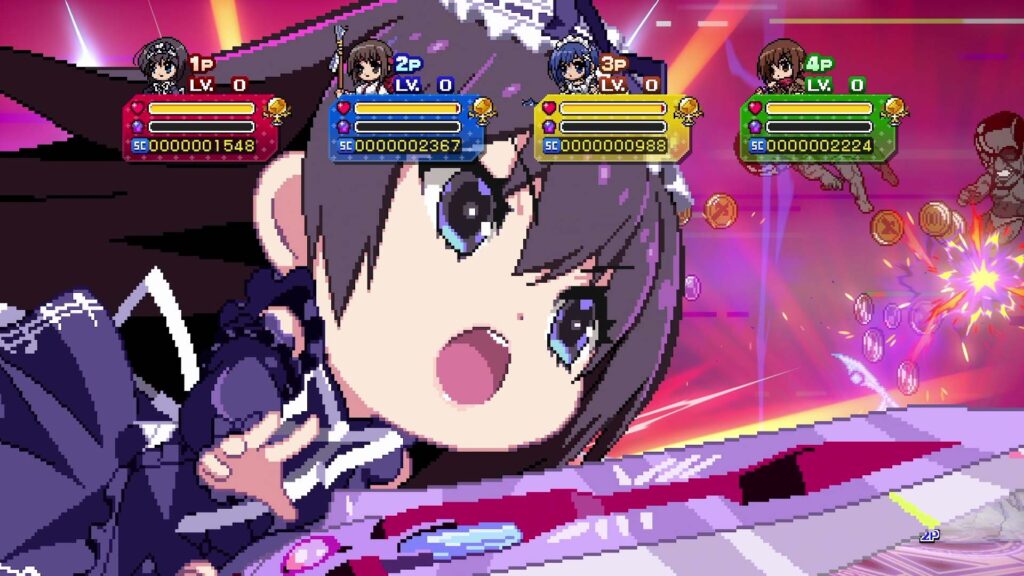
There’s a distinct thrill in turning Ultimate into a kind of party game where groups of players just jump in for as much unbridled chaos as possible, ensuring a good time that might not be serious but is definitely fun.
Phantom Breaker: Battle Grounds Ultimate, like many beat ’em ups, is not rife with complexity or plot. But it possesses an undeniable spirit in its chaotic joy, begging to be played by a group of friends wanting to churn through groups of enemies and watch the screen shake with fury. It’s an homage not entirely to the past but to the simple thrill of fun.