

Colorful and creative best describe this game.
Monowave, from developer Studio BBB Inc., is a colorful puzzle game that uses emotions as gameplay mechanics to guide a cute character through a complex landscape. The game challenges players to use their noggin to figure out how best to navigate puzzles using those emotions. While the game is more of a sip than a gulp, its complexity and challenge make it feel like a worthwhile venture throughout.
Let’s get right into it.
The story of Monowave follows a guardian spirit of Emotions named Mono. Mono’s quest is to help restore an ancient tree called the Prism Tree, which housed Emotion Shards. The shards broke within the tree, causing the tree to wither without them, so Mono seeks to restore them and, in turn, restore the tree. Without both, the land Mono lives in will fall into utter chaos.
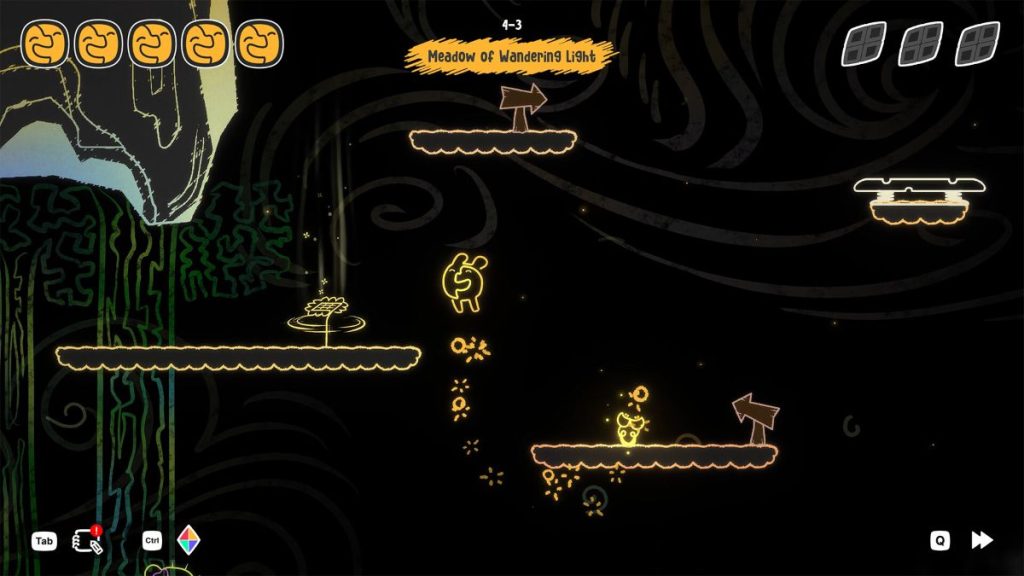
Narratively, Monowave is a cute tale that gives the game just enough purpose to run on. For these types of games, just enough story is plenty. Any good puzzle game of this type typically doesn’t run too deep with narrative. Loco Roco is one example that just pushes enough narrative to give the player a reason to run through some puzzle-filled fun. No Kojima Productions exposition needed. Monowave feels like that game, giving the journey a reason and then setting the player off on it with the occasional reminder of the story. Again, it’s enough.
As for gameplay, the devs at Studio BBB, Inc. spent more time on this part of the design, and they did so with diligence and intelligence. The game balances two gameplay functions: presenting the player with an obstacle-driven landscape that requires careful navigation, and emotions that drive those puzzles. These two gameplay elements drive the entire experience, and they do it well.
Starting with the tools Mono is given, the main character is given emotions that drive how they function and how they are shaped. Anger, Anxiety, Happiness, and Sorrow are four tools that help push Mono through puzzles. Each serves a specific function and lets Mono traverse certain landscapes. For example, when Mono is turned into Anxiety, they can walk on needles and pokey landscapes, or get propelled into the air by chompy monsters without damage. With Anger, Mono can jump off walls and deliver an angry move and demeanor when it calls for it. The player is expected to switch to the right emotion to progress in the game.
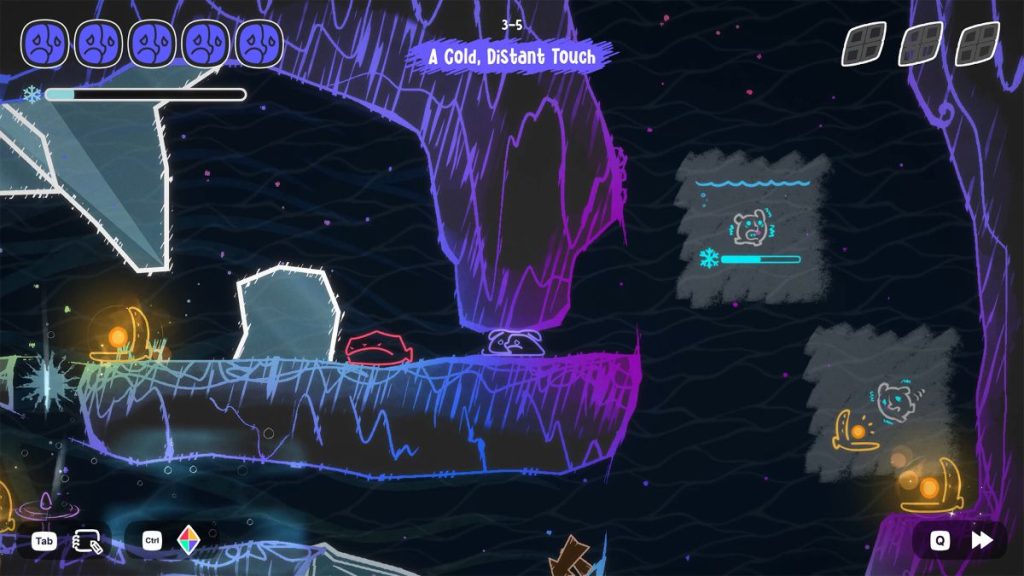
While the emotion-switching process is easy- just pushing a button- knowing when and how to do it makes the puzzles more of a cognitive challenge. The game’s maps aren’t laid out straightforwardly, as players might find a green prickly cactus that Mono has to jump on top of, and then quickly have a yellow platform that they must jump up to (yellow is for Happiness, and Mono jumps higher when in this emotion – literal jumping for joy). As the game progresses, the puzzles demand more from the player’s reactions and require them to dig deep to see which emotions work best to get past things, even creating a juggling situation between emotions. The game’s gradual difficulty is well-placed, and the difficulty arc curves nicely as the game progresses.
There were some incredibly complicated moments where I had to stop and think exactly how to progress through a level. For example, there was a moment when Mono had to go underwater, squeeze into a flat crevice using the Sorrow emotion, then navigate back to Anxiety to safely move back to the surface, and then find a way to turn a butterfly flapping back and forth between the two bodies of water into Anger. And yes, you can pass emotions on to objects and creatures, as well as steal said emotions from objects and creatures in order to successfully move on within a level. That’s a neat side element that plays well into the game’s puzzle design and makes its complicated designs easier to appreciate and tolerate.
Anyway, flipping back and forth with emotions, gradually navigating more difficult landscapes, and running into far more challenging scenarios that eventually involve changing the emotions of characters and creatures makes for a fun time. If you enjoy puzzles, this game will certainly scratch that itch.
Now, is Monowave all sunshine and rainbows? Not at all. If players aren’t expecting puzzles that gradually get more complicated and drive most of the gameplay, they may take this game in what I call ‘sips’ rather than giant gulps. The puzzles can frustrate even the best puzzle-solvers to the point of wanting to pause and take a breath. I can tell you firsthand that I had a few moments like this in the game, when I went back and forth with this title, felt truly stumped on how to navigate a level, and sometimes needed to back off and cool down. In short, the game shouldn’t be taken lightly in its design, and players should expect stop-and-go progression because of its difficulty.
Of course, puzzle games should be designed this way, since players wouldn’t want to breeze through a game like this in a day. But sometimes I felt the difficulty was too great. Granted, that could have been me and my own intelligence (lack thereof) getting in the way. At the end of the day, that difficulty was noticeable but not a complete hindrance. It just meant the gameplay progression was slower than I expected or wanted. Again, that might be a ‘me’ problem.
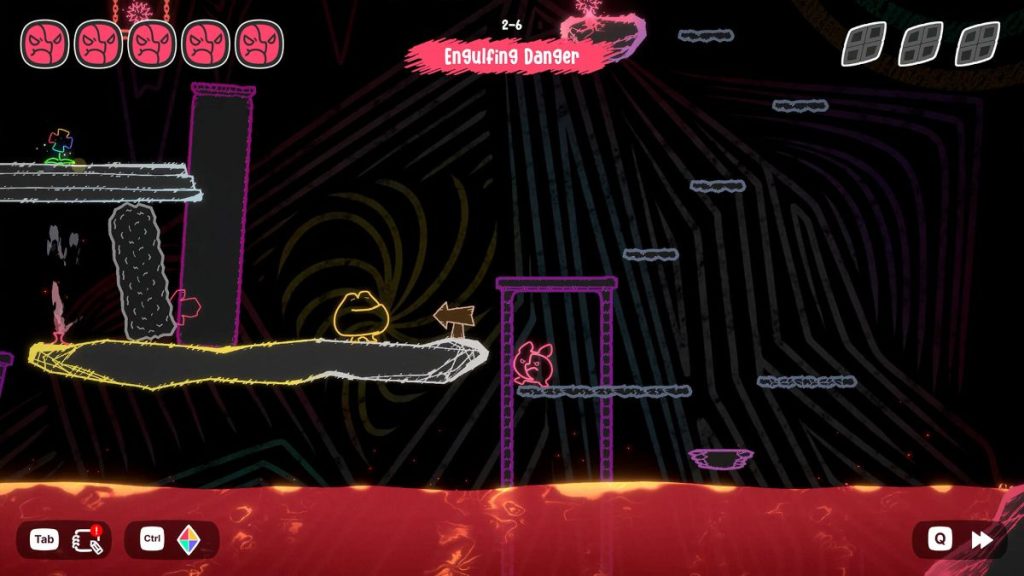
Overall, Monowave’s gameplay is impressive because it is challenging. The balance between emotions and how obstacles/puzzles are designed and navigated is impressive, as it is complicated. Studio BBB did a fantastic job designing this game with creativity and care. The occasional ramped difficulty is the only hiccup in this giddy-up.
On that note, let’s wrap up this review.
Conclusion
Monowave from Studio BBB Inc. is an incredibly creative, addictive, and fun puzzle platformer. It has amazing level and puzzle design, wrapped in a cute, simple narrative. The game ramps up the difficulty at times to offer a frustrating challenge, but nothing that goes against what the game is trying to achieve.