


Marvel’s Wolverine does not reinvent the superhero action genre like other games in Sony’s portfolio. Instead, it violently refines it with flair and demonstrates how Insomniac has become fluent in beautifully brutal combat. You’ll walk away fully satiated with the presentation, even if there were some missed opportunities to take Logan’s stealth sequences and broader skillset further with the PlayStation 5’s DualSense controller.
Like many children of the 90s, I’ve grown up with Hugh Jackman as the quintessential Wolverine. From his 2000 debut in X-Men to his surprise dual-protagonist role in 2024’s Deadpool & Wolverine, he’s shown up time after time as the unkillable, unstoppable, and downright feral mutant with retractable steel claws. Jackman and I may have grown older over the years, but his portrayal as Logan (the preferred name of the man behind the pointy yellow mask) has been timeless. Boy, this introduction utilizes far too many commas.
I was worried by the initial 2021 announcement of Marvel’s Wolverine. I couldn’t shake the fact that anyone other than Jackman would be the next generation of Wolverine. But, as I’ve spent the past two weeks playing the game on my PS5, I’ve come to the conclusion that Liam McIntyre slays this adaptation of the centuries-old mutant.
Insomniac’s Spider-Man franchise pushed the envelope of action-adventure titles with its gigantic sandbox that is New York City, naturally exhilarating traversal, and fluid combat. I walked into Wolverine expecting a similar level of bar-raising gameplay, but I was unsure as to what and how. Initial previews showed Wolverine as feral (as he should be), but with a limited set of deadly skills. There’s only so much that can be done with a melee fighter who claws his way through just about anything, meaning that there’s a legitimate risk of gameplay becoming stale after a time.
I won’t mince words, bub, Insomniac absolutely nailed the animalistic rage and brutality of Wolverine. I hate the oft-used phrase of “you feel like [character] when playing,” but it’s hard to ignore that the essence of Wolverine is present and taken to satisfying heights with Marvel’s Wolverine. It’s largely thanks to the combat that mostly holds up all the way to the final boss.
The Wolverine is agile, brutal, and full of uncontrollable rage. Most combat sequences involve waves of enemies that appear out of every nook and cranny. Wolverine can start out with a combo of slashes, then effortlessly leaping onto a sniper across the room (with a single button press!) to stab him into a bloody pulp, then returning to the original spot to whirl like a tornado that tears enemies’ clothing and skin to bits. The initial few hours of gameplay will feel like button mashing, but it’s exhilarating button mashing that feels satisfying as hell.
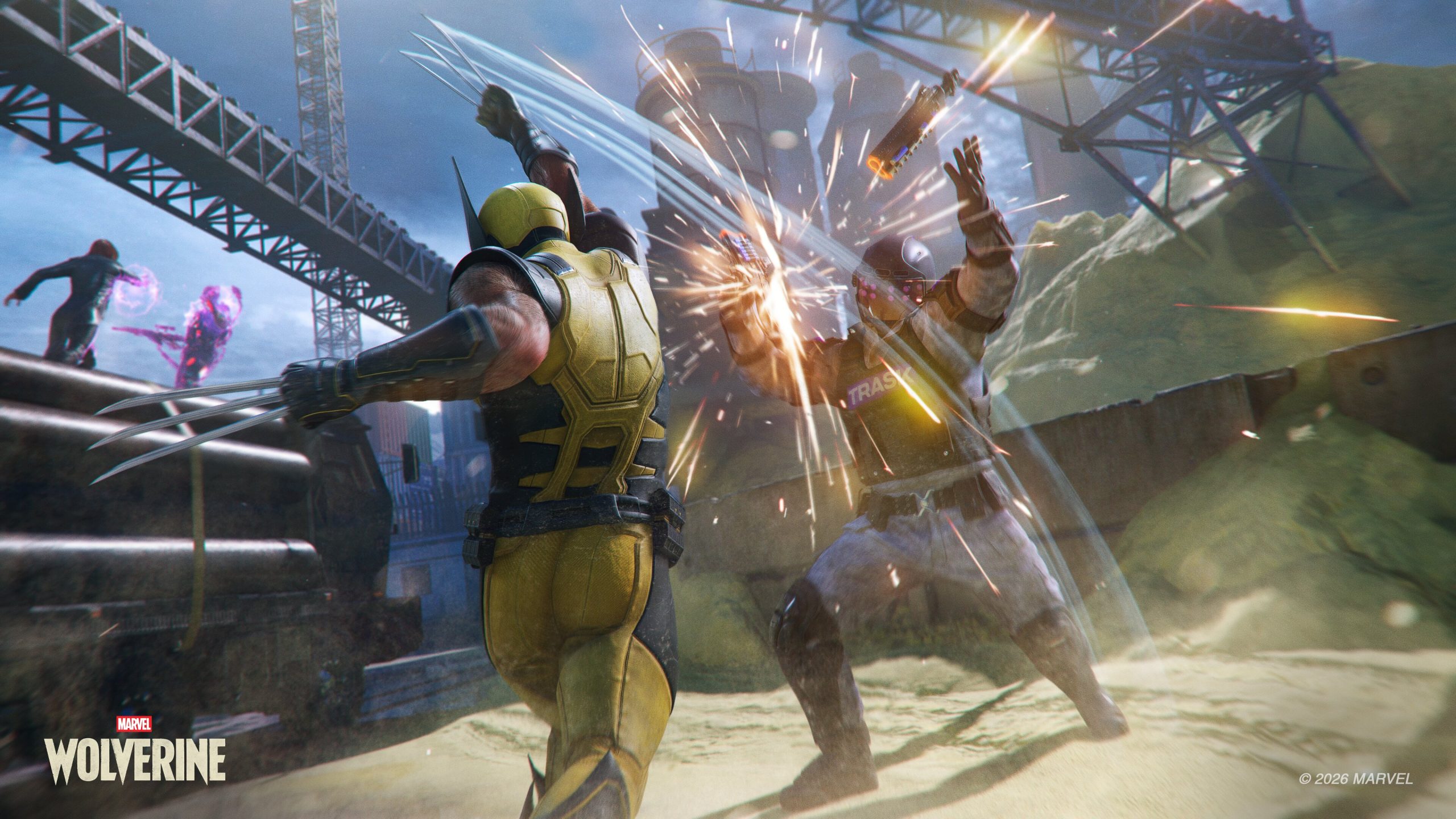 Wolverine’s identity as a nearly unkillable rage-fueled monster is fully realized. Attacking enemies with combos and defeating them builds up rage. After enough rage is accumulated, the scene turns to greyscale leaving only Logan and his enemies in color (along with blood, of course). That black-and-white rage period lets Logan immediately execute low-health enemies by tearing their limbs off. Blood splatters in every direction. Weapons are turned against their holders, assuming the Wolverine hasn’t already sliced them into shiny metal bits. If Logan takes fatal damage while that Rage bar is full, he fully regenerates his health…thus continuing the carnage with reckless abandon.
Melee attacks are the primary methods to Logan’s madness, but several upgrades boost his arsenal. There are six additional attacks that can be unlocked, but only four can be equipped at any time. Other techniques give Logan permanent power in the form of new parries and combos, but that’s about it. Again, there’s only so much creative space that can be leveraged without compromising Wolverine’s longstanding identity. I wouldn’t have minded more unlockable attacks, though. A ranged attack with an ultra-long cooldown would have sufficed.
By the end game, much of the combat focuses on parrying rather than brute force button mashing. I didn’t expect this much emphasis on parrying, but it works Logan’s favor when he sets his claws aflame with fiery energy, counter ranged attacks, and tear weapons out of enemies hands…assuming the limbs aren’t torn off, as well.
Oh, and those boss battles? They start out as spongy affairs but turn into showcases of brutality. They pushed the envelope of pitting the Wolverine against larger and deadlier threats without too much repetition.
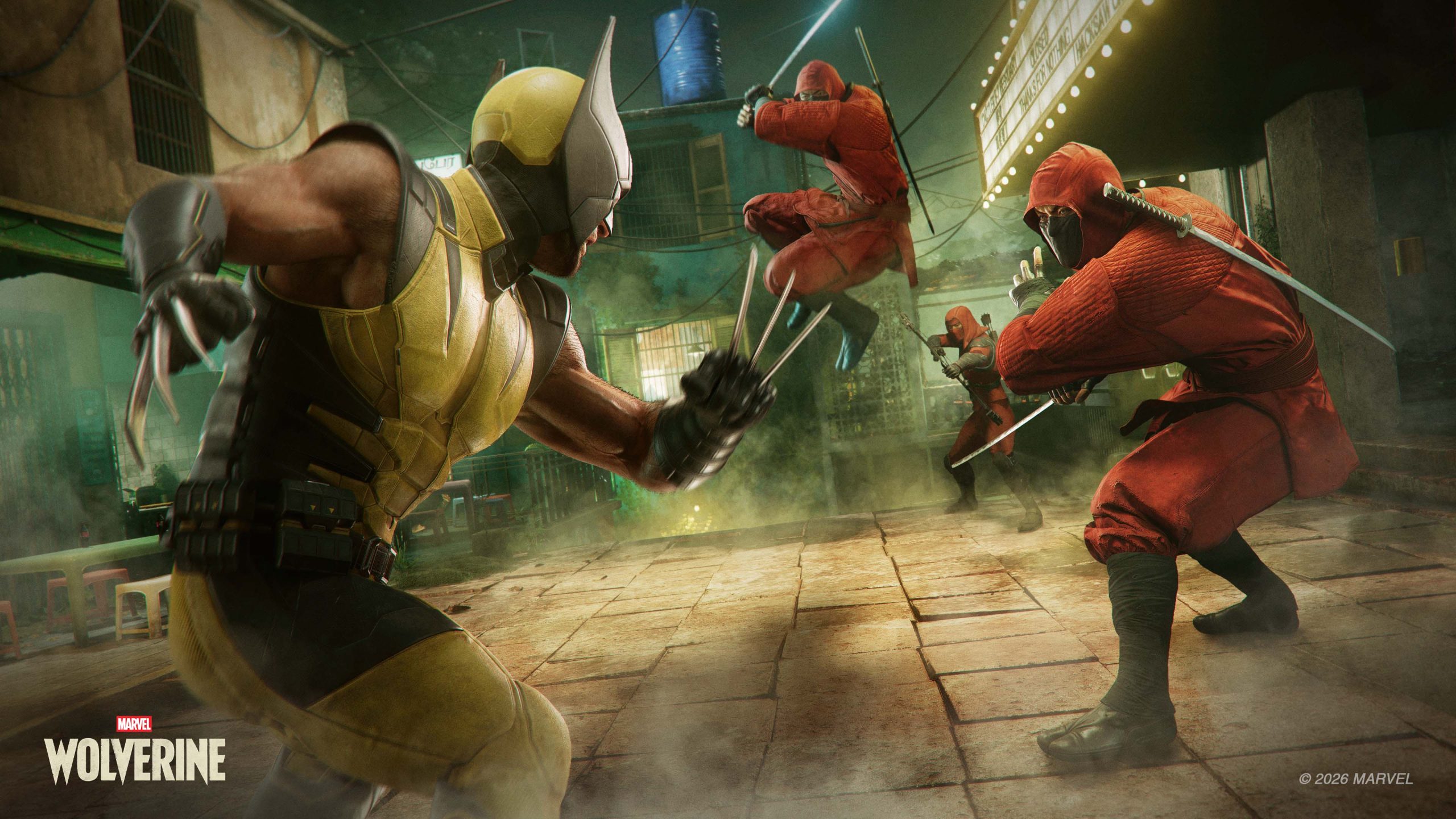 The traversal started out as flat out unintuitive, though. Running/acceleration is bound to the R2 button, forcing me to relearn longstanding movement inputs. Despite that weird decision, I had no trouble locking onto enemies and/or objects when climbing. The handful of traversal challenges had the same degree of fluidity as Marvel’s Spider-Man, but without the web slinging. Climbing walls and jumping from building to building felt effortless and intentional. There were no pixel-perfect requirements to be found, thankfully.
Marvel’s Wolverine uses self-contained episodes that serve as its levels. Rather than a singular massive city ala Spider-Man, Logan is taken across continents and biomes of varying layouts. Confined spaces mean that Logan has nowhere to run; larger arenas act as sandboxes where Logan can freely move and slash without restriction. It’s a refreshing change of pace that makes the game feel episodic rather than a true open-world. At the same time, things will feel quite linear, but that linearity allows the player to focus all their energy on enjoying the game’s combat instead of walking through a massive space of nothingness.
Some of my biggest complaints about X-Men and X-Men-adjacent storytelling is its frequent story beats that ultimately come down to the mutant race attempting to legitimize itself in a human society that hates their existence. Longtime antagonists like Magneto, Bolivar Trask, William Stryker, and Mister Sinister have wildly varying motives that can be distilled into tipping the scales in one way or another. Some of that redundant storytelling has made its way into Wolverine, but it’s overshadowed by a constant push-and-pull of Logan dealing with his own internal demons.
It works, at least here, but it shouldn’t be repeated for a future Wolverine game. I know that Stan Lee’s original intent of the X-Men was to feature social commentary on discrimination through the lens of mutant injustice, but there is more to play with in this storytelling space to showcase the depth of Marvel’s universe. Logan’s stories are compelling insofar as the focus is on him, his past, and his relationships with other characters. As a lone wolf, he is forced to grapple with what he remembers of his past; as a team member, he’s caught in a web of indecision and trust issues.
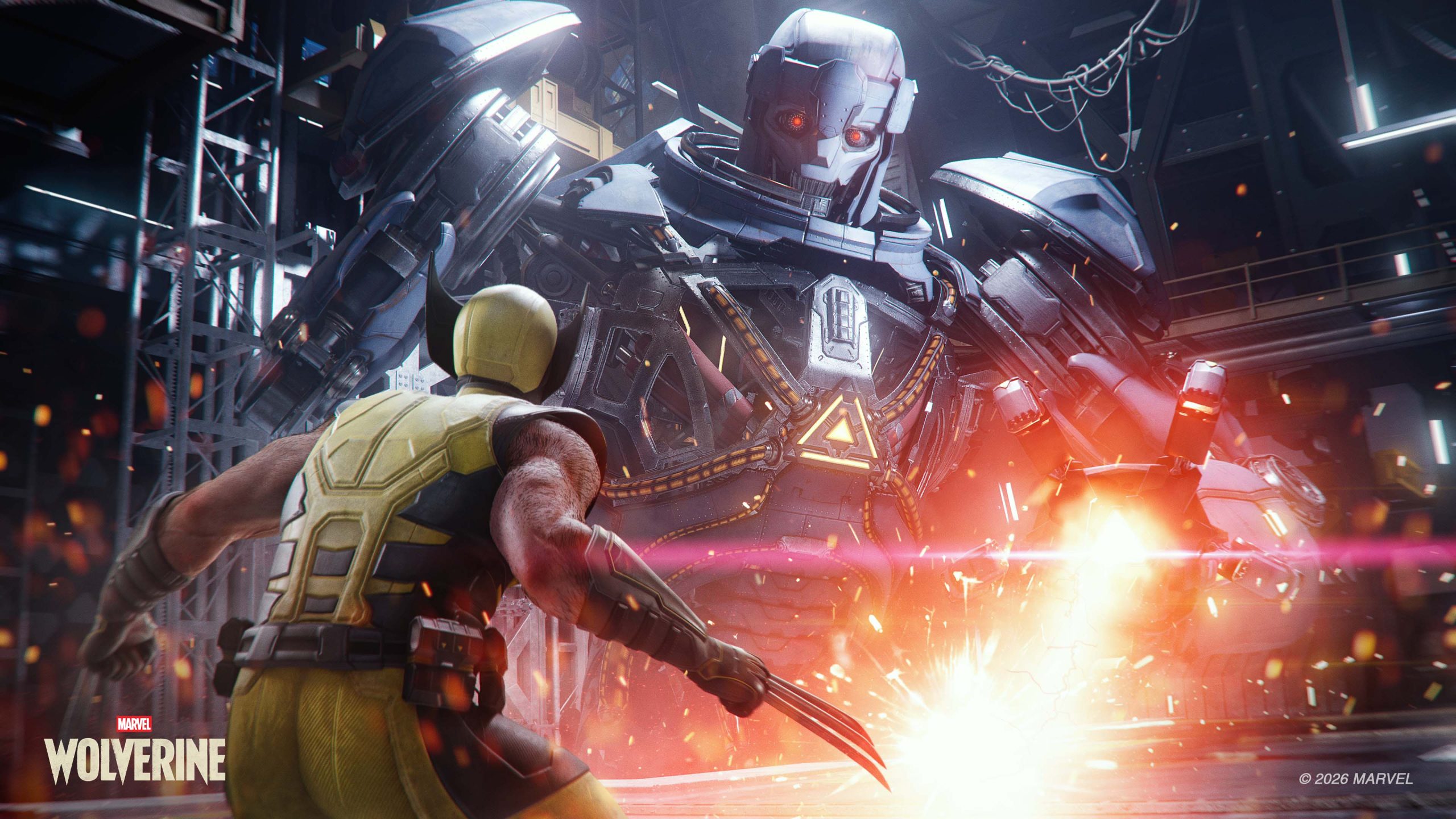 By not focusing on Logan’s origin story, Marvel’s Wolverine elevates itself from other superhero tropes by accelerating the pace of its storytelling. Logan’s relationships with other members of Team X (Mystique, Sabretooth, and Nathan Essex) are pre-established and given a rightful focus to balance out an underlying story of Logan’s own man vs. monster conflict. Some mini arcs are refreshed altogether (namely Mystique’s relationship with the rest of Team X) while one arc featuring an oft-utilized antagonist gets a unique jealousy spin during the game’s bloodiest boss battle. And I haven’t even gotten to Jean Grey – she’s something special.
The player is not forced into a massive backstory with only a few hours to spare for current in-game events. The player instead gets to experience a current story, picking up bits and pieces of older history when it makes sense to do so.
This particular adaptation of Wolverine’s story is interesting. It doesn’t yet focus on the X-Men (as they may or may not exist in this universe) nor is it an in-your-face reminder of this story taking place in the same universe as the previous Spider-Man games (it does). There’s just enough breathing room given to the cast to ensure that their motives and evolutions are made evident without plot-armor shortcuts. There are some similarities with Fox’s X-Men movie arcs, but not enough for this game to feel like a carbon-copy of any of those movies. It’s an original-ish story. Heavy on the -ish, for you longtime Marvel fans.
At the end of the fifteen (or so) hours of playtime, not much is left to imagination about what’s next for Logan. Nearly all of the loose ends have been neatly tied up. Should you want to replay the game with everything you’ve obtained along the way, the New Game+ gives you the runway to do so. However, I was satisfied. I had unlocked everything I needed to get to the end without feeling like I was missing something. I had successfully completed the optional trials and felt like I had succeeded in surviving a gauntlet. I put my DualSense controller down…and began writing this review.
I don’t have a problem with the game’s length, even when considering some of that playtime is occupied by cutscenes. I put my controller down feeling fully satisfied by my experience. I have a feeling that you’ll also feel that way assuming you take the time to complete the Nightmare trials…
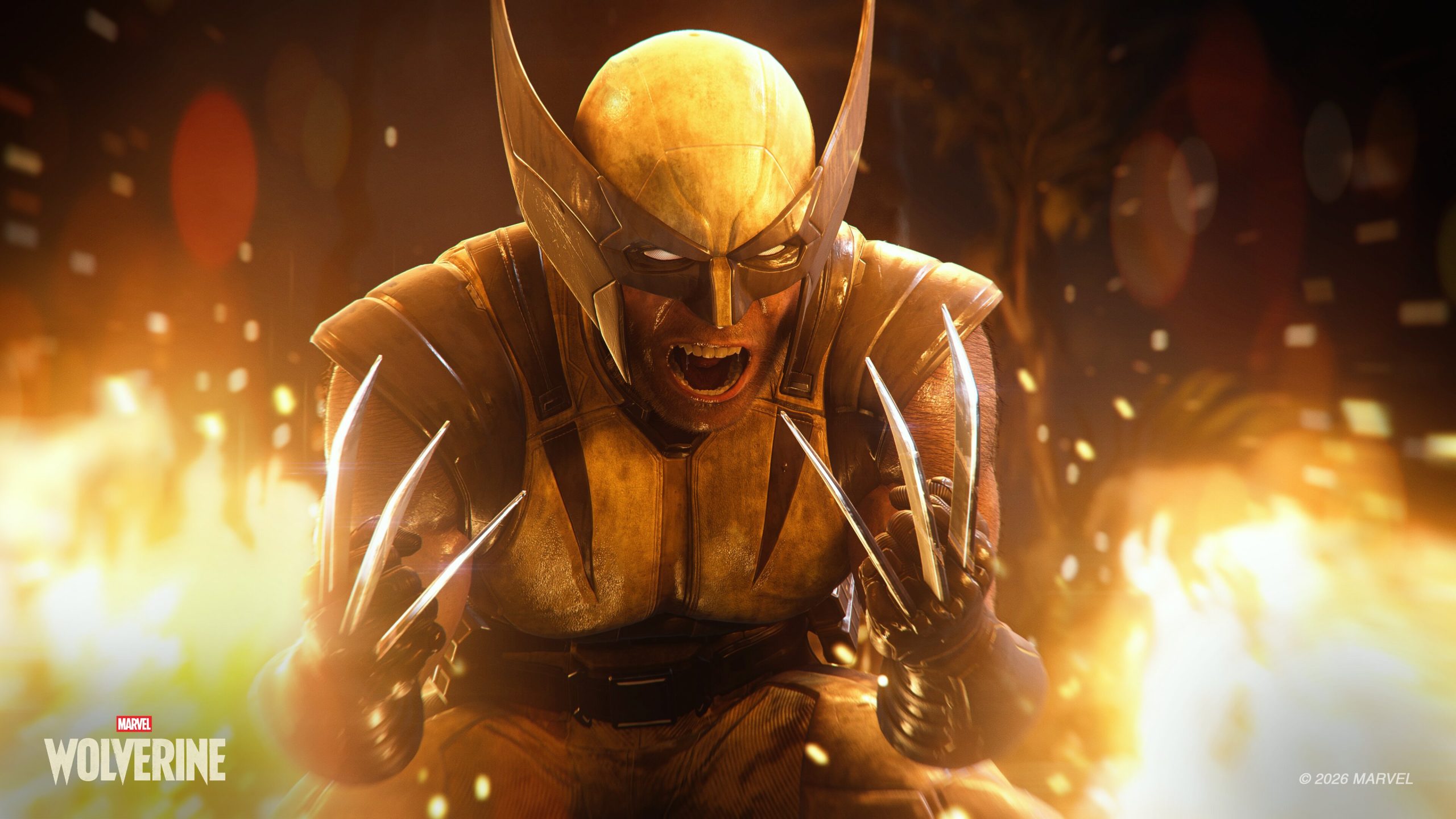 Perhaps this is technically a form of exhaustion, as Wolverine maintains a high-octane rhythm throughout most of the playthrough. I wouldn’t expect anything less, as my idea of thrilling Wolverine-esque gameplay involves a bloody ballet of gore and swiftness. To that end, this iteration of Wolverine feels incredible. Even with a relatively limited moveset that can be misconstrued as repetitious, I didn’t want to stop ripping through Reavers and ninjas.
The few times Wolverine pumps the brakes are flat out jarring, often interrupting the flow of full-throttle gameplay. Logan finds himself in a tunnel where his foes hope to melt his skin off his adamantium skeleton. He’s thrown out of a moving vehicle and attempts to hang on for dear life as that vehicle hurdles towards an imminent doom. He’s put in a position where he must slow down and have a serious conversation with a character foil who straddles the line between a mysterious threat or a love interest. It is during these moments where I, as the player, had to push Logan forward as though he was making his way through waist-high sludge.
I understand why these moments were added. I see the value in having these moments of extremities that contrast to Wolverine’s otherwise high-octane furioso. My issue lies with their implementation. After spending much of the game in a state of violent flow, being held back by artificially restrictive tendrils doesn’t feel enjoyable. Going from running to walking at a snail’s pace up a flight of stairs (only to watch a cutscene) draws out the inevitable storytelling where SIE has successfully staked their claim in modern gaming. I am fine watching a long cutscene. I am fine with cinematic quick time events that break up boss battles and make cutscenes interactive. What I am not fine with is drawing out gameplay that is better spent watching and experiencing.
Outside of the thrilling combat, there’s a degree of tracking with Wolverine’s advanced senses. Have you ever wanted to play a Marvel game where The Wolverine sniffs around? This is apparently it. That element of gameplay falls short in being satisfying: it is far too hand-holdy and lacks the “thinky-ness” that puzzle-based detective games utilize. Much of the tracking involves finding NPCs by following a bright blue line or consistent trail of bloody footsteps. It’s jarring to see this portrayal of The Wolverine as one who sniffs his way through hazy problems when his claws can’t cut it. I’m used to brute force Logan, not a Logan who follows his nose like a bloodhound.
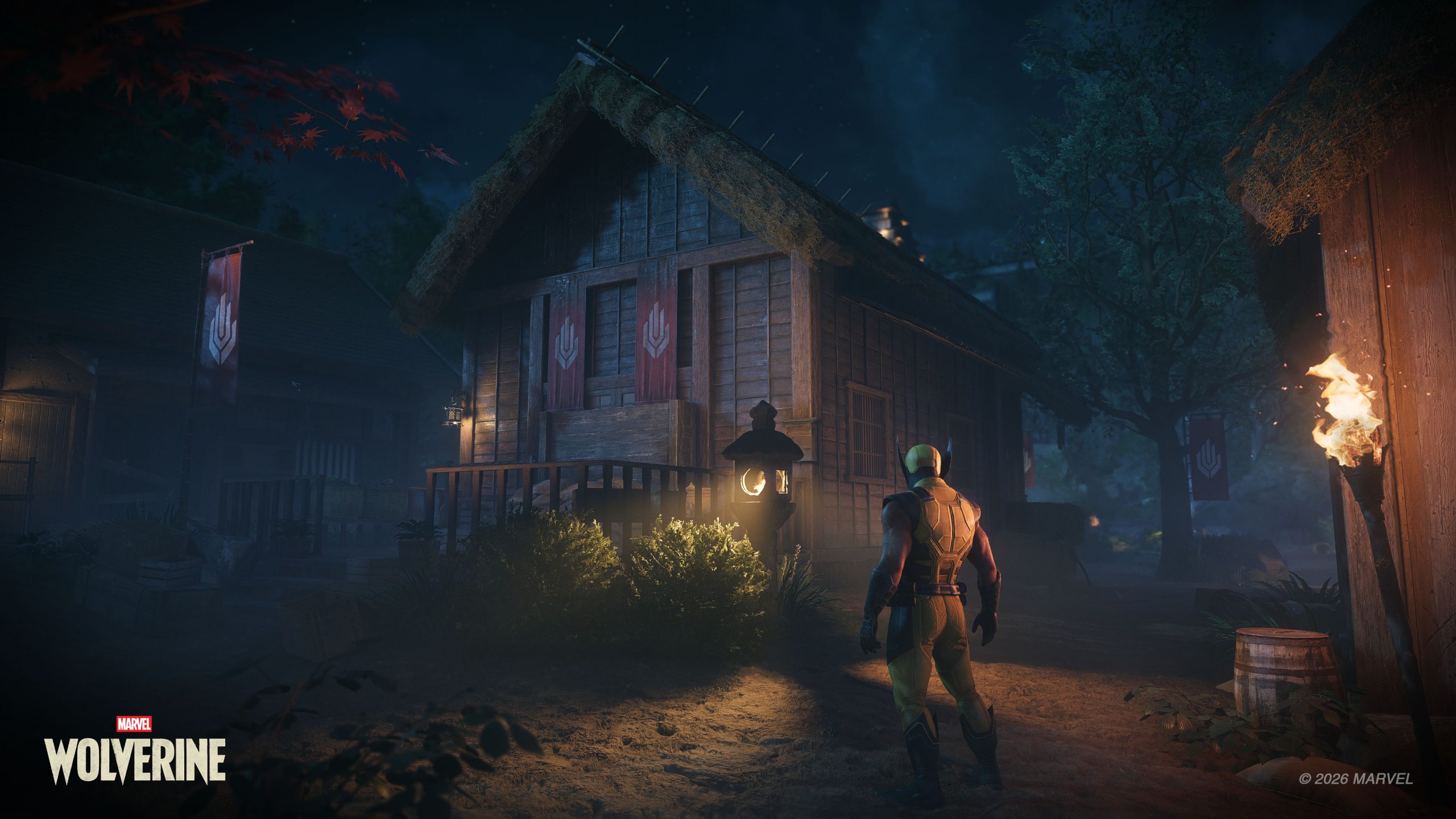 Finally, there’s a stealth-based element to Marvel’s Wolverine that isn’t fully utilized to its best extent. In some missions, I had the option of sneaking around through the bushes or jumping from branch to branch. After some careful positioning, I would leap down and impale an enemy and leap back to safety without any enemy noticing my presence. Later upgrades allowed me to take out two enemies in quick succession and tag in a partner who could distract larger groups for me to remain unseen.
These stealth segments feel innately satisfying. The traversal was intuitive to the point where I could hop from tree to tree, pole to pole, cliff to cliff, without enemies noticing my presence. Picking enemies off one-by-one was rewarding in that I remained deadly enough to kill while fully in control of my surroundings. It’s here where I got the feeling I was playing Metal Gear Solid V sans Kojima…except the stealth mechanics felt overly simplified.
I loved having the option to be stealthy, but I wanted more to do under the guise of stealth. I kept hoping for some degree of environmental interactivity, like setting something on fire to cause a diversion or using Logan’s retractable claws to pierce a pipe to create some cover. Stealth segments were binary in the sense that it was temporary; once my cover was blown, there was no resetting my enemies’ awareness of my threatening presence.
Don’t worry if stealth ain’t your thing, bub. You’re not punished for opting to take the bull-in-a-China-shop approach to taking enemies down.
If you’re coming from SIE’s other games, you’re probably familiar with the notion of a protagonist who talks to themselves while they travel solo. You know – Aloy (from the Horizon series) pointing out things on her own as she solves puzzles, Peter Parker calming himself down after taking down enemies, and Ellie (from The Last of Us) commenting on Infected all around her. Apparently, filling empty space with discourse adds color to worldbuilding. There’s only a smidge of that here, thanks to Marvel’s Wolverine leveraging cooperation between Logan and a small cast of companions that come-and-go. These companions add to the commentary and occasionally intervene in battles, setting Logan up for some thrilling tag-team combos. One companion will throw Logan towards a boss (breaking up the fight) while another might lift a baddie up to give Logan a window to execute them and quickly build rage. The cooperative combat aligns well with the fluidity of the overall game and makes the cast feel like they’re connected in some way.
Now, if you’re hoping for a novel implementation of the PlayStation 5’s DualSense controller, you’ll be somewhat disappointed. Wolverine doesn’t push the envelope of fully utilizing the DualSense like some of Sony’s other titles. Cutscenes have thoughtful haptics, of course, but there’s nothing novel like Housemarque’s SAROS that utilizes the adaptive triggers to unlock another layer of combat. There are some nice-to-haves in the form of using the DualSense’s speaker to find collectibles, but this feature gets rendered moot if you’re using headphones.
Even with the quibbles I outlined above, I enjoyed Marvel’s Wolverine to the point where I feel it’s a solid recommendation for a present day PS5 owner who craves bloody combat with equal degrees of thrills. I don’t see myself needing to complete New Game+ immediately given how I unlocked just about anything during my initial playthrough, but I can see myself returning to Wolverine in a few months to get a Platinum trophy. Maybe there’ll be some additional outfits beyond the existing array of unlockable costumes, too.
If you haven’t been following along this entire review, I’ll put my thoughts more simply: Marvel’s Wolverine isn’t a must-play of 2026. Instead, it’s a should play of 2026.
Marvel’s Wolverine does not reinvent the superhero action genre like other games in Sony’s portfolio. Instead, it violently refines it with flair and demonstrates how Insomniac has become fluent in beautifully brutal combat. You’ll walk away fully satiated with the presentation, even if there were some missed opportunities to take Logan’s stealth sequences and broader skillset further with the PlayStation 5’s DualSense controller.

