
While Marvel Tōkon: Fighting Souls features a deeply complex tag system, Arc System Works incorporates enough newcomer-friendly elements that practically every player can enjoy the bombastic entertainment of a varied Marvel roster beating each other up.
Hello, my name is Ben and I’ve never played a Marvel vs. Capcom. But this is a safe space, right?
And if we’re baring our souls, I have another confession. I am… mediocre at fighting games. Maybe decent after several hours of beating my head against a wall.
Perhaps that’s a disappoint to you, dear reader, one who purports to know me so well. Over the years I’ve made noble attempts to hone some semblance of skill where I could confidently hop into a lobby and not erratically mash my fingers against a controller, desperately hoping for a win against a player clumsier and more inexperienced than myself.
In middle school I once beat a friend at Street Fighter II. He was skilled enough. I had never played. He was pissed. My cheap cowering in a corner worked in successful rounds. I retired immediately.
As with any genre, fighting games can take practice. I’m familiar with dying dozens of times in difficult platformers and action games, memorizing combos and executing them just takes patience and time and lots and lots of practice… which is a currency I don’t have much of. Why pretend when I can merely dabble here and there in the genre from time to time and lament not having a fighting pad that won’t make my thumbs so sore?
So, I’m sorry Marvel vs. Capcom but Marvel Tōkon: Fighting Souls is my first. And honestly, I can think of few better training grounds than this flashy and spectacular game that is happy to guide me through hours of growing pains in the quest to be just a little better at this genre I wish I could be great at.
Difficulty is a challenging subject matter to tackle when it comes to games. Does Sekiro need an easy mode? Should we be able to pause the action if life interrupts while Elden Ring is happening? Honestly, developers can do whatever the hell they want to and inexperienced players can be left trying to figure things out. But when it comes to fighting games, I think it would be a mistake to always force a challenge on newcomers.
Any fighting game could be any player’s first noble attempt at embracing the genre and trying to excel. After playing Person 4 Golden and becoming hopelessly addicted to the universe, I picked up Persona 4 Arena knowing it was a fighting game but wanting to be around those characters again. I barely made it a couple hours. Yes, it was my fault for giving up so easily but I wasn’t having fun mashing the same buttons and dialing the CPU down to brainless levels just so I could get through some story beats.
Persona 4 Arena was also my first introduction to Arc System Works the developer behind Marvel Tōkon: Fighting Souls. The developer has spent decades in the space making excellent action games but has become known for titles like Guilty Gear and BlazBlue. My genre hesitancy has always been a difficult pill to swallow, especially when I see how fluid and expertly animated games like Guilty Gear can be.
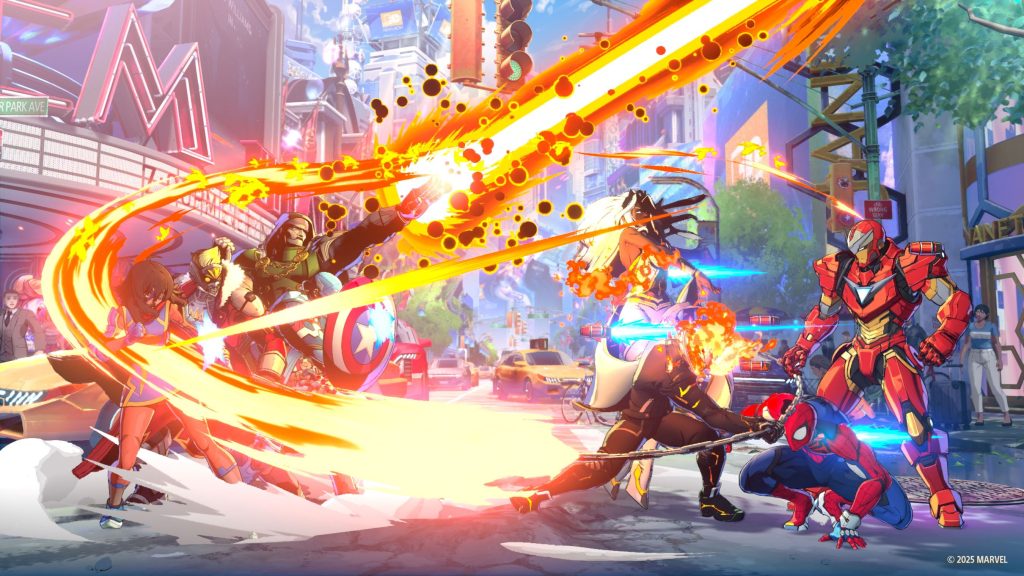
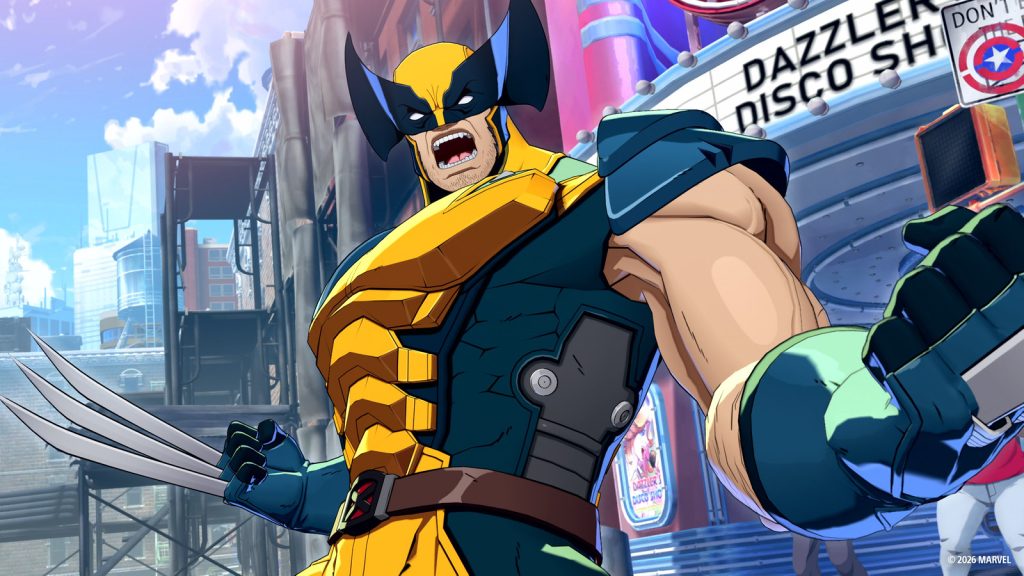
Marvel Tōkon: Fighting Souls feels like that perfect transition point for a number of players. The mass appeal of Marvel meets the expertise of Arc System Works in a genre where these comic book characters have been ferocious contenders for years. And when I saw the Japanese flair Arc System Works team had when interpreting Iron Man, Captain America, and Spidey, I knew this would be a game I had to try.
Back in 2023 I reviewed Street Fighter 6, the first Street Fighter game I’d touched since all those years back in middle school. Aside from Mortal Kombat, no other name holds the weight that Street Fighter does in this genre–it’s one of gaming’s legacy franchises. So it would make sense that Street Fighter 6 would pull out all the stops to get everyone interested and involved with it.
One of the things I commended Street Fighter 6 for was its robust campaign. It provided players the opportunity to get their hands on most of the roster while engaging in a wide range of fights of varying difficulty levels. It was mostly unserious and fun but also entirely unexpected in the genre. Open-zone combat areas where you could challenge almost any NPC to a fight? Custom characters that could be upgraded and equipped with the fighting styles of anyone? Amazing choices by Capcom that, at minimum, provided value outside of fighting other players across the world in online lobbies. Yet Street Fighter 6 also had deep training modes and the ability to understand and map out what every character was capable of. Ultimately, I spent several weeks soaking up the game and improving my form until I moved on to different pastures. I still remember it fondly, however.
Marvel Tōkon: Fighting Souls is an overall lean fighting game that focuses on putting players into the action but it also provides ample opportunity to newer and inexperienced players to brush up on their skills before diving into the deep end.
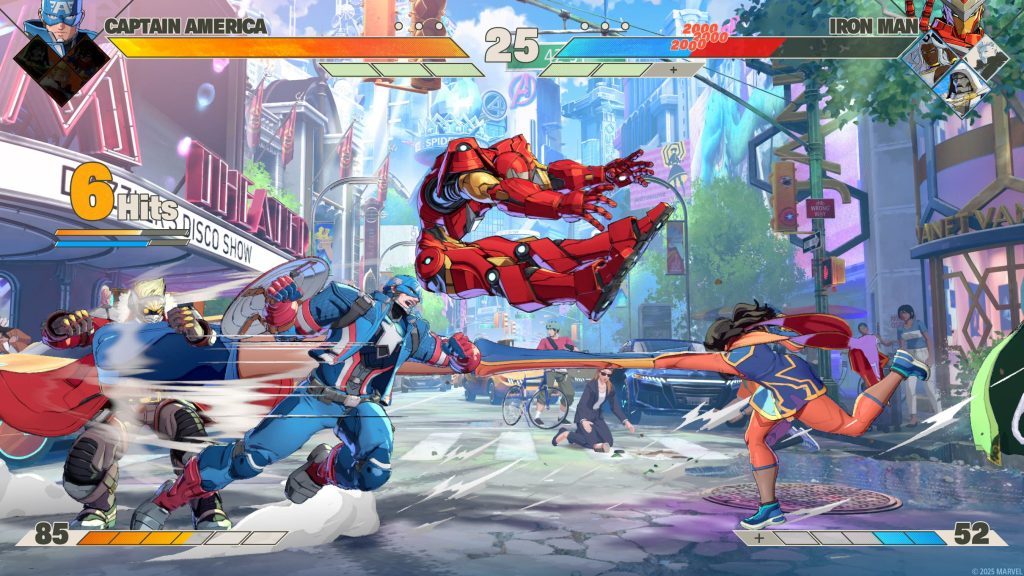
On a roster of 21 characters, players have an entire portion of the game devoted towards introducing the basics of each character, combo lessons that incorporate the game’s mechanics, and challenges that require specific goals to complete. Because I’m relatively green at this genre, my first training rounds were done with Ms. Marvel, Peni Parker, and Wolverine–melee-oriented characters that didn’t possess deeper fundamentals that were obviously way over my head.
Almost an entire afternoon that gave me literal sore thumbs was devoted to getting better at this trio. A few combinations I could nail without referencing the moveset on the side of the screen and a few times I improvised to the point where I was juggling the static bot and getting good damage numbers. While it isn’t the same as fighting against harder iterations of the CPU or a flesh and blood online opponent, I had a bit of confidence that I knew I wouldn’t be caught off guard too bad when in a real fight. I appreciated the level combo challenges as well because it requires players to usually achieve a high damage count along with incorporating a specific combination at some point in the combo chain. Honestly, it’s like a puzzle that players have to figure out and that’s a fantastic and interesting approach to a game like this.
Practice modes are key for earning a sense of confidence not only in personal ability but timing. And it isn’t just a feature used by scrubs like me. Since the Beta of Marvel Tōkon: Fighting Souls, I’ve watched big names like Justin Wong and Maximillian Dood head into training for hours to understand the depth of the roster they had yet to touch and it’s really cool watching high-level players like this grow to understand and appreciate how complex these mechanics are when players sink their teeth in.
While Marvel Tōkon: Fighting Souls would be considered a tag-team fighting game, it is not one in the traditional sense. Players aren’t given multiple characters each with their own health bars that need to be whittled down. Instead, Arc System Works opted for a single health bar where one Marvel character is considered “leader” while three other characters provide assistance but can also be swapped in place of the leader.
One of the advantages of this version of tag-team fights is that matches don’t feel like a slog, following the pace and length of a typical 1v1 fight. Additionally, players can comfortably focus on understanding one or two characters at first without having to learn four different movesets that will be juggled during a battle. But they also create the ability for players to workshop different team compositions.
In Marvel Tōkon: Fighting Souls, there’s a feature where players can craft different team compositions of four characters. This includes the color scheme of each character, the team name, poses those characters make, and a visual card for matches. A multitude of available slots exist so players can create teams for all manner of situations.
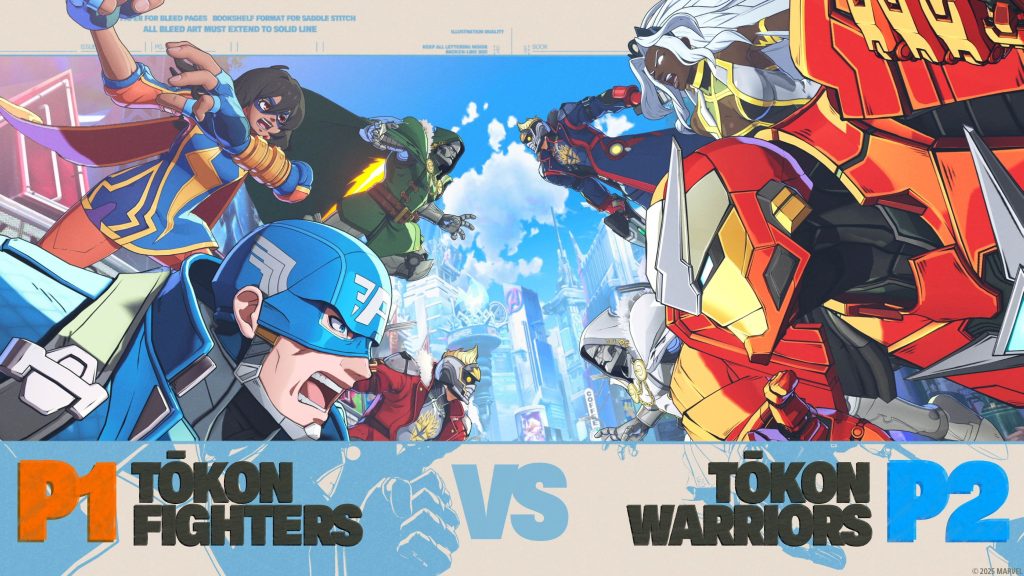
Yet the tag-team mechanic runs deeper than this. Initially, players only start out with one other assist hero. The other two are unlocked by breaking a character through the stage borders (or bashing them against the edge of the stage if it has no transitions), losing a match, and/or executing a combo that causes another hero to fly in for support. This can provide variety for players who are on the ropes to have full assists while the player in the lead only has one, or create an opportunity for one player to tag in a different hero to do the fighting because their primary leader isn’t cutting it for the fight at hand.
During fights, players can call in team assists with a simple button press and, depending on the placement in assist slots, those characters will do different moves. Iron Man can fire an energy beam, Wolverine can slash with his claws, Magik will thrust her sword into the ground and set an area ablaze. Characters can do aerial, frontal, and back assists that are meant to pop in and assist in a combo or for some quick panic surprise damage. Using an assist in the middle of a combo is often a great way to initiate a juggle or provide a counter attack but players also need to keep in mind the speed with which these assist moves also happen because they aren’t infallible and the opponent can often counter or simply move out of the way.
To aid players in setting up unique and powerful attacks, Arc System Works has incorporated a system that performs combos automatically based on successive button presses and hits. Constantly landing light, medium, and heavy attacks back to back will trigger a unique move from the leader while also consuming the assist gauge and/or super meter at the bottom. I think this is a clever way to allow newer players to integrate powerful moves into their chains without having to focus on complex things like half-directional movements that have always felt extremely advanced to me.
But a lot of Marvel Tōkon: Fighting Souls is geared towards emphasizing a certain button that dictates character abilities. On PlayStation 5, R1 and R2 are used for a character’s unique abilities. For someone like Ms. Marvel, pressing R2 and an attack button will cause her to either fly her fists out in a whirlwind or grab an enemy and crunch them. Her unique R1 ability can shoot her arm across the screen to close the distance and grab an opponent. In a way, button mashing kind of works with Marvel Tōkon: Fighting Souls because each button in tandem with a direction or another attack is an opportunity for something new.
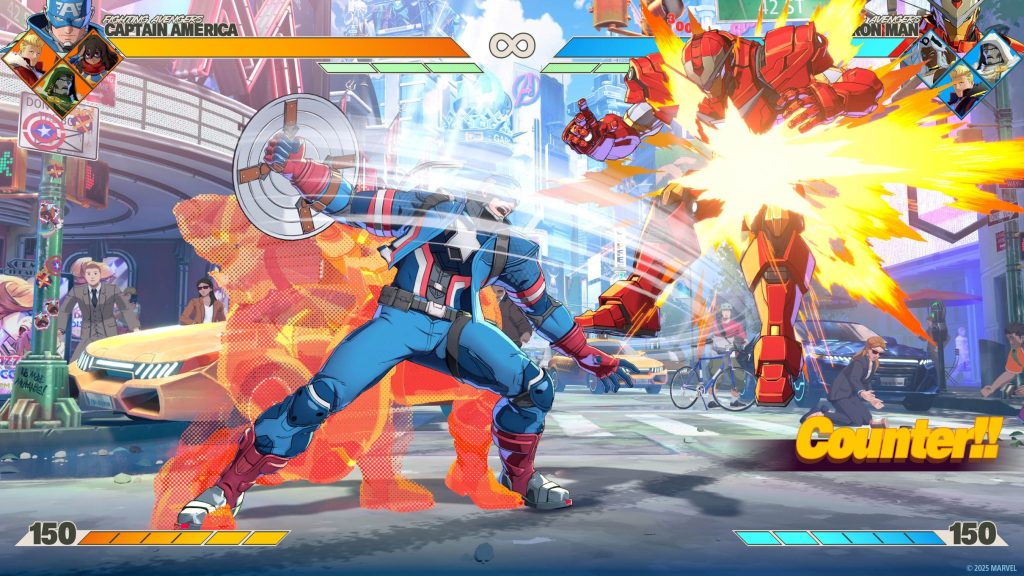
It also makes natural sense for these comic book characters with their powerful abilities to have them tied to specific buttons. Spider-Man uses R1 to thwip his webs around, Captain America uses it to toss his shield around, Storm uses it to hurl elemental damage. While learning how to integrate these simple button moves into hard-hitting, long combos can be difficult, it is all enjoyable. And it all becomes more rewarding when it shows how deep Arc System Works has crafted Marvel Tōkon: Fighting Souls. Certain characters have a unique meter that provides more agency over their abilities. Ghost Rider can increase the level of his heat, Hulk has a Gamma meter that increases his armor and unlocks new moves, Storm’s ability to manipulate the wind allows players to push her projectiles around the stage.
The granular ways that players are given control over this roster gives everyone a comfort level from beginner to advanced. While characters who fight mainly with brute force and fists might seem simple, they aren’t better or worse than any other fighter. Arc System Works makes sure to identify who is more complicated to handle and even when controlling them, it’s pretty obvious which characters have untapped potential. Hell, a few of the characters actually do increased damage after unleashing team attacks that consume a full super bar, meaning there is always a lot to learn.
Though I enjoyed it for what it was, Marvel Tōkon: Fighting Souls‘ story mode, called “Episodes”, could have been more robust. Players can select five separate Episodes, each written by comics writer Kieron Gillen. These Episodes focus on the five different team compositions: Fighting Avengers, Unbreakable X-Men, Amazing Guardians, Knights of Doom, and Samurai Outriders. Framed almost exactly the same way, the story finds Earth’s greatest warriors challenged by The Champion, who threatens the fate of Earth if he is not beaten in combat. Across each Episode, the teams fight others from the whole roster and the story is doled out in the form of comic book pages each drawn by a different artist depending on the storyline.
Episodes are plucky and enjoyable but they can move relatively slow, as static panels and dialog fill the screen laying out the plot. The only animated cutscenes here are applied to each Episode making them feel less unique. And while the stories of these teams do cover a lot of the ground we’ve read in the comics or seen on the screen, I do think they are presented with warmth, humor, and respect for the source material. I just wish they had been a bit flashier, honestly.
Arc System Works has still managed to nail the diversity and vibrancy of all of these characters. They all fight and have moves that make sense for the characters. But just as important are they way they quip and bicker off one another. There are unique lines of dialog across the board for multiple interactions.
This feels like a development team who really did their homework but also appreciates and loves the source material and everything inspired by it. The stages players fight on are stuffed with references and there are plenty of instances where I could identify deep cuts, even when I didn’t know exactly what the reference was. And, of course, there’s Deadpool who was expertly handled, breaking the fourth wall in so many ways. Deadpool is one big reference. Many of his moves, end screens, and animations are pulled from dozens of references and it’s fascinating to watch how deep they go.
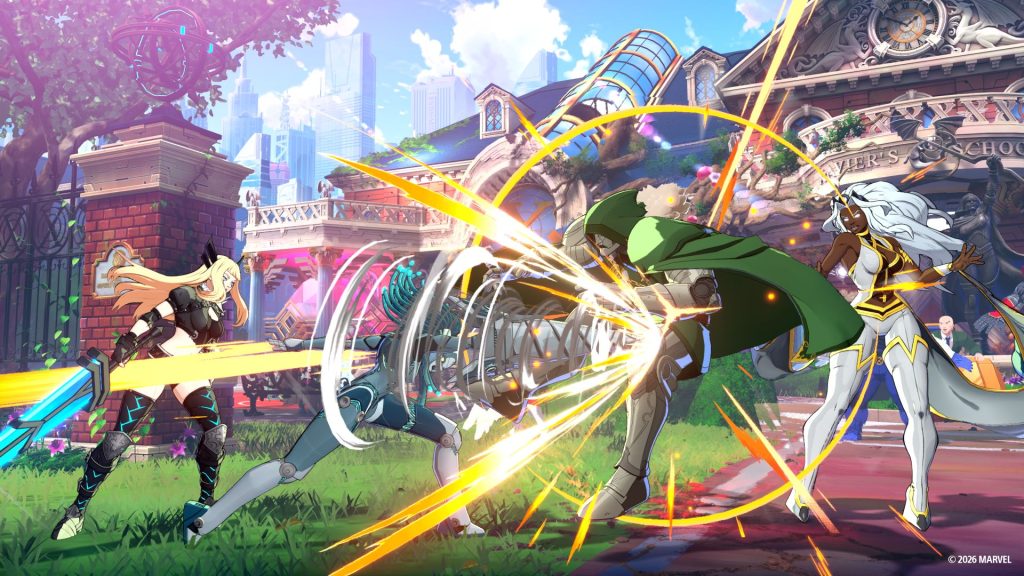
The colorful designs and comic feel of attacks, scene framing, and overall presentation give Marvel Tōkon: Fighting Souls a pleasing aesthetic that is meant to prove this isn’t just a cash-in on a franchise people are far too tired of. I think there is an appetite for Marvel, it’s merely for actual good products. Games like Midnight Sons and Insomniac’s Spider-Man are fantastic not just because they respect the source material but because they are great games. The same applies here.
Though I did get my ass kicked most of the time, I spent awhile in Marvel Tōkon: Fighting Souls fighting online players to experience all it had to offer. Being able to watch matches of other players and hang out in lobbies as chibi versions of characters is great. I loved waiting in a virtual arcade for another player to walk up and challenge me. And thankfully, the netcode on the PlayStation 5 version is incredible. I almost never had delay or frame loss and the game tells you when this happens. It was always smooth and I never felt like a player was getting the better of me because of a connection issue.
Climbing ranked matches and becoming some incredible player isn’t really on the ticket for me but after a week of playing and also watching hours of footage of other players fighting, it’s obvious that Marvel Tōkon: Fighting Souls has a great future ahead of it. While I can’t speak for my own experience, I know that the PC version is still having some problems despite a patch released days after launch. Initially, the issues made the game almost unplayable online with severe slowdown and frame drops, causing many to hold off on the game until it was updated. And hopefully the problems will be ironed out further in the coming days.
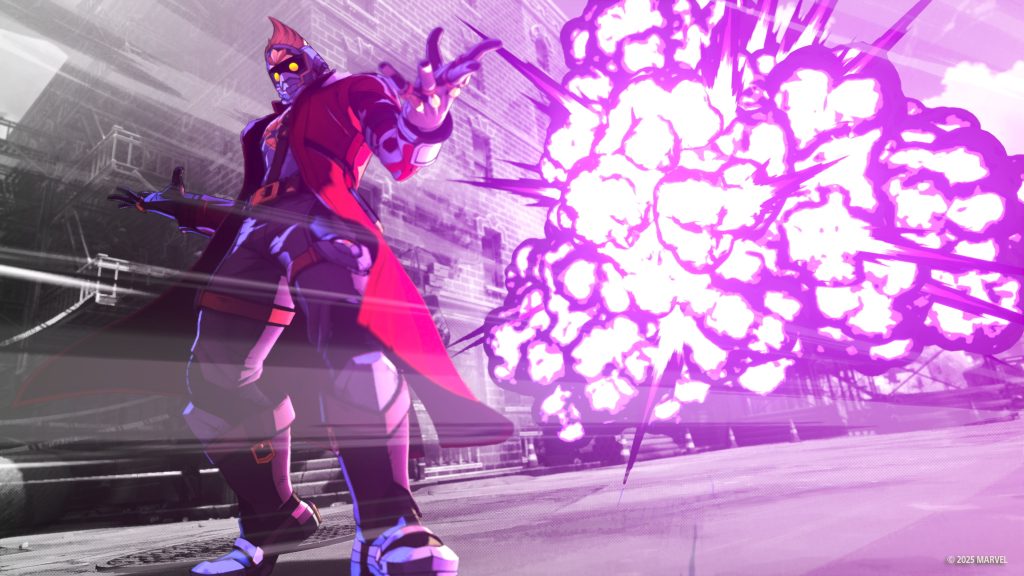
Marvel Tōkon: Fighting Souls is all about its fighting. While not bare-bones by any means, it’s hard to have a fighting game with modes that aren’t simply more fighting. Having those expectations in place are important and the community that builds around this game is going to stem from people churning through online matches day in and day out. Still, I respect the “casual” modes here that allow a person like me to enjoy the game not just by fighting with others. Players can engage in a Survival mode where they try and best 100 stages of increasingly difficult battles. After a boss fight every stage, they can draw cards that improve certain aspects like projectile damage or increasing overall health. It’s a very mild roguelike mode in a fighting game and I could see where it could totally be expanded upon. Players can also have a simple Arcade mode where they put their custom team up against a selected path that culminates in a boss fight. Finally, Arcadia Rumble lets players duke it out with a lobby of others in their chibi form, vying for the most stars at the end of a match. They can acquire powers, cards, and other items that allow them to attack players in one round, then move to a round where they can fight like normal against each other or the CPU. Again, it’s a fun distraction and one that has its place.
Arc System Works has been iterating and perfecting fighting games for years now. Watching them tackle a property as big as Marvel and putting out something that could rival the legacy of Marvel vs. Capcom is impressive. It takes the concept of tag fighters and changes it in a unique way that focuses player skill on how support characters can potentially amplify a lead character. Fast-paced, bombastic matches are always guaranteed because this roster of well-known and obscure characters are ripe for amazing moments.
Marvel Tōkon: Fighting Souls is a deeply complex tag fighter that uses the vast library of Marvel characters to its benefit. As mechanically deep as it will be for veteran fighters to explore and hone their craft, it still has the systems in place to ease newcomers in, providing them with a comfortable springboard to enjoy and improve. It’s hard not to imagine a rich community growing around yet another effort done by Arc System Works who continue to prove their mettle.