


Maestro is quite approachable for a rhythm title – something I often have trouble saying given rhythm games’ steep difficulty curves, disparate input methods, and pricy entry points thanks to needing custom hardware. On the Quest 3, all you need is your hands (or controllers, if you choose) to immerse yourself in a novel rhythm game setting. The Complete Edition comes with the full musical experience that will keep you playing for hours!
French developer Double Jack has done something that I wish more folks have done, and that’s innovating on the rhythm game space. Maestro is a successful and novel approach to rhythm gaming that perfectly captures the feeling of performing on a stage in front of hundreds of people. That performance? Orchestrating music while the Meta Quest 3 tracks my hand movements.
Until now, the state of rhythm gaming in VR has been largely dominated by Beat Saber, a game that was just announced to be winding down its support on the PSVR2. In the wake of its announcement, I’ve seen a litany of rhythm titles passed around on Reddit as contenders to take its place as multi-platform king: Synth Riders, Spin Rhythm XD, just to name a few. On the Quest 3 side, I was surprised by how well BEATABLE tracked my hand movements and made just about any surface in my home a controller for tapping along to the beat.
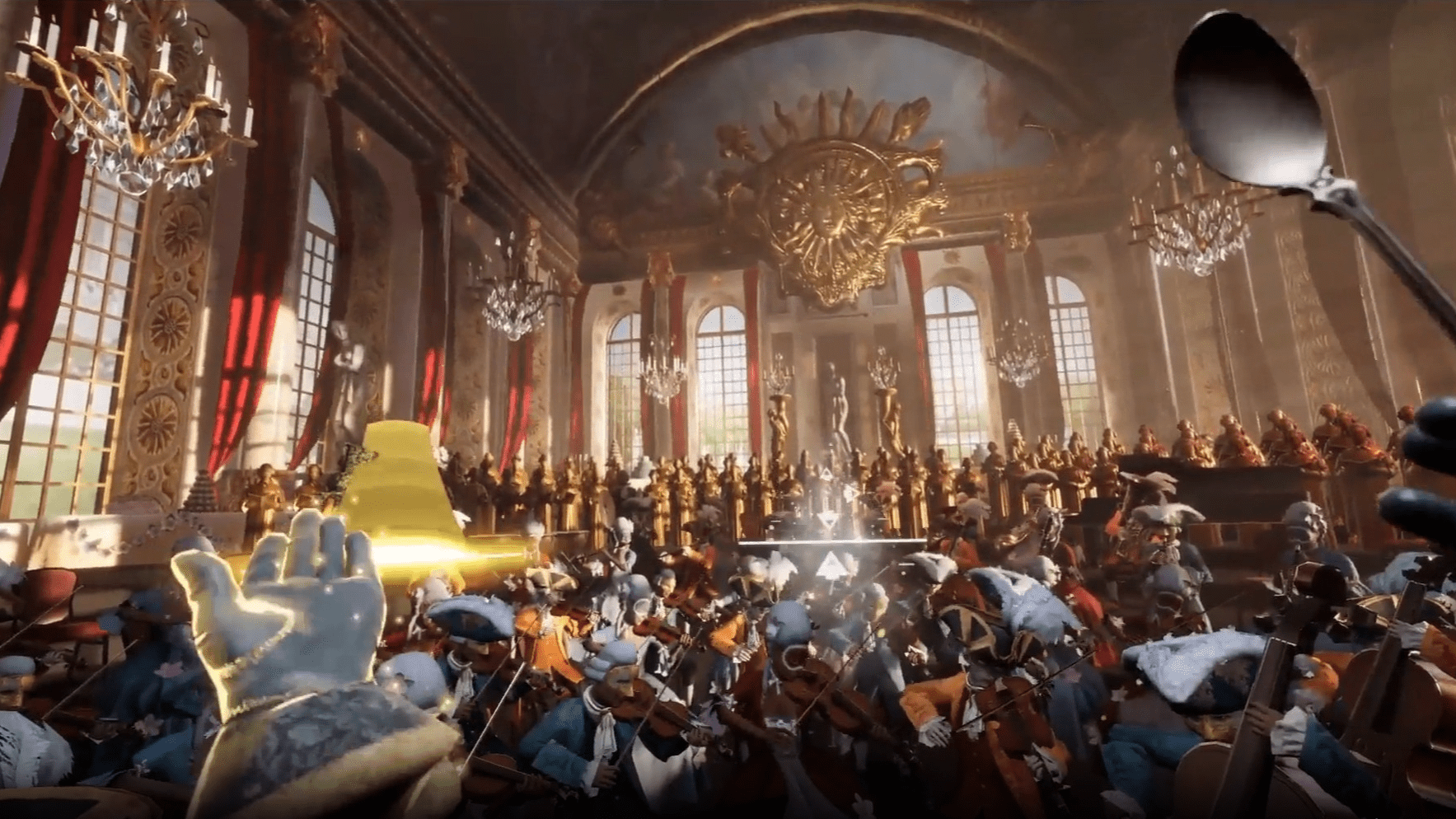
Maestro merges these two worlds together and offers a compelling premise: Use natural movements, just like a conductor does, to conduct an orchestra that plays everything from typical classical music to jazz to hip hop. If you have it on the Quest 3, you don’t even need controllers – just use your hands!
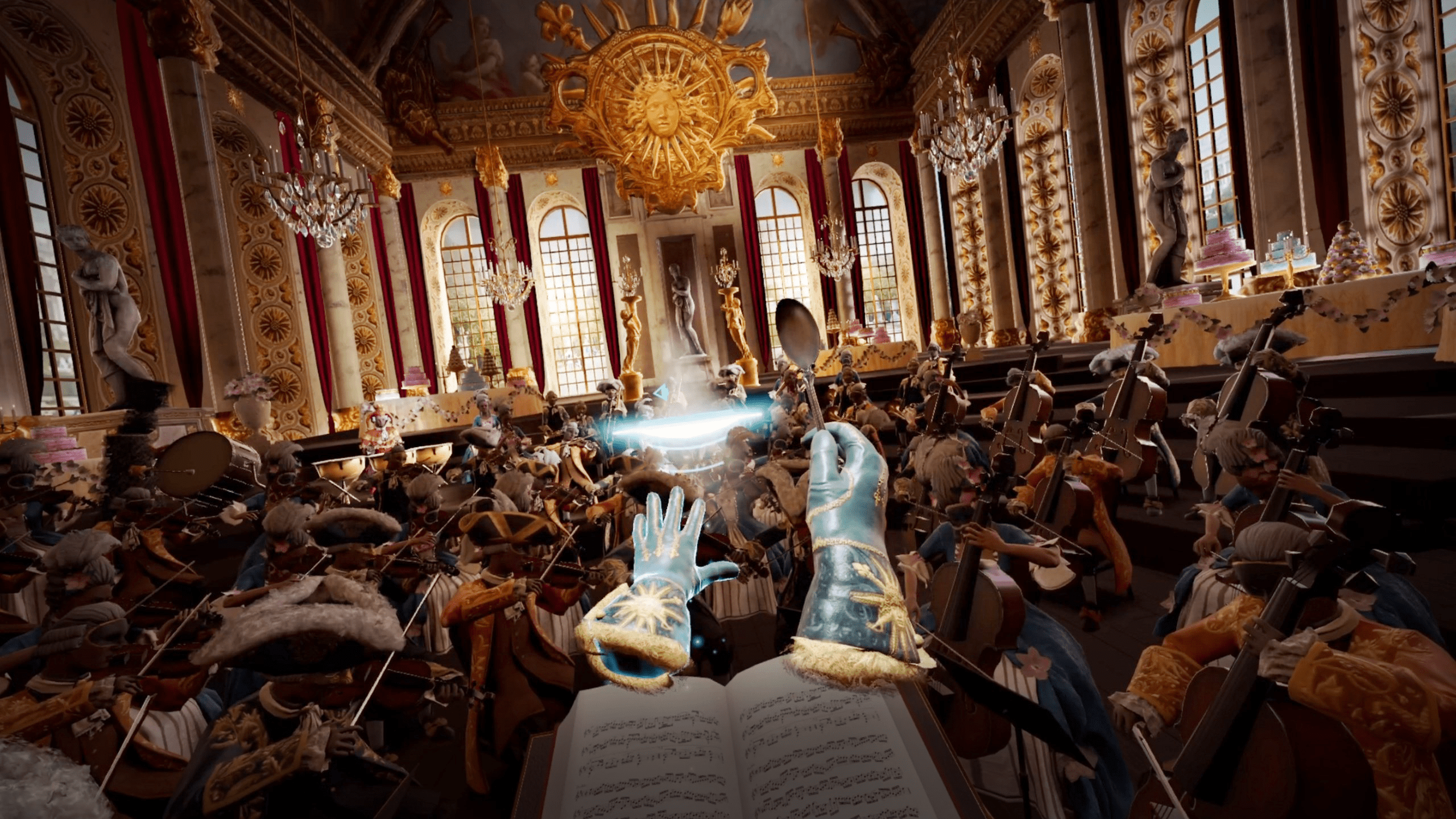 The lack of haptics from orchestrating music can feel jarring at first, especially when coming from playing rhythm titles with unique peripherals or the Quest 3’s controllers. In haptics’ place is a sense of rhythmic flow that’s fine-tuned to the song being played. This flow manifests as simple gestures, like using your right (or dominant) hand to move up/down/left/right as though you were holding a baton or raising/lowering your hand to trigger a crescendo.
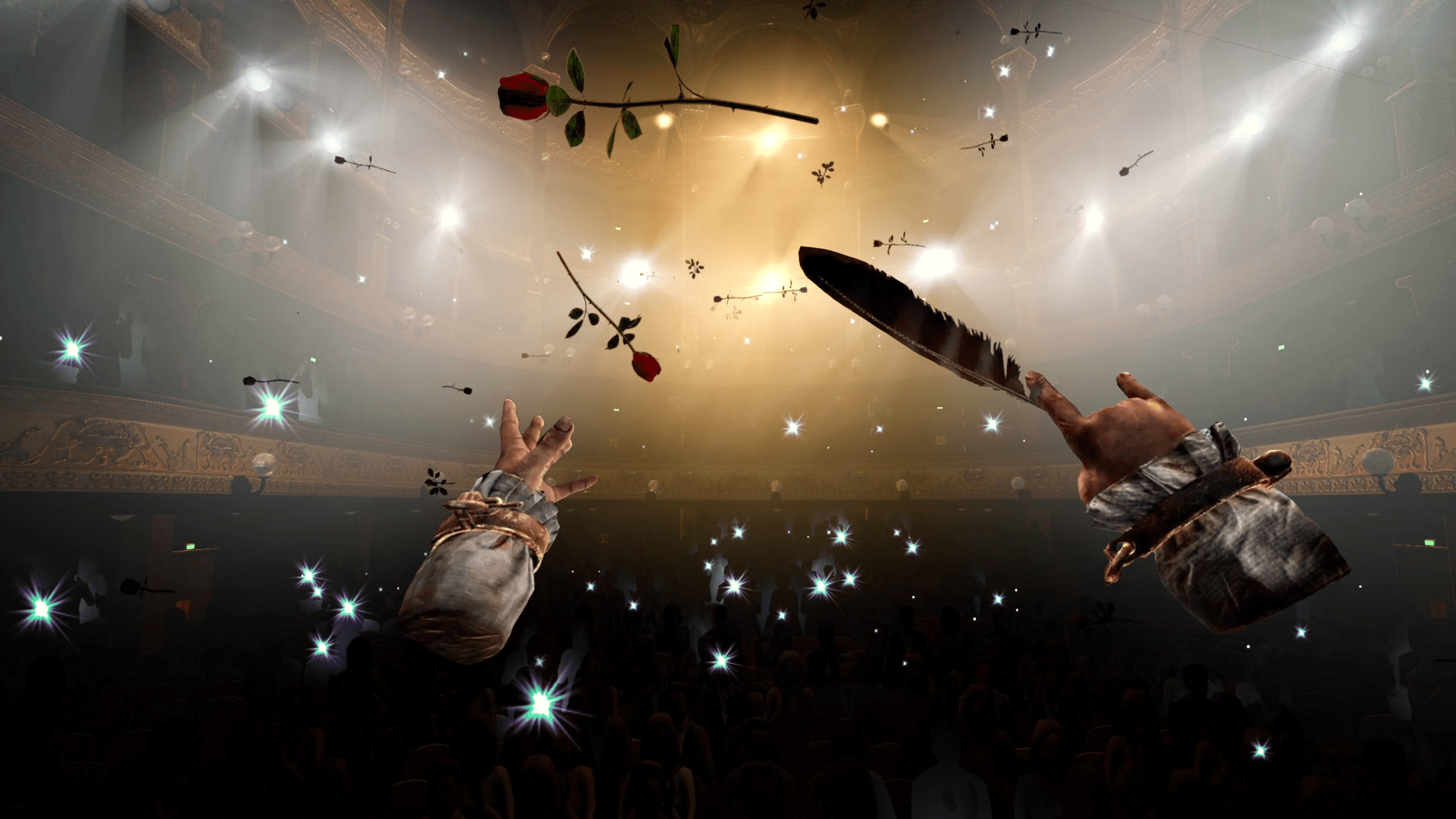
Then, when the song is finished, the audience behind you showers you in praise, photos, and roses (assuming you did well enough to earn a high score). As someone who has spent the majority of his life performing on stage, turning around and seeing a virtual audience gave me goosebumps, as though I was right on stage again. But alas, I was playing Maestro and conducting a virtual orchestra, not reliving my early adulthood.
 To its credit, Maestro excellently utilizes natural movements to cue up and trigger musical inputs. It’s a unique form of rhythmic gameplay that steps away from beat- or note-forward approaches from other rhythm games. Thanks to the hand-tracked movements, I didn’t have to memorize the layout of a unique controller. I was able to fly through the
Of course, the Quest 3 headset occasionally misses notes. The imperfect handtracking can bring down some of the enjoyment of Maestro, but this is an issue with the hardware, not the game. If you prefer to play in a dimly-lit room, you should stick to controllers. Regardless of input method, Maestro is relatively forgiving in allowing players to miss a few notes while still earning a 5-note (think 5-star) score.
As far as song selection goes, Mastro: Complete Edition comes with a ridiculous array of licensed music, from the Harry Potter-inspired Secret Sorcery Pack to the Game of Thrones-inspired Doom Bound Pack. These DLC packs bring the total Maestro song catalogue to 30 songs, an impressive number of tracks that will keep you entertained for hours.
 My only criticism of Maestro at this stage is that it lacks a custom music editor. It’s a shame that custom track support is unavailable, as some rhythm titles have adopted a cult following of players who spend their time supporting the game on their own. While I personally think that there’s quite a lot of enjoyment players can get out of the base game alone, community-support via custom music would attract more players into the novelty that is Maestro.
Once you’re capable of mastering Maestro’s Easy and Normal difficulty, the true challenge begins on Hard mode. I managed to consistently eke out 4-note scores, but never a 5-note score on the highest difficulty. The chaos of looking around at the entire orchestra and the shifting positions of the notes was rough, but totally worth it just for bragging rights of completing “Flight of the Valkyries” and getting a standing ovation.
Maestro is quite approachable for a rhythm title – something I often have trouble saying given rhythm games’ steep difficulty curves, disparate input methods, and pricy entry points thanks to needing custom hardware. On the Quest 3, all you need is your hands (or controllers, if you choose) to immerse yourself in a novel rhythm game setting. The Complete Edition comes with the full musical experience that will keep you playing for hours!
