


An alluring swan song for Double Fine's Xbox tenure, Keeper is resplendent in its ferocity, boldness, and beauty. Among these subdued, silent adventure games, there are few peers able to make this kind of thunderous impact in short order.
At the mountaintop, victory lies in wait.
The proverbial summit to reach.
Madeline sought to climb, conquering her anxieties in Celeste. Kratos and Atreus ascended to give Laufey’s remains back to the world in God of War. Our scarved, hooded figure journeyed to the peak in Journey, only to go back to the beginning.
Elizabeth said, “There’s always a lighthouse.”
Whether designed as a felled final boss, the closing of a chapter, the finish line, or a mere high score, a game ultimately has a mountain to climb. Though triumph may not always come with a sense of elation or perseverance, it exists to drive us through credit rolls and repeated playthroughs.
A player stands at the top of that game’s highest peak, looks back on the journey, and decides where the next steps will take them.
Keeper is bathed in as much metaphor as it is beauty and for a game where no words are spoken, that is incredibly profound.
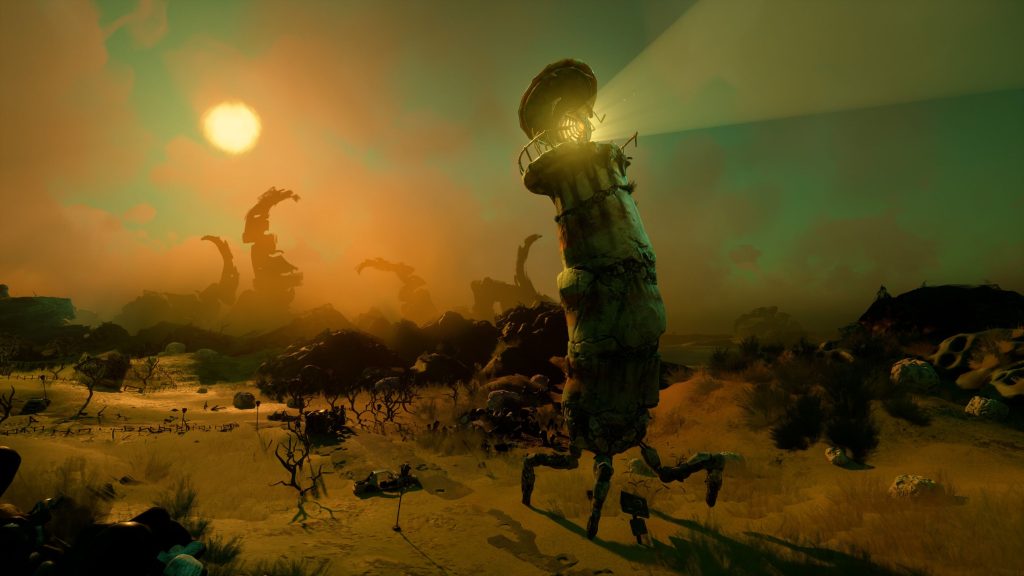
An adventure game very much in the vein of expected brethren, ones I’ve referenced time and time again while speaking of similar games in this nebulous, quiet genre. There’s been something so joyful watching them reach their tendrils out into the universe and expand. The nebulous stories where players stitch together clues like a patchwork quilt. A silent, expressive protagonist who may speak a language we will never understand or simply never utter a sound. Chase sequences where the music swells and failure seems almost certain. Puzzles almost impossible until the answer clicks in place and feels painfully obvious.
In every way, Keeper checks the necessary boxes. But it also highlights them, underlines them using colorful, bold inks and materials. It does everything right and despite that old, familiar feeling, so much about it is freshly welcome.
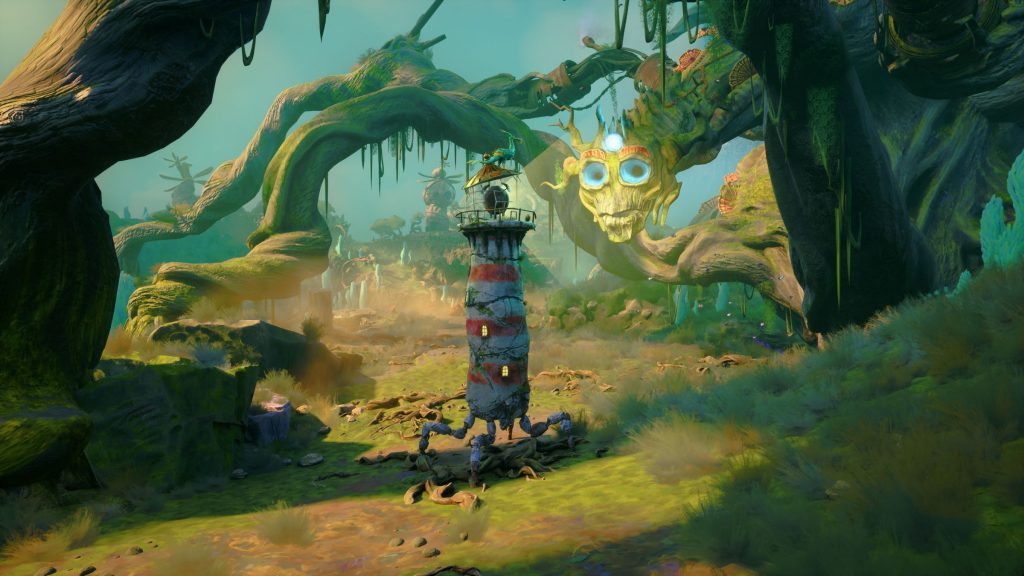
Yet I’m torn between wanting to exposit on the game and simply gestate and articulate on its deeper meanings and symbology.
Keeper is a game about a dying almost dead world. We open on a flock of avian creatures soaring high. Trailing on them is a swarm of evil. They are insects, they are pestilence, they are harm. The colorful wings of the flock a stark contrast to the blackish-purple of what the player may come to know as the Wither.
The Wither is a parasite, a leech upon the world. All around the fantastical, gargantuan island Keeper takes place in, signs of the Wither’s infestation are apparent. Broken buildings. Rusted and ruined vehicles. And a crumbling lighthouse.
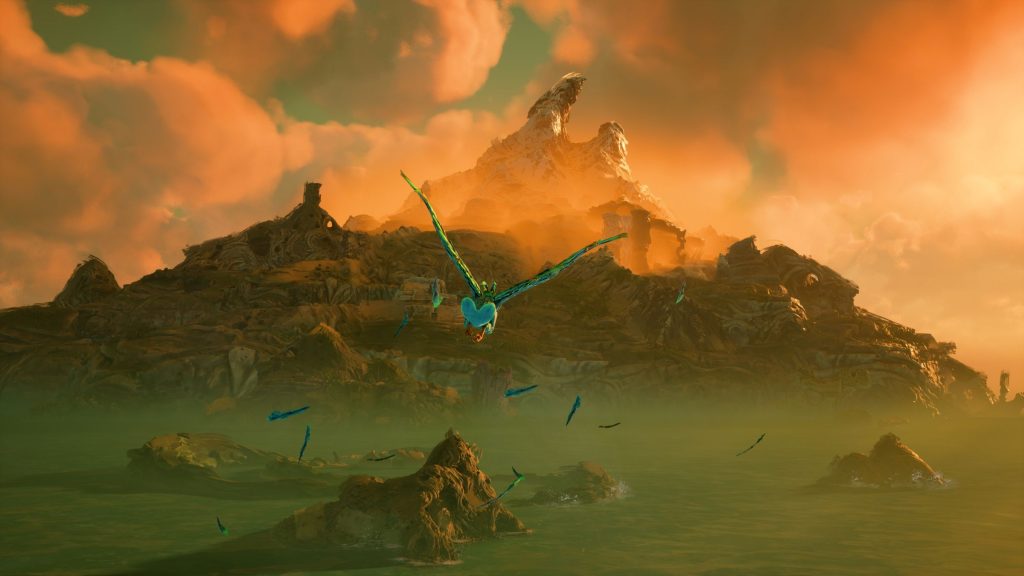
While the world of Keeper is all but alien, we see echoes of Earth in it. The husks of existence before the Wither consumed most of the land directly references a human civilization, one that reached a semblance of modernity. And at one point, civilization attempted to rebel against the Wither, crafting contraptions and infrastructures dipping far past scientific and into magic.
When exactly does Keeper take place? It’s a mystery I truly haven’t thought of until now and yet another reason why the game is so gripping. Because when one attempts to designate the events in the game’s far-flung past as a point on a timeline, it only fertilizes deeper questions. Sure there may be cars and trucks and city buses and a corporate building and a lighthouse… but where did the magical flying beasts bigger than anything manmade arrive from?
And this begets one of Keepers biggest draws.
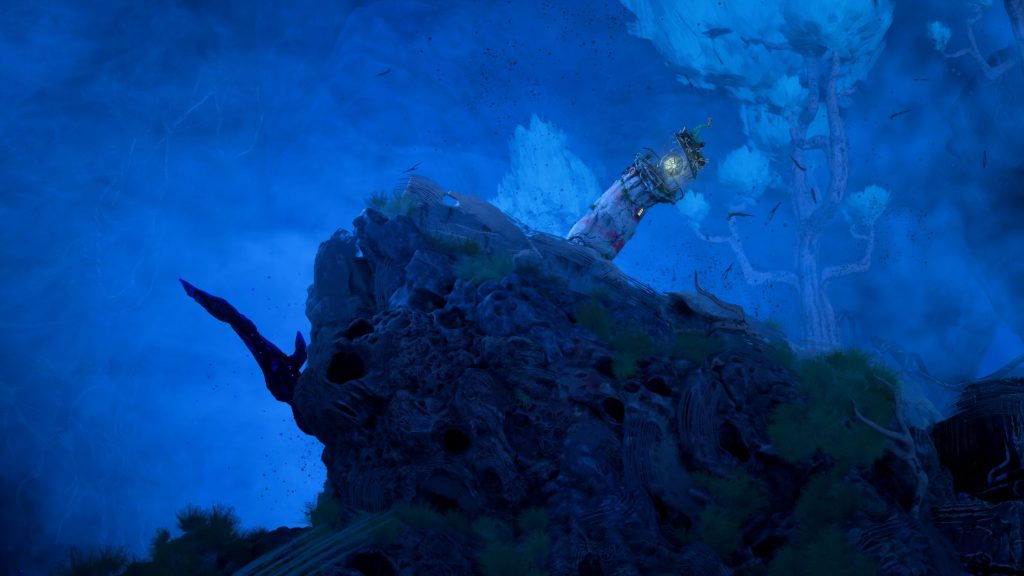
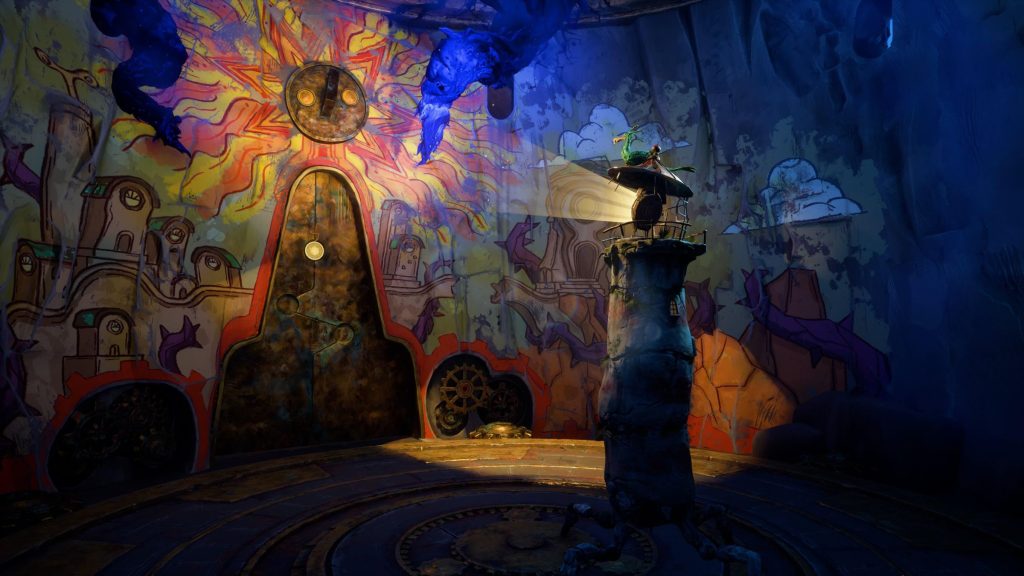
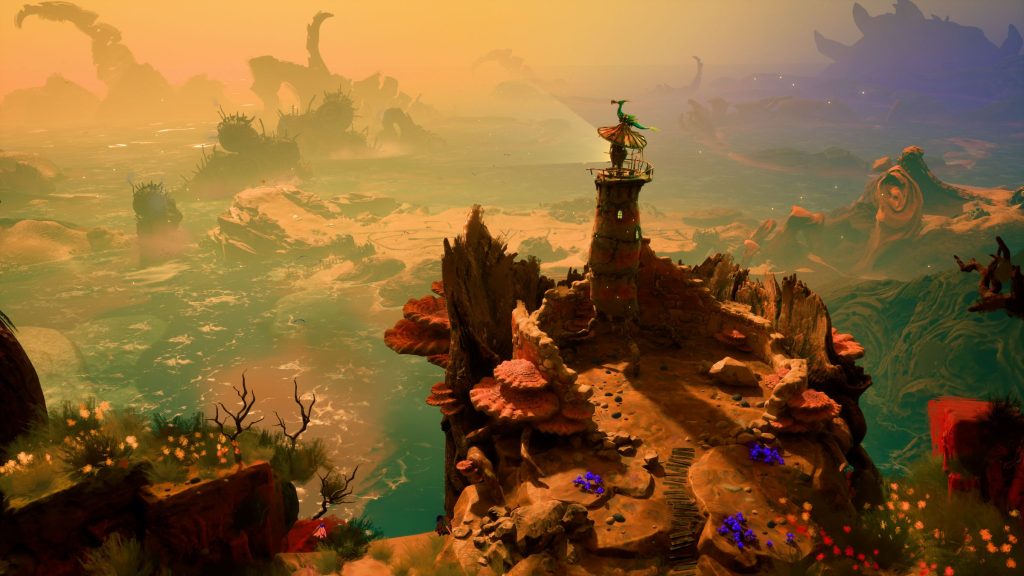
Unquestionably, this is one of the most remarkably artistic and gorgeous games I’ve seen in my time. It wields a brush to its palette, one where pixels and polygons blur because they are swirled and awash with movement. It mimics the feeling I had when playing Okami for the first time, where traditional graphics were rotoscoped with simulated ink and pigments. However, that almost betrays the game’s look. It doesn’t play towards any unquestionably different visual ethos. Games like Mad World or The Unfinished Swan use their graphical language with more intent.
No, Keeper is just fucking pretty. Scanning through shots and videos of the game it’s obvious there is a kind of budget or restraint. From a distance or just a moderately objective lens, it’s colorful but lacks finer detail. But I don’t state this to draw any attention towards Double Fine’s limitations or any cut corners merely branded as vibes and style.
At no point was I anything less than floored when playing through Keeper‘s vastly different chapters, many of which wildly vacillate between moods and sense of place. The most dreary and haunted of spaces speaks as loudly as any lush jungle of living, bouncing plants. This is a world where a postcard creator would be one of the most lucrative careers available.
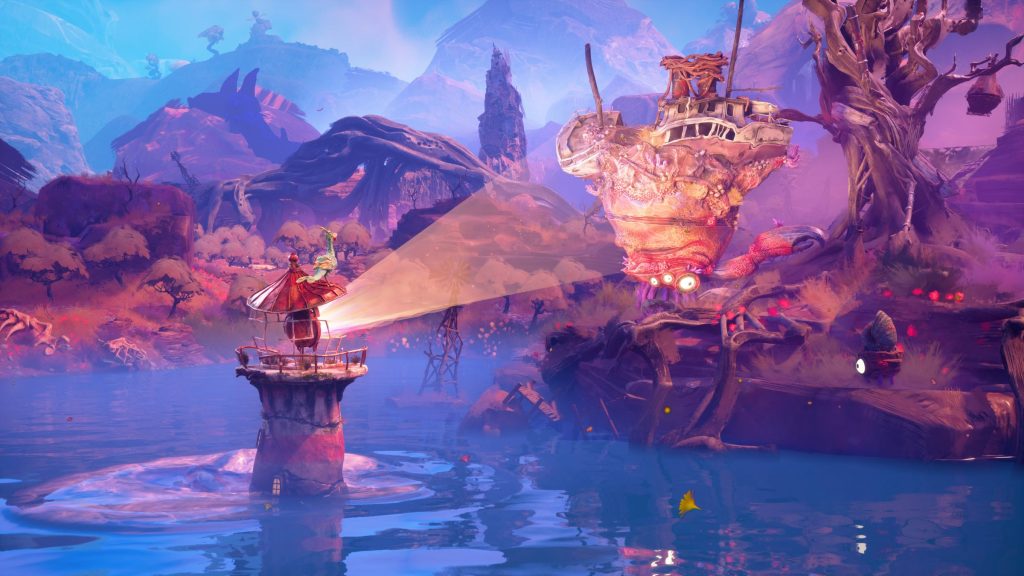
Have you ever done hallucinogenics? I have. Often Double Fine has recreated that sensation where colors breathe and come to life–and not just in the moments where it intentionally implements psychedelic effects. One can become lost in this game’s ecosystem, waiting for a thing to happen with bated breath. Of course, these musings also apply to the numerous creatures occupying this universe. In Keeper‘s timeline what is the difference between the appearance of alien life versus magical life? Double Fine designed an island surrounded by water, it made turtles but turtles with impossible shells in impossible shapes. It made whales but they use their numerous fins to fly and snack on bubblegum pink trees that make one feel light as air.
A village of mechanical beings are stuck in a perpetual shifting of time, offering the player glimpses of before and after. And in this secluded haven, Keeper tells stories and presents puzzles. That cycle continues throughout the game. This is an adventure, this is a game. One hotspot of activity allows us to dwell, to problem solve, to assume intent. Then we move on to the next one. Eventually, we reach the final one, the mountaintop.
Because Keeper‘s ultimate goal is to reach the top of a mountain. The one that shines a light on the lighthouse, the proverbial Keeper, that one of the stray members of that flying flock rests on after it is separated from its fellows after the Wither attacks.
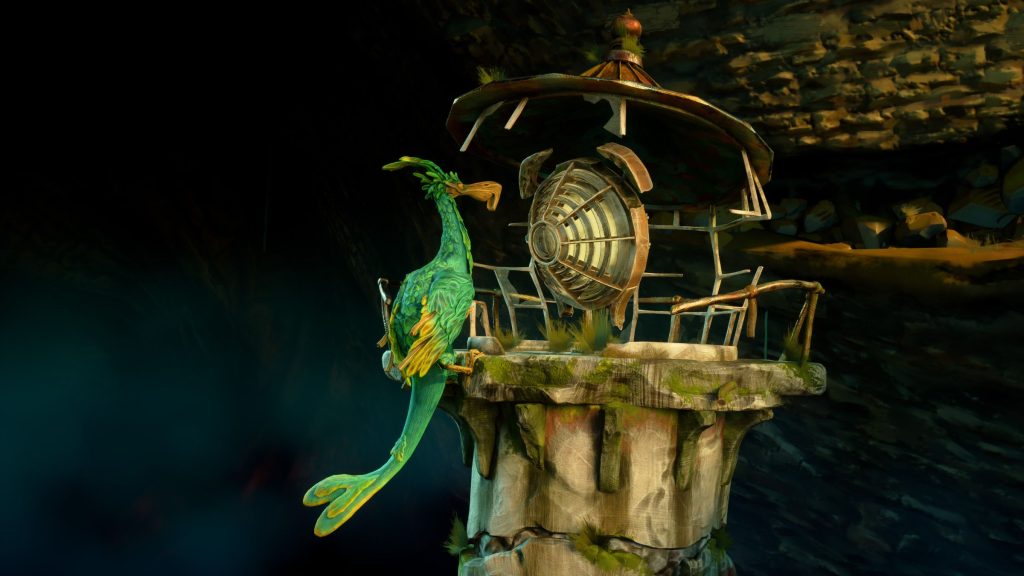
The lighthouse sprouts arachnid-like legs and Keeper‘s opening moments of player control are the living structure’s attempts towards trying to stay upright. It sways and stumbles around, defying gravity and our understanding of the natural world.
Keeper always holds focus on the lighthouse. The light that emits from its myopic lens can beat back the Wither but it can also spark life. Shine it at plants and beasts and watch them grow and react. It is a totally unnecessary element to the game but makes Double Fine’s world all the more immersive. There is no reason to place that beam along a trail of meager bulbs and trace it along the ground and walls as it sprouts foliage. But you do. Because you just want to see what happens.
And it’s that beam of light that protects Twig, our avian fellow, from being consumed by the Wither. Keeper’s core objectives are to get to that mountain–it’s calling, it always does–and to keep both the lighthouse and Twig safe.
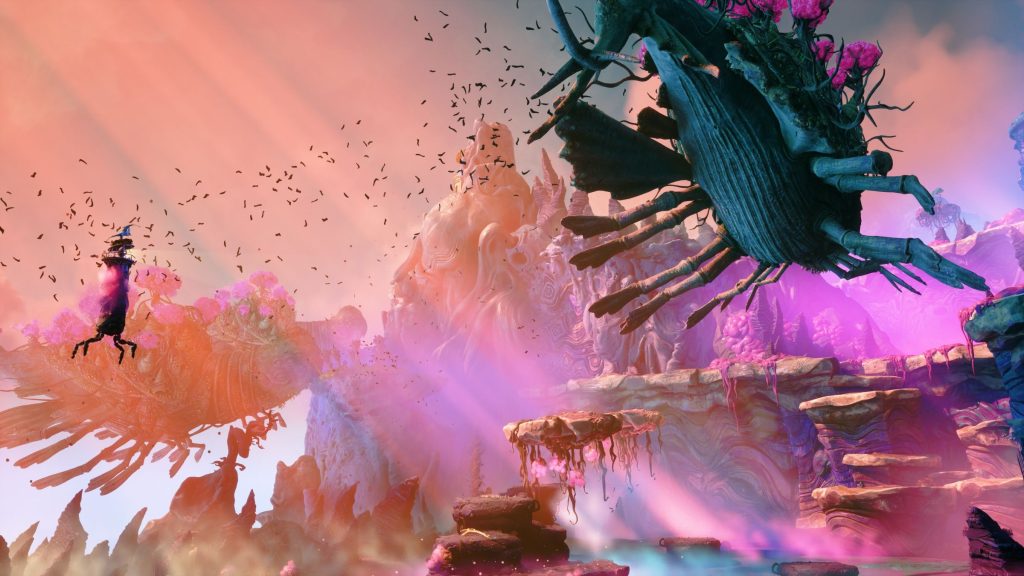
This is a mechanically clean game where the player is presented with a decent amount of puzzles and exploration challenges that don’t overtly prohibit advancement. Players can send Twig to turn cranks and sit on pressure plates and a bit of thinking may be required but I never found myself stumped. For a game like this and designed with the journey in mind, it’s hard to find flaw. A handful of times Double Fine twists expectations and contorts the abilities of players to a degree I refuse to spoil. But just when Keeper even inches towards mechanical mundanity, the earth shifts.
Keeper simply doesn’t let up.
Its journey is tantamount. Moving from place to place and encountering the new thing. I spent about five hours on a Saturday playing through Keeper. And in the time since I rolled credits, it hasn’t left my mind.
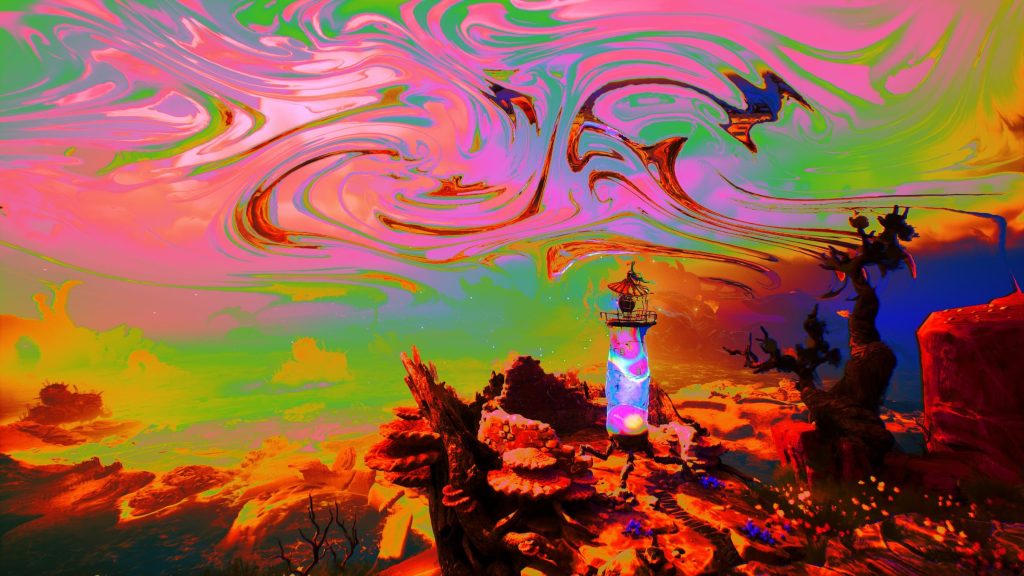
Games do not need words to tell stories. Words aren’t even needed to express emotion. All of these things can be conveyed through sight and sound. Double Fine conveys them through the interconnected parts of its world. How the music sounds when the mood is meant to shift. How the colors may flood the screen or be sapped out to indicate a change. But everything remains cohesive throughout. That beauty is permanence.
But Keeper also feels more significant than just the game inside of its digital confines. Whether prophetic or not, Keeper is like a companion piece to Double Fine’s existence. As much of a swan song as anything can be, Keeper may be as such for the studio’s past iteration. I understand that its cooperative party game Kiln was released earlier this year. But in September of 2026, Keeper released on PlayStation 5. It released in the wake of hundreds of layoffs at Microsoft and Xbox. It released in a worrying, tumultuous time in the video games industry. It released as Double Fine regained their independence, no long under the umbrella of Xbox Games Studio, which is seemingly becoming a more volatile place.
Double Fine was always seen as a champion of independence. A beloved studio with a beloved figurehead that always made strange games never meant to resonate with everyone. I have yet to play Psychonauts 2 and have no doubt it is incredible. But Keeper is intensely profound, especially considering how impactful it is in such a small package. I can’t imagine the studio ever lived up to the expectations the higher-ups had for it after being bought by Microsoft and Xbox. Keeper and Psychonauts simply aren’t games that can be measured in sales alone. Perhaps because it was on Game Pass, Keeper reached more eyes than it ever would have. It’s difficult to quantify. Many people look at a game where you play as a lighthouse and move on because it’s either too abstract or “one of those types of games” which is a grubby bag of opinions that indie games often get plopped into.
Yet I can’t help but see Double Fine coding themselves into the reality of Keeper. This world that has been literally and figuratively withering away. The industry is in an uncomfortable place right now and Double Fine’s newly found independence did not save them from having to lay people off, nor does it guarantee success with future games. Either way, Keeper retained its beauty and its independence despite being a product of its environment.
We play this game. A game about wordlessly trying to fight back the ills inflicted upon the world. A game about traversing the beauty. A game about cooperation and companionship. A game about letting go. A game about solving problems. A game ultimately about trying to reach the mountaintop. But what does that mean? It means something different for everyone. It means something different for an individual versus a corporation versus an independent studio.
We all measure winning differently. Often failure is another path to victory. No matter what, we strive to retain our sense of self and fulfill our goals. But by any measure that truly matters, Keeper is a success.
Keeper is an alluring swan song for Double Fine’s Xbox tenure, resplendent in its ferocity, boldness, and beauty. Among these subdued, silent adventure games, there are few peers able to make this kind of thunderous impact in short order.