

Sometimes you have to get beyond the first layer of a cake before you find the yummy magic of it. True story.
Of course, that cake this time around is Gumball in Trick-or-Treat Land from developer Exquisite Laundry Pet LLC. This game, which was built for an old school Gameboy experience, harkens back to simpler times. It contains a very basic role-playing game structure that is driven by logic problems the player must get through to progress, and turn-based action to keep it fresh. Beyond that, it’s nothing that gamers haven’t seen before from late 80s / early 90s RPGs.
And guess what? That’s more than okay.
So, let’s start munching on this gumball.
Story
There is nothing like a good story to kick off a fun adventure, and Gumball in Trick-or-Treat Land certainly features one. Players will play as Gumball, who is brought to a Halloween land filled full of Halloween themed lands and characters. The quest is to help a Scarecrow find a spellbook, but that quest turns into a need to find seven patches to help the Scarecrow out and save Trick-or-Treat Land.
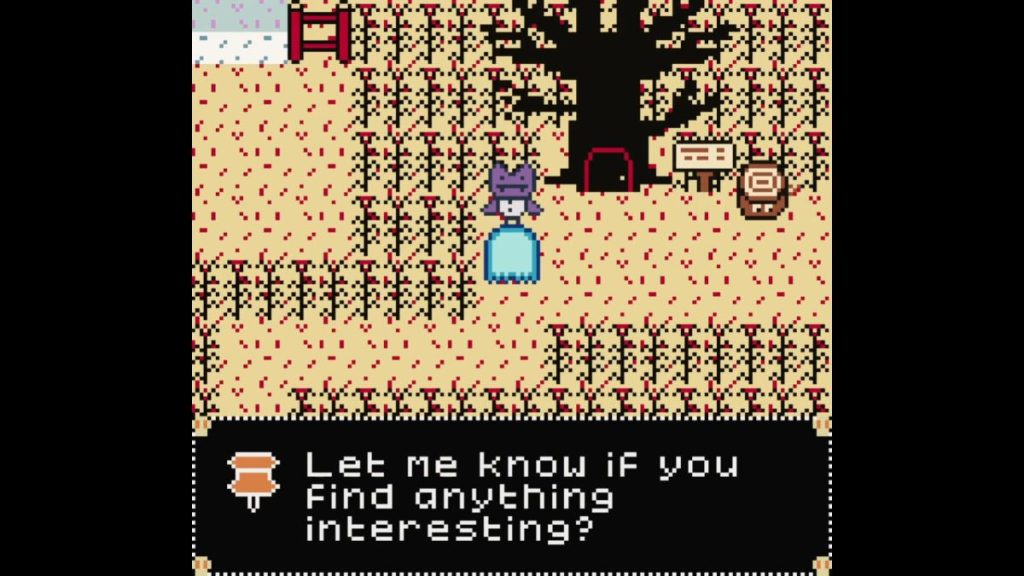
The story is goofy and features some lighthearted humor that doesn’t take itself seriously at all. I mean, there is some seriousness to the situation, but players won’t feel stressed during their time with this game. Anyway, the story contains a simple main quest while also featuring smaller stories embedded with meaningful sidequests.
Again, there is nothing too deep on the narrative side, but there is the occasional branching dialogue of choice for players, while also leaning on a consistent multi-act narrative that is entertaining from beginning to end. In other words, it’s a fun story that gets players involved but doesn’t feel like an adventure that will press on the player negatively. It’s a cool adventure with a good story that motivates the player to keep pushing forward. That is all you can ask for from a game like this.
‘Basic’ Gameplay
While the majority of gamers might be fully assimilated to complicated, action-based RPG experiences that require some Bible-like manual to understand, occasionally it’s nice to shed that complication and fall back to simpler times with simpler gameplay. That’s exactly where Gumball in Trick-or-Treat Land falls into this RPG equation. The game consists of three components: exploration, logic puzzles, and turn-based action.
Exploration and tasks
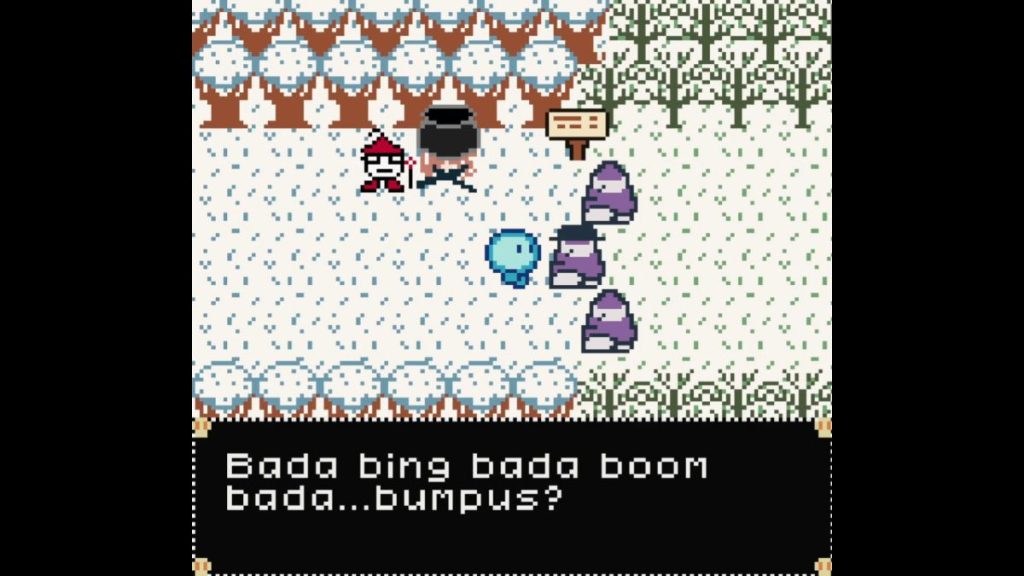
In traditional RPG fashion, Gumball in Trick-or-Treat Land sends the main character out exploring what can only be described as a Halloween-themed land. The land has many different sections in it. There is a cool candy corn city, a location mainly made up of pumpkins, and the occasional talking mushroom sitting on a tree stump. There are more lands in the game, but describing its theme and execution paints a picture of what to expect from its obvious Halloween-driven theme.
But, I digress. A good chunk of Gumball in Trick-or-Treat Land’s gameplay is exploring various Halloween-themed lands. Within these lands, Gumball will meet side characters who present problems, and Gumball is asked, and sometimes forced to complete the side quest for goodies or progression items. The game does a good job of hiding whether one side quest is more important than others. It’s clever in its gameplay design because it forces the player to take every side quest seriously and secretly motivates them to push forward without asking questions. In short, it makes every side quest meaningful in a way.
As for the problems, they aren’t terribly difficult, and sometimes the task is meant for later in the game. For example, there is a task that has Gumball delivering a pizza to some candy corn blokes. Honestly, I had picked up said pizza in the game randomly and just randomly started talking to people until I bumped into a couple of CCs that were waiting for a pizza delivery. The game gave me a choice whether to give the pizza to them or not, and it also gave me an option to eat it for energy/health purposes. It was a random happenstance that came about because I was just exploring and chatting it up. There was no urgency, but the rewards for completing the small task were worth the effort I unknowingly gave.
On more pointed quests, the game will generally ask players to complete multi-stop tasks. For example, players will run into an interesting character who is trying to get his kid into a prestigious school. If players can get said kid into said school, the player will receive an item that expands the world around Gumball, which also opens a new piece of the story. These are your progressive, logic quests that are intermingled with slightly more remedial tasks, but when combined, make for a lovely bit of motivation to keep exploring the bigger-than-expected world of the game. This is a big portion of the game that starts slow but really sits nicely within the overall adventure.
On a side note for this exploration section, Gumball can also collect items that he can trade for certain candies, animals, or objects during the adventure. These items can be used to heal or to obtain other items along the way. The game has this minor collection aspect to it that plays well with exploration and side quests, but also acts as immediate help during combat. It fits nicely into the overall scheme of the game.
Anyway, the devs who put this together really took some care in crafting exploration carefully and making it worthwhile. The game feels much bigger and deeper with this type of design. I definitely have no complaints, as most games of this type give you moments when you know that a task isn’t worth your time. This isn’t that game.
Turn-based
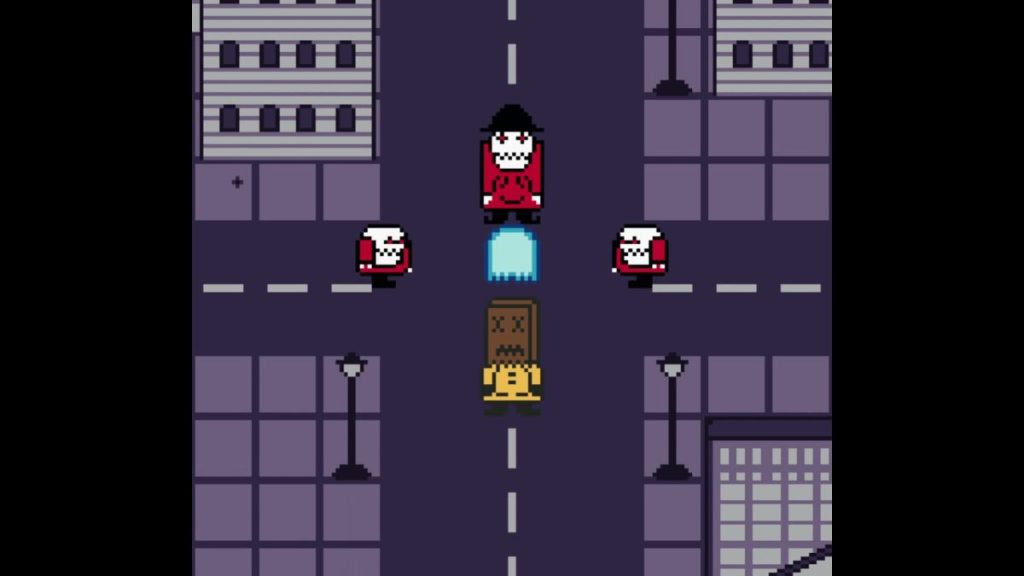
While exploring and completing tasks and figuring out puzzles is good and fine, a strong component of Gumball in Trick-or-Treat Land that makes it most certainly a traditional RPG is its turn-based gaming moments. While players might be used to seeing isometric maps with random encounters, Gumball in Trick-or-Treat Land is an old-fashioned construct that has enemies visibly waiting in a top-down Zelda-esque fashion for Gumball to cross their paths before battles begin.
Players will find this out quickly, as coming out and away from the scarecrow character at the beginning leads them to a land full of violent candy that, if they see you, will pick a fight immediately. At first, this type of basic encounter that launched the turn-based seemed a bit plain, as does the fighting within it – at first! And I will admit that I died quite a bit trying to get used to the combat system (we will get into that in a bit). Once everything started rolling and I started leveling up, the game started to reveal how much fun it was with this traditional fighting system.
Now, the fighting system works exactly how players might expect it to work. A fight begins, you get three choices: to attack, use spells, or open up some skills. The attack has you throwing candy at the opponent in a top-down fighting viewpoint. Most of the time, the candy hits, but sometimes it completely goes off the screen in the wrong direction and misses the enemy. The latter of the bunch was interesting to see because it felt so incredibly random, which is the point of such a basic combat system, but I felt that maybe the game should have gone the way of Undertale, where a mini-game gives you a sporting chance to successfully pull off an attack. I think that would have worked much better and put the fate of the fight more in control of the player. As it stands, it’s a random roll of the dice that generally hits more than it misses, but missing has consequences.
With spells, Gumball collects spells as the story progresses that he can use in fights. These spells help to make the fighting easier. We can get into that in a bit, but just know that their inclusion and slow build make you feel like you are progressing in the game. It’s slow to gain new spells, but worth the effort in doing so.
For skills, they allow for Gumball to heal during fights and contemplate what he does next. It’s a nice option that is in place of a good defense and provides more confidence to players that they can survive tough fights. In a way, it also adds some much-needed strategy to the turn-based fighting, which otherwise would be very basic. I was grateful for its inclusion.
To make the experience even more exciting, the game features friends that Gumball can take with them into battle. The first friend that shows up is a cat, which provides great attack assistance in fights, while occasionally stopping to clean themselves. What they do is not up to the player directly, at least not in a traditional RPG sort of sense, but it’s a welcome additional and occasional attack option.
Once the game gets rolling, and Gumball starts leveling up, which players will get the option to upgrade health points or magic points, turn-based fighting becomes easier, if not outright enjoyable. The game truly shows its good side when Gumball gets his first spell and starts delivering massive damage, which allows the player to explore more and take more chances. The fighting truly becomes fun when the gameplay elements start becoming bigger and more powerful. It’s worth the initial frustration.
Overall, the attack mechanics are simple, which doesn’t bode well at the beginning, but the gradual uptick in the progression mixed with item gathering in the exploration makes for a fun time throughout Gumball in Trick-or-Treat Land.
On that sweet note, let’s wrap up this review.
Conclusion
Gumball in Trick-or-Treat Land from developer Exquisite Laundry Pet LLC harkens back to a simpler RPG time while adding some worthwhile questing, good turn-based action, and some clever humor.