


God of War Sons of Sparta is a surprising return to Kratos' Greek origins, showing players his time as a child soldier in Sparta. While the Metroidvania framing is fascinating, it does limit many of the series' strongest elements.
As far as experiments go, God of War Sons of Sparta is a noble one.
Would you have told me a few weeks ago that the next entry in the long-running series would be a humble spin-off Metroidvania, my interest would have been piqued. Tell me that it’s set in Kratos’ Greek origins? Sold.
Sons of Sparta is an important game but not likely for the reasons you may think.
Criticism has been frequently levied against Sony that it has not taken enough advantage of the PlayStation brand and its deep well of intellectual property. Ape Escape, Sly Cooper, Jak and Daxter, Bloodborne Remake. Since Naughty Dog redefined the calculus of what the PlayStation Brand represented, the publisher has been a bit more guarded about experimentation.
God of War represented a kind of exhaustion that players were beginning to feel with the series being hammered into the ground. After three mainline entries and two PSP games, God of War: Ascension was seen by many as a threadbare attempt to keep Kratos relevant. With the fight against Zeus and the Greek pantheon finally exhausted, Ascension had little choice but to go back to a random point in Kratos’ past. On top of that, there was a multiplayer mode–as competent as it was–tacked on because that was the time every developer felt pressured to do so.
The Norse era revitalized God of War‘s brand and proved Sony was unmatched with premium single-player experiences. But does everything need to be a blockbuster title?
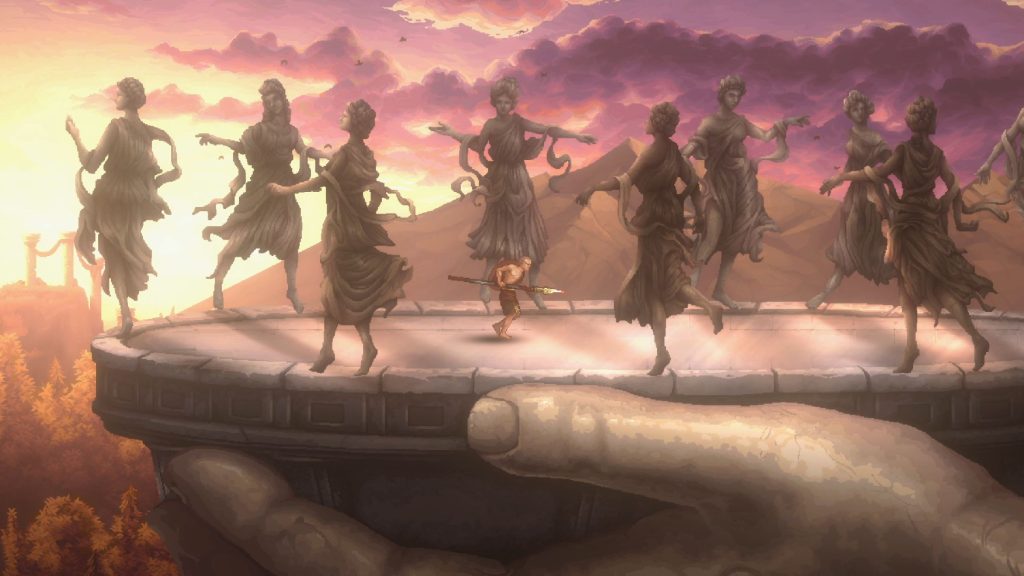
Developer Mega Cat Studios was given the responsibility of answering that question in the form of a smaller-scale God of War game. And while it does not reach the colossal heights many may wish the series to constantly achieve, Sons of Sparta is an enjoyable piece of entertainment that strives to justify its existence.
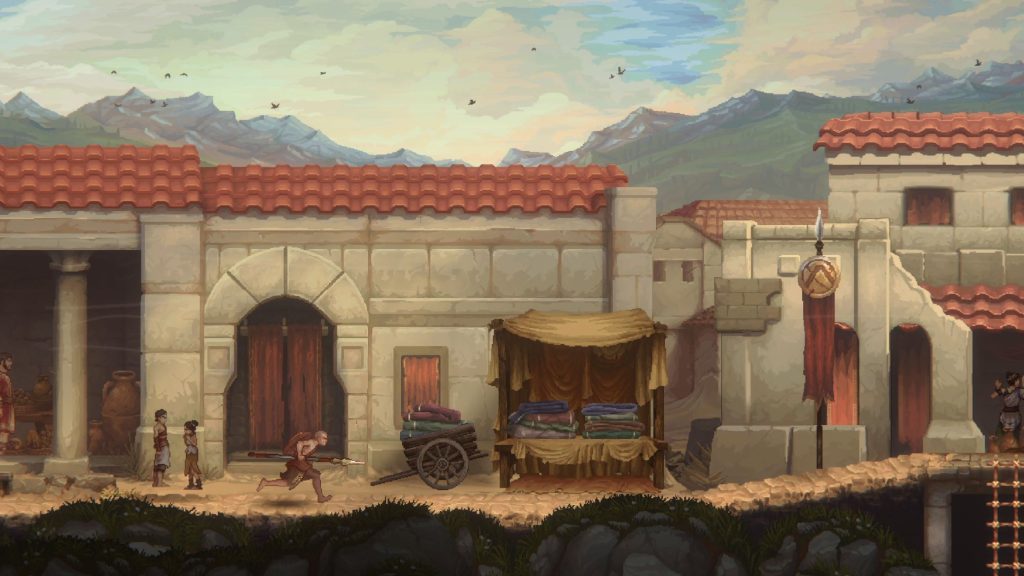
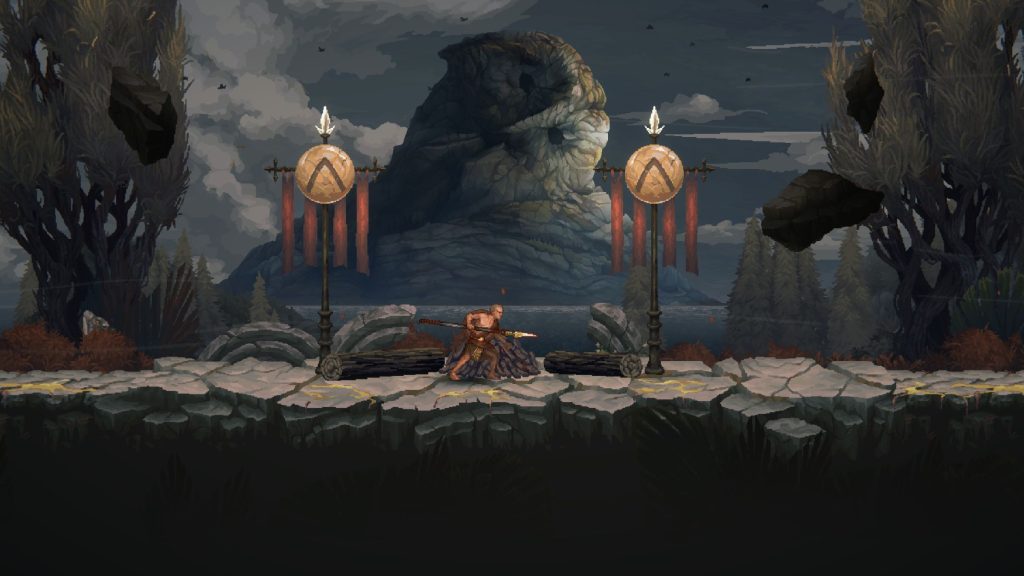
A definite highlight of Sons of Sparta is how Mega Cat translates the Greek world into the 2D realm. I frequently vibed with the sprite work that blends 16- and 32-bit aesthetics. For the most part, there’s no pseudo 2.5D trickery here where the camera works to shift the plane of existence. Backgrounds have depth and texture, looking like old-school matte paintings from film.
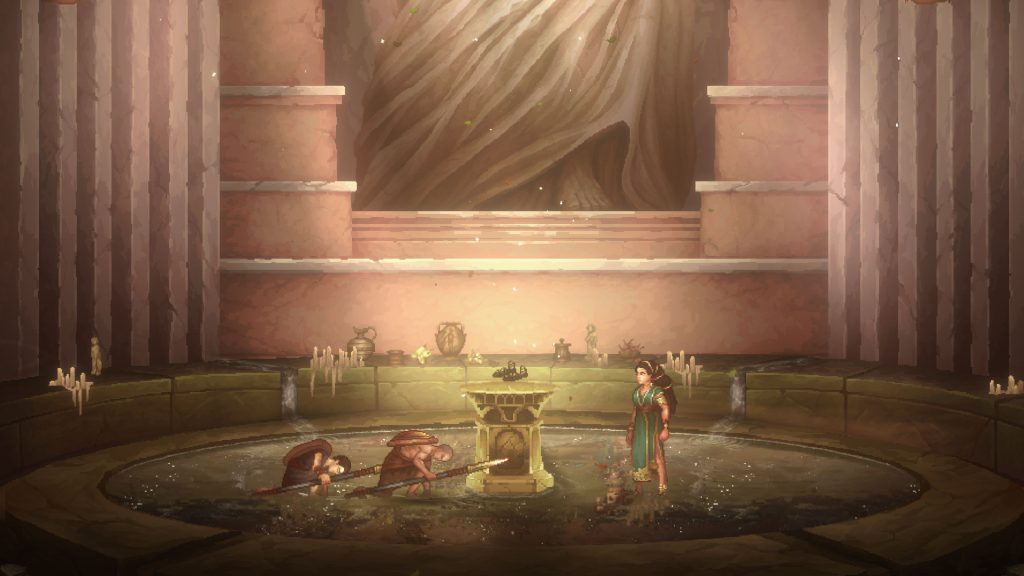
Achieving a sense of spectacle that is on par with one of the most cinematic and bombastic series in gaming is difficult. God of War is known for its elaborate boss fights and sweeping camera angles, emphasizing the power and drama of gods clashing against leviathans. There are few ways in which a two-dimensional Metroidvania can fit inside of that framework. Yet I constantly found myself impressed by Greek architecture expressing devotion towards the gods, tenuous nests where enormous beasts rested their heads, or an oozing sewer infested with bugs.
Variety has a home here in its biomes, all giving a sense of place to the backdrop of Laconia. A winery overrun with monsters, snowy cliffs, and opulent temples work within the established mythos of God of War and Greece. An expected bestiary of minotaurs, humanoids, and ferocious bosses provide familiarity for players who have potentially yearned to go back to Kratos’ original stomping grounds. And it’s all animated quite beautifully. Characters and baddies all move fluidly, truly giving the art direction life.
That feeling of home is also emphasized by the presence of TC Carson, Kratos’ original voice actor. Hearing his elevated, gravely voice touched me in a way that I didn’t expect. Sons of Sparta is framed as a tale of Kratos relaying a story from his younger days to his daughter Calliope, years before Ares and the Greek gods robbed him of his family, infusing him with his infamous bloodlust.
Sons of Sparta focuses on Kratos and his younger brother Deimos as young men still training at the Agoge to become fearsome Spartan warriors. Much of the game follows the brothers as they search for a missing Spartan boy named Vasilis and why those in charge seem to be unbothered by his absence.
With intermittent exchanges between Calliope and Kratos, the narrative attempts to tackle Kratos’ sense of duty as a Spartan. At 13, we see the beginning of the gruff warrior Kratos will become. However, the younger Deimos acts as a foil to this emotional armor. Over the game, we see Kratos begin to soften and act with more empathy. He feels duty-bound to Sparta and more hesitant to question the motives of those in charge, while Deimos chimes in that duty and service have multiple meanings.
Acting as a kind of fable, Sons of Sparta rests well in this humble vision. The village Kratos returns to is only a few screens long. Adult Kratos speaks with a warmth rarely seen until the Norse games. In a way, it all does feel kind of out of place. Despite my best efforts, I never completely acclimated to this “kid-centric” expression. Deimos’ voice, though well-acted, often threw me off when I heard his young tenor.
This isn’t me trying to say that I want my God of War games only deeply mature and violent. Nothing was ever jarring in that I didn’t like the story or its characters. It was merely different and that’s perfectly okay. Many of us likely expected that Santa Monica Studio was working on an Atreus side story and with the right execution, that can be done well. For the package it’s in, Sons of Sparta works. Regardless of the aesthetic or the age of its protagonist, this is a game set in the God of War universe that respects the series and its roots. And it doesn’t have to be the only game to do as such either.
Metroidvanias are not complex to execute. It’s a genre with one of the most iterations in recent memory. Drop players in a map, give them a steady flow of powers and abilities, allow those skills to open up new avenues of exploration and progression. There are several gold standards. You’ve played a few surely. You’ve likely also played numerous ones that fall short.
To me, last year’s Shadow Labyrinth was one of the more tedious games I’ve played in the genre and an indication of how close Sons of Sparta came to committing similar sins. Shadow Labyrinth tried to put a spin on Pac-Man, making this dark universe science fiction game where players would grow in power. But it was bloated, long, and tedious, poorly doling out new abilities.
One of the most frustrating things a Metroidvania can do is stretch out its map too much and obscure new paths at the edges of long stretches. To dig the knife in deeper, games in the genre can turn backtracking into a chore, making you never want to stray far off the intended path.
Sons of Sparta isn’t a massive game. Players can beat it around an average of 15 hours. But numerous times I found myself frustrated over fighting my urge to backtrack, to use a new power to acquire some upgrade or thing that had earlier been unobtainable. About an hour into the game, Kratos receives a marble bust that can shine a spectral light onto places in the environment that have eyes sculpted into them. I remembered a spot at the very beginning of the game having a path I couldn’t access requiring this item. I went back, opened a gate with the bust, grabbed an item, and was met by yet another path that was inaccessible. I needed something to help me scale certain walls.
This also happened after I gained a magical item that allowed Kratos to lob fiery bombs and burn away thorny bushes. I did that and continued along the location, only to met by out of reach chests I knew I wouldn’t be able to get. While there’s nothing wrong with asking the player to be curious and use the map to tag places of future interest, I hate the feeling of running into a brick wall that wasn’t signposted.
I’m not sure how some games nail this traversal more naturally but Sons of Sparta instilled in me a feeling of just progressing along the main path. In doing so, I would collect the necessary tech that would enable me to reach things eventually. This certainly isn’t graceful but it is practical, especially because Kratos doesn’t move that fast and fast-travel points aren’t super generous.
But this issue also brings up another sticking point with Sons of Sparta. In the vein of the Norse games, Kratos can collect different spear tips, shafts, and pommels for his primary weapon, along with different types of shields. Spear tips can add fire attacks, extend the length of jabs, deal more critical damage, etc. Everything else can add finishers to his combos or special attacks. On top of that, these pieces can be upgraded with blood orbs and materials found throughout the journey. Blood orbs are also used to add new skills to Kratos’ repertoire.
All of these things are great and add flavor and experimentation to the game and its combat. However, the combat simply isn’t that complicated. Though it feels great to stab and dodge between the numerous enemies Kratos tears through, fights never really evolve beyond a certain point.
The dodge window has an insane amount of invulnerability frames, enabling players to roll in and out of danger with relative ease. Some enemies can be killed by simply jumping up and down and stabbing them from a different height, never allowing them to touch you. There are color-coded attacks indicating the need to parry, dodge, and avoid but they are telegraphed pretty well.
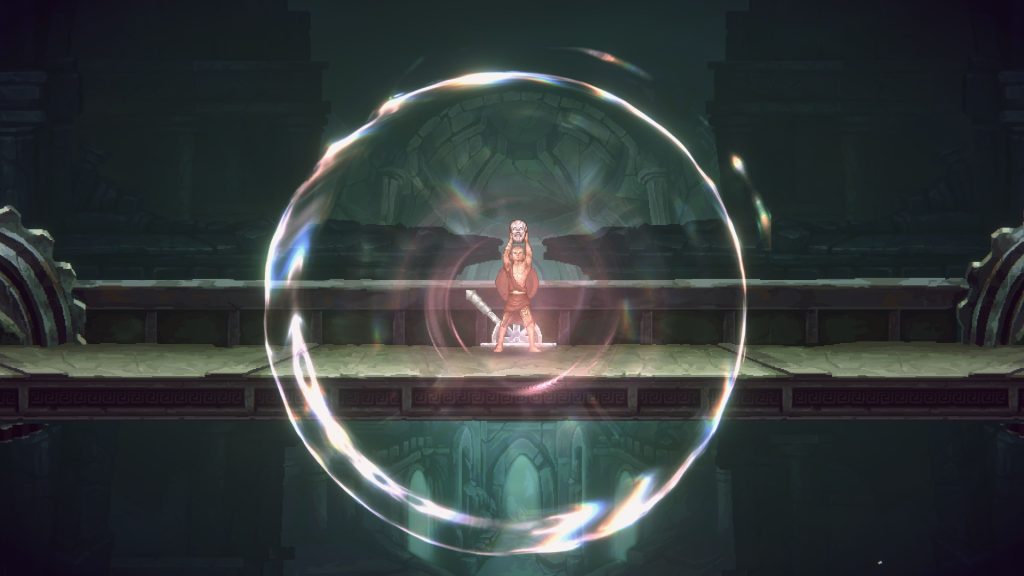
Even playing the game on the hardest difficulty I never felt immensely challenged. Part of the reason I wanted to collect blood orbs and upgrade materials was because it fueled the completionist itch in me. I never really wanted to invest in any of the defensive dodge attacks because I was more concerned with upgrading the spear to raise Kratos’ damage. But getting the materials to upgrade required extensive searching, progression, and enemy farming.
In reality, there are a lot of tools to fight the broad array of enemies. It’s cool that players can use a Spartan attack to generate stun and healing orbs on an enemy. It’s cool to have magical items that can spice up fights. Yet some well-timed jabs of the spear and quick dodges will do the trick just as easy. In ways, this makes combat similar to the Greek God of War games. Those were more hack-and-slash titles that gave a few flashy tools for players to feel more like a god. The Norse games leaned heavily into builds and complex enemy configurations. Sons of Sparta wants to have it both ways but leans mostly into simplicity. Personally I would have preferred less options or more streamlined abilities that could be used against truly difficult enemies.
Sons of Sparta‘s heart still beats true despite these issues. It embraces the retro aesthetic and even brings Bear McCreary back for a chiptune score. It uses the Greek backdrop to inspire nostalgia for the series’ roots, paying respect with a new visual style. For many it will be the combat and exploration that bring up the biggest points of contention, not the youthful take on Kratos. But Sons of Sparta proves that PlayStation franchises can be iterated on in experimental, exciting ways.