


Normally when you think of games centered around music, you might think about games that require you to have some sort of fancy guitar controller. Fretless: The Wrath of Riffson is certainly a music-driven game, but throws out the notion that you need a guitar controller to have fun. It’s an interesting blend of roleplaying, rhythm, and turn-based mechanics. I played with a keyboard, but you might find it better to use a controller.
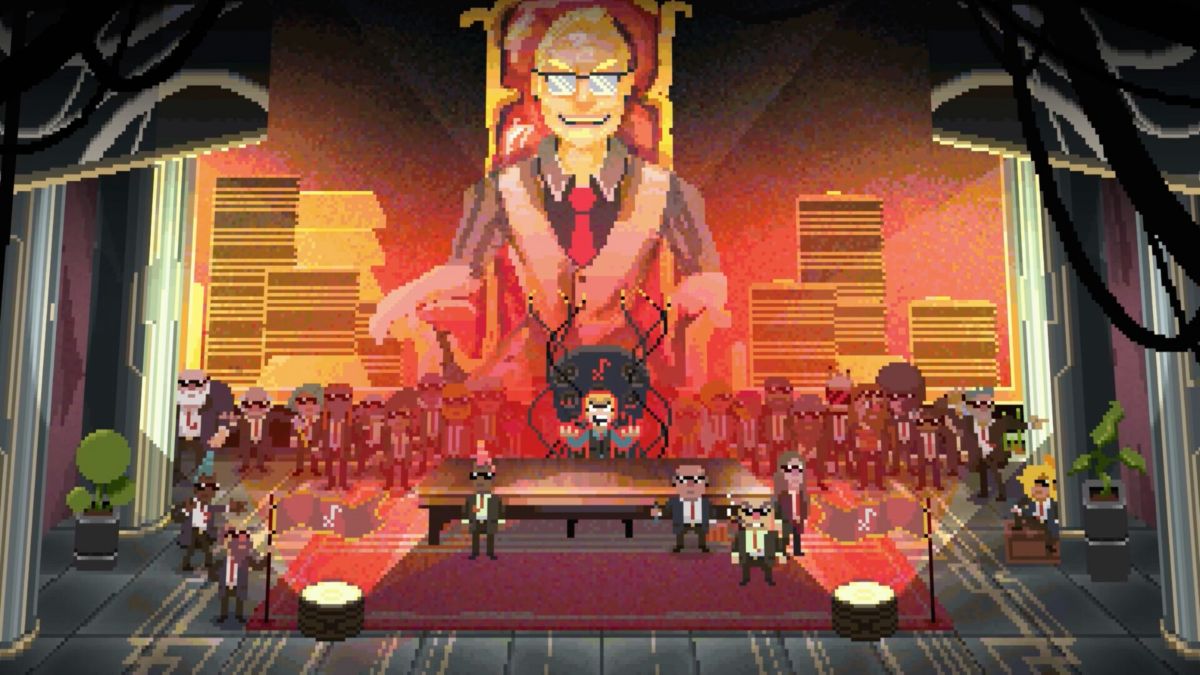
Fretless is an RPG developed by Ritual Studios, published by Playdigious Originals, and is inspired by YouTuber and musician Rob Scallon. This game sees you take on an evil record label called Super Metal Records. Your character, Rob, sets out to defeat CEO Rick Riffson’s horde of baddies with sick tunes and good vibes. Throughout Fretless you’ll explore a world full of music and music puns—just so so so many music puns. So let’s not skip a beat (heh), and jump right into it.
Gameplay
Combat in Fretless emphasizes both turn-based strategy and rhythm mechanics, which surprisingly work well together. Each round of combat you choose three “riffs” to play, which can do a wide range of things from damage to shielding yourself. There’s a lot of versatility with these riffs, especially with the unique powers that each unlockable instrument has. You only have a limited number of spots in your deck for riffs, so you need to strategize which ones you bring into combat encounters. I guess that also makes Fretless a deckbuilder, just without the cards.
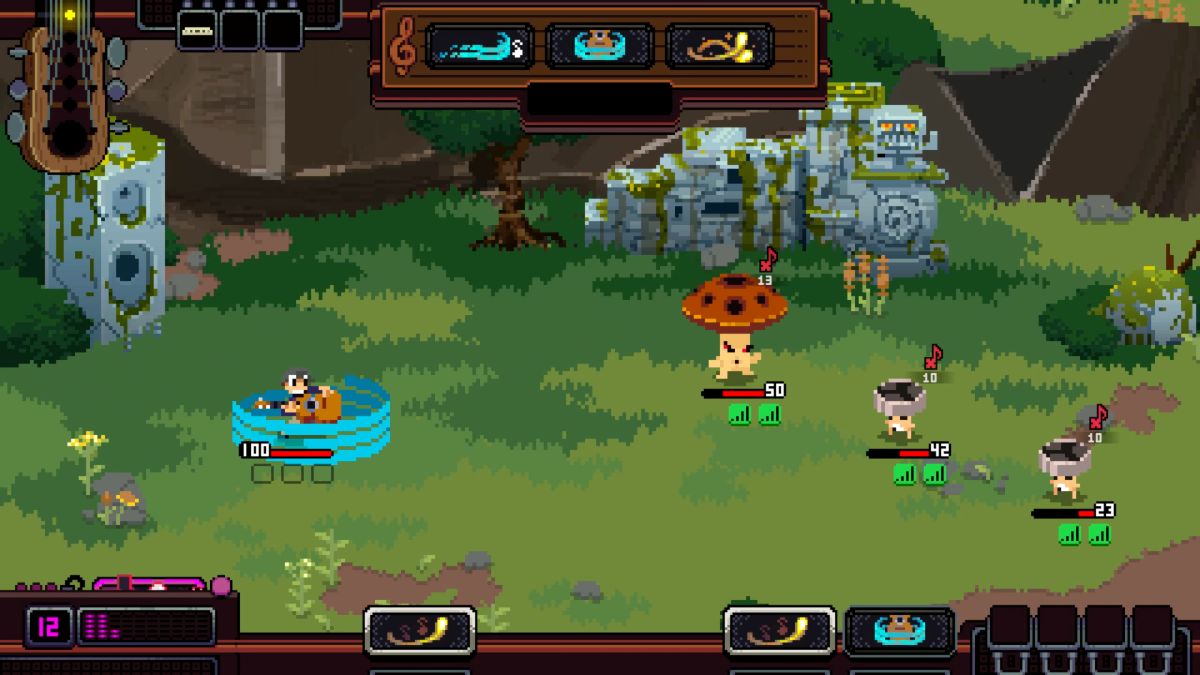
When dealing damage, there’s the option to deal additional damage via something like a quick time event. Well, it’s simply just clicking at a certain point in the attack, indicated by a yellow glow. On the flip side, when enemies attack, they also have a yellow glow. You can click on it to block the attack to take reduced damage. It’s a bit strange because there already is a shield mechanic. Some riffs played give you an amount of health to be shielded on the next enemy attack. There’s some strategy involved with it, meaning the player has to balance both offense and defense, depending on what the enemy’s next move is. So it’s a bit odd to me that there’s also a time-based blocking mechanic. Why give the player the option to block damage if they’re going to have to reduce it with a timed click anyways? It just serves to undermine the strategy elements of the game.
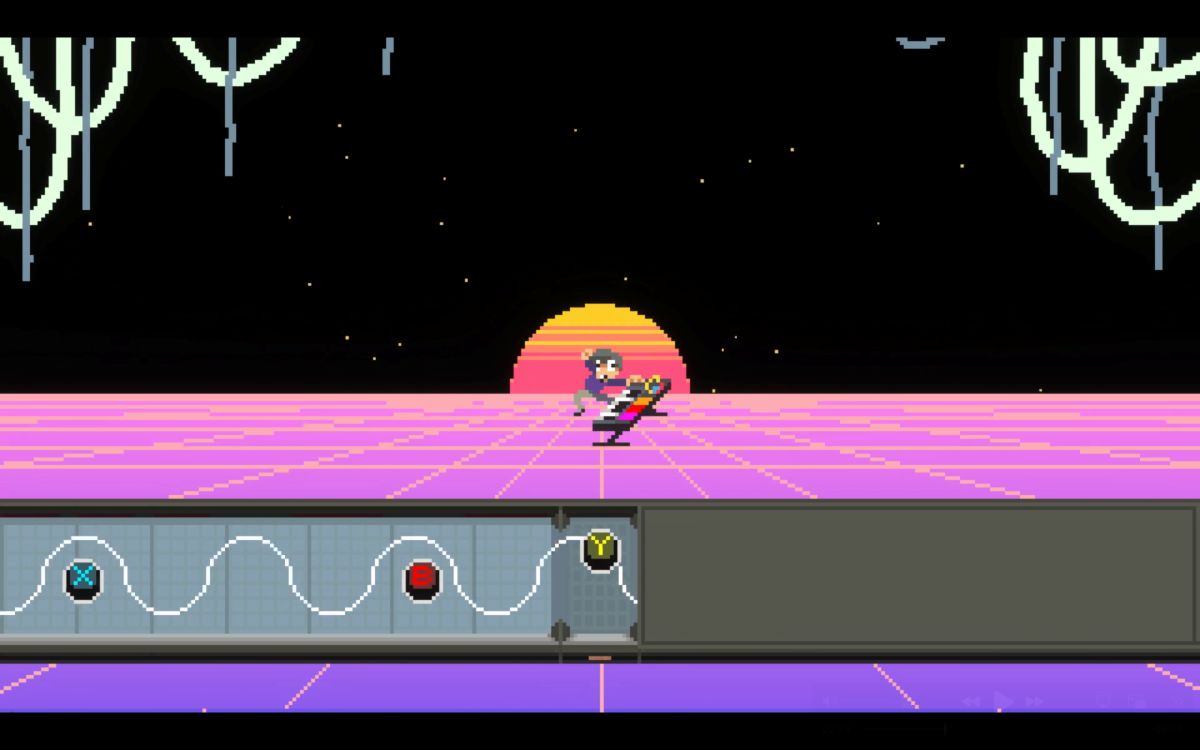
The rhythm elements really shine on their own during the “Crescendo” mechanic. During fights, you slowly build up a meter to unleash your Crescendo. This acts as a special attack that deals massive amounts of damage and boosts you for a little bit. The Crescendo attacks do a base amount of damage, but they also present you with a Guitar Hero style minigame to deal extra damage. It’s so fun and simple that it almost begs the question, why not just highlight the rhythm aspects of the game here where they really shine, rather than including the lackluster blocking mechanic?
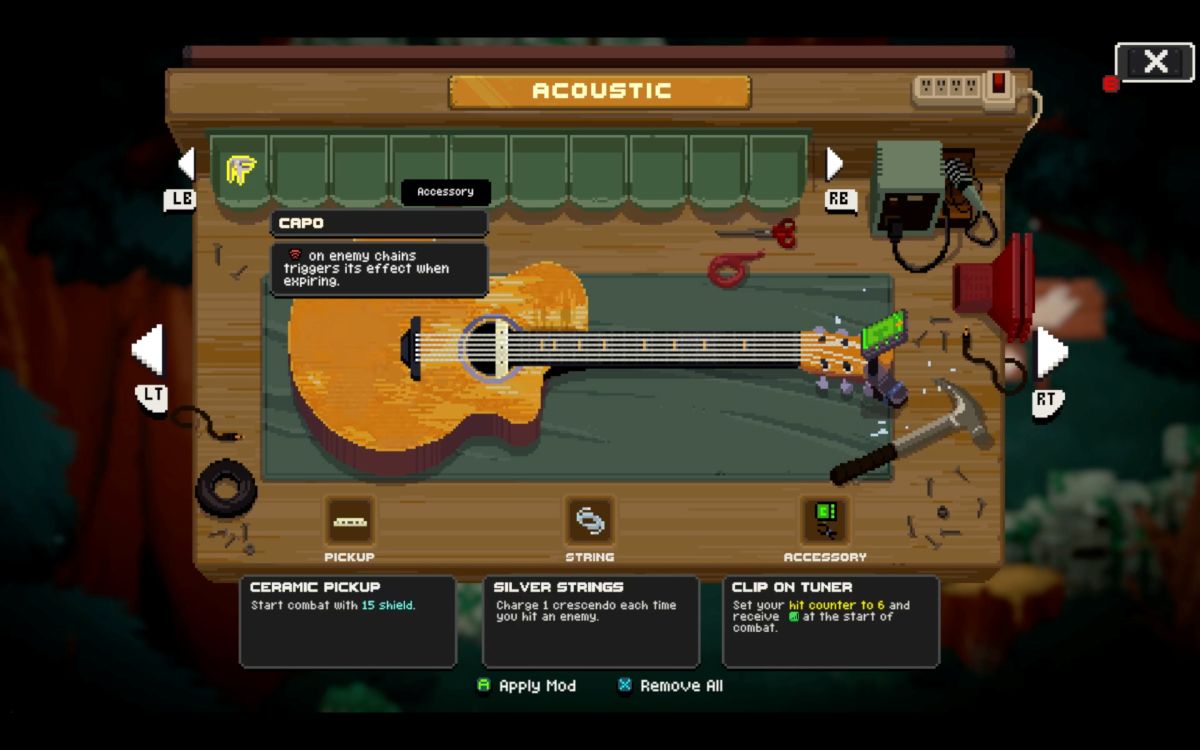
Outside of combat you’re traversing the land and there’s loads of different things to encounter. Your instrument can be modified and you can unlock new riffs and upgrade them. Lots of the upgrade materials are found across the world, there’s merchants to buy items from, and new riffs can be found throughout the world. All of these mechanics work really well together, even if it’s not exactly groundbreaking stuff for an RPG.
As fun as combat and exploration can be, it does get a bit repetitive. Much of Fretless is spent trying to get to one place, just for something to sidetrack you and add on another requirement for you to fulfill. This sort of gameplay loop can get a bit frustrating after a while when all you want to do is progress. The pacing isn’t terrible, but it does feel bogged down when your main goal is delayed for too long.
Audio
I find that sound design is an often overlooked aspect of gaming. Video games are inherently a very visual medium, so both critics and players tend to focus on visuals first and audio later. Heck, even I do this when writing my reviews. However, Fretless is such a music-driven experience that it needs multiple paragraphs dedicated to its sound design.
Most roleplaying games can get away with sub-par audio as long as other aspects of gameplay are there. However, when your game focuses on instruments and music as its core theme, it’s absolutely critical that you get the sound right. I’m happy to say that Fretless absolutely nails its sound design, from ambience to combat.
I adored the ambient sound in Fretless. Though it is a bit loud with the default audio balancing, it’s easily adjusted with a slider. The background audio is calm and serene when you’re wandering the world, and even some plants and animals make instrument sounds when walking past. It really immerses you in a world where yeah, it does make sense for everything to be based on music!
The combat music is also masterfully done. For most encounters, you’ll hear the music of whatever instrument you currently have equipped, which was a really nice touch. Every time, the music is energetic but not overbearing, which is absolutely perfect. In boss fights, you’re treated to some intense rock music which just soars beyond anything else. I did find myself unconsciously headbanging a little during some of these fights, the rhythm just took over my body.
Fretless is turn-based for the most part, but does have rhythm mechanics on attacks, blocks, and special moves. I was worried at first that syncing the rhythm mechanics to the music would be impossible, but I never noticed anything distracting. In fact, it helped my timing with these mechanics to rely more on the sound cues than the visual cues. I’m impressed by how well implemented sound was in the time-based mechanics.
Aside from the rhythm and music, the interaction and impact sounds in this game are really well done. Everything fits nicely, it’s not too annoying or overbearing. There isn’t any voice acting though, because dialogue comes up on the screen in a text box.
Visuals
Fretless’ pixel graphics are nothing revolutionary, but wow are they nice to look at. From the top down perspective, to the graphics, to the gameplay, it all feels reminiscent of earlier Pokémon games. The art style’s retro-modern look is just really pleasant. The colors are vibrant and have a visually pleasing contrast. The foreground and background on certain areas also works very well together, creating a bit of depth to the scenes. Though, the best aspect of the visuals is the animation—they’re all so clean and well polished.
Conclusions
Now, I’ll let you in on a little secret: I used to be a bit of a Rob Scallon fan. I used to play guitar as a hobby and would watch quite a few of his YouTube videos. So when I saw that he was involved in the development of a video game, I was pretty intrigued. I’m happy to say that what was delivered was an enjoyable experience with a lot of soul and love poured into it. Fretless is not the type of game to lock you in for hours on end, or change your life, but it shines in its environment and sound design. It’s a passion project turned into a downright fun experience.