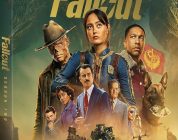


Fallout 4: Anniversary Edition on the Nintendo Switch 2 is not the best version of Fallout 4, but it plays well enough to warrant a recommendation for Switch owners who don’t own a PC or any other console that has seen a Bethesda release in the past decade. It’s a surprisingly good port that’s giving me hope for future RPGs to make their way to the Switch 2.
Fallout 4 has a special place in my heart as it was one of the last things my father and I bonded over prior to his passing. I was playing in the living room, exploring the Boston Commonwealth (as you do) and listening to Diamond City Radio (the in-game radio station that featured classic music from the 40s and 50s). He had heard Cole Porter, Tex Beneke, and Billie Holiday blasting from the TV while he was in the kitchen and became confused. Why was Will listening to 40s music?
He was surprised to see that music from his parents’ childhood was included in the game I was playing, resulting in me sending him down a rabbit hole of Fallout 3 and 4’s radio stations on YouTube. Fast forward to today, returning to explore Bethesda’s post-apocalyptic America feels just as nostalgic as it did back in 2017.
 Last November, Bethesda made several big announcements: Fallout (Season 2) was being released in December 2026 on Amazon Prime, Fallout 4: Anniversary Edition was releasing on most platforms, Fallout 76 was available for free for Amazon Prime members (along with Fallout New Vegas Ultimate Edition and Fallout 3: Game of the Year Edition), and that Fallout 4: Anniversary Edition would be making its way to the Nintendo Switch 2 in early February 2026. My attention, at that time, was focused primarily on Fallout Season 2 and Fallout 76’s new content. Please forgive me when I say the following:
I did not have a Nintendo Switch 2 version of a Fallout game on my 2026 Bingo card. Not one bit.
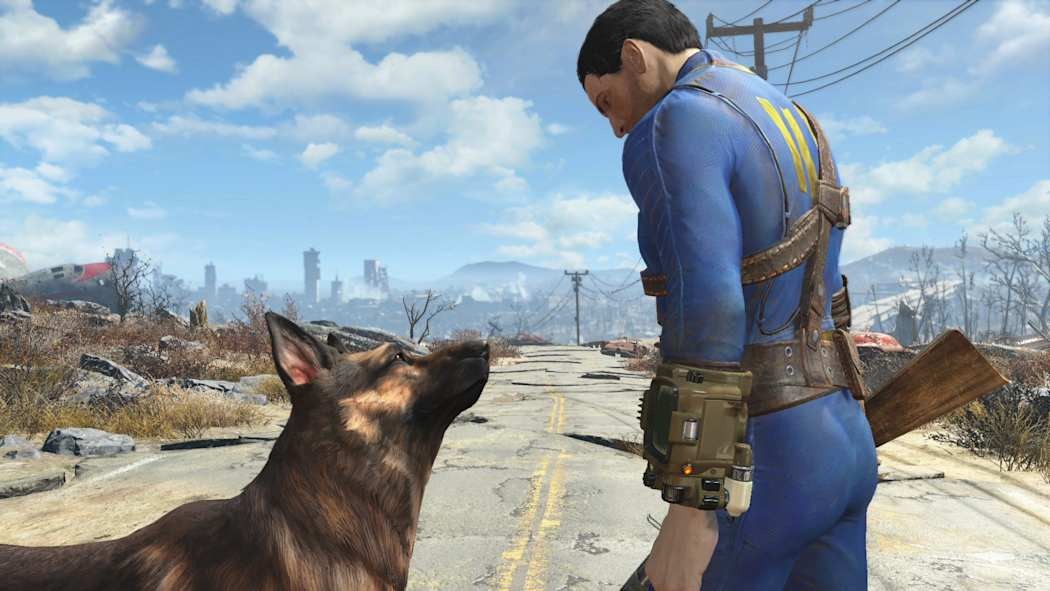 It’s a pleasant surprise to have one, though. It’s even more pleasant to see the game run better than its Skyrim counterpart at launch. After spending a good 20 hours playing Fallout 4: Anniversary Edition on the Nintendo Switch 2, I’ve come to the conclusion that Bethesda and their porting partners are slowly (but surely) coming around to figuring out how to port decades-old games to Nintendo’s newest console.
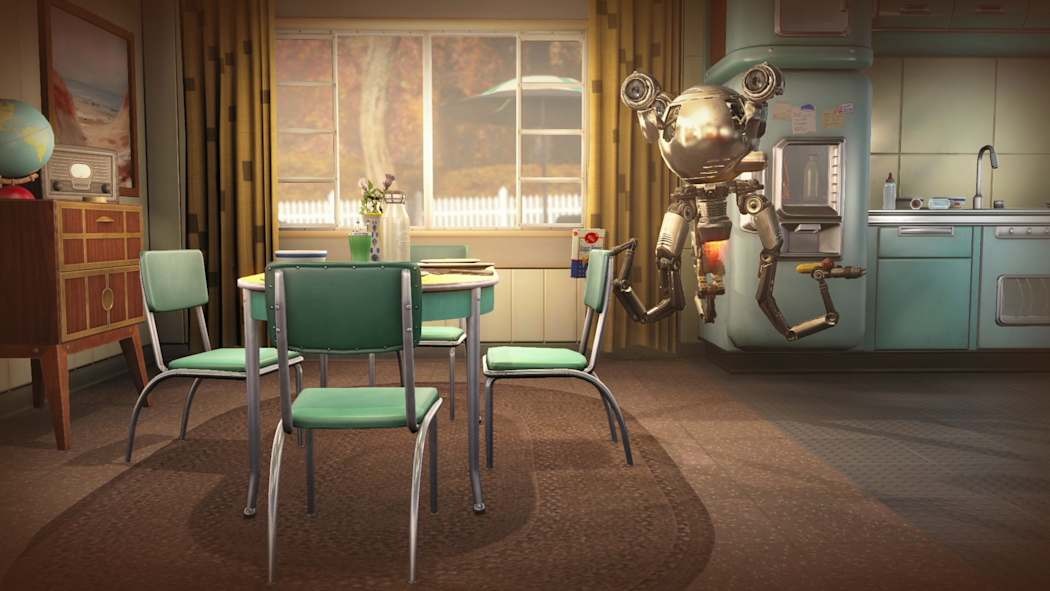
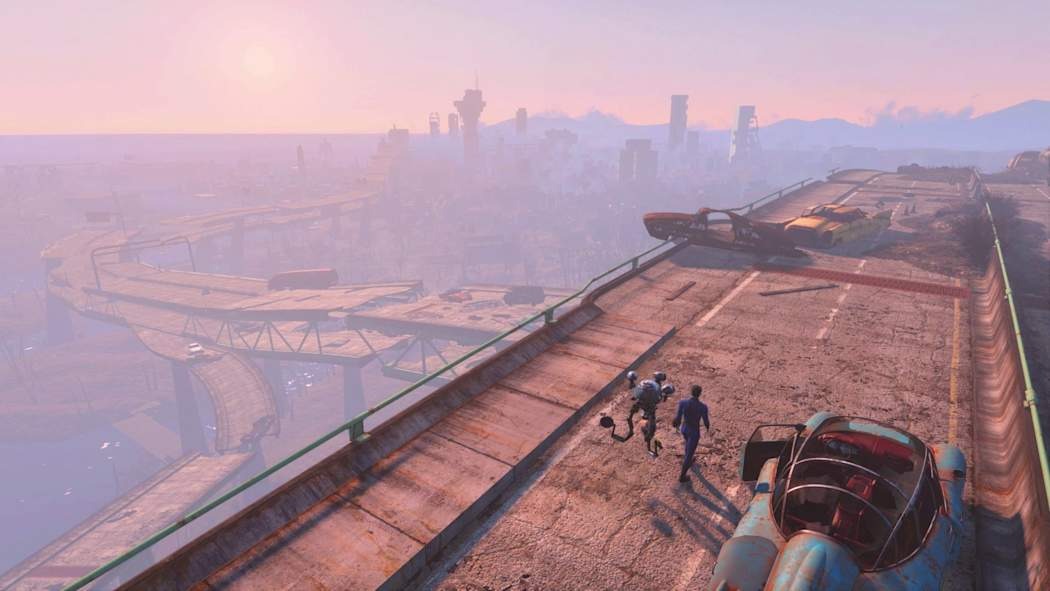
Fallout 4 on the Nintendo Switch 2 shows a less dirty, less grimy, and less detailed version of post-apocalyptic Boston, at least when playing in handheld mode on 60fps. I spent most of my reviewing period playing the game in handheld mode to assess its portability. At 60fps, distant enemies (be it 10 feet away or 50) were fuzzy, blending into the background despite flashes of light emerging from their guns. The VATS auto-targeting system came in clutch when scoping out areas, but it still was disappointing for critical details to be missed at the supposed best graphical mode on the console. Outlining enemies, even at the cost of losing the “surrealism” of Fallout 4’s mystique, would have greatly benefitted Switch 2 owners.
What was most pleasantly surprising was the graphical modes on the main menu: Targeting lower frame rates yielded sharper imagery, albeit at the cost of slightly choppier gameplay reminiscent of last-gen (or older) gameplay. The 40fps cap was the sweet spot during my playthrough – it had just enough details for me to discern friend from foe while remaining smooth enough to explore the Boston Commonwealth without issue. Regardless of framerate cap, however, the game was smooth as butter. There were no frame skips or jumps to be found. No crashes, either. For a Bethesda port, this is admittedly the best one thus far.
 As far as Bethesda games go, Fallout 4 utilizes the RPG and character creation formula that Bethesda has perfected over the past two decades. It places the player in the shoes of a shapeless avatar, pushing them to mold it in their image and give it a personality and set of skills that ultimately guide the player into a playstyle of their own choosing. With the SPECIAL system, the initial Fallout 4 character creation process is used as a framework for future perk selections. If you’re planning on using melee weapons and bludgeoning enemies into bloody pulp, then strength and endurance points should be prioritized. If you’re planning on using tech and futuristic weaponry to disintegrate radiated abominations, then intelligence and luck are needed at the start. By the forty-or-so hour mark, it doesn’t really matter what points were invested in at the start thanks to how the level up system and consumable items grant points to the player throughout the game.
Regardless, Fallout 4 leans into the idea that actions have consequences (albeit some more than others). Putting all your initial skill points into strength and endurance with none in charisma means that your character will initially fail every single conversation check and resort to rudimentary measures to complete tasks. Eating too much wasteland food results in radiation poisoning. Attacking a guard can set off alarms in an otherwise friendly encampment, resulting in bounties placed upon your head assuming you got out of there in one piece. Siding with the Minutemen, one of Fallout 4’s many factions, can result in other factions blocking you off from entering their abodes and preventing you from accessing unique events.
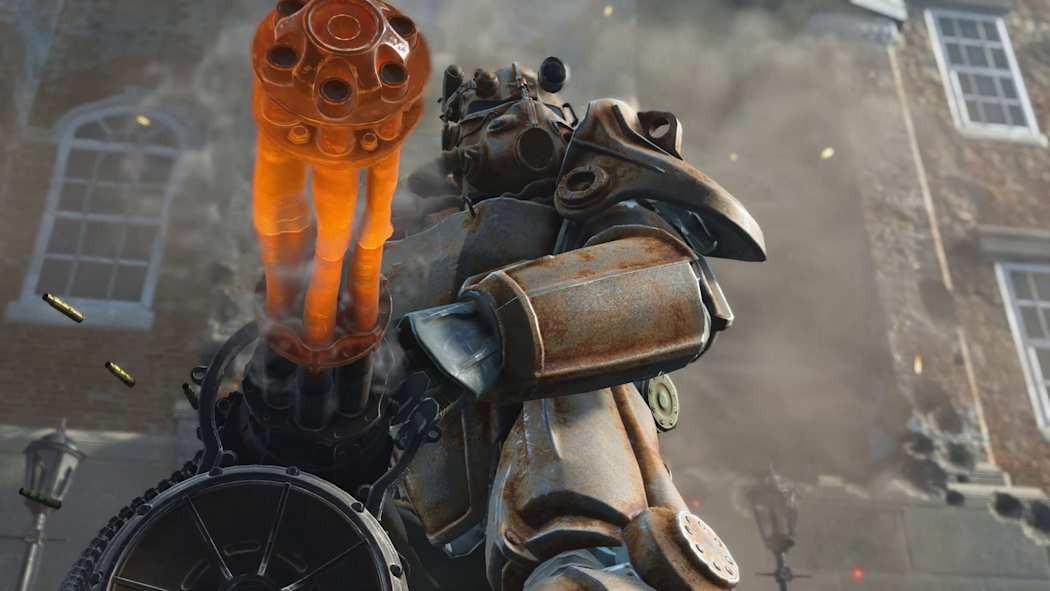 Things are made slightly more difficult, yet slightly more realistic, in Fallout 4. The top of mind example is encountering and wearing power armor. In Fallout 3, power armor served as an endgame set of armor that shielded the player from the Capital Wasteland’s dangers thanks to stats and an immensely beneficial set of defenses. In Fallout 4, power armor is encountered in the first four minutes…but it requires constant upkeep by repairing it with everyday materials (found just about everywhere) and powered by fusion cores for 20 minutes of real-world time.
Fallout 4: Anniversary Edition does not take advantage of the Switch 2’s novelties, namely gyro support or the Joy-Con 2 mouse function. Frankly, it does not need it. The newest odds and ends packed into the Switch 2 don’t feel like natural use cases for the mechanics required of Fallout (or any of the other modern Bethesda titles). One could make the case that gyro support would be nice to have, but if you’re playing games on the Switch and intimately familiar with the Switch’s Joy-Con controllers, it makes better sense to rely on them as you would for other Switch games. The rest of the Switch 2’s hardware, though, is utilized effectively to keep the game running smoothly.
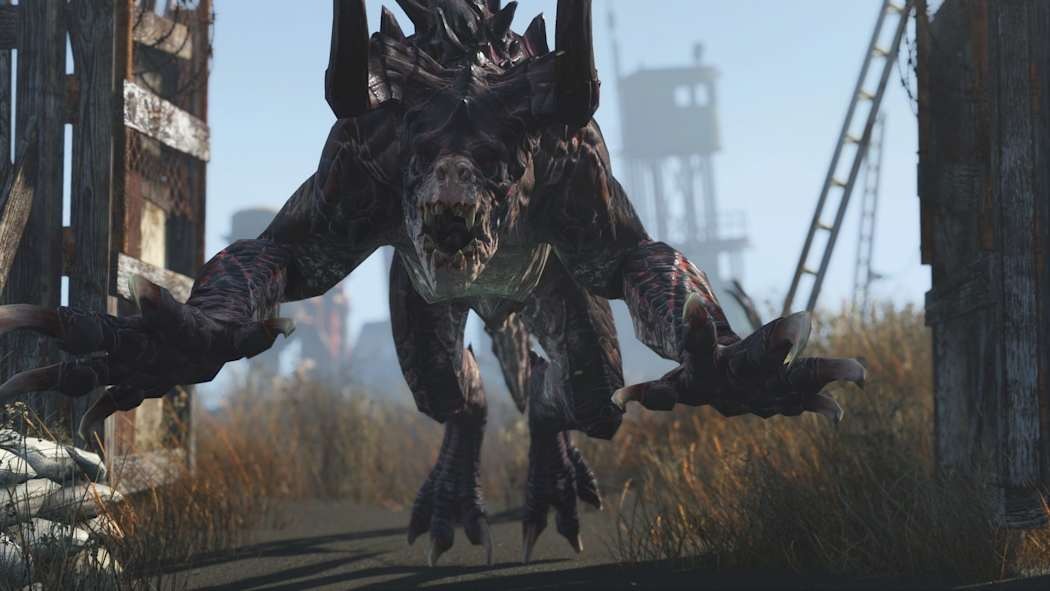 The Anniversary Edition is the comprehensive version of Fallout 4. It features all of the add-ons (like Nuka-World and Far Harbor) along with the 2025 Creations Bundle of community-designed content. While the Creations Bundle might not be the best showing of Fallout 4’s expanded content and Bethesda’s “Creations” ecosystem, the rest of DLC included in this edition fills out some of the empty nooks and crannies in the base game. The Switch version (like its PlayStation counterpart) cannot access custom mods and adjustments via the console, but the additional content is enough for the game to feel complete. Sure, some longstanding bugs remain to this day, but that’s the Bethesda special. Watching an enemy ragdoll into outer space after shooting them with a pistol is silly and par for the course: It most likely won’t happen, but when it does it will elicit a good chuckle.
Fallout 4: Anniversary Edition on the Nintendo Switch 2 is not the best version of Fallout 4, but it plays well enough to warrant a recommendation for Switch owners who don’t own a PC or any other console that has seen a Bethesda release in the past decade. It’s a surprisingly good port that’s giving me hope for future RPGs to make their way to the Switch 2.