


Everdeep Aurora is more than a cozy digging metroidvania. It’s a glimpse of what simplistic platforming can and should be, thoughtfully interwoven into a gameplay loop where discovery is the win condition. Its presentation might lack directness, but I would prefer a world where I can enjoy what I’ve dug up rather than being pointed to the next objective where I can surmise the outcome.
Everdeep Aurora is one of those indie games that looks familiar until you pick it up. From its Game-Boy-Color-inspired 16-bit aesthetic to its simplicity, it harkens back to a time where games were far from flashy while being more difficult than what today’s players come to expect. Except now, the game isn’t difficult as much as it is intentionally vague (for the better), and it stars a small cat with a big drill.
My first hour of Everdeep Aurora was a strange one. I grew up with a teal Game Boy Color, so I was familiar with games that utilized black, white, and color blocking to add depth to an otherwise monochromatic space. It felt like I was playing Link’s Awakening but with slightly more fidelity, fluidity, and wholesomeness.
Developer Nautilus Games and publisher Ysbryd Games have put together a unique 2D platformer meets metroidvania, albeit one that lacks intricacy, urgency, and complexity from some notable titles in this space.
 I was put in the shoes of Shell, a silent kitty whose mother had taken shelter in the depths and was told to meet in the “usual place.” The “usual place” is intentionally left vague here, as much of the focus is on a meteor shower that has threatened the existence of all of the animals who know Shell and her mum.
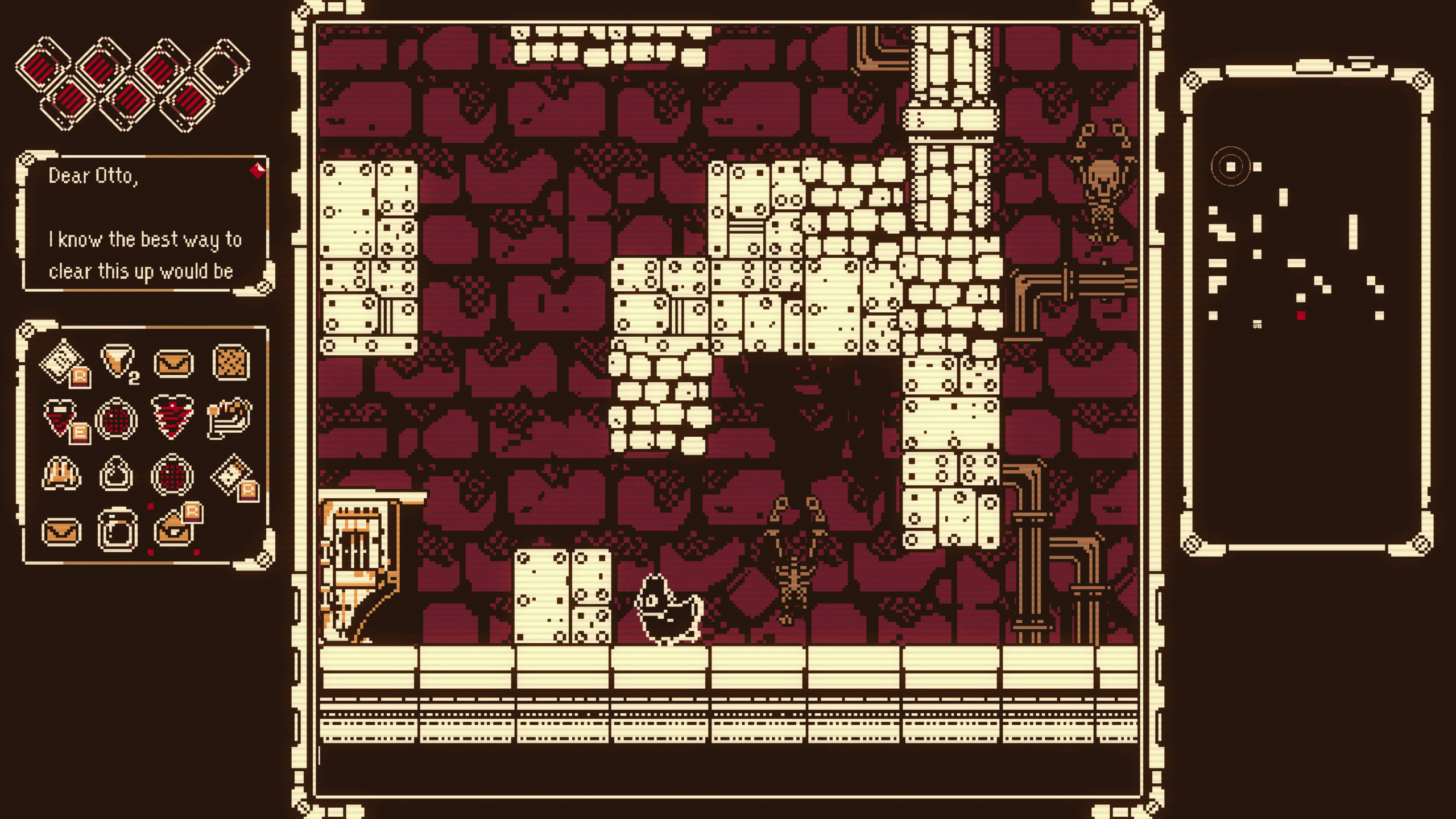
Everdeep Aurora plays like a metroidvania in that progression involves exploration, some platforming, and some puzzle solving, but it’s primarily locked within a vertical confine. Much of the navigable space involves drilling upwards or downwards, only backtracking when Shell’s big drill is out of juice and needs to be recharged from a drill charger that costs red gems that you’ve collected from digging. If you’re too far down, you can call on a friendly frog who can take you back to the nearest base camp where you saved your progress.
Exploring the depths of Everdeep is a solemn yet easygoing affair. There are no “threats” to be encountered, nor is there an endless abyss where the player can feel lost. Instead, digging is done until the player can dig no more, all the while a little map reminds you of the location of the major NPCs’ locations (like the Ram who upgrades your drill). The world will slowly rebuild itself, too, which saves the player from becoming softlocked in the event that they dug too far down in a vertical direction.
As far as platforming is concerned, there’s very little intricacy that defines Shell’s movement. At most, jumping and a single wall-jump is the most players will need, barring a few other simple movements that can get through some of Everdeep Aurora’s puzzles. The subterranean environment gives the player quite a bit of freedom in carving out temporary paths to reach new depths and discover new elements of the world of Everdeep. It’s like Minecraft in a 2D-space, with a far less emphasis on exploration and a greater emphasis on exploration.
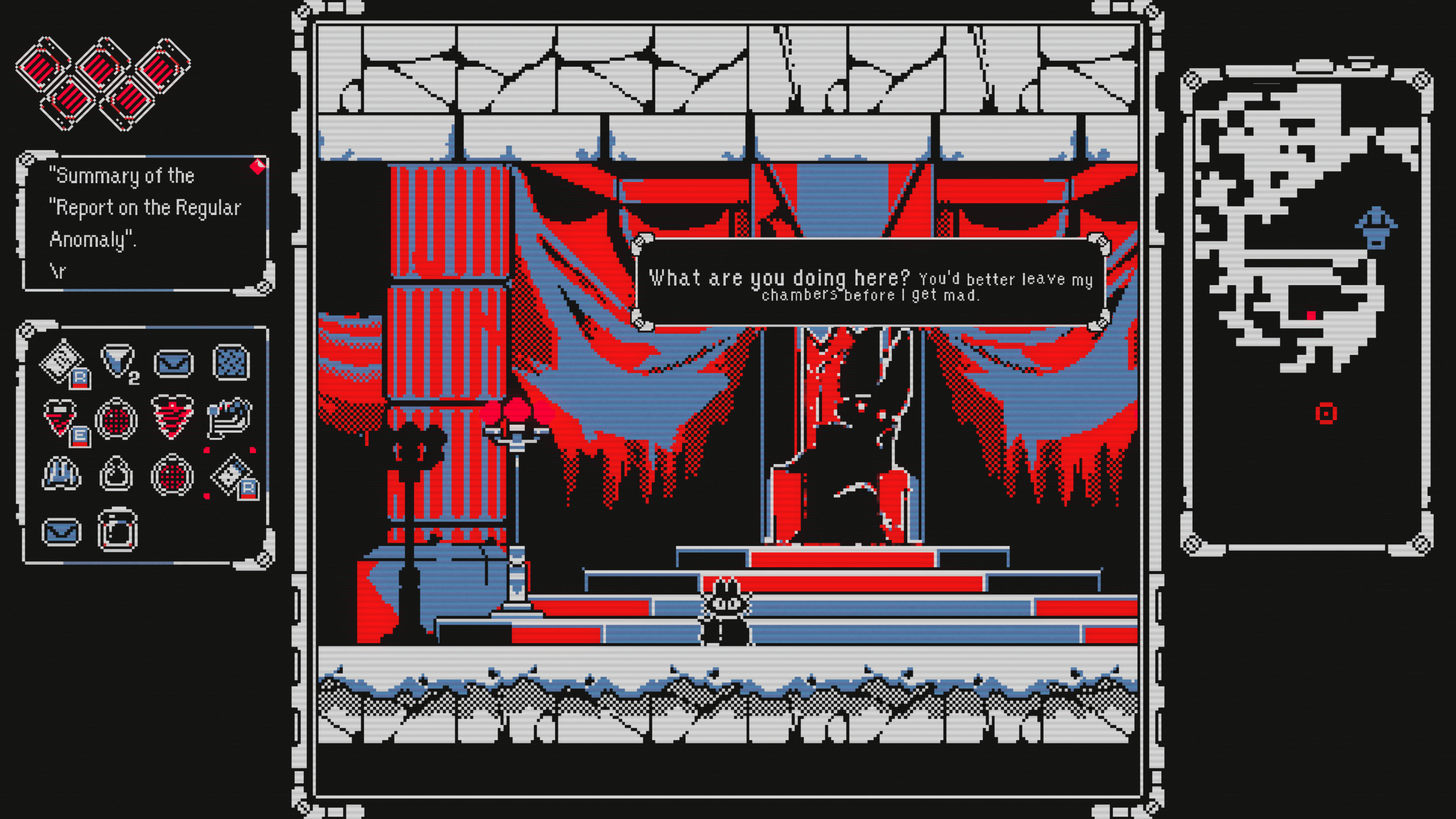 The handful of zoomorphic NPCs in Everdeep Aurora’s depths may bring you some reprieve in the solemnity of its subterranean exploration, but these interactions are treated as exceptions rather than the norm. Several interactions give the player a quick glimpse into the world that Nautilus Games has created, while a handful of others feature some form of minigame that break the norm of digging for the purposes of finding Shell’s mother.
Regardless of purpose, these interactions are almost exclusively discovered by chance, rather than something explicitly told to the player as a means of advancement.
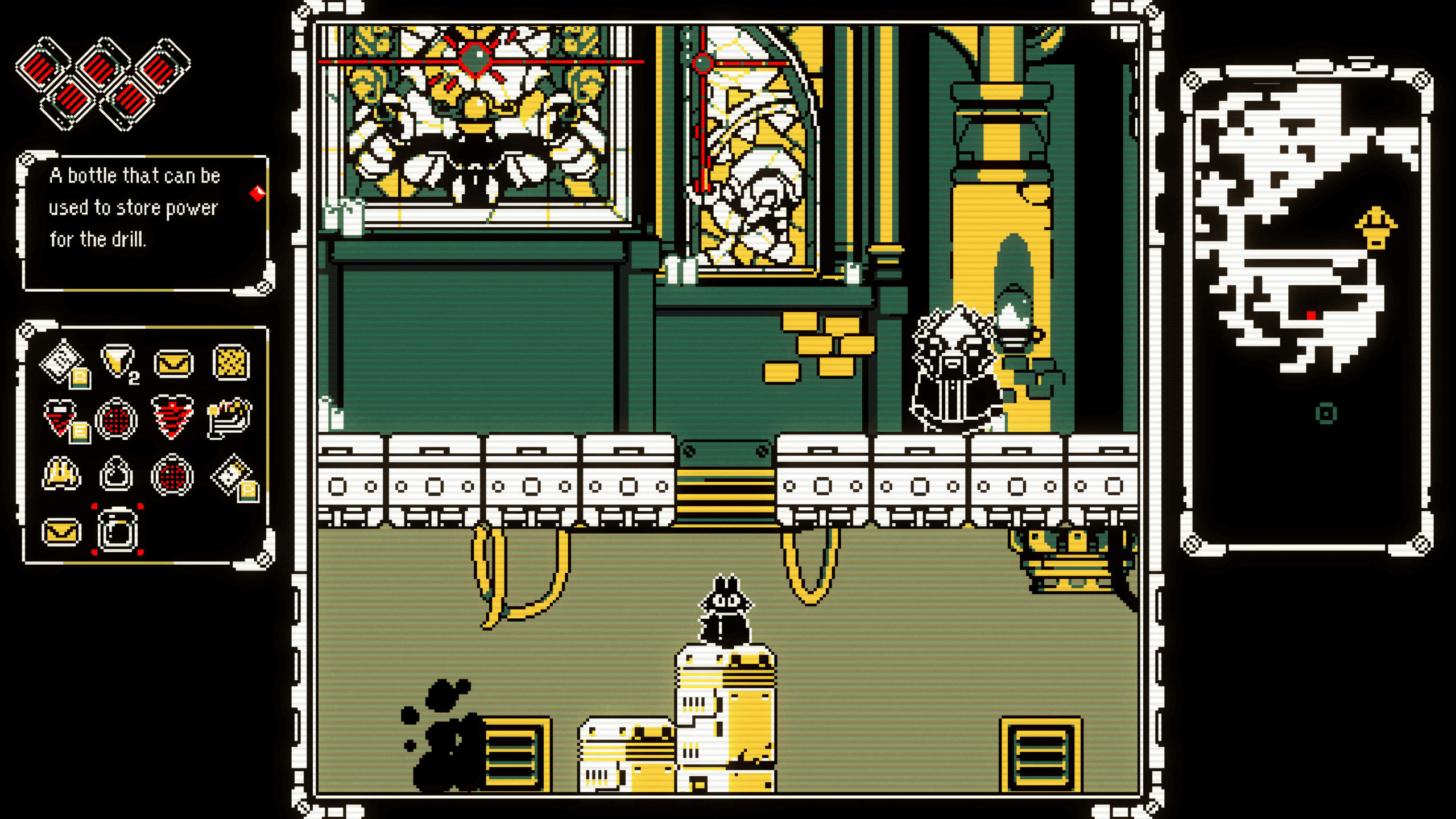
The biggest thing holding Everdeep Aurora back is its presentation of information. That is, it’s quite difficult to pinpoint where to go next, what do next, along with rediscovering where you’ve been as you dig further into its depths. Its persistent minimap cannot be expanded, nor can it be marked up to give you a sense of direction should you decide to put the game down for a spell. Should you return to it, it may take longer than necessary to get your bearings and figure out what you were doing along with the purposes of the items of your inventory that are attached to secret side quests.
On the other hand, this lack of information creates a void of urgency, ensuring that each small discovery made during a few minutes of backtracking is given a small moment of celebration that the player can fully enjoy. I was lost quite often during my playthrough, and it was during those moments of backtracking where I encountered a new costume, what I assumed was another optional sidequest, and/or something that was critical for advancement. Every one of those moments of discovery was a moment where I could reflect on what I found and hypothesize on what I needed to progress further. But even then, I wasn’t laser-focused on trying to figure out the best path forward. I was focusing more on the bigger picture, an objective I couldn’t properly define but I could technically envision as something I potentially needed a smidge later.
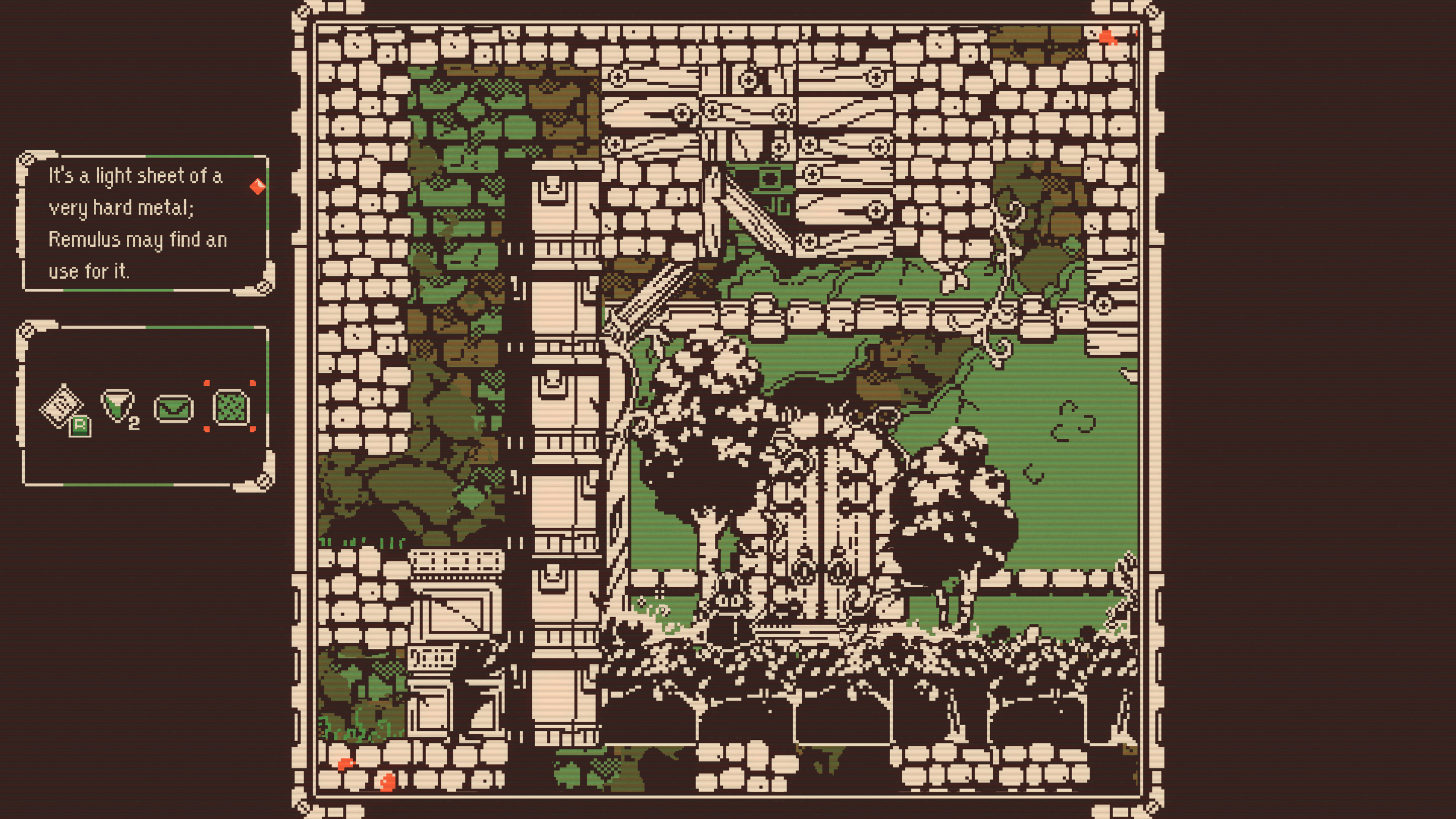 You’ll find your way down to the deepest parts of Everdeep Aurora in due time, but it may take you longer than others…and that’s okay. Part of what makes Everdeep Aurora a delightfully wholesome experience is those small moments of discovery unmarred by an arbitrary lose condition or unnecessarily complex mechanics. It’s all about digging downwards (sometimes, upwards) and going with the flow with what you find.
I was able to complete Everdeep Aurora in around 7 hours, which is just over the 6-8 hour time frame that the developers intended for most players’ completion times. I was also told that there are twelve endings – I managed to unlock 2, I think, but I’m unsure as to what constitutes an ending. There’s also no way for me to review the endings in the post-game space. I wish that there was a conclusive way for players to track their post-game experience just so they can see how deep they’ve traveled, or perhaps how deep they have yet to experience.
I see a world in which Everdeep Aurora attracts a small, but avid, fanbase of folks who want to pick apart its narrative like those who’re fully aligned with the church of Hollow Knight. Everdeep Aurora touches on several naturally mysterious and seductive tropes, like competing religious cults, existential automatons, and the illusion of choice. Much of these thematics are tucked away behind side quests, hidden doors, and secret passages, only revealing themselves to players fully committed to the world that Nautilus Games has thoughtfully constructed. Should the developers choose to expand this universe further (which I hope they do), I’m confident that players will find themselves immersed into the narrative intricacies of the Everdeep.
I’m torn on who is most deserving of playing Everdeep Aurora. It walks a fine line of wholesomeness while giving players small tastes of its mystery. In a vacuum, its simplicity would imply that anyone could pick it up and play, but in reality, I’m concerned about who would most appreciate a gameplay loop of discovering minutia amidst the rubble. With how much is left to players’ imagination and natural sense of curiosity, I fear that most players will miss out on some of the best bits of Everdeep Aurora’s story and worldbuilding.
 That said, Everdeep Aurora is a good treat best experienced in a single sitting, or perhaps a good holiday weekend. It could also be a title that is speed-ran, one that a GDQ player/viewer enjoys. I’m curious to see how speedrunners sink their teeth into this game only because of its depth.
As I was reviewing the Nintendo Switch version of Everdeep Aurora, I would imagine that my experience is relatively different from a PC player’s experience thanks to the snails’ pace of updates allowed on Nintendo’s consoles. During my review period, I encountered a handful of bugs that may have already been already fixed on the PC version, such as one where I was able to skip ahead to some endgame content that would have been otherwise locked away until I had unlocked a specific traversal upgrade. Just be mindful of the potential delay between the PC version’s updates and the Switch version.
Everdeep Aurora is more than a cozy digging metroidvania. It’s a glimpse of what simplistic platforming can and should be, thoughtfully interwoven into a gameplay loop where discovery is the win condition. Its presentation might lack directness, but I would prefer a world where I can enjoy what I’ve dug up rather than being pointed to the next objective where I can surmise the outcome.