


Parsing through its varying harsh systems, Death Howl's difficulty becomes a true reward. Satisfying deck building is the player's primary weapon against evolving oppression in this haunting spirit world about death and living.
Were we to embrace death and return to this mortal coil gifted with the knowledge of our former life, what would be do?
In these trying times, most of us would likely invest in stocks or buy bitcoin on the cheap years before values exploded. But thematically, sincerely, what would we really try? Would we beeline towards our future partner years earlier? Would we choose a different career path? Would we learn a new language or move to a different state?
The nature of dying in video games acts as both time machine and learning tool, a mechanic flesh and blood players like us seemingly can’t take advantage of. For decades we have been able to incorporate 1-ups, game overs, and respawns into every subsequent moment after death. A new life, a new chance. We can strategize, hit the pause button to think. Do you grind more experience to become stronger? Do you rush to the boss determined that you will beat it this time? Or do you merely walk the same path, more emboldened than before?
Death Howl doesn’t present the player’s demise more benevolently or cruelly than any other game. It treats the act as a lesson and as a plot device. A reward and a motivation. And, at times, the defeating, unflinching act that it truly is.
Deck-builders have not gelled with me. Honestly, I’ve actively avoided them. I might derisively suggest that gameplay is conducted over glorified menus and icons. But I’ve also never played card games like Magic: The Gathering, either. The genre feels like it has grown in popularity in recent years and while I recognize it’s a conscious goal for a developer, much like “cozy” games, I’m not actively seeking out the genre. There’s simply too many games.
Death Howl is emblematic of the kinds of titles one hopes to convert us to new ways of thinking.
Using cards to execute nearly all actions won’t ever become my preferred avenue of gameplay, that’s not going to change. And it isn’t like I don’t understand the appeal the genre has to wide swaths of players. Death Howl simply arrived on the back of intrigue, influenced by its aesthetic and seemingly brutal approach.
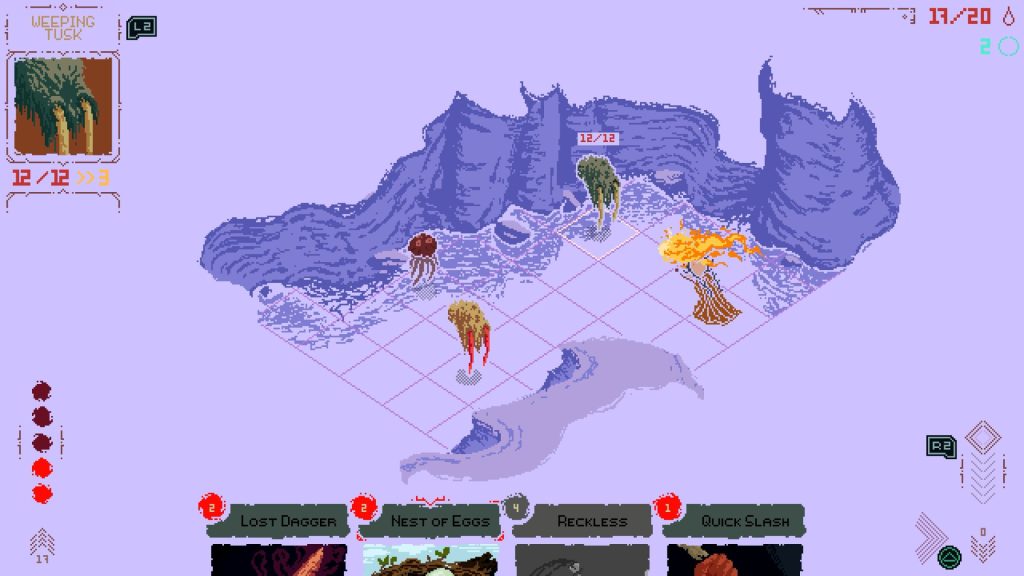
The punishing reward structure of dying in Death Howl makes some want to staple a Soulslike moniker on its tender flesh. Perhaps my inexperience with deck-builders as a whole renders me uninformed to varying sub-genres that borrow similar elements. The turn-based combat makes sense. How else would one dictate the flow of refreshing cards and decks? Yet it’s hard to ignore the easy crutch to lean on when a game is simply hard.
The tool of death is not exclusive to one genre or another. In games, it’s merely one type of a fail state. To some, rounding out a day in Stardew Valley forgetting load the mayonnaise machine before bed might be the equivalent of being sniped off the parapet of Anor Londo.
Developer The Outer Zone uses death generously, frequently. Death Howl is immensely punishing in ways that feel both oppressive and satisfying. It is framed around loss both mechanically and narratively, creating a beautiful tapestry that only becomes more eloquent the longer players continue to thread the needle.
Ro is the focal point of Death Howl, unable to accept the death/loss of her son. Her solution to coping is traveling to the spirit realm to reclaim him for the land of the living. Set in a backdrop that is heavily entrenched in mysticism, The Outer Zone doesn’t seem to specifically reference one culture over another. The spirit realm Ro travels to is rife with Native American and Western hues. Her son is seen as a spectral deer while a moose acts as a sage guide. Ro is adorned with a backpiece of antlers that shatter and reform on her own cycle of life and death.
But the whole of Death Howl is an absolute tone poem of cultural symbolism. It transported me back to my earlier days as a kid in Kentucky learning about the history of Native American tribes; of reeling at the artifice of “Indian” cultural appropriation in the form of beaded moccasins made in a factory and feathered headdresses. In contrast, Death Howl is more powerful because it is muted, constrained. Players generally fight with tree spirits, boars, and owls in the opening forest area. Progressing through the world peels back a more sinister layer as foes become diseased-like insects or chopped up representations of the thing they used to be a part of.
Beauty can be found in spades here, even when turning over a wretched rock and seeing the bile pour forth. Ro encounters numerous mystical beings in search of aid–a tree in perpetual fire to keep away predators that ran off a bird that used to rest in its branches, a fish in need of its scales bleeding into the water, a two-headed bird absent its eyes. Something is corrupting the spirit world and distorting the delicate peace it used to house. The stories and beings players encounter on Ro’s ultimate path are fascinating to aid.
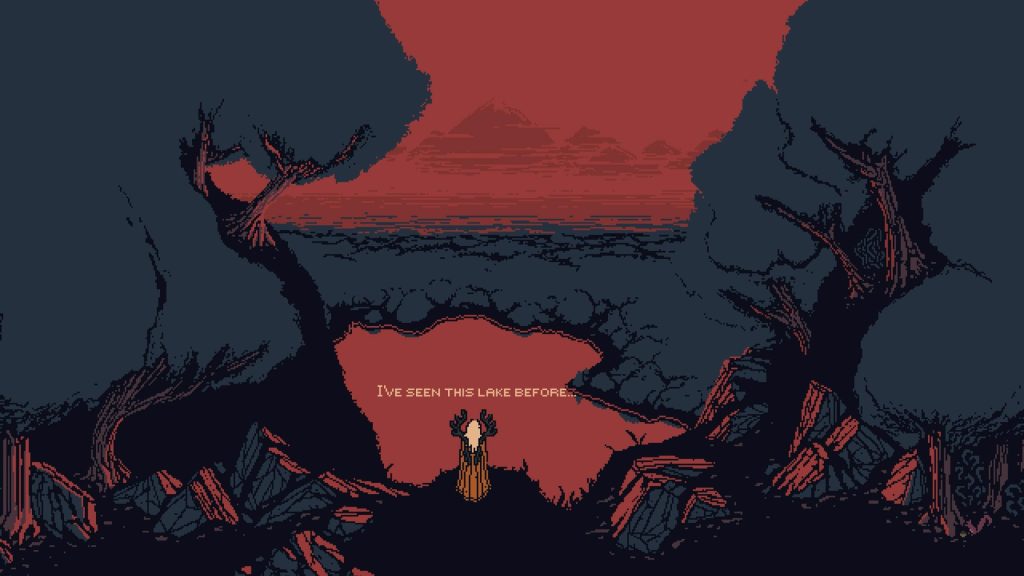
Swirling in this harrowing world is an objectively perfect aesthetic that works within the confines of a game that is both small in resources and striving for a unique palette. Seconds into Death Howl the steady beats of percussion pounded in my ears like a chant around an ancient fire. It was warm and intimidating, immaculate. Its visuals are painted with an 8-bit paintbrush where detailed models are used sparingly for maximum impact.
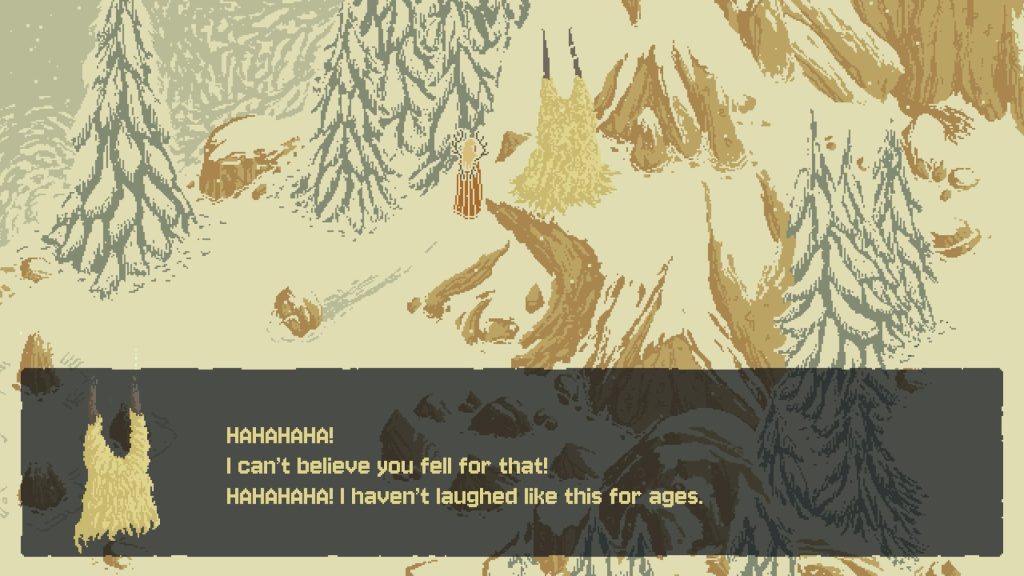
One could rationally identify Death Howl as a lost NES game. The lack of brisk action and Ro’s stiff movement around the overworld imply the game could conceivably fit on a cartridge containing only a few megabytes of data. Washed in colors that aren’t particularly vibrant, it feels like The Outer Zone never betrayed their vision. Death Howl has to and should look like this. Too much brightness and the mood would be too gleeful. Too archaic and it would obscure the natural beauty of a world made of lost spirits.
Because Ro is fighting off the unfortunate spirits of the afterlife, players should feel haunted by the presence of the vast bestiary of enemies encountered in Death Howl. Enemies fought and slaughtered evoke feelings of pity, disgust, and relief. All of them once were brimming with life, some even retain the visage of their former selves. But maybe when they hit so hard those feelings of guilt wash away.
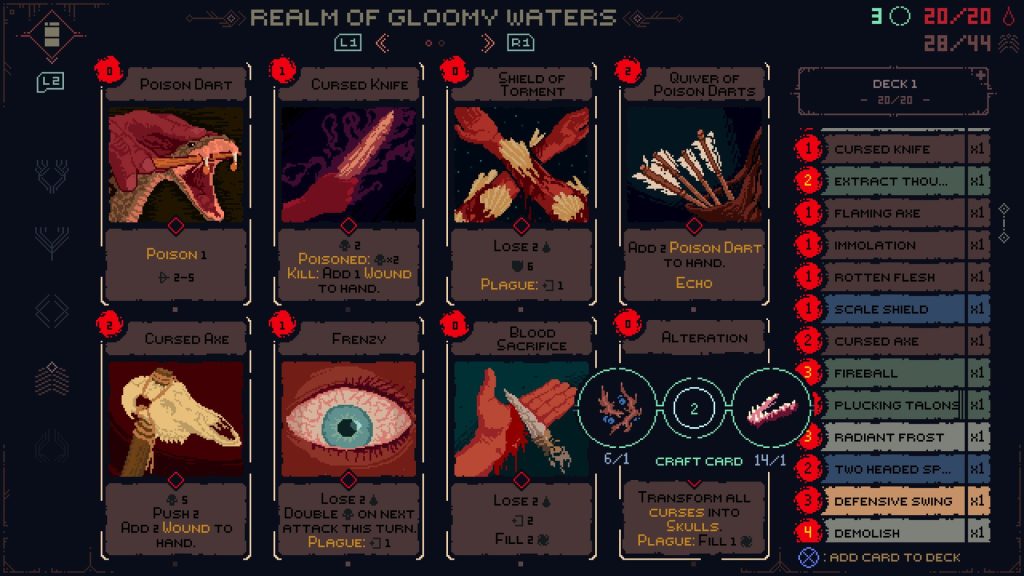
Death Howl works to smother the player just enough that the taste of air is always on the edge of their lips. Over the numerous biomes a few truths exist. Players have safe points that restore health they can fast travel back and forth between when interacted with at least once. In between these respites are enemy encounters of varying degrees of difficulty. Small tussles with spirits might have Ro fight a couple “easier” enemies while an Elder Spirit fight can throw in challenging foes. Upon defeat, spirits drop the titular death howls and materials that are used to craft new cards that will be used in combat.
The meat and potatoes of Death Howl is fairly generous to understand. The map plainly indicates where fights are but obscures secrets and side objectives until the player runs into them. Death howls can also be injected into safe spots to grant Teardrops that will grant bonus mechanics to Ro. Totems are unlocked and rewarded that grant passive benefits meant to give the player a slight edge.
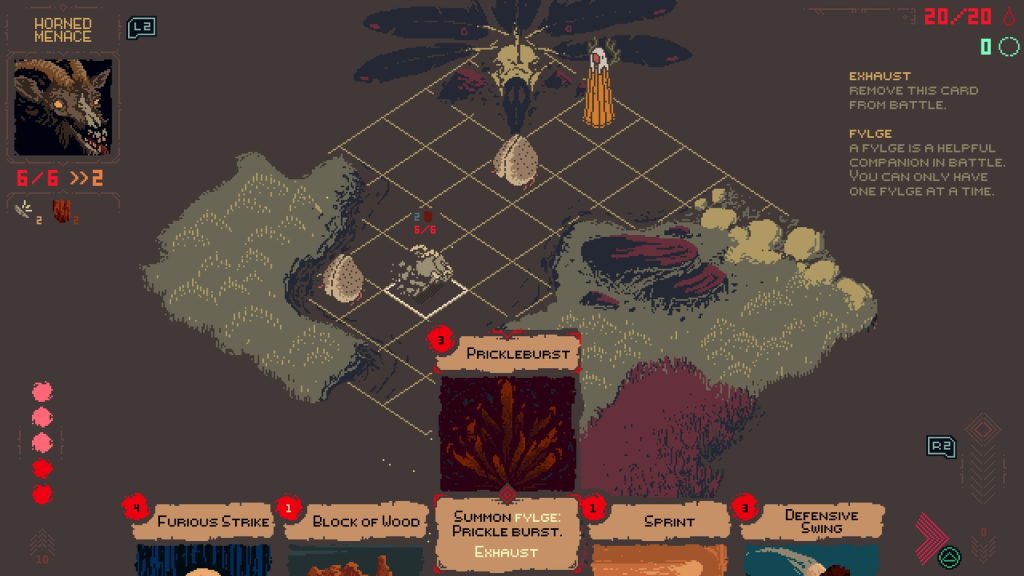
At first glance, one could argue there isn’t much to the core of Death Howl and that’s certainly true in a sense. This is a turn-based, grid-based, deck-builder game where players use a series of cards to execute attacks. As the game progresses, constant variants are thrown into the mechanics to add challenge and freshen up the familiar.
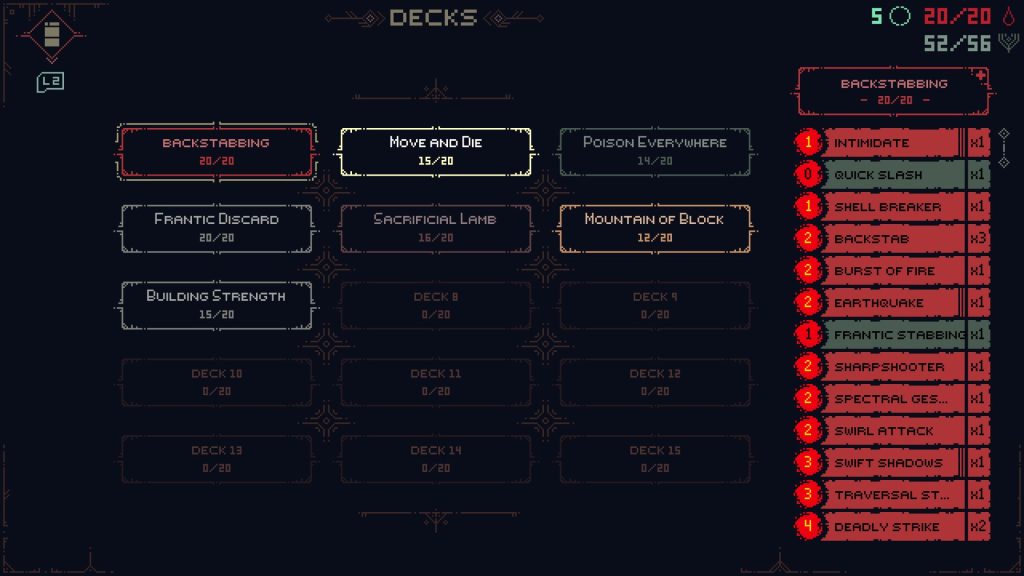
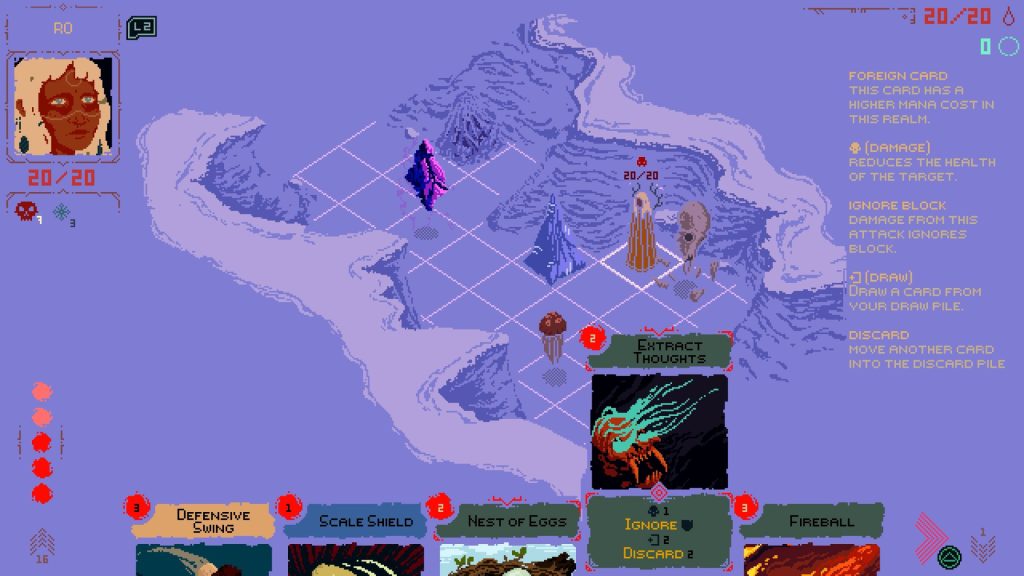
In every region the player visits, specific cards are unlocked that are unique to that region, often focusing on certain status ailments or concepts. There’s poison decks, ones that focus on speed, others working to ignore enemy armor. The thorn in the side is that, while Ro has a “universal” deck, using a region-specific card in anywhere else aside from its ancestral home will add a point to its use cost.
Players have an extremely limited “mana” pool usually of only five points per turn. So Death Howl becomes an intimate dance of placement, preparation, and luck. Not using a Sprint card when moving will cause one mana point to be burned per tile moved. Players will often fight to balance when to sacrifice part of their turn simply to move a few spaces away in hopes that an enemy won’t close the distance.
Battle conditions are relatively simple. Kill all enemies and move along. But the health pool is also extremely limited and cards or skills that grant health aren’t always plentiful. Usually, there’s only two or three fights between safe spots but resting at one refreshes all fights. But because Death Howl‘s economy relies on using death howls to craft cards and teardrops, expect to grind a decent amount to be truly comfortable.
Importantly, there isn’t really a definitive point where the player becomes overpowered in Death Howl. Throughout the game there are intensely challenging encounters that players will escape by the skin of their teeth, praying that each new card pulled will turn the tide. Players can also build up an extensive group of decks, simply choosing a new one upon dying and coming back right at the entrance of a fight.
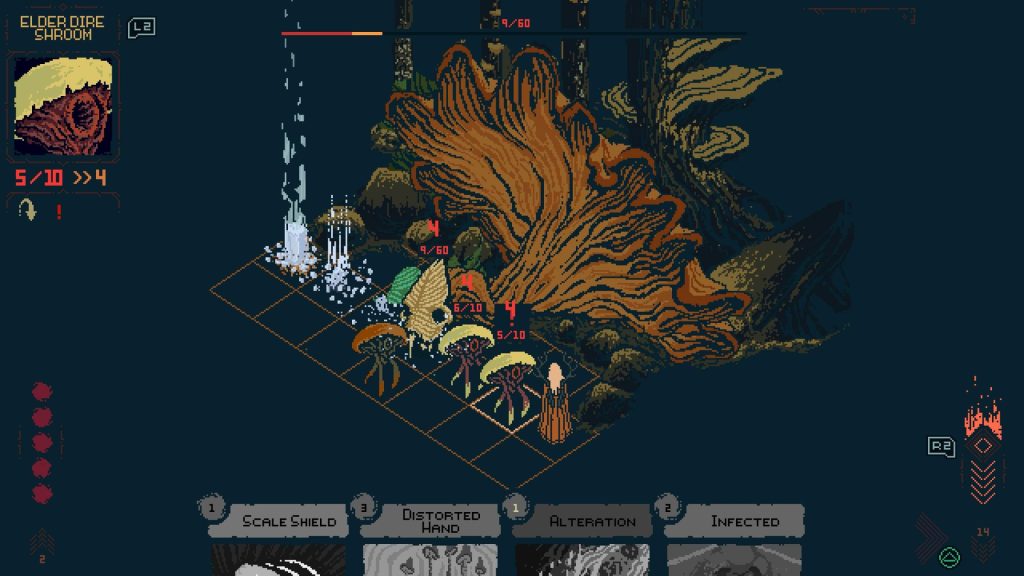
The opening salvo of combat through Death Howl‘s introductory woods is necessary and hard, it pulls few punches especially when working to fight Elder Spirits. But that prepares one for the tasks ahead. Enemies grow in complexity and how they manipulate the grid of battle. One learns when an enemy will coat the area in damaging pools of bile, requiring ranged attacks or simply taking damage to close the distance. Unlocks done through Teardrops are also unique to the region. But each features a kind of ultimate ability that changes based on location. This mechanic charges up in different ways, usually by attacking or blocking or moving and when full, will boost Ro in a helpful way. Quests also require unique ways to tackle them, including granting cards that may be lost when resting at a safe space, requiring careful planning and good use of healing mechanics to complete.
The complexity Death Howl revels in is, in a way, a balm to its fangs. Death is an absolute here and it can be frustrating when the tides don’t turn specifically in the player’s favor. The reliance on grinding can feel like a boon but often having the right cards and crafting a variety of decks is the best way to victory. It is extremely satisfying to get to a point where a fight is tough but not daunting. And when players meet the handful of bosses present here, it will put their decks to task.
Truly my biggest gripe with Death Howl was its flawed menu navigation. I would try and move the directional stick or press a shoulder button to go somewhere and tab over to an incorrect spot and get lost on where to go. It didn’t seem as fluid as it should be, like it would skip over pages for some reason. But if that’s my only problem… that’s saying something.
Death Howl is a ferocious meditation on using difficulty as a crucible for improvement. It takes the mechanics of deck building and twists them in enough clever configurations that players will stare death in the face and relish in triumph. More so, this is a exquisite looking game drenched in mysticism that ruminates on the struggle we all face with acceptance of loss, transforming a game about cards into a truly enjoyable work.