
The video game history-loving side of me is thrilled that Atari is continuing its expansion of the Atari 50 series. To date, it has hit all the right notes when it comes to providing background information about the games I grew up with in the ’80s and, sadly, the ‘90s. It has delivered on its promises, even when the games and systems were rubbish.
What’s not rubbish is the latest DLC release for the title, Namco Legendary Pack, which comes in short on games, but comes in big on history, and not pulling punches. This DLC pack goes through the marvel of NAMCO’s inception, while glossing over the mayhem of Pac-Mania back in the ‘80s around the world. Combined, both were well done, and I even appreciated the reviews of NAMCO games as they made it to the Atari 2600, 5200, and 7800. I now wish more reviews had cropped up in these DLCs. Those were entertaining as hell.
Anyway, let’s get right into this DLC.
History’s Mysteries: A Blast from the Past
Kudos to Bob’s Burgers for that headline.
Moving on, the Namco Legendary Pack has a few layers to sift through when trying to judge how it is among the rest of Atari 50. The first layer is games. Players only gain access to a few NAMCO games with this DLC, and sometimes not good translations. Here’s what you should expect should you dive into this DLC:
- Galaxian (2600, 5200)
- Galaga (2600, 5200)
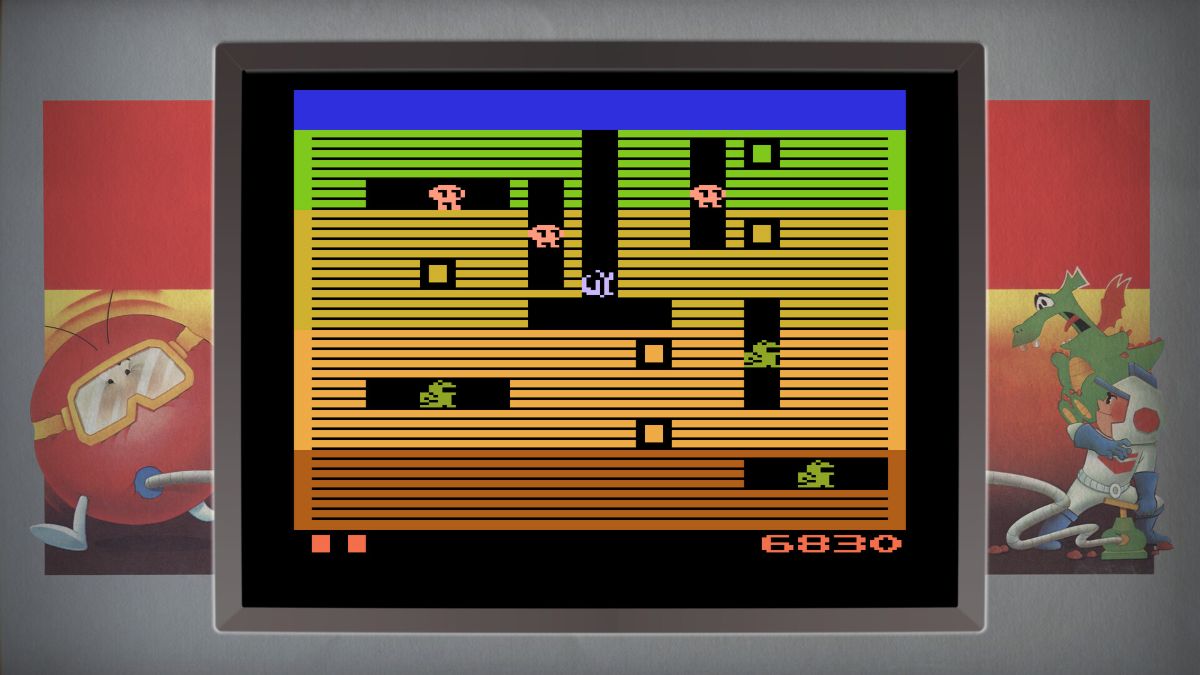
- Dig Dug (2600, 5200, Atari Computer, and Arcade)
- Xevious (Arcade, 2600, 7800)
- Pac-Man (2600, 5200, and Atari Computer)
- Breakout (Arcade)
- Super Breakout (Arcade)
Pac-Man Plague
While it’s lovely having a trip down memory lane for some of us old-heads out here, going back to an awful Pac-Man version on the 2600, and par versions of it on the 5200 and the Atari Computer is a system shock. I can tell you for a fact that the 2600 version of Pac-Man was downright disappointing and awful back when it was actually released to the Atari 2600 console. The disappointment that I felt as a kid was unimaginable, considering how much love and dedication I had put into Namco’s money maker. To put that in perspective, I would actively get up at 8:00 am to watch the Pac-Man animated show on a Saturday. I also bought Pac-Man cards, cereal, a stupid record, and the board game that was super-duper dumb. I was all-in on this f**ker.
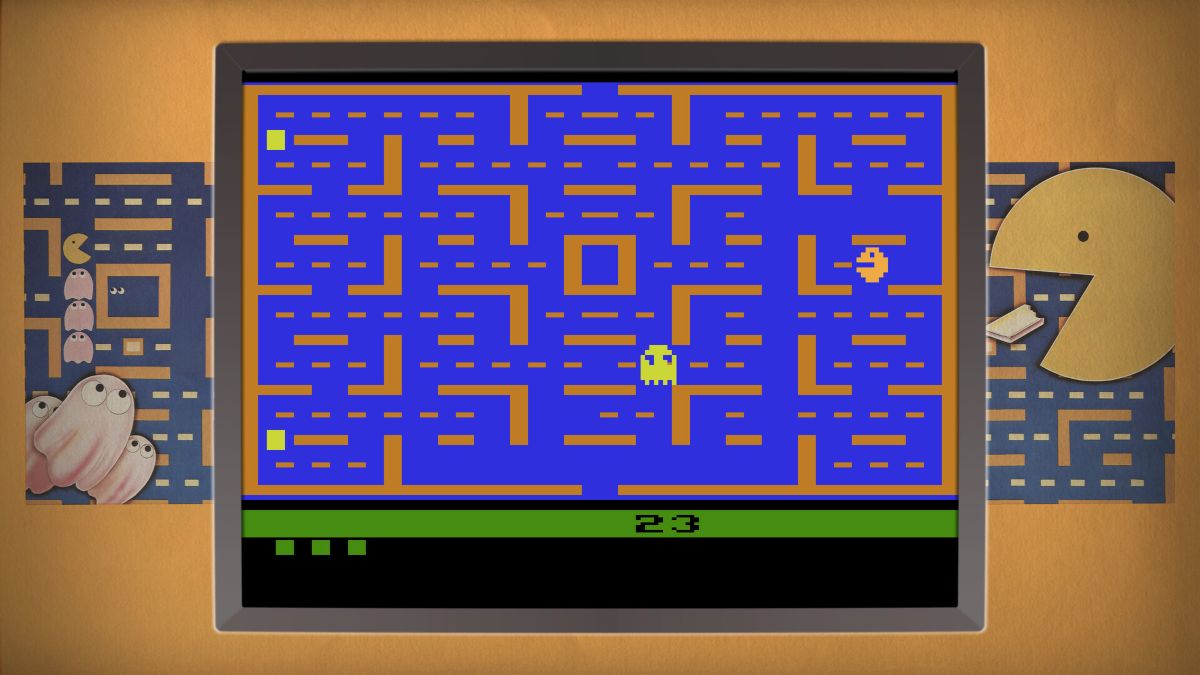
Back to gaming, the translated version of Pac-Man featured shoddy graphics that blinked terribly, mazes that didn’t really change or match the arcade version of the game, and an awkward, elongated pellet rectangle in the middle that couldn’t be less round. To put the rotten cherry on top, the game’s sound effects were enough to plug one’s ears with cotton. In short, it was a pretty bad arcade-to-home translation. It would have scored a 1 out of 10 from Digitalchumps if it were released in modern times. That one just meant that it actually loaded on the system…regretfully.
Thankfully, that awfulness is beautifully on display in this DLC pack. As players will get to see, first-hand, the abomination of Atari’s Pac-Man translation on the 2600. It’s worth experiencing at least once, and it will make you appreciate the re-vamp of the game on the Atari 5200 and Atari Computer. Those had the nearly perfect version of the arcade game, though not one-to-one.
To round this out, this pack features a newsletter from a very upset video game retailer named Video Take-Out, which took in quite a bit of pre-orders but basically received nothing to fill them from Atari. It was titled “West Coast Shortage”, and all I can think about is how lucky they must have felt after playing the game for the first time, and not having to expose their customer base to such a bad game. Yes, the 2600 version of that game was very bad.
While the Pac-Man game was bad, it is nice to see that the DLC broaches that topic and doesn’t hold back. It does fit right into how NAMCO took off in America (and worldwide) with their pellet-eating pal, which should belong in a DLC that is about NAMCO. On a side note, it should also be noted that NAMCO did not develop the Atari version of the game; rather, it came from within Atari’s house. NAMCO should never be blamed for it.
Galaxian and Galaga
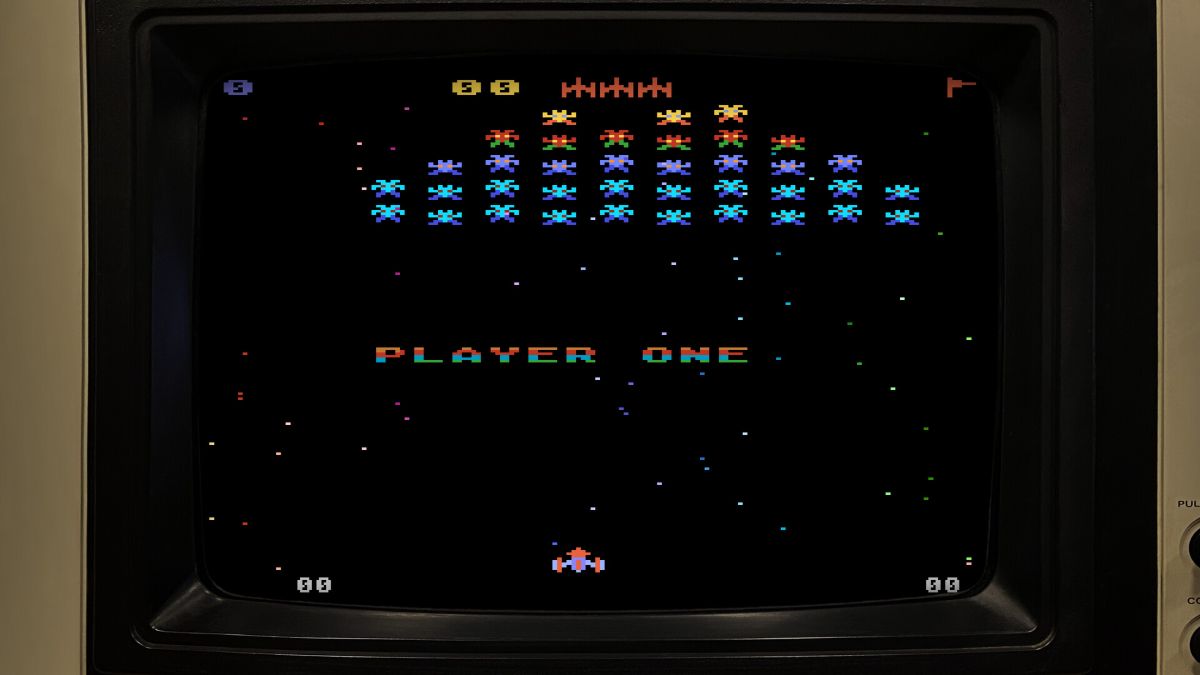
The versions of Galaxian and Galaga included in this DLC are decent, though I do wish that the arcade versions of both were available in this pack. I understand that maybe that license was tied up in the NAMCO Museum releases, and that’s proper, as well as individual buys on console and computer markets. What you do get with these is good enough to be happy with on this release. Even the Atari 2600 version of Galaga isn’t that bad. It wouldn’t be my go-to, but you can definitely see things were learned with Pac-Man’s release on the system. More effort seemed to be given.
Overall, I like the information given about both titles and how the concept of Galaxian evolved into its sequel, Galaga, and how more features were added to make the experience different enough. Adding that captured ship feature in the latter propelled it to unimaginable entertaining heights. It was neat seeing the evolution and information given between the two in this DLC release.
All in on Dig Dug
The arcade version of Dig Dug is primo. It’s still top-tier entertainment when introducing young gamers to a 1980s gaming world. The arcade version included is one-to-one with its cabinet quarter muncher, and there is no shortage of competitive entertainment when playing it against someone else for the first time. The game’s freedom allows the player to create their own strategy and to understand the changing enemy habits to accommodate said strategy. It’s remarkable how wonderfully designed the arcade version is and how it holds up after 40+ years.
The DLC does a great job of delivering all forms of Dig Dug, while also giving a heaping helping of good information about how it was advertised, how players enjoyed it, and reviews of it. To boot, the DLC also provides some commercials that are goofy as they are so 1980s.
Xevious
It was 1984, and I found this arcade game in a Pizza Hut near Oklahoma City as a kid. It was fun, the sound effects were pleasing, and the levels were out of this world huge. The pizza wasn’t bad either.
The Namco Legendary Pack is almost all-in with information about Xevious, providing some good paperwork from its creation, and even goes as far as to provide how big the overall map of the game was and how it was divided into pieces. There is a lot of impressive information about this good NAMCO title, which includes a six-minute history lesson about porting it over from arcade to 2600 and 7800. It’s neat to see such a title was included, one which was almost forgotten with the video game collapse in 1984. It certainly makes a good comeback through a good history lesson on this DLC. It’s a great shooter and worth your time and attention.
Other Odds and Ends
The Namco Legendary Pack does include some additional gaming, such as Breakout and Super Breakout, two games that are truly a pain-in-the-ass when it comes to playing on modern controllers. While these were licensed to NAMCO for Japanese distribution, they were included as part of Atari’s brief journey in Japan.
When I say ‘brief’, I mean brief-brief.
While the DLC is about NAMCO making it big and bringing out some unshakable classics that survive the test of time, the deals made between NAMCO and Atari began with the inception of Atari Japan. Atari Japan was a disaster from the get-go, as nearly all video game history books tell a tale of Atari not understanding the Japanese market and clearly not bothering to sit down to do the research to prepare a proper strategy for it.
That’s a painful part of Atari’s past because breaking into that market would have probably given them a good injection of capital to live on, and avoiding the need to sell the company to Warner Communications, which handled it as well as someone handling an angry electric eel with their bare hands.
Anyway, it’s fun to see this part of Atari’s history included in the NAMCO DLC because it shows their mistakes and how it was handled improperly. My only wish for this part of the DLC is that it would have been nice to see it getting into the nitty-gritty of the company’s mistakes and see specific failures that came down to poor decision-making. It sounds mean, but most history glosses over this part of the Atari story, although Stephen Kent and Tristan Donovan do a decent enough job of extracting exactly what the problems were with Atari in Japan. I highly recommend their books if you’re interested in some good history of the industry.
Verdict on this DLC
If players going into this are expecting a heavy dose of NAMCO games, then they might be disappointed. This DLC focuses more on Atari’s interaction with NAMCO, brings a heavy dose of Pac-Man mistakes and poor translations, while throwing in some decent NAMCO titles that players have seen before in better form on other NAMCO releases.
For history buffs, the additional information provided in the Namco Legendary Pack DLC will be satisfying, as well as the additional videos (commercials and interviews), and outside written perspectives on some of the Atari translated NAMCO releases. There’s some good stuff in this DLC, and far better than the last DLC, but not as potent as Atari-made DLCs at Atari 50’s get-go.
Anyway, let’s wrap up this review.
Conclusion
The Namco Legendary Pack for Atari 50 brings some great insight, good videos, and wonderful video game reviews from the past about NAMCO titles on Atari systems. While the DLC doesn’t feature a bevy of NAMCO games that players would find on a NAMCO Museum release, nor does it bring too many arcade experiences in comparison to other Atari 50 releases, it does bring a variety of NAMCO games on various Atari systems. Some of those translations might not be gems, especially Pac-Man on the 2600, but they’re worth experiencing.