
It’s spooky time, and that means it’s time for spooky movies. Sure, you could go with ‘Weapons,’ a fine modern film that is a slow build but has a good payoff. You could consider exploring The Thing, a John Carpenter classic that features a satisfying ending. But wouldn’t you rather go old school and watch seven movies that prove that quantity and quality are two very separate things? I thought so.
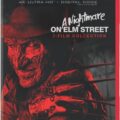
Warner Home Video has released A Nightmare on Elm Street: 7-Film Collection that gets steadily ridiculous through each scary journey, but carries its own brand of humor and horror that lasts longer than Johnny Depp trying to stay awake. Each film included demonstrates the steady departure from pure horror, but still works, even when it doesn’t. To boot, each movie is beautifully crafted and carefully upgraded to a high UHD 4K release standard that Warner has a good talent for pulling off, even with its ancient classics.
So, sit back, try not to fall asleep to this review (it’s tough), and let’s discuss the UHD 4K release of A Nightmare on Elm Street: 7-Film Collection.
Story and substance
The seven-movie collection in this release is a bag of mixed review nuts. I’m questioning that sentence, but I’m going to go with it. Anyway, Wes Craven knocked it out of the ballpark with the first film in 1984, A Nightmare on Elm Street, which introduced the idea that a killer (and other things) of children can never be quite dead if they exist in one’s dreams. That concept is pure Craven, as it takes a silly idea and turns it into a straight-up nightmare with the right amount of good storytelling, fantastically scary moments where antagonist Freddy is hunting down sleepers (never taking a bath again), and makes our four-fingered slasher basically unstoppable.
As a kid growing up in the 80s, this movie gave me another reason not to go to sleep at night, as the mere notion that I could die in my sleep was haunting. Even after seeing Freddy without make-up, played by Robert Englund, a talented man who has a knack for the darker side of life, this was a film that followed me until my teenage years. Yes, it had that much of an impact on me.
When the sequel arrived the following year in 1985, not directed by Wes Craven, you could see the horror of it slowly draining. While Freddy certainly earned his revenge from the first film, how it was executed and brought to life kind of went the opposite way of a Wes Craven-crafted movie. While Freddy led the way in A Nightmare on Elm Street 2: Freddy’s Revenge, the plot mainly revolved around a kid named Jesse who was slowly becoming possessed by Freddy. A hard shift from the first film, and one that worked in spurts but not as a whole. I credit director Jack Sholder for trying to avoid making the same movie Craven made, but in doing so, departed so hard from the original idea that this became its own thing instead of a good sequel.
As the franchise licked its wounds and counted its money, it took a sabbatical, and the studio started to put together a new idea for a third film. In 1987, A Nightmare on Elm Street 3: Dream Warriors was released. Back on track with the same Wes Craven formula, director Chuck Russell did a wonderful job of breathing new life into the franchise by having very flawed humans fighting against their own demons, while taking on Freddy head-to-head in their dreams. In addition, the film brought back Nancy Thompson (played by Heather Langenkamp) and connected the third film back to the first in the best of ways. It was filled full of praise-worthy moments, strong, well-developed characters, and a focus on what made the first film great.
After the third film, the franchise started falling off the rails a bit. A Nightmare on Elm Street 4: The Dream Master connects directly to the previous film and takes a lighter route. While the murder and mayhem of Freddy is ever-present throughout the fourth film, it is doused with humor that never goes away from beginning to end. While I like my killers funny, I prefer not to have a goofy stand-up version of them. The fourth film in the franchise went too far with humor and made Freddy more humorous than horrible, which is wrong considering his past.
The fifth film, A Nightmare on Elm Street 5: The Dream Child, kept the story of going from the third and fourth films, and even featured the directorial return of Wes Craven. The return of the master of horror in the Freddy universe meant bringing with him a more toned-down comedy routine from his antagonist. What was intended to be delivered was to create some lore and deepen the character of Freddy, thus making this more than just another slasher film. By doing so, the fifth film broke away so hard from the original material and almost avoided the hard and scary moments with Freddy that made the original so epic. While this entry was a fresh take, it just didn’t do enough to return the franchise to its former self. It did make money, though. And when a film makes money, that means more films.
The last two films, Freddy’s Dead: The Final Nightmare and Wes Craven’s New Nightmare, were a means to an end, but creative ones. The former was a film made to finally put Freddy to rest, though it does leave the door open at the end for him to return (like, a tiny crack of a door – which Freddy happily passed through to go fight Jason). The latter is probably more interesting, as it felt like Scream, and was very meta in its intentions, and everyone, including Wes Craven, did a bang-up job being in the film. At the very least, the last film is probably one of the coolest, freshest takes of the entire franchise. It took a chance, rode a wave, and helped continue the tone of horror films within horror films, which was a strong sign of the times. And a sign that has been forgotten.
As a complete package, the A Nightmare on Elm Street: 7-Film Collection is front-heavy with its creativity and success. The backend flounders in some areas, but takes chances and breaks the horror formula in attempts to try something new. Overall, it’s a great set of stories that sometimes don’t mingle well together, but they do make Halloween a bit sweeter.
Special Features
Beyond the films and the gorgeous UHD 4K transfer, here’s what you get with this collection:
– Ready Freddy Focus Points
– Commentary with Wes Craven, Robert Englund, Heather Langenkamp, Ronee Blakley, Robert Shaye, and Sara Risher
– Commentary with Wes Craven, Heather Langenkamp, John Saxon, and Jacques Haitkin
– Alternate Endings – Scary Ending, Happy Ending, Freddy Ending
– The House that Freddy Built: The Legacy of New Line Horror
– Never Sleep Again: The Making of A Nightmare on Elm Street
– Night Terrors: The Origins of Wes Craven’s Nightmares
– Theatrical and Uncut versions of the first and fifth films
It’s a solid package for horror fans out there looking to add to their library.